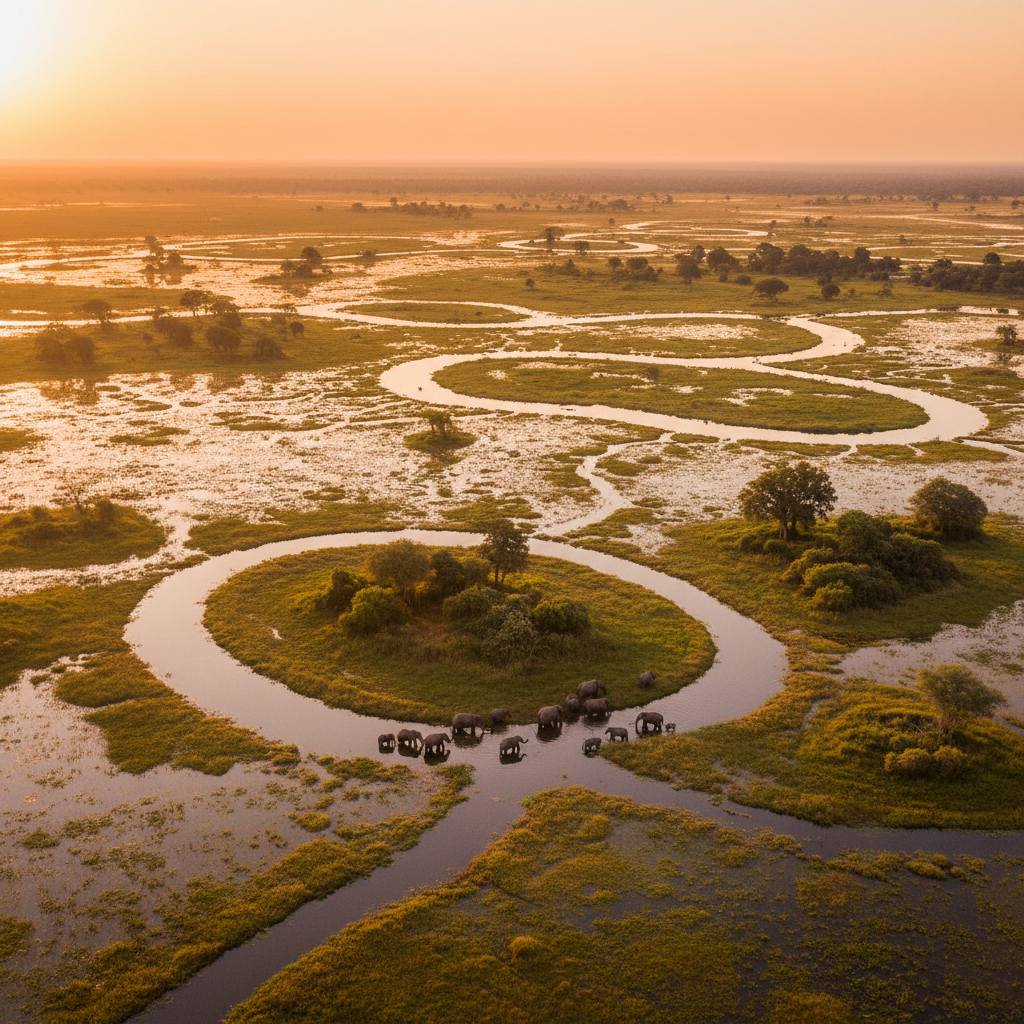
Botswana: Africa's Best Safari Destination, Where 130,000 Elephants Roam Free
Destination: Botswana
Category: guides
Botswana doesn't try to impress you. There are no theme-park safaris, no crowds of buses jostling for position at a lion kill, no Instagram-optimized viewpoints with souvenir stalls. What Botswana offers instead is something rarer: genuine wilderness, in quantities that most travelers have stopped believing still exist.
I've been to Kenya, Tanzania, South Africa, and Namibia. Botswana hit differently. The scale of the wildlife — particularly the elephants — is simply not comparable to anywhere else on Earth. When you're on a boat on the Chobe River and 400 elephants walk down to drink 20 meters from your hull, you stop thinking about photography. You just watch.
This guide is for everyone who's considered Botswana but hesitated — because of the cost, the logistics, the "is it really worth it?" question. The answer is yes. Here's how to make it work for your situation.
Why Botswana Is Africa's Premier Safari Destination
The numbers tell part of the story. Botswana is home to over 120,000 elephants — the largest elephant population on Earth, concentrated in the northern part of the country around Chobe National Park and the Okavango Delta. The country has made a deliberate choice to pursue high-value, low-volume tourism: fewer visitors, higher prices, better experiences. It works.
The result is a safari ecosystem where you might spend 45 minutes alone with a leopard and her cubs, where wild dog packs hunt in the open at dawn without a single other vehicle present, where the Okavango Delta floods each year like clockwork and transforms the Kalahari into a labyrinth of waterways and islands teeming with life.
Botswana is also one of Africa's most politically stable and well-governed countries. The infrastructure is reliable, the guides are exceptional, and the conservation record is among the best on the continent.
The Five Botswana Experiences (And Who Each One Is For)
1. Chobe National Park: The Family Safari That Delivers
If you're traveling with children and want to guarantee wildlife encounters that will genuinely blow their minds, Chobe is your answer. The Chobe River boat safari is the single best wildlife activity for families — flat, stable, no dust, and eye-level with elephants as they wade into the river. Children who can't sit still for a 5 AM game drive will happily spend 3 hours on a boat watching hippos, crocodiles, and elephant herds.
The logistics are straightforward: Kasane International Airport is 10 minutes from the park gate, with daily connections via Johannesburg. Chobe Game Lodge — the only lodge inside the park — accepts children of all ages and has a head start over day-trippers on morning game drives. For families watching the budget, Senyati Safari Camp offers self-catering chalets on the river at $50–$150/person/night with identical wildlife access.
Best months: August–October for maximum elephant concentrations. May–July for cooler temperatures and fewer crowds.
2. The Budget Safari: Botswana Without the $1,000/Night Price Tag
The most common misconception about Botswana is that it's exclusively for wealthy travelers. It isn't. A self-drive camping safari through Chobe and Moremi delivers the same Big Five encounters as any luxury fly-in camp — you just cook your own food and sleep in a tent.
The DWNP public campsites at Third Bridge and Xakanaxa in Moremi are legendary for a reason. Hippos walk through camp at night. Elephants drink at the bridge 50 meters from your tent. Lions are regularly heard after dark. The total cost for two people — 4x4 rental, campsites, park fees, food, and fuel — runs $330–$420/day. That's $165–$210/person/day for a world-class safari. Book your DWNP campsites 3–6 months ahead; peak season (July–August) sells out fast.
The non-negotiable: A 4x4 with high clearance. The sandy tracks of Moremi and Savuti will strand a 2WD. Budget $150–$250/day for a Toyota Land Cruiser rental.
3. Moremi Game Reserve: The Wildlife Photographer's Obsession
Moremi is where photographers come to push their limits. The Khwai corridor has one of the highest wild dog densities in Africa — packs of 15–30 dogs hunting impala at dawn is one of the most dramatic wildlife sequences you can photograph anywhere. Chief's Island has exceptional leopard density. The Khwai River crossing at dawn, with elephants and hippos moving through golden light, is one of the most photographed scenes in Botswana for good reason.
Bring a 400mm+ telephoto lens and two camera bodies — you cannot change lenses in the dust of a game drive. Khwai Bush Camp (in the private concession north of Moremi) allows off-road driving and night drives, which the national park doesn't permit. Book 9–12 months ahead for peak season; the best photographic camps sell out within days of opening their booking windows.
The insider move: A full-day circuit from Khwai through the reserve to Xakanaxa Lagoon, returning via the Mopane Tongue — covers all the major habitats in one extraordinary day.
4. The Okavango Delta: Luxury Safari at Its Peak
The Okavango Delta luxury experience is what most people imagine when they think of Botswana. The Delta floods annually from Angolan rains, transforming the Kalahari into a 15,000 square kilometer labyrinth of channels, lagoons, and palm-fringed islands. A mokoro (traditional dugout canoe) gliding silently through papyrus reeds while a hippo surfaces 10 meters away is an experience with no equivalent.
The private concessions on Chief's Island — Mombo Camp, Little Mombo, Chitabe — are widely considered among the best wildlife camps in Africa. The exclusivity is real: you share the concession with a handful of other guests and have a private guide and vehicle. The price reflects this ($2,000–$3,500/person/night all-inclusive), but for a once-in-a-lifetime trip, the Okavango delivers.
5. The Chobe + Victoria Falls Combo: Two Icons in One Trip
The most popular Southern Africa itinerary for good reason: Kasane/Chobe for 3 nights, then Victoria Falls for 3 nights. Kasane is 100km from Victoria Falls — a 2-hour road transfer via the Kazungula border crossing. The logistics are seamless.
Victoria Falls is the world's largest waterfall by combined width and height: 1,708 meters wide, 108 meters tall, generating a spray cloud visible 50km away. The adventure activities are extraordinary — Grade 5 white water rafting on the Zambezi, bungee jumping off the 111m Victoria Falls Bridge, helicopter flights over the falls, swimming in Devil's Pool at the lip of the falls (Zambia side, October–May only). Ilala Lodge in Victoria Falls town is the benchmark mid-range stay — you can hear the falls from your room.
Practical Planning: What Nobody Tells You Before Your First Botswana Trip
Malaria: Botswana is in a malaria zone. Consult a travel clinic 6 weeks before departure. Malarone is the standard recommendation. Don't skip this.
Best overall months: May–October (dry season). Peak wildlife viewing August–October. Shoulder season May–June offers lower prices and fewer crowds with still-excellent game viewing.
Getting there: Most international visitors fly into Johannesburg (O.R. Tambo) and connect to Maun (for Okavango/Moremi) or Kasane (for Chobe). Flight time from Johannesburg is 1–2 hours. From New York or London, budget $1,800–$2,800/person round trip.
Clothing: Neutral colors only — khaki, olive, beige. Avoid blue (attracts tsetse flies). Layers for cold mornings (May–July temperatures can drop to 5°C/41°F before dawn).
Currency: Botswana Pula (BWP). Most lodges accept USD and major credit cards. Kasane and Maun both have ATMs.
Visas: US, UK, EU, Australian, and Canadian citizens receive a free 90-day visa on arrival.
The Bottom Line
Botswana rewards travelers who are willing to engage with it on its own terms. It's not the easiest destination to plan, and it's not the cheapest. But nowhere else on Earth offers the combination of wildlife density, wilderness scale, and quality of experience that Botswana delivers.
Whether you're bringing your family to watch 400 elephants drink from a boat on the Chobe River, driving yourself through Moremi with a tent and a cooler box, or flying into a private concession in the Okavango Delta for the trip of a lifetime — Botswana will exceed your expectations. It always does.
Created by the Ask Leif Team — Reviewed by Shane