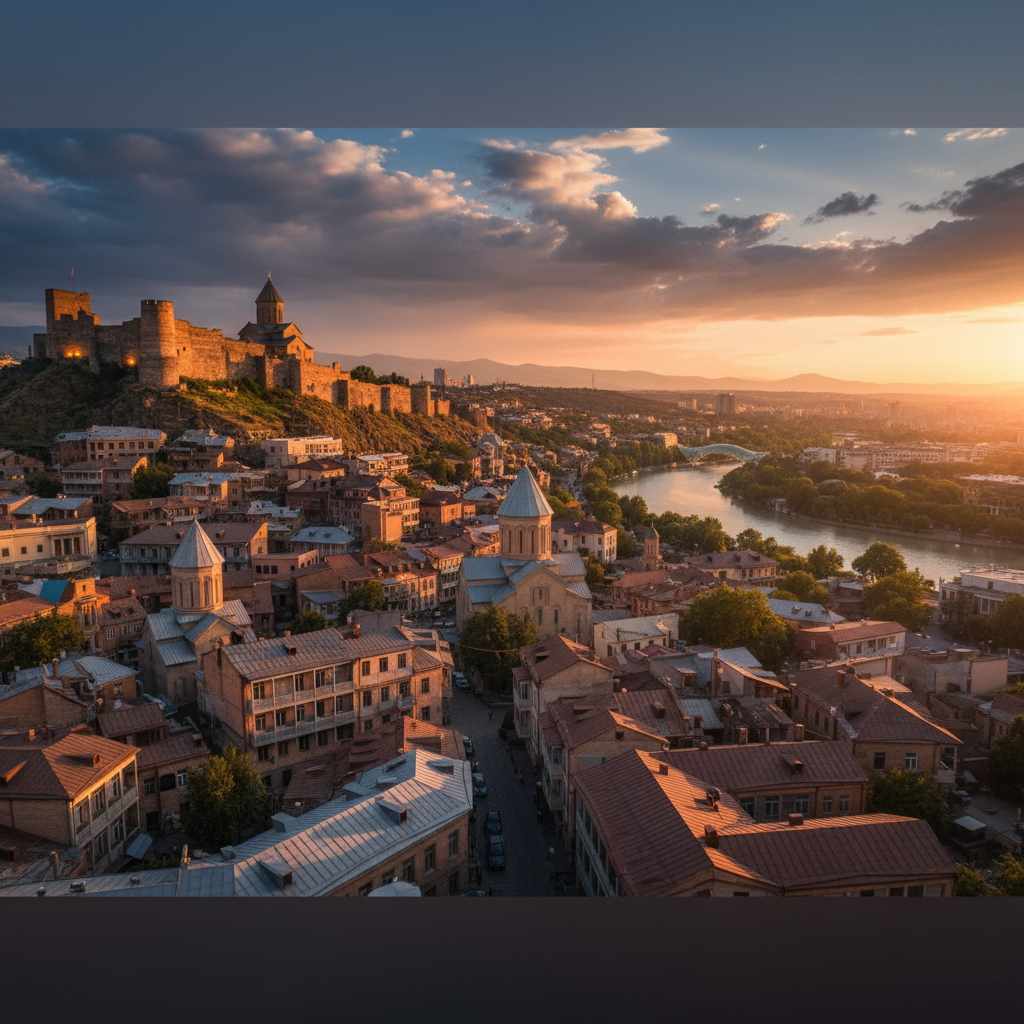
Forget Paris: Tbilisi is Europe's Most Underrated City Break Destination
Destination: Tbilisi, Georgia
Category: guides
The steam hits you first, thick and sulfurous, as you descend into the ancient brick-domed bathhouse. The air is heavy with history, the chatter of Georgian voices, and the promise of pure, unadulterated relaxation. You’re in Abanotubani, Tbilisi’s historic sulfur bath district, and you’ve just had your skin scrubbed raw (in the best possible way) by a mekise. Emerging, refreshed and tingling, into the cool night air, the scent of fresh bread mingles with the distant thrum of live music. This isn’t Paris, darling. This is Tbilisi, and it’s about to steal your heart.
Why Tbilisi Is Having Its Moment
Forget the usual suspects like Prague or Budapest. While those cities are undeniably charming, Tbilisi offers something more raw, more authentic, and frankly, more exciting right now. It's a city that’s confidently shedding its post-Soviet skin, embracing its ancient past while hurtling into a vibrant, modern future. The energy is palpable – a delicious blend of old-world charm and contemporary cool.
Why now? Well, for starters, it’s still incredibly affordable compared to Western European capitals, offering incredible value without sacrificing quality. But it's more than just budget-friendly travel. Georgia has always been a crossroads of cultures, and Tbilisi embodies this beautifully. You’ll find Persian-influenced architecture next to Art Nouveau masterpieces, Orthodox churches beside a synagogue and a mosque. It’s a place where ancient traditions, like the 8,000-year-old winemaking process, are celebrated alongside a burgeoning contemporary art and electronic music scene that's drawing international attention. The world is finally catching on to what Georgians have known for centuries: this place is special.
The Old Town vs. The New Tbilisi
Tbilisi is a city of fascinating contrasts, and nowhere is this more evident than in its distinct neighborhoods.
Old Town (Kala) is where you’ll spend your first few days, and for good reason. It’s a labyrinth of cobblestone streets, colorful balconies, and hidden courtyards, all nestled beneath the imposing Narikala Fortress. Wander through Shardeni Street (yes, it’s touristy, but still charming), marvel at the Sioni Cathedral, and cross the iconic Bridge of Peace, a modern glass and steel structure that beautifully bridges the ancient and the new. Don’t miss a ride on the cable car up to Narikala Fortress for panoramic views of the city – especially stunning at sunset. The sulfur baths are here, too, a non-negotiable experience.
But Tbilisi isn't just a pretty historical postcard. Cross the Mtkvari River, and you’ll find yourself in the burgeoning, bohemian heart of Marjanishvili and Fabrika. This is where the city’s creative pulse truly beats. Fabrika, a former Soviet sewing factory, has been transformed into a multi-functional space housing hostels, cafes, bars, artist studios, and co-working spaces. It’s buzzing with young energy, street art, and a palpable sense of community. Think Berlin's Kreuzberg or Lisbon's LX Factory, but with a distinctly Georgian flavor.
Nearby, Marjanishvili itself is a grand boulevard lined with stunning Art Nouveau buildings, many of which are being lovingly restored. It’s a great area for independent boutiques, experimental restaurants, and a more local feel than the tourist-heavy Old Town. For a taste of old-world grandeur, stroll down Rustaveli Avenue, home to the Parliament of Georgia, the Georgian National Opera and Ballet Theater, and numerous museums. And for a truly local experience, head up to Mtatsminda Park via the funicular for incredible views, an amusement park, and a lovely escape from the city bustle.
What to Eat (and Where)
Prepare to eat. A lot. Georgian cuisine is hearty, flavorful, and designed for sharing. It’s a feast for the senses, and you’ll quickly understand why it’s gaining international acclaim.
First things first: khinkali. These oversized, soup-filled dumplings are a national obsession. You pick them up by the pleats, bite a small hole, slurp the broth, then eat the rest (leaving the tough pleat behind). They come filled with meat (pork and beef are common), mushrooms, or cheese. My favorite spot for these is Pasanauri (multiple locations, but the one near Liberty Square is great for people-watching). They’re consistently good and surprisingly affordable.
Then there’s khachapuri, the glorious cheese bread. There are many variations, but the most iconic is Acharuli khachapuri, a boat-shaped bread filled with molten cheese, topped with an egg yolk and a pat of butter, which you stir in yourself. It’s decadent and utterly delicious. For a fantastic Acharuli, head to Retro in the Old Town. For a more traditional, round Imeruli khachapuri, any local bakery will do, but Machakhela (also in Old Town) is a reliable choice.
Don't leave without trying shkmeruli (chicken in a creamy garlic sauce), badrijani nigvzit (fried eggplant rolls with walnut paste), and lobio (a rich bean stew served in a clay pot). For a truly authentic experience, find a traditional Georgian restaurant with live music and folk dancing – Cafe Gabriadze (next to the famous puppet theatre) offers a charming, albeit slightly touristy, experience, but the food is solid. For something more contemporary and chic, Shavi Lomi (meaning "Black Lion") offers a modern take on Georgian classics in a wonderfully quirky setting.
And let’s talk about wine. Georgia is the cradle of wine, with a winemaking tradition stretching back 8,000 years. Forget what you think you know about wine; Georgian wines, especially those made in traditional qvevri (clay amphorae buried underground), are unique and utterly delicious. Seek out amber wines, often called "orange wines," which are white grapes fermented on their skins. For a fantastic wine bar experience, head to Vino Underground in the Old Town, which focuses on natural, small-batch Georgian wines. For something more lively, 8000 Vintages offers a huge selection and knowledgeable staff.
Finally, for a late-night snack or a sweet treat, grab some churchkhela, the "Georgian Snickers" – strings of nuts dipped in thickened grape juice. You’ll see them hanging everywhere, looking like colorful candles.
Practical Stuff Nobody Tells You
- Visa: This is a breeze for most. Many nationalities (including EU, UK, US, Canada, Australia) are visa-free for up to a year. Others can easily apply for an e-visa online. Check the official Georgian Ministry of Foreign Affairs website for your specific country.
- Currency: The local currency is the Georgian Lari (GEL). ATMs are widely available, and credit cards are accepted in most restaurants and shops, though smaller vendors might prefer cash.
- Getting There: Direct flights from many European cities (e.g., London, Berlin, Warsaw, Istanbul) make Tbilisi surprisingly accessible. Kutaisi International Airport (KUT) is another option, often with budget airline connections, and it's a scenic bus or train ride to Tbilisi.
- Safety: Tbilisi is generally a very safe city, even at night. Georgians are incredibly hospitable. As with any city, exercise common sense, watch your belongings in crowded areas, and be aware of your surroundings.
- Transportation: The metro is efficient and cheap, connecting key areas like Marjanishvili, Rustaveli, and Liberty Square. You’ll need a rechargeable Metromoney card (available at any station). Taxis are plentiful and affordable; use apps like Bolt or Yandex Go to avoid inflated tourist prices. Walking is the best way to explore the Old Town.
- Best Season: Spring (April-May) and Autumn (September-October) offer the most pleasant weather – warm days, cool evenings, and fewer crowds. Summer (June-August) can be hot, but the city comes alive with outdoor activities and festivals. Winter (November-March) can be cold, but a dusting of snow on the ancient buildings is magical, and the sulfur baths are even more appealing.
- Language: Georgian is the official language, a unique and ancient tongue. While many younger people and those in the tourism industry speak English, learning a few basic phrases (e.g., Gamarjoba for hello, Madloba for thank you) will go a long way and be greatly appreciated.
The Bottom Line
Tbilisi isn't just a city; it's an experience. It’s a place where ancient history rubs shoulders with a buzzing contemporary scene, where hospitality is a way of life, and where every meal feels like a celebration. It offers the charm of old Europe, the exoticism of the East, and the vibrant energy of a city on the rise, all at an unbeatable value. If you're looking for an adventure that feels both familiar and wonderfully foreign, a city break that will surprise and delight you at every turn, then Tbilisi is your next destination.
Ready to swap your Parisian croissant for a khachapuri? Let Ask Leif help you plan your unforgettable trip to Tbilisi.