Two Islands, One Rental Car, and the Realization That No Other Country Does This: The New Zealand Road Trip Guide
Destination: New Zealand
Category: destination
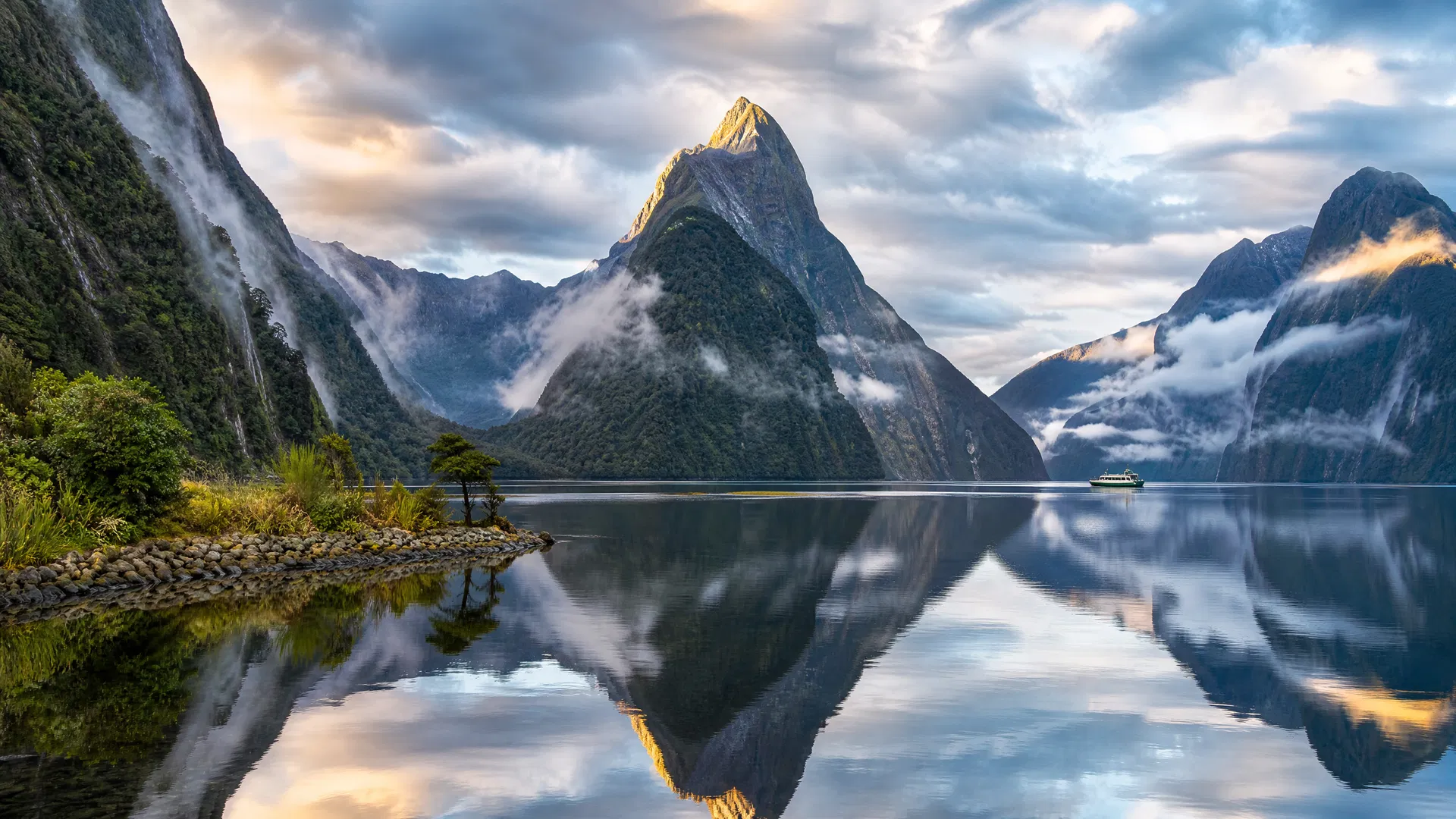
There is a specific kind of disorientation that happens when you drive into Fiordland for the first time. You've seen the photographs — everyone has — but photographs of Milford Sound are like photographs of the Grand Canyon: technically accurate and completely inadequate. The scale doesn't translate. The way the Mitre Peak rises 1,692 metres directly from the water, without preamble or foothills, in a single vertical statement of geological authority — that doesn't come through in an image. Neither does the sound, which in the right conditions is almost entirely absent, a silence so complete that the occasional waterfall crashing into the fiord from 500 metres up sounds like an intrusion.
New Zealand earns its reputation, is what I'm saying. And it earns it in a way that is unusual among heavily photographed destinations, because the photographs consistently undersell it.
This is a country roughly the size of the United Kingdom packed with the landscape variety of an entire continent: fjords in the southwest, glaciers on the West Coast, volcanic plateaus in the center of the North Island, subtropical forests in the north, wine country in the northeast, and a coastline that changes character every 50 kilometres. It has a culture built on the intersection of Māori tradition and Polynesian heritage with British colonial history and a frontier independence that comes from being the last significant landmass on earth to be settled by humans. It has a food scene that has quietly become one of the best in the Southern Hemisphere. And it has a road trip culture — a genuine, deeply embedded understanding that the best way to see this country is from behind the wheel of a rental car, moving at your own pace between landscapes that would be the headline attraction of any other country but here are simply the next thing around the corner.
This is the guide for that road trip. Both islands. The essential stops and the ones most guides skip. The practical realities of driving in New Zealand that nobody tells you until you've already made the mistake. And the honest answer to the question every first-timer asks: is two weeks enough?
Why the Rental Car Is Non-Negotiable
New Zealand's public transport system is functional but not designed for travelers who want to see the country rather than move between its cities. The bus networks connect the major centers; they do not take you to Milford Sound at dawn before the tour buses arrive, or to the Tongariro Alpine Crossing trailhead at 6 AM, or to the Moeraki Boulders at low tide, or to the Catlins — a stretch of the South Island's southeastern coast that most visitors never reach and that contains some of the most extraordinary wildlife and scenery in the country.
The rental car gives you the thing that New Zealand most rewards: flexibility. The ability to pull over when the light hits the Remarkables in a way that makes you question whether you're still on earth. The ability to take the road to Wanaka instead of the road to Queenstown because someone at the hostel mentioned it was worth it (it is). The ability to arrive at Milford Sound at 7 AM, before the first tour boats, and stand at the water's edge in something approaching silence.
New Zealand drives on the left, which takes approximately 45 minutes to feel natural for most visitors. The roads are generally excellent but often narrow and winding, particularly in Fiordland and on the West Coast, and the distances between fuel stations in remote areas are longer than they look on a map. Fill the tank whenever you see a petrol station in the South Island's more remote corridors. And drive slower than you think you need to — not because the roads are dangerous, but because the scenery will make you want to stop every 10 minutes, and fighting that impulse is a waste of time.
The South Island: Where the Photographs Come From
Most travelers who have two weeks in New Zealand spend the majority of it on the South Island, and this is the correct instinct. The South Island is where the landscape achieves its most dramatic expressions — the fjords, the glaciers, the alpine lakes, the Mackenzie Basin with its impossibly turquoise water and the dark sky reserve above it that makes it one of the best places on earth to see the Milky Way.
Queenstown is the inevitable starting point for most South Island itineraries, and it earns its reputation as the adventure capital of the world with a density of adrenaline experiences — bungee jumping, skydiving, jet boating, white-water rafting, paragliding, canyon swinging — that no other single town on earth can match. The original AJ Hackett bungy at the Kawarau Bridge, where commercial bungee jumping was invented in 1988, remains one of the most viscerally memorable experiences in travel. The Shotover Jet, threading through canyons at 85 km/h with centimetres to spare, is the other.
But Queenstown is also more than its adrenaline economy. The town itself — compact, walkable, set on the edge of Lake Wakatipu with the Remarkables rising behind it — is genuinely beautiful, and the food and wine scene has matured considerably over the past decade. Central Otago pinot noir is now recognized as among the finest in the world, and the cellar doors in the Gibbston Valley, 20 minutes from town, offer tastings in a landscape of schist rock and autumn-gold vines that is as beautiful as any wine region on earth. Fergburger, the legendary burger joint on Shotover Street, has lines that form at 10 AM and don't stop until closing — it is not hype, it is genuinely one of the best burgers you will eat anywhere.
Milford Sound is four hours from Queenstown on a road that is itself one of the great drives in the world. The Homer Tunnel — a raw, unlined bore through the Darran Mountains that opens onto the Cleddau Valley like a revelation — is the gateway to Fiordland, and the drive from the tunnel to the Sound, through valleys of ancient beech forest with waterfalls threading down every cliff face, is the kind of thing that makes you understand why New Zealand was chosen as the location for Middle-earth. Go early. The first cruise of the day, before the tour buses arrive from Te Anau, is the one where you have the best chance of seeing the fiord in something approaching solitude. Dolphins are common. Fur seals sleep on the rocks at Seal Rock. In the right conditions, after rain, hundreds of temporary waterfalls appear on the cliff faces and the whole place looks like a landscape from a dream.
Wanaka is Queenstown's quieter, more considered neighbor, 70 kilometres to the north over the Crown Range — the highest sealed road in New Zealand, with views that justify the detour on their own. Wanaka has the same alpine lake setting as Queenstown but without the bachelor parties, and the town's single most famous attraction — the "That Wanaka Tree," a lone willow growing from the lake itself — has been photographed so many times that it has become a cliché, and yet in person, at dawn, with the Buchanan Peaks reflected in the still water behind it, it remains genuinely moving.
The West Coast is the South Island's most dramatic and least visited corridor — a narrow strip of land between the Southern Alps and the Tasman Sea where the rainfall is extraordinary (Hokitika averages 2,900mm per year), the bush is ancient and dense, and the glaciers of Franz Josef and Fox descend from the mountains to within 300 metres of temperate rainforest in a juxtaposition that exists nowhere else on earth. The glaciers have retreated significantly in recent decades — Franz Josef has lost more than 3 kilometres of length since 1900 — but the helicopter flights over the névé, landing on the upper glacier, remain one of the most extraordinary experiences available in New Zealand. Book in advance; weather cancellations are common.
Lake Tekapo in the Mackenzie Basin is the South Island's most underrated overnight stop. The lake's turquoise color — caused by glacial flour suspended in the water — is genuinely that color in person, not a photographic exaggeration. The Church of the Good Shepherd on the lake's edge, with its window framing the lake and mountains, is one of the most photographed buildings in New Zealand. And the Aoraki Mackenzie International Dark Sky Reserve, which covers 4,300 square kilometres around the lake, makes this one of the best places on earth to see the southern sky — the Milky Way, the Magellanic Clouds, the Southern Cross — with a clarity that is simply not available in the northern hemisphere.
Christchurch is the South Island's largest city and, since the 2011 earthquake that destroyed much of its historic center, one of the most interesting urban stories in the world. The rebuild has been thoughtful, creative, and ongoing — the Cardboard Cathedral, designed by Shigeru Ban, is a temporary structure that has become a permanent landmark; the Re:START container mall pioneered a model of post-disaster retail that has been replicated globally; and the new arts precinct around the Tūranga central library is one of the best examples of contemporary public architecture in the Southern Hemisphere. The Botanic Gardens, which survived the earthquake largely intact, remain one of the finest in the world.
The North Island: Volcanoes, Geothermal Wonders, and the Place Where Hobbits Live
The North Island is warmer, greener, and more culturally complex than the South, and it rewards travelers who approach it with curiosity rather than just treating it as the bookend to a South Island trip.
Rotorua is the North Island's most distinctive destination — a geothermal city where the earth is actively demonstrating its own interior life. The sulfur smell hits you before you see anything: a faint eggy note that becomes background noise within an hour and that you'll miss, inexplicably, when you leave. The geothermal parks — Wai-O-Tapu, Waimangu Volcanic Valley, Te Puia — are extraordinary in different ways. Wai-O-Tapu's Champagne Pool, a 65-metre-wide crater lake of 74°C water surrounded by orange and yellow mineral deposits, looks like a special effect. Waimangu Volcanic Valley, formed entirely by the 1886 eruption of Mount Tarawera, contains the world's largest hot spring. Te Puia houses the Pōhutu Geyser, which erupts up to 20 times a day to a height of 30 metres, and the New Zealand Māori Arts and Crafts Institute, where you can watch master carvers and weavers working in traditional styles.
Rotorua is also the most accessible place in New Zealand to engage seriously with Māori culture. The haka — the ceremonial dance that has become one of New Zealand's most recognizable exports — is performed here in its proper context, as part of a cultural evening that includes a hāngī feast (food cooked in an earth oven) and performances of traditional song, story, and dance. The Tamaki Māori Village offers one of the most immersive versions of this experience, and the guides are genuinely knowledgeable about the history and meaning of what they're sharing rather than simply performing for tourists.
The Tongariro Alpine Crossing is consistently rated among the best day hikes in the world, and the rating is deserved. The 19.4-kilometre crossing traverses the volcanic landscape of Tongariro National Park — New Zealand's oldest national park and a dual World Heritage Site for both its natural and cultural significance — passing the active volcanic craters of Mount Ngāuruhoe (which served as Mount Doom in Peter Jackson's Lord of the Rings films), the Emerald Lakes (three crater lakes of extraordinary color caused by minerals leaching from the surrounding rock), and the Red Crater, a raw volcanic landscape of rust-red rock and steam vents that looks genuinely extraterrestrial. The crossing takes 6–8 hours; start early to avoid the crowds and to have the best chance of clear weather. The shuttle service from Whakapapa Village or Tūrangi is the standard approach — the trailhead car park is not large enough to accommodate the volume of visitors on peak days.
Hobbiton in the Waikato is either a pilgrimage or a curiosity, depending on your relationship with Tolkien's work, but it is remarkable in either case. The movie set — built on a working sheep farm near Matamata and used for both the Lord of the Rings and Hobbit trilogies — has been maintained as a permanent attraction, and the attention to detail is extraordinary. The hobbit holes are built at three different scales (to create the illusion of size difference between hobbits and humans), the gardens have been planted and tended for years to achieve the overgrown, lived-in look of the Shire, and the Green Dragon Inn at the end of the tour serves Southfur Cider and Sackville Stout brewed exclusively for the site. Even visitors who have never seen the films find it genuinely beautiful — a pastoral English landscape transplanted to the rolling green hills of the Waikato.
Auckland is New Zealand's largest city and its most cosmopolitan, shaped by its position as the gateway to the Pacific and by the largest Polynesian urban population in the world. The city's food scene — particularly in Ponsonby, Parnell, and the CBD — reflects this diversity in ways that make it one of the more interesting places to eat in the Southern Hemisphere. The Waiheke Island ferry (35 minutes from the downtown ferry terminal) delivers you to an island of olive groves, vineyards, and beaches that feels like a different country; the Stonyridge and Mudbrick wineries are among the finest in New Zealand. The Sky Tower, at 328 metres the tallest structure in the Southern Hemisphere, offers views that extend to the Coromandel Peninsula on clear days, and the SkyWalk and SkyJump experiences — walking around the outside of the tower's observation deck, or jumping from it — are the urban equivalents of Queenstown's adrenaline offerings.
The Māori Dimension: Why It Matters
New Zealand is the only country in the world where an indigenous culture has been formally integrated into the national identity at a constitutional level — the Treaty of Waitangi, signed in 1840 between the British Crown and Māori chiefs, remains a living document that shapes New Zealand law and policy. This doesn't mean the relationship between Māori and Pākehā (non-Māori New Zealanders) is without tension — it isn't, and the ongoing process of Treaty settlements for historical land confiscations is a live political issue — but it does mean that Māori culture is present in New Zealand in a way that indigenous cultures rarely are in settler nations.
The language — te reo Māori — is an official language of New Zealand, and place names throughout the country are given in both Māori and English (or Māori only, in many cases). The haka is performed at state occasions, sporting events, and cultural gatherings. Māori art — particularly the intricate tā moko (facial tattooing), whakairo (carving), and tukutuku (woven panels) — is present in public buildings, museums, and galleries throughout the country. And the concept of kaitiakitanga — guardianship of the natural world — is embedded in New Zealand's environmental legislation in ways that reflect a genuinely different relationship between people and land.
For travelers, the most meaningful engagement with Māori culture happens in Rotorua, at Waitangi in the Bay of Islands (where the Treaty was signed, and where the Treaty Grounds offer the most comprehensive historical context), and at Te Papa Tongarewa — the national museum in Wellington — which houses the most important collection of Māori taonga (treasures) in the world and presents them with a depth and honesty about New Zealand's colonial history that is genuinely unusual in a national museum.
The Guides: Plan Your New Zealand Adventure
New Zealand rewards detailed planning, particularly for the South Island, where accommodation in Fiordland and on the West Coast fills months in advance during peak season (December through February). The Ask Leif New Zealand guides are built around the road trip reality of the country, with itineraries that account for driving times, weather contingencies, and the specific logistics of each region.
For the full two-island experience, the 14-Day New Zealand Road Trip: South & North Island Adventure covers the essential stops on both islands in a logical sequence that minimizes backtracking and maximizes time in the places that matter most.
For travelers focused on the South Island, the New Zealand South Island 10-Day Road Trip: Fiordland, Glaciers & Adventure Loop builds a complete circuit from Christchurch through the Mackenzie Basin, Queenstown, Fiordland, and the West Coast, with specific advice on where to stop, where to stay, and how to handle the weather variability that defines the South Island's western coast.
For the adventure-focused traveler, the New Zealand South Island in 10 Days: The Ultimate Adventure & Outdoors Guide prioritizes the Tongariro Crossing, the Routeburn Track, the Milford Track, and the adrenaline experiences of Queenstown, with practical advice on booking the Great Walks ballot and what to do when weather closes the passes.
For the North Island, the 10-Day North Island New Zealand Road Trip & Adventure: Auckland to Wellington covers the Bay of Islands, Hobbiton, Rotorua, Taupo, the Tongariro Crossing, and Wellington's extraordinary Te Papa museum in a sequence that makes geographic sense.
For Auckland specifically, the Auckland 4-Day Itinerary: City, Waiheke & Hobbiton Adventure and the Auckland Food Guide: 4 Days of Pacific Rim Flavors & Culture cover the city's neighborhoods, restaurants, and day trips in depth.
For Queenstown, the Queenstown Adventure & Romance: A 5-Day Couples' Guide to New Zealand's Adrenaline Capital covers the adventure experiences, the wine country, and the Milford Sound day trip in a format designed for two people who want to do everything.
The Practical Details
When to go: New Zealand's peak season is December through February (southern hemisphere summer), when the weather is most reliable and the days are longest. This is also when accommodation is most expensive and the most popular trails and attractions are most crowded. The shoulder seasons — October/November and March/April — offer better value, smaller crowds, and weather that is often as good as peak season. The Tongariro Alpine Crossing is best done between November and April; the winter months (June through August) bring snow and ice that require crampons and experience.
How long do you need: Two weeks is the minimum for a meaningful experience of both islands. Three weeks allows you to slow down, take the detours, and spend more time in the places that deserve it. One week is enough for a focused South Island trip if you're willing to drive hard and prioritize ruthlessly.
The Great Walks: New Zealand's nine Great Walks — including the Milford Track, the Routeburn, the Tongariro Northern Circuit, and the Abel Tasman Coast Track — are among the finest multi-day hikes in the world. They require advance booking through the Department of Conservation (DOC) website, and the most popular (Milford Track, Routeburn) sell out months in advance. If a Great Walk is on your list, book before you book your flights.
Currency and costs: New Zealand is not a cheap destination. Accommodation, food, and activities are priced at levels comparable to Western Europe or Australia. Budget travelers can manage on NZD $100–150 per day; mid-range travelers should expect NZD $200–300. The Milford Sound cruise, the Tongariro Crossing shuttle, and the Queenstown adrenaline experiences are all significant line items — budget for them specifically rather than hoping they'll fit into a daily average.
Driving: Left-hand traffic, excellent roads in most areas, narrow and winding in others. The most important rule: give way to vehicles coming uphill on single-lane roads. The second most important rule: don't underestimate driving times in Fiordland and on the West Coast — the roads are beautiful but not fast.
The Honest Answer
Is two weeks enough? It's enough to see the essential New Zealand — both islands, the major landscapes, the cultural highlights. It's not enough to feel like you've finished. No one who goes to New Zealand feels like they've finished. The country has a way of revealing itself in layers, and the more time you spend, the more you realize how much you've missed.
The travelers who come back — and most do — come back for the things they didn't have time for the first time: the Catlins, the Marlborough Sounds, the Coromandel Peninsula, the Northland beaches, the Otago Peninsula with its royal albatrosses and yellow-eyed penguins. They come back because the country got under their skin in a way that few places manage, and because the rental car, the open road, and the next landscape around the corner are a combination that is genuinely addictive.
Two islands. One rental car. The realization, somewhere on the road between Queenstown and Milford Sound, that no other country does this.
Book the flights.