The City That Has the Andes for a Skyline and Patagonia for a Backyard
Destination: Santiago, Chile
Category: Destination Guides
The City That Has the Andes for a Skyline and Patagonia for a Backyard
Meta title: Santiago, Chile: Andes Skyline, Wine Country & the City That Surprises Meta description: Santiago isn't a stopover. It's a capital with the Andes as its skyline, Patagonia in its backyard, and a food scene that changed South America. Here's what it actually is. Primary keyword: Santiago Chile travel guide Destination: Santiago, Chile Category: Destination Guides Tags: Santiago, Chile, South America, Andes, wine country, food travel
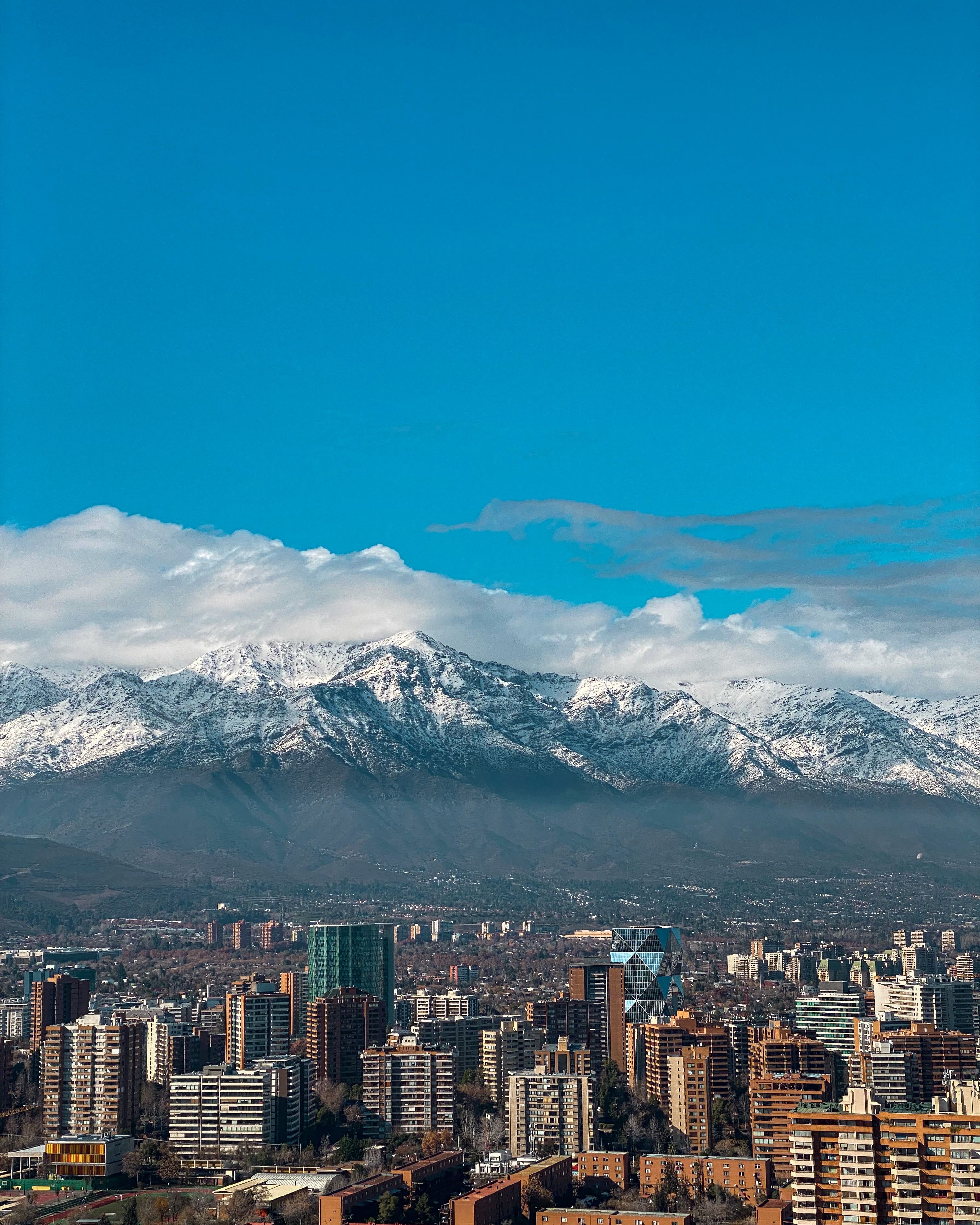
On a clear morning in Santiago — and there are many of them, because the Atacama Desert sits to the north and the Pacific sits to the west and the city gets more than 280 days of sunshine a year — you can stand at a bus stop in Barrio Italia and look east and see the Andes. Not a suggestion of mountains. Not a distant smudge on the horizon. The Andes. Specific peaks. Snow on them in winter. The kind of scale that makes you recalibrate what you thought you knew about the word "mountain."
Most people who visit Santiago don't look up. They're passing through — a night before a flight to Patagonia, a day before the Galápagos connection, a weekend before the wine country. They eat at the Mercado Central, walk through Lastarria, take the funicular up Cerro San Cristóbal, and leave having seen the postcard version of a city that is, in fact, one of the most interesting capitals in the Western Hemisphere.
This post is for the people who want to understand what Santiago actually is. And what it is — the thesis that runs through everything that follows — is a city that has been shaped by its geography more completely than almost any other major city on earth. The Andes are not a backdrop. They are the reason Santiago exists where it does, the reason the wine country is 45 minutes away, the reason the skiing is 58 kilometers from the city center, the reason the air is clean enough to see the Milky Way from a rooftop in Providencia. The mountains are the argument. Everything else in Santiago is evidence.
How the Andes Made Santiago
Santiago sits in a central valley between two mountain ranges — the Andes to the east and the Coastal Range to the west — at an elevation of 520 meters. The Mapocho River runs through it, fed by Andean snowmelt. The city exists because of this geography: the valley provided flat land, the river provided water, and the mountains provided protection from the Pacific winds that make the Chilean coast cold and inhospitable.
Pedro de Valdivia founded Santiago in 1541 on a small hill called Huelén — now known as Cerro Santa Lucía — because the hill gave him a defensive position and the river gave him water. The Mapuche people had been living in this valley for centuries before he arrived, and they fought him for decades after. The city that grew from that founding is, in many ways, still defined by the same geography that determined where Valdivia planted his flag.
What this means practically for a visitor: the Andes are always there. They are the first thing you see when you land at Arturo Merino Benítez airport on a clear day. They are what you look at from the rooftop bar of any hotel in Providencia. They are what you ski on in July, when the Southern Hemisphere winter covers Valle Nevado and Farellones in two meters of snow and Santiago residents drive 58 kilometers to ski on terrain that would be considered world-class anywhere on earth.
The Valle Nevado ski resort — three hours from the city center by car, 58 kilometers as the condor flies — is one of the best-kept secrets in international skiing. It sits at 3,025 meters, has 900 hectares of skiable terrain, and is almost entirely unknown outside South America. In July and August, when the Northern Hemisphere's ski season is over and Aspen and Chamonix are running on snowmaking, Valle Nevado has natural snow and empty slopes and prices that are roughly a third of what you'd pay in the Alps. Santiago residents treat it as a day trip. It is not a day trip. It is a destination.
The Neighborhoods That Define the City
Santiago is a city of neighborhoods, and the neighborhoods are more distinct from each other than in almost any other South American capital. Understanding which one you're in — and why it is the way it is — is the difference between experiencing Santiago and just passing through it.
Barrio Italia is where Santiago's creative class lives. It's a neighborhood of early 20th-century houses that were subdivided and repurposed over decades, and then, in the 2000s and 2010s, reclaimed by designers, chefs, and independent business owners who turned the ground floors into studios, restaurants, and shops. The main commercial streets are Avenida Italia and Avenida Condell, and on a Saturday morning they are full of people eating breakfast at sidewalk tables, browsing vintage furniture shops, and buying coffee from roasters who take their sourcing as seriously as any in Melbourne or Portland. The neighborhood is not a tourist destination in the conventional sense — there are no museums, no monuments, no famous landmarks. It's just a very good place to spend a morning being a person in Santiago.
Lastarria is the neighborhood that most travel guides describe, and it deserves the attention. It's a small, dense cluster of streets near Cerro Santa Lucía, full of restaurants, bookshops, and galleries, with a weekend antiques market that runs along the edge of the park. The architecture is late 19th-century European — Santiago's elite built here when they were trying to make the city look like Paris — and the effect is charming in a way that doesn't feel manufactured. The neighborhood's best restaurant is not the one in the guidebooks. It's a small place called Liguria, which has been serving Chilean food to Santiago's intellectuals and politicians since 1991, and which has a wine list that reads like a love letter to the Maipo Valley.
Barrio Yungay is the neighborhood that almost no English-language travel content covers, and it is, in many ways, the most important neighborhood in Santiago for understanding what the city actually is. It's the oldest surviving residential neighborhood in the city — founded in the 1830s, named after a battle in the War of the Confederation — and it has been home to Santiago's working-class intellectual tradition for nearly two centuries. The Museo de la Memoria y los Derechos Humanos, Chile's most important museum of the Pinochet dictatorship and its aftermath, is here. So is the Biblioteca de Santiago, a public library housed in a converted 19th-century building that is one of the most beautiful public spaces in South America. On a Sunday afternoon, Barrio Yungay's Plaza Yungay fills with families, musicians, and street food vendors selling sopaipillas — fried pumpkin dough — with pebre, the Chilean salsa of tomatoes, onions, cilantro, and ají pepper that appears on every table in every traditional restaurant in the country.
Bellavista is where Santiago goes at night. It sits at the foot of Cerro San Cristóbal, on the north bank of the Mapocho, and it's been the city's bohemian neighborhood since the 1960s. Pablo Neruda's Santiago house — La Chascona, named after his lover Matilde Urrutia's curly hair — is here, tucked into a hillside street and open for tours that are worth every peso. The neighborhood's restaurant scene runs from excellent to mediocre, but the bar scene is consistently good, and the streets are full of people until 3am on weekends in a way that feels organic rather than performative.
The Food That Santiago Doesn't Apologize For
Chilean food has a reputation problem. Ask most travelers who have been to South America what they ate in Chile, and they'll say "empanadas and pisco sours" and then mention that the food wasn't as good as Peru. They're not wrong about Peru — Lima's food scene is one of the greatest on earth — but they're wrong about Chile, because they're comparing the wrong things.
Chilean food is not trying to be Peruvian food. It's not trying to be anything. It's the food of a country with 4,300 kilometers of Pacific coastline, a central valley that produces some of the best produce in the Southern Hemisphere, and a culinary tradition that has been shaped by Mapuche ingredients, Spanish technique, and German immigration in equal measure. The result is a cuisine that is quieter than its neighbors, less theatrical, more honest, and, at its best, extraordinary.
The seafood is the place to start. Chile's Pacific coast produces sea urchin (erizo), razor clams (machas), abalone (loco), and king crab (centolla) in quantities and qualities that are almost incomprehensible to anyone who has paid European or North American prices for the same ingredients. At the Mercado Central — the iron-and-glass market in the city center, built in 1872 — you can eat a plate of machas a la parmesana (razor clams baked with parmesan and white wine) for less than the cost of a coffee in London. The market is a tourist destination, and the restaurants inside it know it, but the quality of the seafood is genuine.
The empanada de pino — the Chilean empanada, filled with ground beef, onion, hard-boiled egg, olives, and raisins — is one of the great hand foods of the world, and the best version in Santiago is not in any restaurant. It's at the Emporio La Rosa on a Sunday morning, where they make them fresh and sell them warm, and the pastry is thin enough to shatter and the filling is wet enough to run down your wrist. The raisins are not an accident. They're the Mapuche influence — the sweetness in the savory — and they're what separates a Chilean empanada from every other empanada in South America.
The picada is the institution that most visitors miss entirely. A picada is a traditional Chilean restaurant — usually family-run, usually in a converted house, usually with no English menu and no Instagram presence — that serves the food that Chileans actually eat: cazuela (a broth of beef or chicken with vegetables and corn), pastel de choclo (a corn pie with a meat filling that is the Chilean equivalent of shepherd's pie), porotos granados (a bean and corn stew that is summer food in the central valley). The picada near Barrio Italia called El Hoyo has been operating since 1912 and has a wine list that consists of a jug of house red or a jug of house white. The food is not fancy. It is, however, exactly what Santiago tastes like when it's not performing for tourists.
The wine deserves its own section, but the short version is this: the Maipo Valley is 45 minutes from the city center, and it produces Cabernet Sauvignon that competes with Napa and Bordeaux at a fraction of the price. The Casablanca Valley, 90 minutes west toward the Pacific, produces Sauvignon Blanc and Chardonnay that has changed the conversation about Chilean white wine. Both are accessible as day trips from Santiago, and both are worth the drive.
The Maipo Valley: When the Andes Meet the Vine
The Maipo Valley sits at the foot of the Andes, east of Santiago, at an elevation that gives it warm days and cold nights — the diurnal temperature variation that produces complex, structured red wines. The valley has been producing wine since the 16th century, when Spanish missionaries planted the first vines, and it has been producing world-class Cabernet Sauvignon since the 1980s, when Chilean winemakers started taking their own terroir seriously.
The wineries that are worth visiting are not the ones with the biggest marketing budgets. Concha y Toro is the largest wine producer in Latin America and its Casillero del Diablo label is on every supermarket shelf in the world — but the winery tour is a production, not an experience. The wineries worth visiting are the smaller ones: Viña Cousiño-Macul, which has been family-owned since 1856 and still has its original 19th-century cellar; Viña Santa Rita, which has a hotel and restaurant on the estate and a wine museum that is genuinely excellent; and Viña Undurraga, which offers a bicycle tour through the vineyards that ends with a tasting in a room with a direct view of the Andes.
The best way to do the Maipo Valley is not a tour bus. It's a rental car, a map, and a willingness to stop at the roadside stands selling chicha — fermented grape juice, the precursor to wine, drunk cold in summer — and mote con huesillos, the Chilean street drink of husked wheat and dried peaches in sweet syrup that is the taste of a Santiago summer.
The Ski Runs That Santiago Keeps to Itself
In July, when the rest of the world's ski resorts are closed and the Northern Hemisphere is deep in summer, Santiago residents put ski racks on their cars and drive east into the Andes. The ski resorts of Valle Nevado, Farellones, El Colorado, and La Parva sit within 60 kilometers of the city center, at elevations between 2,470 and 3,670 meters, and they receive an average of 5 meters of snow per season.
Valle Nevado is the largest and most developed of the four, with 900 hectares of skiable terrain, 35 runs, and a vertical drop of 1,430 meters. It's connected to El Colorado and La Parva by a shared lift pass, making the combined area one of the largest ski resorts in South America. The infrastructure is not Aspen — the lodges are functional rather than luxurious, the lift lines can be long on weekends, and the altitude requires acclimatization — but the skiing is genuine, the snow is real, and the view from the top of the mountain, looking west over Santiago toward the Pacific, is one of the great views available to a person on skis anywhere on earth.
For visitors who want to ski but don't want to commit to a full day, the Farellones resort is the closest to the city — 45 kilometers from the center — and has beginner terrain that is accessible to first-time skiers. The drive up is an experience in itself: 40 switchbacks on a road that climbs 1,500 meters in 30 kilometers, with views of Santiago spread out below and the Andes rising above.
The Museum That Santiago Built to Remember
The Museo de la Memoria y los Derechos Humanos — the Museum of Memory and Human Rights — opened in 2010, 37 years after the military coup that brought Augusto Pinochet to power and began 17 years of dictatorship, torture, and disappearance. It sits in Barrio Yungay, in a building designed by the Brazilian architects Estudio América, and it is one of the most important museums in the Western Hemisphere.
The museum documents the period from September 11, 1973 — the date of the coup — through March 11, 1990, when democracy was restored. It does this through testimony, documents, photographs, and objects: the sunglasses of a disappeared person, the letters written by prisoners to their families, the recordings of phone calls made by people who knew they were about to be arrested. The effect is not abstract. It is specific and human and devastating in the way that only specific and human things can be.
Visiting the museum is not a comfortable experience. It is, however, a necessary one for anyone who wants to understand contemporary Chile — the country's relationship with its own recent history, the ongoing process of reckoning and reconciliation, the reason that the word desaparecido (disappeared) carries the weight it does in Chilean Spanish. Santiago is a city that has not forgotten what happened here, and the museum is the most honest expression of that refusal to forget.
The Cerro San Cristóbal Ritual
Every city has a hill. Santiago has Cerro San Cristóbal — a 880-meter peak in the middle of the city, covered in native forest, with a funicular that has been running since 1925 and a white statue of the Virgin Mary at the top that is visible from most of the city below.
The hill is a metropolitan park — the Parque Metropolitano de Santiago — and it contains two outdoor swimming pools, a botanical garden, a zoo, and 22 kilometers of walking and cycling paths. On weekends, half of Santiago seems to be on the hill: families with strollers, cyclists in lycra, couples walking the paths through the eucalyptus trees, teenagers eating ice cream near the lower funicular station.
The view from the top is the view of Santiago that every photograph tries to capture and none of them quite manage: the city spread out below, the Mapocho River a silver thread through it, and behind everything, filling the eastern horizon from north to south, the Andes. On a clear winter day — June or July, when the summer smog has been washed away by rain — you can see individual peaks. You can see the snow. You can see, if you look carefully, the ski runs on Valle Nevado.
The funicular is the tourist way up. The local way is to walk — a 45-minute climb through the park from the Pío Nono entrance in Bellavista, steep enough to require stops but not so steep as to be punishing, with benches at intervals and vendors selling mote con huesillos at the halfway point. The walk down, in the late afternoon when the light is going golden and the city below is starting to light up, is one of the better hours available to a person in Santiago.
Valparaíso: The City That Santiago Keeps in Its Pocket
Valparaíso is 120 kilometers west of Santiago, 90 minutes by bus, and it is a completely different country. Where Santiago is ordered and grid-planned and Andean, Valparaíso is chaotic and vertical and Pacific — a port city built on 42 hills above a bay, where the streets are too steep for cars and the only way to get between neighborhoods is by the ascensores, the funicular elevators that have been climbing the hillsides since the 1880s.
The city was the dominant port on the Pacific coast of South America for most of the 19th century, and the wealth of that era is still visible in the architecture of the hillside neighborhoods — the Victorian houses, the German-built warehouses, the Italian-tiled staircases that connect the streets at different elevations. The wealth left when the Panama Canal opened in 1914 and the Pacific trade routes shifted, and Valparaíso spent most of the 20th century in a slow, graceful decline that preserved its architecture by accident. What remains is one of the most visually extraordinary cities in South America: a city of painted houses and outdoor murals and staircases that lead to views of the Pacific, all of it slightly crumbling, all of it beautiful.
The Valparaíso Couples Guide covers the city in the depth it deserves — the Cerro Alegre and Cerro Concepción neighborhoods, the best restaurants on the hillsides, the wine bars that stay open until 4am. The short version: take the bus from Santiago's Alameda terminal, arrive in Valparaíso by mid-morning, spend the day walking the hills and eating chorrillana — a plate of french fries topped with caramelized onions and sliced beef that is the city's signature dish — at a bar on Cerro Alegre, and take the last bus back to Santiago in the evening. It is the best day trip available from any South American capital, and it is the trip that most visitors to Santiago skip because they don't know it exists.
Planning Your Santiago Trip with AskLeif
Santiago rewards time. A single day gives you the Mercado Central and a walk through Lastarria. Three days gives you Barrio Italia, Bellavista, and a day trip to the Maipo Valley. A week gives you the Atacama Desert to the north, the Casablanca Valley to the west, and the ski resorts to the east — and still leaves you feeling like you've only scratched the surface.
The 4-Day Santiago Itinerary is the place to start: it covers the city's essential neighborhoods, the Mercado Central, Cerro San Cristóbal, and a half-day in the Maipo Valley. If food is your primary interest, the Santiago Food & Culture Guide goes deeper into the picada culture, the seafood markets, and the wine country day trips. Traveling with family? The Santiago Family Adventure Guide covers the zoo, the pools on Cerro San Cristóbal, and the kid-friendly wineries that make the Maipo Valley accessible with children. And if you're extending south, the Patagonia 10-Day Road Trip picks up where Santiago leaves off — Torres del Paine, El Calafate, and the Carretera Austral, the road that runs 1,200 kilometers through Chilean Patagonia and is one of the great drives on earth.
Use the AskLeif itinerary generator to build a trip that matches your actual interests — not a template, but a plan built around what you want to do and how long you have to do it.
The City That Stays With You
The thing about Santiago is that it doesn't announce itself. It doesn't have the immediate visual drama of Rio de Janeiro or the overwhelming sensory assault of Bangkok or the centuries of accumulated grandeur of Rome. It reveals itself slowly, over days, through small things: the way the light changes on the Andes in the late afternoon, the way a picada feels on a cold winter night, the way the city sounds on a Sunday morning when the streets are quiet and the mountains are very close.
Most people who visit Santiago leave thinking it was fine. A small number of people leave thinking it was one of the best cities they've ever been to. The difference is almost always time — how long they stayed, how far they walked from the tourist circuit, how many times they looked east and let the Andes recalibrate their sense of what a city can be.
The Andes are 58 kilometers away. In Santiago, you feel them from the kitchen window. That's not a metaphor. That's the city.