Porto, Portugal: The City That Gets Under Your Skin and Never Lets Go
Destination: Porto, Portugal
Category: Destination Guides
Porto doesn't announce itself. It doesn't have the grand boulevards of Paris or the imperial skyline of Vienna or the relentless energy of Bangkok. What it has is something rarer and harder to describe — a quality of light in the late afternoon, when the sun hits the azulejo tiles on the church facades and turns the whole hillside into something that looks less like a city and more like a painting that someone left out in the rain for five hundred years and somehow became more beautiful for it. Porto is the kind of city that gets under your skin quietly, without warning, and then refuses to let go.
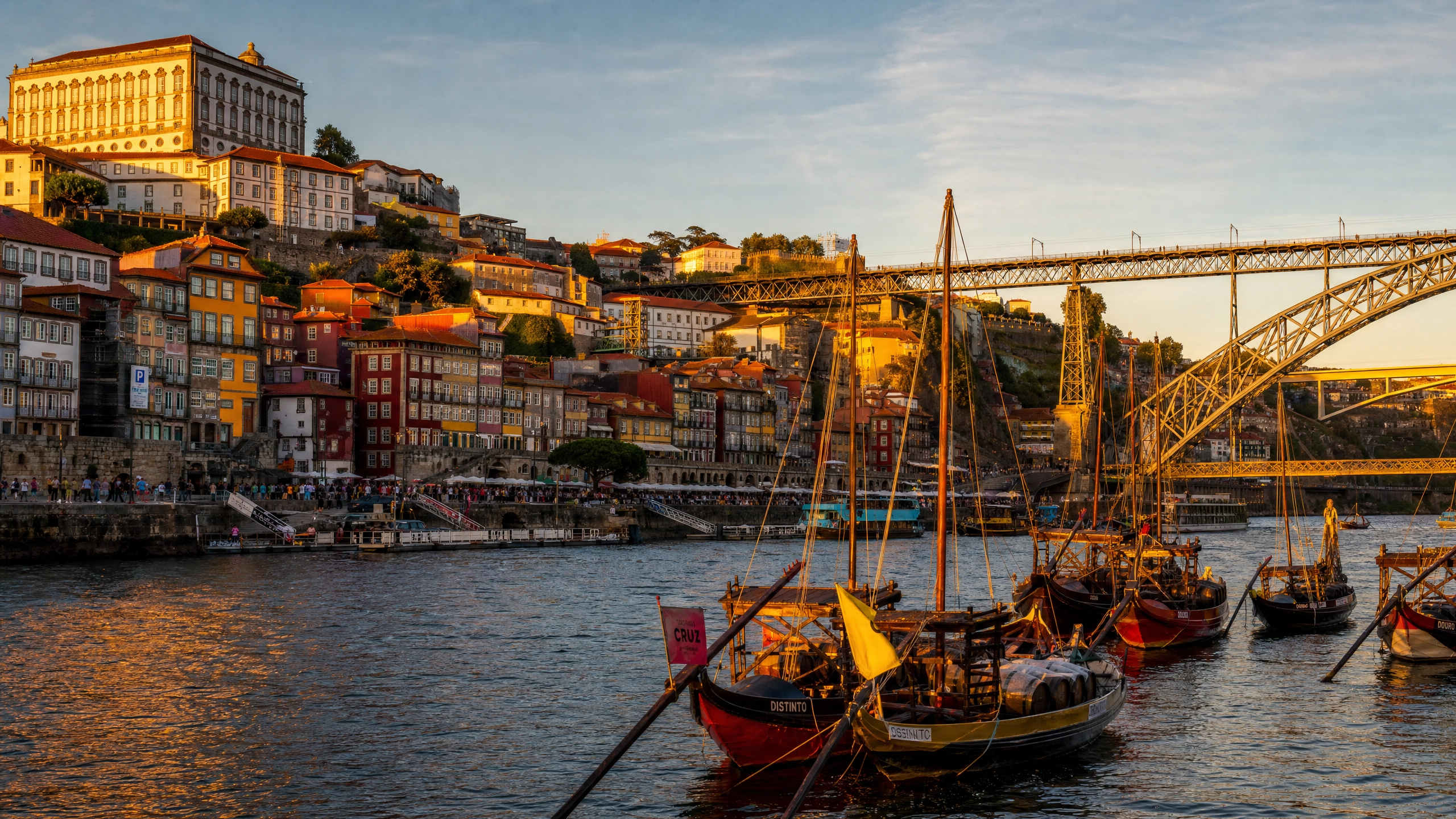
It is Portugal's second city, which is a designation that tells you almost nothing useful. Porto is not Lisbon's smaller sibling. It is its own thing entirely — rougher, more working-class, more proud, more complicated. Where Lisbon is cosmopolitan and slightly self-conscious about it, Porto is provincial in the best possible sense: deeply rooted in its own identity, suspicious of trends, committed to the things it has always been committed to. Port wine. Bacalhau. Francesinha. The Douro River. The bridges. The tiles. The particular way the light falls on the Ribeira waterfront at golden hour, when the rabelo boats are moored along the quay and the hillside above is a cascade of terracotta and ochre and the kind of faded grandeur that takes centuries to accumulate.
Porto is also, quietly, one of the best travel destinations in Europe right now. The city has been discovered — there is no pretending otherwise — but it has not been consumed. The neighborhoods that were working-class twenty years ago are still working-class, with the addition of excellent restaurants and wine bars that have opened in the spaces between the old bakeries and the hardware stores. The tourists are there, but they are concentrated in certain areas, and the city beyond those areas is still entirely itself. This is the guide for people who want to find that city — the real Porto, the one that exists beyond the Instagram coordinates.
Understanding Porto Before You Arrive
Porto sits at the mouth of the Douro River, on the Atlantic coast of northern Portugal, about three hours north of Lisbon by train. The city is built on hills — steep, unforgiving hills that have shaped its character as much as its history. The Douro divides Porto from Vila Nova de Gaia, the municipality on the south bank where the port wine lodges are concentrated, and the two are connected by six bridges, the most famous of which is the Dom Luís I Bridge, an iron double-deck structure designed by a student of Gustave Eiffel that has become the most photographed image in the city.
The historic center — Ribeira, the Baixa, and the neighborhoods that climb the hillsides above them — is a UNESCO World Heritage Site, and the designation is deserved. The density of beautiful, decaying, extraordinary architecture in a relatively small area is unlike anything else in Europe. The azulejo tiles that cover the facades of churches, train stations, and ordinary houses are the city's most distinctive visual element — blue and white geometric patterns that have been applied to Portuguese buildings since the 15th century and that, in Porto, reach a level of ambition and artistry that is genuinely staggering.
The city is compact enough to walk, if you're willing to accept that walking in Porto involves significant elevation change. The hills are real, and they are steep, and the cobblestones are uneven, and the reward for climbing them is a view that makes every step worthwhile. The trams (the historic Line 22 and the E28 equivalent) provide relief on the steepest sections, and the funicular at Batalha connects the lower city to the upper neighborhoods. But the honest advice is to wear comfortable shoes and accept that Porto is a city that requires physical commitment.
The Neighborhoods: Porto's Many Faces
Ribeira: The Postcard and the Reality
Ribeira is the neighborhood that appears on every photograph of Porto — the narrow medieval streets running down to the Douro waterfront, the colorful houses stacked on the hillside above, the rabelo boats moored along the quay. It is genuinely beautiful, and it is also genuinely touristy, and the combination is something you have to make peace with before you arrive. The restaurants along the waterfront are, with a few exceptions, mediocre and overpriced. The souvenir shops are everywhere. The selfie sticks are out in force.
But Ribeira rewards the visitor who goes beyond the waterfront. The streets that climb away from the quay — Rua da Fonte Taurina, Rua dos Mercadores, the alleys that connect them — are where the neighborhood's actual character lives. The old houses with their laundry strung between windows, the cats sleeping on doorsteps, the elderly residents who have been here their entire lives and watch the tourists with a mixture of bemusement and resignation — this is the Ribeira that existed before the guidebooks arrived, and it is still there if you look for it.
The best time to be in Ribeira is early morning, before the tour groups arrive, when the light is soft and the streets are quiet and the city feels like it belongs to you. Or late evening, after 9 PM, when the day-trippers have gone and the restaurants that are actually good — Cantinho do Avillez, DOP, the wine bars on Rua da Fonte Taurina — are full of locals and the kind of travelers who have figured out that the real Porto comes out after dark.
Bonfim and Campanhã: The New Porto
Bonfim, just east of the historic center, is where Porto's creative energy has been concentrating for the past decade. The neighborhood was working-class — it still is, mostly — but the arrival of artists, designers, and the restaurants and bars that follow them has transformed certain streets into something that feels genuinely exciting without feeling manufactured. Rua de Miguel Bombarda is the center of the gallery scene, a street lined with contemporary art spaces that have been there long enough to have real credibility. The Mercado do Bom Sucesso, a converted market hall, houses a food court that represents the full range of Porto's culinary ambition.
The coffee culture in Bonfim is worth a dedicated morning. Combi Coffee, which operates out of a converted space on Rua de Gonçalo Cristóvão, is one of the best specialty coffee shops in Portugal. Moustache, on Rua do Almada, has been roasting its own beans since 2013 and has a following among the city's creative community that says something about the quality. The Portuguese take their coffee seriously — a bica (espresso) is not a morning ritual but a cultural institution, and the coffee in Porto is, by general consensus, better than in Lisbon.
Foz do Douro: Where the River Meets the Sea
Foz do Douro, at the western edge of the city where the Douro meets the Atlantic, is Porto's most affluent neighborhood and its most beautiful. The Avenida do Brasil runs along the coast, with the Atlantic on one side and the grand bourgeois houses of the late 19th and early 20th centuries on the other. The Jardim do Passeio Alegre, a formal garden at the river mouth, is one of the most pleasant places in the city to spend an afternoon. The beaches — Praia de Matosinhos, just north of the city, is the most accessible — are Atlantic beaches, which means they are cold and often windy and occasionally magnificent.
The restaurant scene in Foz is the most sophisticated in the city. Pedro Lemos, which holds a Michelin star and is housed in a 19th-century manor house, serves contemporary Portuguese cuisine that is among the best in the country. The seafood restaurants along the coast in Matosinhos — particularly Restaurante Camarão, which has been there for decades and which local chefs cite as a reference — are the places to eat grilled fish and shellfish in the way that northern Portuguese people actually eat it.
Cedofeita and the Boavista: The Everyday Porto
Cedofeita, north of the Baixa, is the neighborhood that Porto residents actually live in — a grid of streets lined with 19th-century apartment buildings, local bakeries, hardware stores, and the kind of restaurants that don't have websites or Instagram accounts but have been full every lunch service for thirty years. The Mercado do Bolhão, the city's historic covered market, is here — recently restored after years of renovation, it is the best place in the city to buy fresh produce, cheese, cured meats, and the kind of ingredients that make you wish you had a kitchen.
The Boavista, further west, is where the city's cultural institutions are concentrated. The Casa da Música, designed by Rem Koolhaas and opened in 2005, is one of the most important concert halls in Europe — the architecture alone is worth the visit, and the programming is consistently excellent. The Serralves Museum of Contemporary Art, in a pink Art Deco villa surrounded by 44 acres of gardens, is the best contemporary art museum in Portugal and one of the best in Europe.
Port Wine: The Reason Porto Exists
Port wine is not a souvenir. It is not a thing you drink once on a wine tour and then forget about. It is the reason the city of Porto exists in its current form — the trade that brought English merchants to the Douro Valley in the 17th century, that built the lodges on the south bank of the river, that financed the grand houses and the azulejo-covered churches and the bridges that connect them. Understanding port wine is understanding Porto.
The lodges are in Vila Nova de Gaia, on the south bank, and they are open for tours and tastings. The big names — Graham's, Sandeman, Taylor's, Quinta do Crasto — offer excellent tours that explain the production process and provide context for the tasting. But the most interesting port experiences are not in the big lodges. They are in the smaller producers who have been making wine in the Douro Valley for generations and who pour their wines in the lodge tasting rooms with the kind of pride that comes from knowing exactly where every grape came from.
The distinction between port styles is worth understanding before you taste. Ruby port is the most accessible — young, fruity, meant to be drunk relatively soon after bottling. Tawny port is aged in small oak barrels, developing a nutty, oxidative character that is completely different from ruby. The age designations on tawny (10-year, 20-year, 30-year, 40-year) refer to the average age of the blend, not a specific vintage. Vintage port — declared only in exceptional years and aged for decades in bottle — is the pinnacle of the style and one of the great wines of the world.
The best place to drink port in Porto is not in a lodge tasting room. It is in a wine bar in the Ribeira or the Baixa, late in the evening, with a plate of cheese and a view of the river. The Prova wine bar, on Rua Ferreira Borges, has one of the best selections of port by the glass in the city and a staff that knows how to guide you through it without being condescending.
The Food: Francesinha, Bacalhau, and Everything Else
Porto's food culture is one of the most distinctive in Europe, and it is built around a set of ingredients and preparations that have been refined over centuries. The city is not interested in trends. It is interested in doing the same things it has always done, but doing them better than anyone else.
The francesinha is the dish that defines Porto, and it is not for the faint of heart. A francesinha is a sandwich — ham, linguiça sausage, and steak, layered between thick slices of bread, covered in melted cheese, and then drowned in a spiced beer-and-tomato sauce that is the subject of fierce debate among Porto residents about who makes it best. It is served with french fries, which are also covered in the sauce. It is the kind of dish that makes you understand why Porto has one of the highest rates of cardiovascular disease in Portugal and also why no one seems particularly bothered by this. The best francesinha in the city is a matter of genuine controversy — Café Santiago and Bufete Fase are the names that come up most often, but every Porto resident has a different answer and will defend it passionately.
Bacalhau — salt cod — is the other defining ingredient of northern Portuguese cuisine, and Porto takes it seriously. There are said to be 365 ways to prepare bacalhau in Portugal, one for every day of the year, and the restaurants of Porto seem determined to work through all of them. Bacalhau à Gomes de Sá, a casserole of salt cod with potatoes, onions, hard-boiled eggs, and olives, is the Porto preparation — named after a 19th-century Porto merchant who is said to have invented it. Bacalhau com natas (with cream) is the richer, more indulgent version. Both are extraordinary.
The seafood is exceptional. Porto is a coastal city, and the fish markets receive fresh Atlantic catch daily. Grilled sardines in summer, percebes (barnacles) at any time of year, amêijoas (clams) in white wine and garlic — the seafood in Porto is the kind that makes you reconsider your relationship with the ocean. The restaurants in Matosinhos, the fishing neighborhood just north of the city, are where the chefs eat when they're not working.
For travelers who want to eat their way through Porto systematically, our Porto Food Guide: 4 Days of Francesinha, Port Wine and Bacalhau is built around the specific dishes and the specific places that define the city's food identity — not the tourist restaurants, but the places where Porto actually eats.
The Azulejos: Porto's Blue Soul
The azulejo tiles that cover the facades of Porto's buildings are not decoration. They are the city's visual language — a way of telling stories, marking history, and creating beauty in the spaces between the practical and the transcendent. The tradition of covering buildings in painted ceramic tiles arrived in Portugal from the Moorish south in the 15th century, and it evolved over the following centuries into something uniquely Portuguese, reaching its most ambitious expression in the 19th and early 20th centuries.
The São Bento railway station, in the heart of the city, is the most famous azulejo destination in Porto — the main hall is covered in 20,000 blue and white tiles depicting scenes from Portuguese history, installed between 1905 and 1916 by the artist Jorge Colaço. It is one of the most beautiful interiors in Europe, and the fact that it is a functioning train station — that people are buying tickets and checking departure boards while surrounded by this extraordinary art — is one of the things that makes Porto Porto.
The Igreja do Carmo, on the Praça de Gomes Teixeira, has an exterior wall covered in an azulejo panel depicting the founding of the Carmelite order — 1,600 tiles installed in 1912, one of the largest azulejo panels in the city. The Igreja de Santo Ildefonso, near São Bento, has a facade of 11,000 tiles depicting biblical scenes and allegories of the continents. The Palácio da Bolsa, the 19th-century stock exchange building, has an interior that includes the Arabian Room — a Moorish Revival hall that took 18 years to complete and is one of the most extraordinary rooms in Portugal.
The Douro Valley: The Day Trip That Changes Everything
The Douro Valley, the wine-producing region that begins about 100 kilometers east of Porto and extends to the Spanish border, is one of the most beautiful landscapes in Europe. The river cuts through schist hillsides that have been terraced for viticulture over two millennia, creating a landscape of geometric precision and natural grandeur that is unlike anything else in the world. The valley was designated a UNESCO World Heritage Site in 2001, and the designation understates the case.
The most beautiful way to experience the Douro is by train. The Douro Line, which runs from Porto's São Bento station along the river to Pocinho, is one of the great train journeys in Europe — three hours of river gorges and terraced vineyards and medieval villages perched on hillsides above the water. The section between Régua and Pinhão is the most dramatic, and the station at Pinhão — covered in azulejo panels depicting the harvest — is one of the most beautiful small train stations in the world.
The quintas (wine estates) along the valley offer tastings and tours that provide context for the port wine you've been drinking in the city. Quinta do Crasto, Quinta do Vale Meão, and Quinta da Roêda are among the most accessible and most impressive. The harvest in September and October — when the grapes are picked by hand on the terraced hillsides and the valley fills with the smell of fermenting must — is one of the great seasonal experiences in Europe.
The Bridges: Porto's Iron Poetry
Porto has six bridges crossing the Douro, and each one tells a different story about the city's relationship with engineering, ambition, and the river that defines it. The Dom Luís I Bridge, designed by Théophile Seyrig (a student of Gustave Eiffel) and completed in 1886, is the most famous — a double-deck iron arch that carries pedestrians on the upper deck and trams on the lower, with views of the city and the river that are among the best in Porto. Walking across the upper deck at sunset, with the Ribeira on one side and the port wine lodges of Gaia on the other, is one of the essential Porto experiences.
The Ponte de D. Maria Pia, upstream from the Dom Luís I, was designed by Gustave Eiffel himself in 1877 and was, at the time of its construction, the longest metal arch bridge in the world. It is no longer in use for rail traffic, but it stands as a monument to the engineering ambition of the late 19th century and as a reminder that Porto has always been a city that builds things that last.
Porto for Every Type of Traveler
For the Solo Traveler
Porto is one of the best cities in Europe for solo travel. The city is compact and walkable, the people are warm and generally speak English, and the culture of sitting alone at a café or a wine bar with a book is not just accepted but actively encouraged. The hostels in Porto are among the best in Europe — the Generator Porto, the Tattva Design Hostel, and the Pilot Design Hostel all have social spaces that make it easy to meet other travelers without the forced bonhomie of a pub crawl.
The solo traveler's Porto is built around the city's café culture. A morning at Majestic Café — the 1921 Art Nouveau café on Rua de Santa Catarina that is one of the most beautiful interiors in the city — is worth the tourist premium on the coffee. An afternoon in the Serralves gardens, wandering among the sculptures with a book, is one of the most pleasant ways to spend time in Porto. An evening at a fado house — the Meia Cave or the Casa da Mariquinhas — is the kind of experience that makes solo travel feel like the only way to travel.
Our Porto Solo Travel: A 3-Day Itinerary for the Independent Explorer is built around the specific experiences that make Porto excellent for solo travelers — the neighborhoods to explore, the places to eat alone without feeling self-conscious, and the cultural experiences that are best had without the distraction of a companion.
For Couples
Porto is deeply romantic, in the way that cities with centuries of history and a certain melancholy beauty tend to be romantic. The light in the late afternoon, the sound of fado drifting from a window, the view of the river from the upper deck of the Dom Luís I Bridge at sunset — these are the ingredients of a certain kind of romance that is harder to manufacture and easier to find in Porto than almost anywhere else in Europe.
The most romantic experience in Porto is a river cruise on the Douro at sunset — the rabelo boats that once transported port wine barrels from the valley now carry tourists along the river, and the view of the city from the water, with the bridges and the hillsides and the evening light, is one of the most beautiful things you can see in Portugal. The dinner that follows, at one of the restaurants in the Ribeira or in Gaia with a view of the river, completes the picture.
We have two Porto couples guides depending on how long you have: our Porto for Two: A Romantic 3-Day Couples' Getaway for a long weekend, and our Porto for Two: A Romantic 5-Day Couple's Escape for a more immersive visit that includes a day trip to the Douro Valley.
For Families
Porto with children is more manageable than it might appear. The hills are real, and the cobblestones are challenging with a stroller, but the city has enough genuinely excellent family-friendly experiences to justify the logistics. The World of Discoveries museum, near the waterfront, is an interactive museum about the Age of Exploration that is one of the best children's museums in Portugal — the boat ride through recreated historical scenes is genuinely impressive. The Sea Life Porto aquarium is excellent. The Jardim do Palácio de Cristal, a garden with peacocks and a spectacular view of the Douro, is one of the best places in the city to let children run.
The food culture in Porto is family-friendly in the way that all Portuguese food culture is family-friendly — children are welcome everywhere, the menus are extensive, and the portions are large. The pastelarias (pastry shops) are the secret weapon: a pastel de nata (custard tart) is one of the great universal pleasures, and Porto's version — slightly different from the Lisbon original, with a creamier filling and a less caramelized top — is excellent.
Our Porto Family Fun: A 3-Day Adventure for All Ages covers the logistics of navigating Porto with children, including the neighborhoods that are most stroller-friendly and the experiences that work for a range of ages.
For Budget Travelers
Porto is one of the most affordable cities in Western Europe, and this is one of the reasons it has become so popular with a certain kind of traveler — the person who wants the full European city experience without the full European city price tag. A meal at a tasca (traditional restaurant) costs €8–12. A glass of port wine at a bar in the Ribeira costs €3–5. A day of walking the historic center, visiting the free churches and the São Bento station and the Palácio da Bolsa (which charges a small admission), costs almost nothing.
The Mercado do Bolhão is the best place to eat cheaply and well — the stalls sell fresh produce, cheese, and prepared foods at prices that reflect the local market rather than the tourist economy. The tascas in Cedofeita and Bonfim, away from the tourist center, serve lunch menus (a main course, bread, wine, and coffee) for €8–10. The wine is extraordinary and cheap — a bottle of Douro red that would cost €30 in a London restaurant costs €6 in a Porto supermarket.
Our Porto on a Budget: 4-Day Guide to Port Wine, Azulejos and Francesinha for €55/Day is built around the principle that the best of Porto is not expensive — it is in the streets and the markets and the wine bars that have been there for decades and have no interest in charging tourist prices.
Porto vs. Lisbon: The Question Everyone Asks
Every traveler to Portugal eventually faces this question, and the honest answer is that they are not comparable in the way that the question implies. Lisbon is a capital city — cosmopolitan, international, self-conscious about its own beauty. Porto is a provincial city in the best sense — rooted, proud, slightly suspicious of outsiders, and more itself for it.
Lisbon is easier. The neighborhoods are flatter (mostly), the English is more widespread, the tourist infrastructure is more developed. Porto requires more effort — the hills are steeper, the neighborhoods are more complex, the city rewards the visitor who is willing to work for it.
The food in Porto is, by general consensus, better. The port wine is, obviously, better. The architecture is more dramatic. The light is different — northern Portugal has a quality of light that is softer and more melancholy than the Lisbon light, and it suits the city's character.
If you have time for both — and the train between them takes three hours and costs about €25 — do both. Our 7-Day Lisbon and Porto City Escape: Your Ultimate Portugal Adventure is built around exactly this combination, with the right amount of time in each city and the logistics of moving between them.
The City Break: Porto in 4 Days
Four days is the ideal amount of time for Porto. It is enough to explore the historic center properly, to make a day trip to the Douro Valley, to eat your way through the food culture, and to develop the kind of relationship with the city that makes you want to come back. It is not enough to see everything, but Porto is not a city that rewards the checklist approach — it rewards the traveler who picks a neighborhood and stays in it long enough to find the good stuff.
Our Porto City Break: A 4-Day Urban Adventure Guide is the comprehensive itinerary for the traveler who wants to see Porto properly — the historic center, the contemporary neighborhoods, the Douro Valley day trip, and the food and wine experiences that make the city worth visiting.
When to Go: The Honest Guide
Porto is a year-round destination, but the seasons matter. Summer (June–August) is the most popular time — the weather is warm and dry, the festivals are frequent (the Festa de São João on June 23rd is one of the great street parties in Europe, when the entire city takes to the streets with plastic hammers and garlic flowers and celebrates until dawn), and the city is at its most alive. It is also the most crowded, and the prices are at their highest.
Spring (March–May) and autumn (September–October) are the best times to visit. The weather is mild, the crowds are manageable, and the city is operating at a pace that feels sustainable. The Douro Valley in October, during the harvest, is one of the great seasonal experiences in Europe — the terraced hillsides are gold and red, the air smells of fermenting grapes, and the quintas are open for harvest experiences that are unlike anything you can do at any other time of year.
Winter (November–February) is Porto at its most itself — gray and rainy and slightly melancholy, the tourist crowds gone, the city returned to its residents. The restaurants are less crowded, the prices are lower, and the experience of sitting in a warm tasca with a glass of tawny port while the rain falls on the Ribeira outside is one of the most satisfying things you can do in Portugal.
The Porto That Stays With You
Every city has a version of itself that you carry home with you — a smell, a sound, a quality of light that comes back to you unexpectedly months later and makes you want to return. Porto's version is specific and hard to replicate: the sound of fado drifting from a window on a steep street in the Ribeira, the smell of salt cod frying in olive oil, the particular blue of the azulejo tiles in the late afternoon light, the view of the Dom Luís I Bridge from the lower deck with the city climbing the hillside above and the river below and the port wine lodges of Gaia on the other bank.
Porto is a city that asks something of you. It asks you to walk up the hills even when your legs are tired. It asks you to eat the francesinha even when you're not sure you're ready for it. It asks you to sit with the melancholy of a city that was once one of the great trading ports of the world and is now something smaller and more intimate and, in its own way, more beautiful for the passage of time.
The travelers who love Porto most are the ones who gave it time — who stayed long enough to find the café that the locals use, the wine bar that doesn't have a sign, the viewpoint that isn't on the map. Porto rewards patience and curiosity in equal measure. Come with both.
Plan Your Porto Trip with Ask Leif
We've built a full library of Porto guides for every type of traveler and every kind of trip. Whether you're coming for a long weekend or a full week, traveling solo or with family, working with a generous budget or a tight one — we have a day-by-day itinerary built specifically for you.
- Porto City Break: A 4-Day Urban Adventure Guide — the comprehensive guide for the traveler who wants to see Porto properly
- Porto Food Guide: 4 Days of Francesinha, Port Wine and Bacalhau — for travelers who want to eat their way through the city
- Porto Solo Travel: A 3-Day Itinerary for the Independent Explorer — for solo travelers who want to experience the real Porto
- Porto for Two: A Romantic 3-Day Couples' Getaway — for couples on a long weekend
- Porto for Two: A Romantic 5-Day Couple's Escape — for couples with more time and a Douro Valley day trip
- Porto Family Fun: A 3-Day Adventure for All Ages — for families navigating the city with children
- Porto on a Budget: 4-Day Guide to Port Wine, Azulejos and Francesinha for €55/Day — for travelers who want the full Porto experience without breaking the bank
- 7-Day Lisbon and Porto City Escape: Your Ultimate Portugal Adventure — for travelers who want to combine both of Portugal's great cities
Built by travelers, for travelers — Your Next Adventure Starts Here.