Phuket Beyond Patong: The Island That Most Tourists Never Actually See
Destination: Phuket, Thailand
Category: Destination Guides
The reputation precedes it, and not always favorably. Phuket. The name conjures a specific image for anyone who's been paying attention to travel media over the past two decades: Patong Beach at midnight, neon signs, beach clubs pumping bass into the Andaman air, a strip of bars that never quite closes. It is, by some measures, the most visited island in Southeast Asia, and the version of it that most visitors experience — fly in, check into a resort, spend a week between the pool and the beach — is real enough.
But it is not the whole story. Not even close.
Underneath the resort infrastructure, underneath the party beach reputation, there is an island with a history that stretches back 200 years through tin mining booms and Chinese merchant dynasties and Peranakan culture and Sino-Portuguese architecture that rivals anything in Penang or Macau. There is an Old Town where MICHELIN-recognized street food vendors have been cooking the same recipes for three generations. There are islands off the coast where the diving is world-class and the water is the kind of blue that makes you question every other blue you've ever seen. There are beaches on the southern tip of the island that most tourists never reach, where the sand is white and the water is clear and the only sound is the Andaman Sea.
This is the Phuket that experienced travelers whisper about. This is the one worth planning a trip around.
Understanding the Island: Two Phukets, One Choice
The first thing to understand about Phuket is that it is, effectively, two completely different destinations that happen to share an island. The choice you make about where to base yourself will determine which one you experience.
Patong and the West Coast Resorts — Patong, Kamala, Surin, Bang Tao — are where the majority of international tourists stay. The beaches are beautiful, the resort infrastructure is world-class, and if you want a beach holiday with excellent service, good food, and easy access to water sports and island day trips, this is a perfectly good base. Patong itself is the party hub: loud, neon-lit, never entirely asleep, and genuinely fun if you're in the right mood for it. Surin and Bang Tao are quieter and more upscale, with beach clubs that attract a more discerning crowd.
Phuket Old Town is something else entirely. Located in the east of the island, away from the beaches, it is a UNESCO-recognized historic district of Sino-Portuguese shophouses, Taoist shrines, Peranakan museums, and street food that has been drawing serious food travelers for years. The architecture — pastel-painted facades with shuttered windows, ornate stucco details, covered five-foot walkways — was built by Chinese merchants who came to Phuket during the tin mining boom of the 19th century and stayed. Most visitors to Phuket never make it to the Old Town. This is one of the great missed opportunities in Southeast Asian travel.
Phuket Old Town: The Island's Best-Kept Secret
Thalang Road, Phang Nga Road, and Yaowarat Road are the three main streets of Phuket Old Town, and walking them on a Sunday morning — when the weekly Walking Street market takes over Thalang Road — is one of the great street-level experiences in Thailand.
The architecture alone is worth the trip. The shophouses were built in the Sino-Portuguese style that spread across Southeast Asia during the colonial era: ground floors open to the street for commerce, upper floors for living, covered walkways creating shade for pedestrians. In Phuket, the Chinese merchants who built them added their own decorative vocabulary — ceramic tiles, carved wooden screens, ornate facades painted in the soft yellows and greens and blues that give the Old Town its distinctive palette.
The shrines are extraordinary. The Jui Tui Shrine, dedicated to the Taoist deity Pak Tai, is one of the oldest in Phuket — more than 200 years old — and the center of the Phuket Vegetarian Festival, a nine-day event held annually in October that involves fire-walking, body piercing, and processions that draw visitors from across Asia. The Phuket Thai Hua Museum, housed in a restored 1934 Sino-Portuguese building on Krabi Road, tells the story of the Chinese community in Phuket through six floors of exhibitions — the tin mining history, the Hokkien dialect schools, the merchant dynasties, the cultural practices that survived the journey from southern China and took root in Thai soil.
The Food: Why Phuket Old Town Is a Serious Culinary Destination
The MICHELIN Guide's arrival in Phuket was not a surprise to anyone who had been paying attention to the Old Town food scene. The surprise was how many of the recognized establishments were street food vendors and small family restaurants rather than hotel dining rooms.
One Chun — a Bib Gourmand recipient — has been serving Phuket's Peranakan cuisine from the same family recipes for three generations. The moo hong (pork belly braised slowly in soy sauce, sugar, and five-spice until it collapses) is the dish that built the restaurant's reputation, and it is as good as its reputation suggests. Go Benz is the late-night institution: pork with a peppery broth that has been drawing locals since before the tourists arrived, served until the small hours of the morning to a crowd that includes everyone from market vendors finishing their shifts to chefs eating after service.
Blue Elephant, in a historic mansion on Phuket Road, is the Old Town's most famous restaurant — a MICHELIN-listed institution that also runs cooking classes, which are among the best in Thailand. The classes begin with a market tour of the Old Town, move to the kitchen for hands-on instruction, and end with a meal of what you've cooked. It is one of the best half-days you can spend in Phuket.
The street food circuit in the Old Town deserves its own afternoon. Hokkien noodles, roti with curry, dim sum, fresh coconut ice cream, khanom jeen (rice noodles in a fragrant curry sauce), and the Phuket-specific version of pad thai that uses flat rice noodles and a slightly sweeter sauce than the Bangkok version. The Lard Yai Night Market on Thalang Road (Sunday evenings) is the best single introduction to the Old Town food scene: dozens of vendors, a crowd that is mostly local, and prices that make Bangkok look expensive.
The Beaches: Beyond Patong
Phuket has 30 kilometers of coastline and more than a dozen named beaches, and the quality varies enormously. Patong is the most famous and the most crowded. The beach itself is beautiful — a long crescent of sand backed by the town — but the water is not as clear as the beaches to the north and south, and the beach itself is dense with sun loungers and vendors. Kata Beach is the first beach south of Patong, and it is significantly quieter and cleaner. The water is good for snorkeling — there are coral formations visible from the shore — and the beach has a relaxed, family-friendly energy.
Karon Beach is long — nearly three kilometers — and relatively uncrowded compared to Patong. The sand is fine and white, the water is clear, and the town behind the beach has enough restaurants and bars to be convenient without being overwhelming. Nai Harn, at the southern tip of the island, is where Phuket's most discerning visitors go. The beach is beautiful, the water is clear, and the development behind it is minimal. The viewpoint above Nai Harn, at Promthep Cape, offers the best sunset views on the island.
The Islands: What Lies Off the Coast
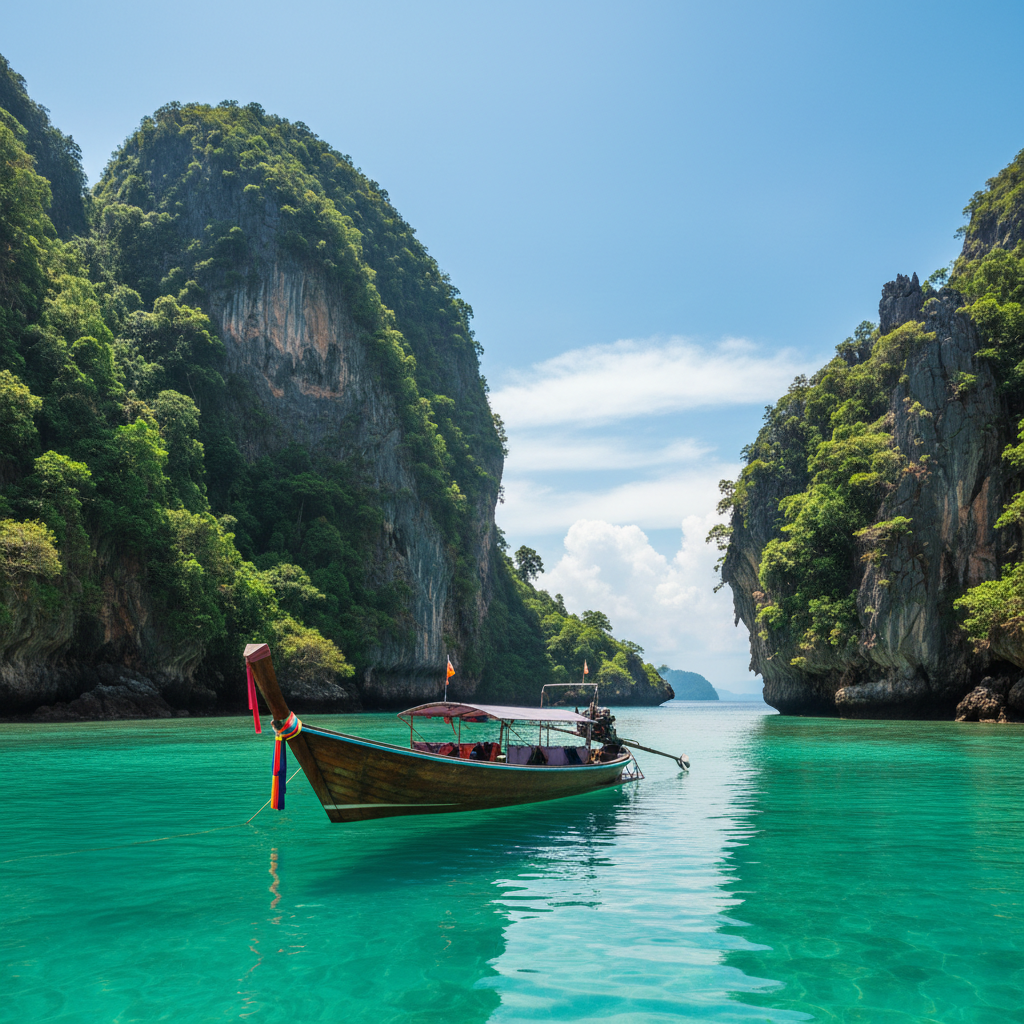
Phuket's position in the Andaman Sea puts it within reach of some of the most spectacular island scenery in the world. The Phi Phi Islands are the most famous, and for good reason. Ko Phi Phi Leh is the island where The Beach was filmed, and Maya Bay — the cove at its heart — is as beautiful as the movie suggested. Phang Nga Bay is the day trip that most visitors remember longest. The bay is filled with limestone karsts — vertical pillars of rock rising from the water — and the boat journey through them is one of the great visual experiences in Southeast Asia. James Bond Island (Khao Phing Kan) is the most famous karst, used as a villain's lair in The Man with the Golden Gun.
The Similan Islands, accessible from Phuket between November and May, are among the top ten dive sites in the world. The visibility can exceed 30 meters. The marine life includes whale sharks, manta rays, leopard sharks, and reef fish in densities that make every other dive site feel sparse. Koh Yao Noi and Koh Yao Yai are the antidote to Phuket's resort infrastructure: two islands in Phang Nga Bay where the pace is slow, the population is mostly Muslim fishing families, and the development is minimal. The views across the bay to the karsts are extraordinary.
Building Your Phuket Itinerary
The guides below are built around specific travel styles and will help you plan the version of Phuket that fits your trip — whether you're coming for the diving, the food, a family beach holiday, or a romantic escape.
The Phuket Couples Guide builds a five-day romantic itinerary around the Old Town, a sunset dinner at Promthep Cape, a day trip to Phang Nga Bay by private longtail boat, and a beach day at Nai Harn — the version of Phuket that most couples who've been before wish they'd known about the first time.
For families, the Phuket Family Guide centers on the beaches that work best for children (Kata and Karon), the elephant sanctuary visit that is both ethical and genuinely moving, and a snorkeling day trip to the Racha Islands where the water is shallow and clear.
The Phuket Budget Guide shows you how to do the island properly for under $60 a day — including the street food circuit in the Old Town, the local songthaew system that costs a fraction of taxis, and the beaches that are just as beautiful as the resort beaches without the sun lounger fees.
Solo travelers will find the Phuket Solo Guide maps the island for independent exploration — the dive shops that welcome solo divers, the Old Town coffee shops where solo travel feels natural, and the day trips that are best experienced without a group itinerary.
The Phuket Food Guide is built for travelers who want to eat their way through the island: the Peranakan street food circuit in the Old Town, the MICHELIN-recognized vendors, the cooking class at Blue Elephant, and the beach clubs where the food is actually worth ordering.
Practical Phuket: What You Need to Know
When to go: November through April is the dry season on the Andaman side, with calm seas, clear skies, and excellent diving conditions. May through October is monsoon season — the seas are rough, many dive sites are inaccessible, and some beach clubs and resorts close. If diving or island-hopping is on your agenda, the dry season is non-negotiable.
Getting around: Renting a scooter is the most efficient way to explore the island independently. If you're not comfortable on a scooter, hire a driver for the day (around 1,500–2,000 baht) rather than relying on taxis, which are expensive and often unavailable outside the main tourist areas. The local songthaew system (shared pickup trucks running fixed routes) is cheap and reliable for getting between the main beaches.
Phuket is not the island its reputation suggests. It is more complex, more interesting, more beautiful, and more rewarding than the beach party version that dominates the travel media. The Old Town alone is worth the flight. The diving alone is worth the flight. The combination of all of it — the food, the history, the beaches, the islands, the culture — makes it one of the most complete travel destinations in Southeast Asia. The neon version of Phuket is there if you want it. But the real island is waiting just behind it.