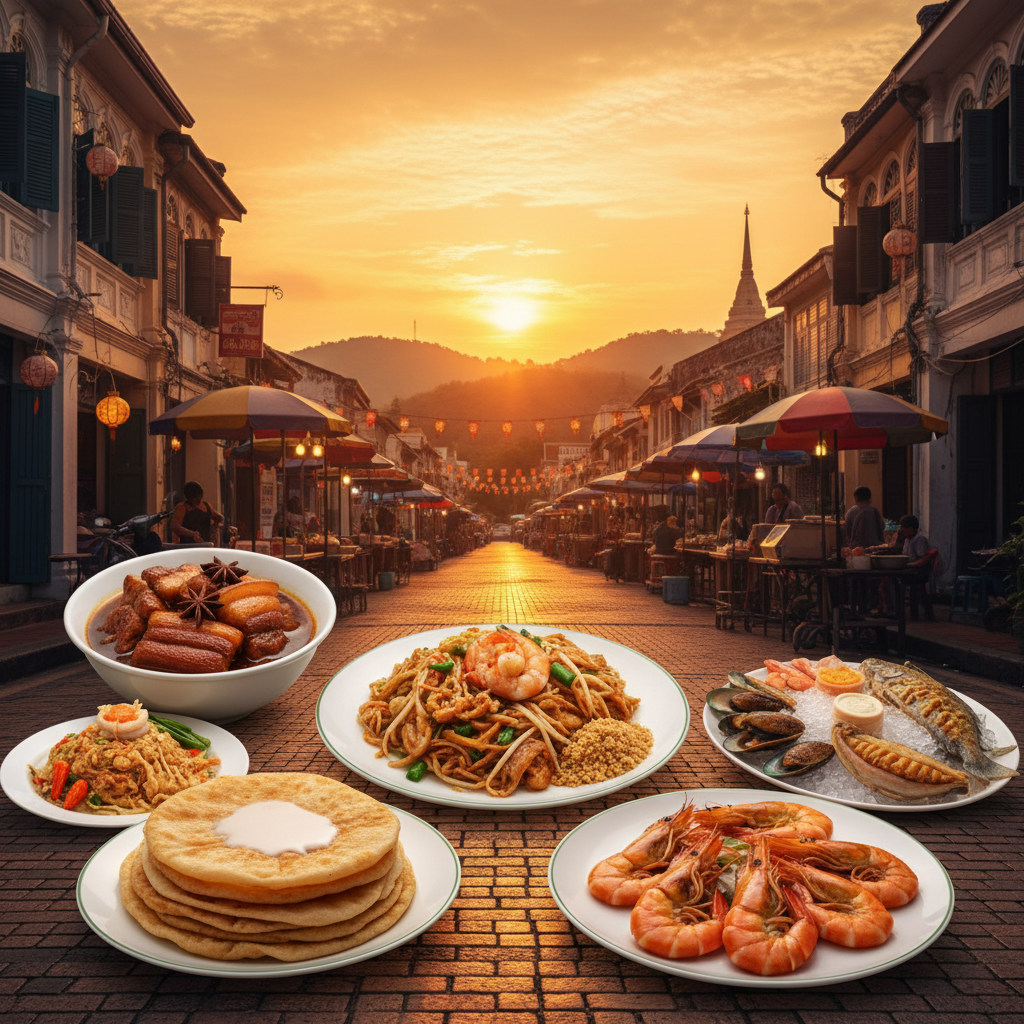
Phuket Food Lover's Guide: 5 Days of Peranakan Delights & Street Eats
Uncover Phuket's hidden culinary gems on a 5-day food tour. Explore Peranakan flavors, vibrant markets, and unique dishes found only on this Thai island.
- Duration: 5 Days
- Estimated Budget: $250–$600
- Best Time to Visit: November-April (dry season, calm seas)
- Destination: Phuket, Thailand
Phuket's Old Town isn't just charming Sino-Portuguese architecture; it's a living, breathing testament to a unique culinary heritage. This island's food scene, deeply rooted in Peranakan traditions, offers a delicious departure from typical Thai fare, making it an unparalleled destination for any serious food lover.
The moment you step into the bustling energy of the Phuket Town Central Market, your senses are immediately overwhelmed in the best possible way. This isn't just a place to buy produce; it's a vibrant tableau of local life, where vendors hawk exotic fruits you've never seen, and the air is thick with the scent of fresh herbs, spices, and sizzling street food. It’s here, amidst the colorful chaos, that you begin to understand the true heart of Phuket's culinary identity, far removed from the tourist-trodden beaches. You'll discover ingredients integral to the island's unique dishes, from pungent shrimp paste to aromatic galangal, all while soaking in the authentic rhythm of daily life.
Should you focus solely on the famous Old Town eateries, or venture further afield for hidden gems? Here's the reality: while the historic district is a fantastic starting point, limiting yourself to just those few blocks means missing out on the island's broader gastronomic landscape. Phuket's culinary treasures are spread across its diverse districts, from the bustling morning markets that spring to life before dawn, to the tranquil coastal villages where the freshest seafood is pulled directly from the Andaman Sea. A true food lover knows that the best flavors often require a little exploration, guiding you to authentic experiences far beyond the well-worn paths.
Food lovers spend their evenings navigating the lively night markets, a kaleidoscope of sights, sounds, and, most importantly, smells. Imagine weaving through rows of stalls, each one offering a new culinary adventure – perhaps a perfectly grilled satay stick, a steaming bowl of noodles, or a sweet, sticky dessert. It’s an immersive experience where you can sample a dizzying array of local delicacies, watch skilled vendors prepare dishes before your eyes, and soak in the festive atmosphere. This is where the island's street food culture truly shines, offering an informal yet incredibly rich dining journey under the stars.
You'll find yourself chasing the perfect bite more than you expect. From the first light of dawn, when the aroma of freshly brewed coffee and warm roti fills the air, to the late-night hunt for a spicy seafood curry, your days will be punctuated by delicious discoveries. This journey isn't just about eating; it's about connecting with the local culture through its flavors, understanding the stories behind each dish, and savoring every moment. You'll learn to distinguish between the subtle nuances of different curries, appreciate the art of a perfectly balanced stir-fry, and develop a deep appreciation for the island's culinary heritage.
Old Town Culinary Immersion: Moo Hong & Peranakan Delights
Arrive at Phuket International Airport (HKT), clear customs, and take a pre-booked taxi or Grab to your accommodation in Phuket Old Town.
Starting in Old Town immediately immerses you in the heart of Phuket's unique culinary and cultural heritage. It's the perfect base for a food-focused trip, with countless eateries within walking distance.
Head to Raya Restaurant for a traditional Phuket lunch, focusing on the island's signature dish, Moo Hong.
Raya is an institution, famous for its authentic Peranakan cuisine served in a beautifully preserved Sino-Portuguese house. This is your essential introduction to Phuket's unique flavors.
Explore the charming streets of Phuket Old Town, focusing on Thalang Road, Dibuk Road, and Phang Nga Road, admiring the Sino-Portuguese architecture.
This leisurely stroll helps you digest lunch and soak in the atmosphere of the historic district, where every corner hides a potential culinary gem or a beautiful photo opportunity.
Indulge in an afternoon treat at a local Roti stall, perhaps on Patong Beach Road if you venture out, or seek out a smaller one in Old Town.
Roti is a quintessential Phuket street snack – flaky, buttery, and incredibly satisfying. It's a perfect pick-me-up and a delicious insight into the island's Malay influences.
Experience the vibrant atmosphere and diverse offerings of the Phuket Weekend Night Market on Chao Fa Road.
This market is a sensory overload in the best way, offering an incredible array of street food, local snacks, and a lively cultural experience. It's a must-do for any food lover.
Enjoy a nightcap at a chic bar in Phuket Old Town, such as Dibuk Road's 'The Library' or 'The Shed'.
Wind down your first day with a refreshing drink in a stylish setting, reflecting on the day's culinary discoveries. It's a great way to experience the Old Town's evening ambiance.
Leif's Tip: Upon arrival, grab a local SIM card at the airport. Having data will be invaluable for navigating with Google Maps, finding hidden eateries, and translating menus, making your food explorations much smoother.
Phuket’s intricate network of local eateries, from humble street stalls to revered family-run restaurants, presents a delightful challenge for any food enthusiast. The island has dozens of small, unassuming spots that serve dishes you won't find on any tourist map, each with its own loyal following and a unique twist on Peranakan classics. Navigating these hidden culinary gems, understanding their operating hours, and knowing which specific dish to order at each can feel like deciphering a secret code. Without insider knowledge, you might find yourself settling for generic tourist fare, missing out on the truly authentic tastes that define Phuket’s gastronomic identity. This is precisely where Leif shines, cutting through the noise to deliver you directly to the heart of the island's most delicious experiences.
Say you want to experience the true essence of a Phuket morning, but you're not sure where the locals go for their breakfast fix beyond the usual hotel buffets. Leif will guide you to a bustling, no-frills shop house on a side street near the historic clock tower, where the aroma of freshly steamed dumplings and rich, dark coffee fills the air. You'll arrive knowing exactly which stall serves the most delicate Phuket-style dim sum, or where to find a steaming bowl of Khao Tom, perfectly seasoned with local herbs. Leif won't just tell you the name; it will provide the precise address, the best time to visit to avoid queues, and even suggest a few key phrases in Thai to enhance your ordering experience, ensuring you savor every authentic bite with confidence.
You'll arrive in Phuket knowing exactly where to find the most succulent Moo Hong, the flakiest Roti, and the freshest seafood, all without the endless scrolling through reviews or the uncertainty of trial and error. Instead of wandering aimlessly, you'll embark on a curated culinary adventure, each meal a deliberate and delicious discovery. The difference is savoring a perfectly balanced Massaman curry in a generations-old eatery, feeling the warmth of local hospitality, and knowing that every recommendation is a direct path to an unforgettable taste. Arriving in Phuket with Leif's meticulously planned food circuit already done means your palate, and your soul, are in for an extraordinary journey.
Best Time to Visit Phuket, Thailand
November to April is ideal for a food-focused trip, offering dry, sunny weather perfect for exploring markets and outdoor dining.
Avoid May to October if possible, as the monsoon season can bring heavy rains that might dampen your market adventures and street food crawls.
Even during the dry season, mornings are cooler and perfect for visiting local markets like the Old Town morning markets for Khao Tom and Dim Sum.
Evenings are vibrant for night markets like the Phuket Weekend Night Market, so plan your schedule to hit these after the sun sets.
Getting Around Phuket, Thailand
For navigating Phuket Old Town and its many food stalls, walking is your best bet to truly soak in the atmosphere and discover hidden gems.
Consider using ride-hailing apps like Grab for longer distances, especially to reach places like Rawai Seafood Market or the Phuket Weekend Night Market.
Tuk-tuks are available but negotiate the price before getting in; they can be pricier than Grab for similar distances.
Renting a scooter can offer flexibility for exploring, but only if you're an experienced rider and comfortable with local traffic conditions.
What to Pack
- Lightweight, breathable clothing like cotton or linen to stay comfortable in Phuket's tropical heat.
- Comfortable walking shoes are essential for exploring Old Town's streets and bustling markets.
- A small umbrella or light rain jacket, even in the dry season, for unexpected showers or sun protection.
- Reusable water bottle to stay hydrated while sampling all the delicious food; tap water is not safe to drink.
- Sunscreen and a wide-brimmed hat to protect yourself during daytime food explorations.
- Insect repellent, especially if you plan on dining outdoors in the evenings or visiting markets.
- A small daypack for carrying water, snacks, and any market purchases you might make.
- Cash in small denominations (Thai Baht) for street food vendors and smaller local eateries.
Money-Saving Tips
- Embrace street food and local eateries; they offer incredible flavors at a fraction of the price of tourist restaurants.
- Look for 'local price' menus or ask for the Thai menu if you're comfortable; sometimes tourist menus have inflated prices.
- Visit night markets for dinner; you can sample a huge variety of dishes for very little money.
- Consider staying in a guesthouse or boutique hotel in Old Town to be close to many affordable food options.
- Hydrate with water from convenience stores rather than expensive drinks at every meal; save your splurges for unique Thai beverages.
Local Insights
- Don't be afraid to try new things! Phuket's Peranakan cuisine is unique and offers flavors you won't find elsewhere in Thailand.
- Eating with your hands is common, especially for street food; don't be shy to dig in like a local.
- Many street food vendors and smaller restaurants might not speak much English, so pointing and smiling goes a long way.
- Be open to sharing dishes; it's a great way to try more of the local cuisine and experience a wider range of flavors.
- Always have some small bills (20, 50, 100 Baht) on hand for street food and market purchases, as many vendors don't accept cards.
Frequently Asked Questions
What is Moo Hong and why is it so special in Phuket?
Moo Hong is Phuket's signature dish, a rich, slow-braised pork belly cooked in a dark soy sauce with cinnamon and star anise. It's special because it's a Peranakan (Baba-Nyonya) recipe, reflecting the island's unique Chinese-Malay-Thai culinary fusion, making it distinct from any other pork dish you'll find in Thailand. It's a must-try for its tender texture and complex, savory-sweet flavor.
How does Phuket-style Pad Thai differ from other regions in Thailand?
Phuket-style Pad Thai typically uses wider rice noodles and features a more pronounced tamarind flavor, giving it a tangier, richer profile. It's often served with a side of fresh, raw bean sprouts and a wedge of lime, allowing you to customize the crunch and acidity. It's less sweet than central Thai versions and emphasizes the savory and sour notes.
Where is the best place to experience authentic fresh seafood in Phuket?
For the most authentic and freshest seafood experience, head to the Rawai Seafood Market. You can select your live seafood directly from the local fishermen's boats or market stalls, then take it to one of the adjacent restaurants to have it cooked to your preference. It's an incredible 'sea-to-table' experience that guarantees unparalleled freshness.
Are there good options for cooking classes to learn local Phuket cuisine?
Absolutely! The Phuket Thai Cooking Academy in the Old Town offers excellent classes, often including a market tour before you learn to prepare 4 traditional dishes. For a more upscale and comprehensive experience, the Blue Elephant Cooking School, also in the Old Town, provides a prestigious setting to master the nuances of royal Thai cuisine.
What's the best way to explore the food scene in Phuket Old Town?
The best way to explore Phuket Old Town's food scene is on foot, allowing you to wander through Thalang Road, Dibuk Road, and Phang Nga Road. Many of the best eateries are tucked away in Sino-Portuguese shophouses. Go in the morning for breakfast items like Khao Tom and Dim Sum, and return in the evening for dinner and street food stalls.
What are some unique breakfast options specific to Phuket?
For breakfast, you must try Phuket-style Dim Sum, which is a Chinese-Phuket hybrid, smaller and more delicate than Hong Kong dim sum, often found at places like Dim Sum Phuket on Ranong Road. Another local favorite is Khao Tom, a comforting rice congee with seafood, often served at the Old Town morning markets, perfect for a hearty start to your day.
Is it easy to find vegetarian or vegan options in Phuket's local food scene?
While traditional Phuket cuisine often features meat and seafood, it's increasingly easy to find vegetarian and vegan options, especially during the annual Vegetarian Festival (though many restaurants offer 'Jay' or vegetarian dishes year-round). Look for dishes like Pad Pak Ruam (stir-fried mixed vegetables) or ask for curries made with tofu and vegetable broth. Many street food stalls can also adapt dishes upon request.