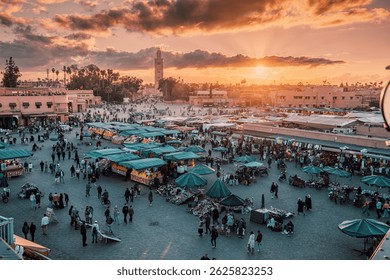
The Red City Doesn't Welcome You. It Swallows You Whole.
Destination: Morocco
Category: destination-guide
Morocco is not a destination you visit. It is a destination that happens to you — loudly, unexpectedly, and with a completeness that most places never manage. From the moment you step through the arched gate of a medina and the alley closes around you, the world you came from simply ceases to exist. There is only this: the smell of cumin and tanned leather, the sound of a muezzin threading through the rooftops, a man on a bicycle navigating a gap you could not have believed was navigable, and the particular quality of afternoon light on ochre walls that no photograph has ever fully captured.
This is a guide to Morocco — and specifically to Marrakech, its most intoxicating city — written for people who want to understand it rather than just survive it. Because surviving it is easy. Understanding it takes longer, and the rewards are proportionally greater.
Why Morocco Stops People in Their Tracks
There is a quality to Morocco that travel writers have been struggling to articulate for centuries, and the reason they keep failing is that it is not one thing. It is the collision of things: Berber, Arab, Andalusian, French colonial, sub-Saharan African, and something older than all of them that lives in the mountains and the desert and the way people greet each other with a hand to the heart. The country sits at the edge of Africa, an hour's ferry ride from Spain, and it has absorbed and synthesized influences from every direction without losing the thread of itself.
Marrakech is the city that most travelers encounter first, and it is the right place to start — not because it is the most representative of Morocco (it isn't; Fez is older and stranger, Chefchaouen is more photogenic, Essaouira is more relaxed) but because it is the most concentrated. Everything Morocco does, Marrakech does at full volume. The medina is a UNESCO World Heritage Site and one of the largest car-free urban areas in the world. The souks are a labyrinth that has been trading for a thousand years. The food is extraordinary. The riads — those inward-facing courtyard houses that hide their beauty behind blank exterior walls — are among the most beautiful places to sleep on earth.
And then there is Djemaa el-Fna, the great square at the heart of the medina, which UNESCO designated as an Intangible Cultural Heritage of Humanity — one of only a handful of places on earth to receive that designation. At dusk, it transforms. Snake charmers, storytellers, acrobats, henna artists, musicians playing gnawa music that has roots in West African spiritual practice, and food stalls that materialize from nowhere to serve harira soup and grilled merguez and fresh-squeezed orange juice to hundreds of people simultaneously. It is not a performance for tourists. It is a living tradition that has been happening in this square for a thousand years, and you are simply fortunate enough to be present for it.
The Medina: How to Actually Navigate It
The first thing to understand about the Marrakech medina is that getting lost is not a failure. It is the correct approach. The medina was not designed for navigation — it was designed for living, and its logic is the logic of organic growth over centuries, not the logic of a grid. The alleys branch and narrow and dead-end and loop back on themselves, and the moment you accept this, the medina stops being a maze and starts being a neighborhood.
The second thing to understand is that the medina has a geography, even if it is not immediately legible. The main artery runs from Djemaa el-Fna northward through the souks toward the Ben Youssef Mosque and Medersa. The souks are organized by trade — the dyers' souk, the leather souk, the spice souk, the metalworkers' souk — and while the boundaries have blurred over centuries of commerce, the specialization is still visible if you pay attention. The leather tanneries at Chouara are in the northeast of the medina, and the smell will find you before you find them. Climb to a rooftop terrace above a leather goods shop for the view — the circular vats of dye, the workers treading hides in a scene unchanged since the 11th century — and you will understand why this is one of the most photographed industrial sites in the world.
The third thing: the souks are for buying, and the vendors are skilled. This is not a criticism. It is a description of a culture that has been trading for a thousand years and has developed sophisticated techniques for it. Bargaining is expected, even required — paying the first price asked is considered slightly insulting to the ritual. The general rule is to offer roughly a third of the opening price and negotiate from there. But more importantly: only bargain for things you actually want to buy. Walking away after extended negotiation is considered rude, and the social contract of the souk is worth respecting.
What to buy: argan oil (Morocco produces 95% of the world's supply, and the women's cooperatives that press it are worth visiting), saffron from the Taliouine region (the world's finest), hand-knotted Berber rugs from the Atlas Mountains, babouche slippers in every color, silver jewelry from the Berber tradition, and ceramic tagines that will make everything you cook at home taste slightly better and slightly more melancholy.
The Food: Morocco's Greatest Underrated Achievement
Morocco has one of the great cuisines of the world, and it is still criminally underrepresented in the global food conversation. This is partly because Moroccan food is not easily exported — it depends on the spice blends, the slow-cooking methods, the clay tagines, and the specific quality of the ingredients that come from this particular soil and climate. What you eat in a riad in Marrakech is not what you eat in a Moroccan restaurant in London or New York, and the gap is significant.
The tagine is the foundation. Named for the conical clay pot it is cooked in, a tagine is a slow-braised stew that can contain almost anything — lamb with prunes and almonds, chicken with preserved lemon and olives, kefta meatballs in spiced tomato sauce, vegetables with chickpeas and ras el hanout — but what distinguishes it from other stews is the technique. The conical lid creates a convection cycle that bastes the food continuously in its own steam, concentrating flavors over hours of cooking. A properly made tagine is one of the most satisfying things you will eat anywhere.
Couscous is served on Fridays, traditionally after the midday prayer, and the Friday couscous at a family-run restaurant in the medina is a different experience from the couscous you have encountered elsewhere. It is hand-rolled, steamed three times, and served with a broth and a mound of slow-cooked vegetables and meat that has been cooking since morning. It is a communal dish, eaten from a shared bowl, and the ritual of it matters.
Pastilla is the dish that most surprises first-time visitors: a flaky warqa pastry filled with pigeon (or chicken) braised with onions, saffron, and cinnamon, then dusted with powdered sugar and almonds. Sweet and savory simultaneously, it is a remnant of Andalusian cuisine — the food of the Muslims expelled from Spain in 1492 who brought their culinary traditions to Morocco and never quite let go of them.
Street food: the stalls of Djemaa el-Fna at night are the obvious choice, but the more interesting eating is in the smaller squares and alleys of the medina during the day. Msemen — flaky, griddle-fried flatbread served with honey and argan oil — for breakfast. Harira soup, thick with tomatoes, lentils, chickpeas, and lamb, with a squeeze of lemon and a date on the side. Sfenj, the Moroccan doughnut, pulled fresh from hot oil and dusted with sugar. Mechoui — whole slow-roasted lamb — at the mechoui stalls near Rahba Kedima square, where you point at the cut you want and they hack it off with a cleaver and hand it to you on a piece of bread.
For a deeper dive into the food culture of Marrakech — from the spice merchants of the souk to the rooftop restaurants of the nouvelle ville — the Marrakech Food & Culture: 4-Day Tagine Trails, Souk Secrets & Rooftop Dining guide is the most thorough resource we have built for this city.
The Riads: Sleeping Inside a Secret
The riad is Morocco's great architectural achievement, and staying in one is not merely a accommodation choice — it is an experience that reframes your understanding of how a city can be organized. From the outside, a riad is a blank wall with a door. No windows face the street. No decoration announces what lies within. The exterior is deliberately unremarkable, a privacy screen for the life inside.
Step through the door and the world inverts. A central courtyard, open to the sky, with a fountain or a garden or both. Rooms arranged around the courtyard on multiple levels, their windows facing inward rather than out. Zellige tilework on the floors and lower walls — geometric patterns in terracotta, cobalt, and white that have been made by hand in the same workshops for centuries. Carved plaster (tadelakt) on the upper walls. Cedar wood screens and carved stucco above the doorways. And quiet. Extraordinary quiet, despite being in the middle of one of the noisiest cities on earth.
The riads of the Marrakech medina range from simple family-run guesthouses to extraordinary boutique hotels with rooftop terraces, plunge pools, and hammams. The hammam experience — the traditional Moroccan steam bath, with its sequence of hot rooms, cold plunge, and the kessa scrub that removes several layers of skin and leaves you feeling like a newborn — is worth doing regardless of where you stay. Most riads offer private hammam sessions, and the public hammams in the medina are cheaper and more authentic, if slightly more confusing to navigate.
For couples looking to experience the riad culture at its most romantic — private hammam, candlelit dinners in the courtyard, day trips to the Atlas Mountains — the Marrakech for Couples: A Romantic 4-Day Itinerary of Riads, Hammams & Atlas Views guide covers this in full detail.
Beyond Marrakech: The Morocco That Most Tourists Miss
Marrakech is the entry point, not the destination. The Morocco that will stay with you longest is the Morocco you find when you leave the city.
The Atlas Mountains begin an hour south of Marrakech and rise to over 4,000 meters at Jebel Toubkal, the highest peak in North Africa. The Ourika Valley, the closest Atlas destination to Marrakech, is accessible as a day trip and offers a complete change of register — Berber villages clinging to hillsides, terraced gardens, waterfalls, and the particular silence of mountains after the noise of the medina. The High Atlas beyond Ourika is trekking territory, with multi-day routes through valleys where the villages have no roads and the language shifts from Darija Arabic to Tachelhit Berber.
Fez is the city that Marrakech tourists should visit and often don't, and the omission is a significant one. Fez el-Bali, the old city, is the largest medieval urban area in the world — a UNESCO World Heritage Site with 9,000 alleys, 14th-century madrasas, and a tannery quarter that has been operating continuously since the 11th century. It is harder than Marrakech, less polished, more demanding, and more rewarding. The Bou Inania Madrasa, with its carved cedar and zellige tilework, is one of the most beautiful buildings in Africa. The Fez for Couples: A 3-Day Romantic Escape into Morocco's Medieval Heart guide covers the city in the depth it deserves.
Essaouira is the Atlantic coast antidote to the intensity of the inland cities — a blue-and-white walled port town with a permanent wind that keeps the summer heat bearable and the kitesurfers perpetually airborne. The medina is relaxed, the seafood is exceptional (the grilled fish at the port stalls is among the best you will eat anywhere), and the gnawa music festival in June draws musicians and listeners from across the world. The Essaouira for Couples: A Romantic 2-Day Escape to Morocco's Windswept Coast guide is the best starting point for planning time here.
Chefchaouen, the blue city of the Rif Mountains, is the most photographed place in Morocco and, despite the Instagram saturation, genuinely worth the journey. The blue paint on the walls — applied by Jewish refugees in the 1930s and maintained ever since — creates a visual effect that no photograph fully captures because it is not just the color but the quality of light it produces, the way the blue walls reflect the mountain sky and make the whole medina feel like it is underwater. The Solo Chefchaouen: 3-Day Blue Medina, Rif Hikes & Artisan Workshops guide covers the city and its surroundings in full.
The Sahara is the journey that reorders everything. The road from Marrakech to Merzouga, through the High Atlas via the Tizi n'Tichka pass, through the Draa Valley and the kasbahs of Aït Benhaddou (a UNESCO site and the filming location for Game of Thrones, Gladiator, and Lawrence of Arabia), across the Dadès Gorge and the Valley of Roses, to the dunes of Erg Chebbi at Merzouga — this is one of the great road trips on earth. The Morocco Unveiled: A 10-Day Journey Through Ancient Cities & Desert Wonders guide maps the full circuit in detail.
The Food: Why Moroccan Cuisine Is One of the World's Great Culinary Traditions
Moroccan food is the product of the same convergence of civilizations that produced the architecture and the music — Berber foundations, Arab spice routes, Andalusian refinement, sub-Saharan influences, and a French colonial period that introduced café culture and the baguette without displacing anything essential. The result is a cuisine of extraordinary complexity and warmth, built around the tagine, the couscous, and the bastilla, and elevated by a spice vocabulary that most Western kitchens have barely begun to explore.
The tagine is not a dish. It is a cooking method, a vessel, and a philosophy. The conical clay lid creates a self-basting environment in which meat, vegetables, and aromatics cook slowly in their own steam, developing flavors that no other technique produces. The classic lamb tagine with preserved lemon and olives is the one that will haunt you — the preserved lemon cutting through the richness of the meat with a fermented brightness that is unlike any other citrus preparation. The chicken tagine with caramelized onions and prunes is sweeter, more baroque, a dish that tastes like a trade route. The vegetable tagine with seven vegetables is the Friday couscous tradition's weekday cousin, and it is not a lesser thing.
Bastilla is the dish that most surprises first-time visitors: a pie of shredded pigeon (or chicken in modern versions), eggs, and almonds, wrapped in paper-thin warqa pastry and dusted with powdered sugar and cinnamon. Sweet and savory simultaneously, crisp and yielding, it is one of the most technically demanding dishes in the Moroccan repertoire and one of the most rewarding. Order it at a traditional restaurant in the medina and you will understand why Moroccan cuisine is considered one of the world's great culinary traditions.
Street food is where the real education happens. The Djemaa el-Fna food stalls at night are the most theatrical dining experience in Africa — vendors calling from numbered stalls, smoke rising from grills loaded with merguez and kefta, harira soup ladled from enormous pots, snail broth served in small bowls as a digestive, sheep's head for the committed, fresh-squeezed orange juice for everyone. The Mellah market sells spices by weight — ras el hanout (a blend that can contain 30 or more spices), cumin, coriander, turmeric, paprika, dried rose petals — and the vendors will let you smell everything and explain the uses of each.
For a structured introduction to the food culture, the Marrakech Culture & Food: 5-Day Culinary Journey Through the Medina's Flavors guide builds an entire itinerary around eating and cooking — including a market visit, a cooking class in a riad, and a curated list of restaurants from street stalls to the rooftop dining rooms that have made Marrakech a serious culinary destination.
The Hammam: The Thing You Must Do Before You Leave
The hammam is not a spa. It is a social institution, a hygienic practice, a spiritual preparation, and one of the oldest continuous traditions in Islamic culture. The public hammams in the medina — there are dozens, each serving a specific neighborhood — operate on a simple principle: hot room, warm room, cold room, and a kessala (scrubber) who will remove more dead skin from your body than you believed possible. The experience is vigorous, communal, and deeply restorative in a way that no hotel spa treatment replicates.
For visitors, the choice is between a traditional neighborhood hammam (cheap, authentic, requires some confidence and basic Arabic or French) and a tourist-oriented hammam (more expensive, English-speaking staff, the same essential experience with less navigational challenge). The Hammam el-Bacha in the medina is the most historically significant — a 1920s hammam built for the Pasha of Marrakech, with a vaulted ceiling and star-shaped skylights that filter the steam into something approaching the sacred. It is now open to tourists and remains one of the most beautiful rooms in the city.
The ritual: arrive, pay, undress to underwear or swimwear, enter the hot room, sweat for 15 minutes, receive the black soap (savon beldi, made from olive oil and eucalyptus), be scrubbed with a kessa mitt until the dead skin rolls off in grey ribbons, rinse, move to the warm room, rest, dress. You will emerge feeling like a different person. This is not a metaphor.
Practical Morocco: The Things Nobody Tells You
When to go: October to April is the ideal window. May and September are shoulder season — warm but manageable. June through August is genuinely hot in the interior (Marrakech regularly exceeds 40°C in July), though the coast and the mountains are cooler. The Atlas ski season runs January to March, which is a fact that surprises most visitors.
Getting around: The train network connects the major northern cities (Casablanca, Rabat, Fez, Tangier, Marrakech) efficiently and comfortably. CTM buses cover routes the trains don't. Grand taxis — shared long-distance taxis that depart when full — are the local way to travel between smaller towns and are cheap and fast. Within the medinas, everything is on foot; the alleys are too narrow for vehicles.
Language: Arabic (Darija dialect) and Berber (Tamazight) are the primary languages. French is widely spoken in cities and is often the language of commerce and administration. Spanish is useful in the north. English is increasingly common in tourist areas but should not be assumed.
Dress: Morocco is a Muslim country and modest dress is both respectful and practical. Shoulders and knees covered in medinas and religious sites. Women traveling solo will attract less unwanted attention in conservative dress, though harassment in tourist areas is a reality that should be acknowledged rather than minimized. The Marrakech Solo Travel: Confidently Navigate the Medina & Atlas Mountains in 4 Days guide addresses this honestly and practically.
Money: The dirham (MAD) is not freely convertible — you cannot get it outside Morocco, and you cannot take it out. Exchange at the airport on arrival or at banks in the city. ATMs are widely available. Cash is king in the medinas; cards are accepted in upscale restaurants and hotels.
Tipping: Expected and important. Guides, drivers, hotel staff, and restaurant servers all depend on tips as a significant part of their income. 10-15% at restaurants, 20-50 MAD for guides per hour, 10-20 MAD for parking attendants and hammam attendants.
Safety: Morocco is one of the safer countries in North Africa for travelers, with a functioning tourist infrastructure and a government that takes tourism security seriously. The main risks are petty theft in crowded areas and the persistent attention of unofficial guides and commission-seeking touts in the medinas. The standard advice — keep valuables secure, be politely firm with unwanted attention, don't follow strangers to shops — applies here as it does everywhere.
The Morocco That Changes You
There is a concept in Arabic called baraka — a kind of blessing or grace that accumulates in sacred places and in people of spiritual distinction. Moroccans speak of it naturally, the way other cultures speak of luck or karma, and you begin to understand it in Morocco because you can feel it in certain places: the courtyard of the Ben Youssef Medersa in the late afternoon light, the silence of the Sahara at 4am before the dunes begin to glow, the moment in a riad when the call to prayer comes through the open roof and the city sounds distant and the fountain sounds close.
Morocco is a country that rewards attention. The more carefully you look, the more you see — the geometry of the zellige tilework, the logic of the souk organization, the way the architecture responds to the climate, the way the food reflects a thousand years of trade routes. It is a country with a deep past that is not hidden or museumified but lived in, walked through, cooked in, and prayed over daily.
Go for the food. Stay for the light. Come back for everything else.
For families bringing children to Marrakech — the souks, the snake charmers of Djemaa el-Fna, the camel rides at the edge of the Sahara — the Marrakech Family Adventure: 4-Day Itinerary with Kids guide is built specifically for traveling with younger explorers. And for those watching their budget without compromising the experience, the Marrakech on a Budget: 4-Day Guide to Souks, Street Food & Hammam for $40/Day guide proves that Morocco's greatest pleasures are not the expensive ones.
The Red City is waiting. It has been waiting for a thousand years, and it is very good at it.