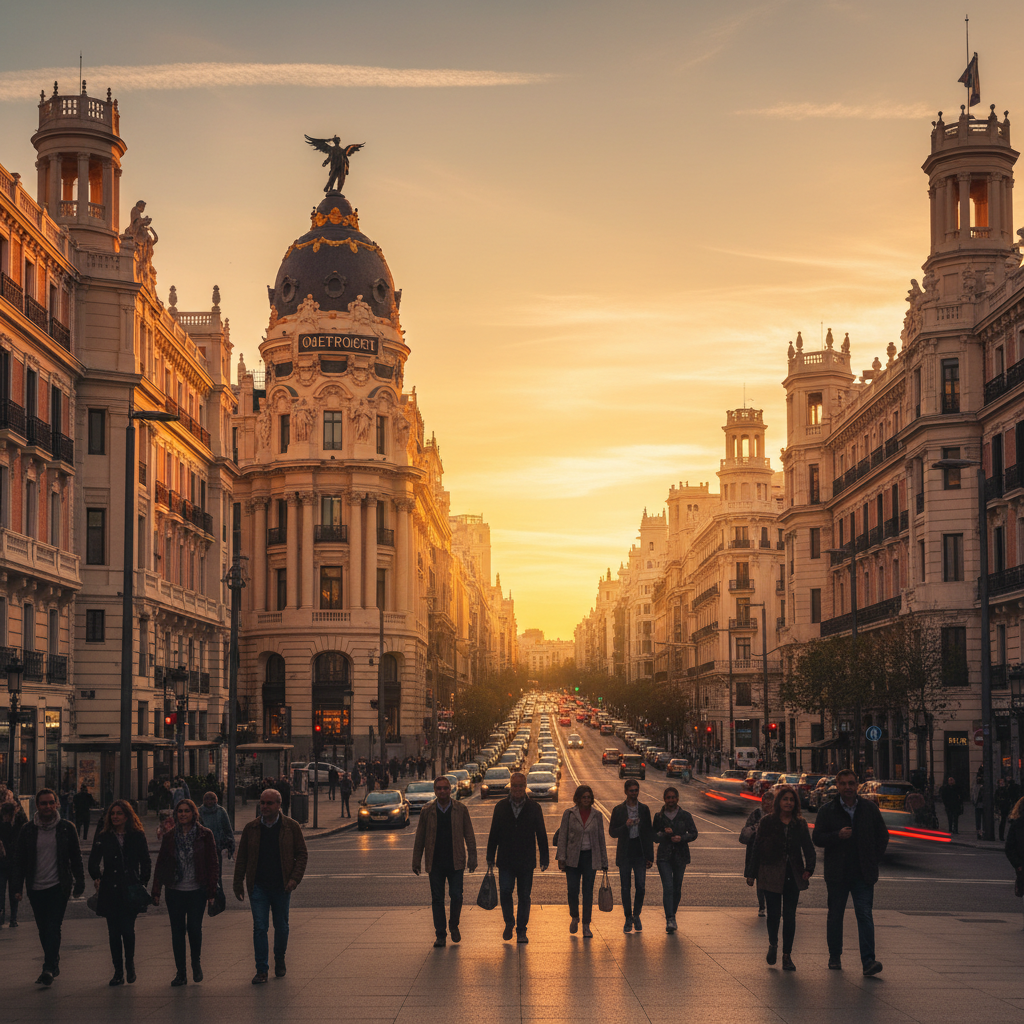
The Prado, the Tapas, and the 10pm Dinner: Why Madrid Is Spain's Best-Kept Secret
Destination: Madrid, Spain
Category: Destination Guides
Every conversation about Spain eventually circles back to the same tired argument. Barcelona or Madrid? Coast or capital? Gaudí or Goya? Travelers pick sides before they've even landed, and most of them pick wrong — not because Barcelona isn't extraordinary, but because they've been sold a version of Madrid that doesn't exist. The one where it's the sensible, slightly boring older sibling. The administrative capital. The city you visit because you're already in Spain and it would be rude not to.
That Madrid is a fiction. The real one doesn't compete with Barcelona because it doesn't need to. Madrid is doing something entirely different — something louder, later, more emotionally overwhelming, and more stubbornly itself than almost any city on earth. It is the city where Velázquez painted Las Meninas and Picasso hid Guernica from Franco. Where dinner doesn't start until 10 PM and the conversation doesn't end until the sun comes back. Where the museums are so dense with genius that you have to sit down in the middle of them and just breathe.
If you've been putting Madrid off, this is the piece that ends that habit.
The Art Is Not Optional
Let's start with the thing that separates Madrid from every other city in Europe: the Golden Triangle of Art. Three world-class museums within a fifteen-minute walk of each other, any one of which would be the anchor of a lesser city's entire cultural identity.
El Prado is not a museum you visit. It is a place you survive. The collection — Velázquez, Goya, Bosch, Titian, Rubens, El Greco — is so staggering in its depth that most people see maybe 30% of it and leave feeling like they've been through something. Las Meninas alone, Velázquez's 1656 masterwork, is worth the flight from anywhere. Stand in front of it long enough and you'll start to understand why art historians have spent 370 years arguing about what it means. The painting looks back at you. It watches you watching it. The room goes quiet in a way that rooms don't usually go quiet.
Then there's Goya's Black Paintings — pulled from the walls of his own home, where he painted them directly onto plaster in the last years of his life when he was deaf, isolated, and convinced the world was ending. Saturn Devouring His Son. The Dog. These are not decorative objects. They are the record of a mind at war with itself, and they will stay with you long after you've forgotten the name of every restaurant you ate at.
Museo Reina Sofía houses Guernica, and nothing I write here will prepare you for it. Picasso painted it in 1937 in response to the Nazi bombing of a Basque town during the Spanish Civil War. It is 11 feet tall and 25 feet wide, rendered entirely in black, white, and grey — a deliberate choice that makes it feel like a newspaper photograph of something that cannot be photographed. The screaming horse. The mother holding her dead child. The light bulb shaped like an eye. You stand in front of it and you understand, in a way that no history book achieves, what it means for a government to turn its weapons on its own people.
The Thyssen-Bornemisza fills the gap between the two — impressionists, early moderns, the Dutch Golden Age — and is the museum most people rush past on their way to the other two. Don't. The Thyssen has Hopper, Caravaggio, Monet, and a Renoir that stops you mid-stride. It is also the least crowded of the three, which means you can actually stand in front of the paintings instead of photographing the backs of other people's heads.
Book all three in advance. Arrive early. Give yourself at least two full days for the triangle, and don't try to do all three in one day — you'll walk out feeling like you've been hit by something heavy and can't remember what.
The Neighborhoods That Actually Matter
Madrid is a city of barrios, and the one you're staying in will define your entire experience. The tourist maps show you Puerta del Sol and Gran Vía. The city worth knowing is somewhere else.
Malasaña is where Madrid keeps its counterculture. It was the epicenter of La Movida Madrileña — the explosion of art, music, film, and sexual freedom that erupted after Franco's death in 1975 and turned Madrid into one of the most creatively alive cities in the world for about a decade. Almodóvar filmed here. The streets were full of people who had been told for forty years what they were not allowed to be, and they were making up for lost time. The neighborhood still carries that energy. The bars are small and loud. The coffee shops are good. The record stores are real. Walk Calle del Pez on a Tuesday afternoon and you'll understand why people who move to Madrid for six months end up staying for six years.
Lavapiés is the most genuinely diverse neighborhood in the city — North African tea houses, South Asian grocery stores, flamenco tablaos, and old Spanish bars that have been there since before anyone thought to call the area "up and coming." It is the neighborhood that Madrid's gentrification machine has been trying to swallow for twenty years and hasn't quite managed to. Go now, while it still has its edges.
La Latina is where you go on Sunday morning for the El Rastro flea market — 3,500 stalls sprawling through the streets, selling everything from vintage leather jackets to antique maps to things that appear to have no purpose but that you will somehow end up buying. After the market, the neighborhood's tapas bars fill up with people who have no intention of going anywhere for the next several hours. This is the correct approach.
Salamanca is Madrid's answer to the 16th arrondissement — wide boulevards, designer boutiques, restaurants where the service is impeccable and the prices are not. It is beautiful and slightly airless, and worth walking through even if you're not staying there, because the architecture is extraordinary and the people-watching is its own sport.
The Food Is the Point
Madrid is not a city where food is incidental to the experience. It is a city where food is the experience, and everything else — the museums, the nightlife, the football — is what you do between meals.
The mercado culture here is not the Instagram-friendly food hall version that has colonized every major city. Mercado de San Miguel, just off Plaza Mayor, is the exception — beautiful, touristy, worth a glass of vermouth and a plate of jamón but not a full meal. The real action is at Mercado de la Paz in Salamanca, where locals actually shop, and Mercado de Antón Martín in Lavapiés, where the stalls are cheaper and the atmosphere is more honest.
Tapas in Madrid operate differently than in other parts of Spain. In some cities, tapas come free with your drink. In Madrid, you pay for them — but the quality is higher and the variety is more interesting. The canonical Madrid tapa is the bocadillo de calamares: a crusty roll filled with fried squid rings, served with a cold beer, eaten standing up at a bar near Plaza Mayor. It costs almost nothing and is one of the great pleasures of the city.
For a proper sit-down meal, the Madrid rhythm is this: lunch is the main event, eaten between 2 and 4 PM, and it is not a quick affair. The menú del día — a fixed-price lunch menu that typically includes three courses, bread, and a drink — is how the city eats on weekdays, and it is the best value in European dining. For €12-15, you get what would be a €40 dinner anywhere else. Order the cocido madrileño if it's on the menu: a slow-cooked chickpea and meat stew that is the definitive Madrid dish, heavy enough to require a nap afterward, which is the point.
Sobremesa — the Spanish tradition of lingering at the table long after the food is gone — is not optional in Madrid. It is the meal. The conversation that happens over the empty plates and the second glass of wine is considered as important as the food itself. Rushing through a meal in Madrid is considered not just rude but philosophically confused. You are here. The afternoon is long. What exactly are you rushing toward?
The Nightlife Is a Different Country
Madrid's nightlife is not something you can prepare for by having been to other cities' nightlife. It operates on a different clock, with different rules, and a different relationship to the concept of "late."
Dinner at 10 PM is normal. Bars fill up around midnight. Clubs don't get going until 2 AM. The night ends — if it ends — somewhere around 6 or 7 in the morning, when the churro shops open and the night people and the morning people briefly occupy the same space. This is not a performance of excess. It is simply how the city is organized. Spaniards sleep in the afternoon and live at night, and Madrid is the most extreme expression of this tendency.
The best nights in Madrid don't happen in clubs. They happen in the small bars of Malasaña and Chueca, where the music is loud enough to feel but not so loud you can't talk, and where the same group of people might stay for four hours without anyone suggesting they move on. Chueca — Madrid's LGBTQ+ neighborhood — is one of the most welcoming and energetically alive parts of the city, with bars that range from quiet wine spots to full-scale dance floors, and a street culture that is warm and inclusive in a way that doesn't feel performed.
If you want the club experience, Kapital is a seven-floor converted theater in the city center that is exactly as overwhelming as that sounds. Sala El Sol in Malasaña is where the legacy of La Movida lives on — live music, sweaty walls, the feeling that something important is happening. Café Central is the jazz venue that serious musicians play when they're in Madrid, and the acoustics are extraordinary.
The key to Madrid nights is to not fight the schedule. Eat late. Start late. Don't be the tourist who shows up to a bar at 9 PM and wonders why it's empty.
El Retiro and the City's Green Heart
Parque del Buen Retiro is 350 acres of parkland in the middle of the city, and on a Sunday morning it is one of the finest places in Europe to simply exist. Rowers on the central lake. Street performers near the Crystal Palace. Families, couples, elderly men playing chess, dogs of every possible size. The park was originally the private garden of the Spanish royal family and was opened to the public in 1868, and it still has the feeling of a place that was designed to be beautiful rather than functional.
The Palacio de Cristal — a glass and iron greenhouse built in 1887 — is now an exhibition space for the Reina Sofía's collection of large-scale contemporary art. The building is the exhibit as much as anything inside it. Go in the late afternoon when the light comes through the glass at an angle.
The Jardín Botánico, adjacent to the Prado, is the city's botanical garden and one of its most undervisited treasures. It is quiet in a way that the rest of Madrid rarely is, and the greenhouse section has plants from every climate zone on earth arranged in a way that feels genuinely surprising.
The Football, the Stadiums, and What They Mean
You cannot understand Madrid without understanding football, and you cannot understand Madrid football without understanding that this city has two clubs — Real Madrid and Atlético de Madrid — that represent not just different teams but different versions of what it means to be from here.
Real Madrid is the establishment. The galácticos. The club of kings and presidents and the most Champions League titles in history. The Santiago Bernabéu, recently renovated into one of the most technologically advanced stadiums in the world, is worth visiting even if you don't have a match ticket — the stadium tour is genuinely impressive.
Atlético de Madrid is the other Madrid. The working-class club. The team that wins things less often but suffers more beautifully. Their fans will tell you, with complete sincerity, that supporting Atlético is a philosophy of life — that it teaches you that effort matters more than results, that loyalty is worth something even when it costs you. The Metropolitano stadium, opened in 2017, is one of the best football venues in Europe.
If you can get a match ticket for either club, go. The atmosphere in a Madrid derby is something that exists nowhere else.
Planning Your Madrid Trip
Madrid rewards slow travel. The city is dense with things worth doing, and the rhythm of the place — late nights, long lunches, afternoon pauses — is not compatible with a packed itinerary. Give yourself at least four days. Five is better. Seven means you might not want to leave.
Getting around: The metro is excellent, clean, and cheap. Most of the city's main attractions are walkable from each other if you're staying in the center. Taxis and Uber are both available and reasonably priced.
When to go: Spring (April-May) and autumn (September-October) are the ideal seasons — warm enough to sit outside, cool enough to walk all day. July and August are brutally hot (regularly above 40°C/104°F) and the city empties out as locals flee to the coast. December and January are cold but festive, and the Christmas lights on Gran Vía are genuinely spectacular.
Where to stay: Malasaña or Chueca for atmosphere and nightlife access. Salamanca for comfort and quiet. The area around the Prado for museum proximity. Avoid the tourist-trap hotels around Puerta del Sol unless you specifically want to be in the center of everything.
Day trips: Toledo is 30 minutes by high-speed train and is one of the best-preserved medieval cities in Europe. Segovia (the Roman aqueduct, the Alcázar) is 90 minutes. Ávila, with its intact medieval walls, is an hour. All three make excellent day trips and all three are dramatically different from Madrid.
The Guides That Will Help You Plan It
Madrid rewards depth, and the best way to experience it is with a plan that's specific to how you travel. Whether you're coming for the art and culture, the food scene, a solo adventure, or a romantic escape, these guides will help you build the trip:
- Madrid, Spain: 4-Day Solo Travel Guide — Built for independent travelers who want to move at their own pace and find the city's quieter corners.
- Madrid, Spain: 4-Day Couples Romantic Getaway Guide — Late dinners, rooftop bars, the Retiro at golden hour, and the restaurants worth dressing up for.
- Madrid, Spain: 5-Day Budget Travel Guide — The menú del día circuit, free museum hours, and how to do Madrid properly without spending like a tourist.
- Madrid, Spain: 5-Day Family Guide — Art, parks, the Retiro, and the museums that actually work with kids.
- Madrid, Spain: 4-Day Food & Tapas Guide — The mercados, the tapas bars, the vermouth culture, and the restaurants worth the wait.
The Thing About Madrid
Every city has a version of itself that it sells to visitors, and a version that it keeps for the people who stay long enough to find it. Most cities make you work hard to get to the second version. Madrid hands it to you almost immediately — in the way a stranger at a bar will turn to you mid-conversation and include you in it, in the way the city's schedule forces you to slow down and eat properly and stay out too late and wake up the next morning feeling like you've actually been somewhere.
Barcelona is magnificent. But Barcelona knows it's magnificent, and it charges accordingly, and it has spent twenty years becoming a city that performs its own identity for the benefit of people who are passing through.
Madrid is not performing anything. It is just being Madrid — loud, generous, slightly chaotic, extraordinarily beautiful, and completely indifferent to whether you appreciate it or not.
That indifference, paradoxically, is what makes it so easy to love.
Plan your Madrid trip at askleif.com — tell us how you travel, and we'll build you the itinerary that fits.