Lisbon Kept Its Secrets Longer Than Any City Has a Right To
Destination: Lisbon
Category: destination-guide
There is a word in Portuguese — saudade — that has no direct translation in English. It describes a kind of melancholic longing for something beautiful that has passed, or that you are not sure ever existed. It is the feeling of missing something you have not yet lost. Lisbon is the city that makes you feel saudade before you have even left.
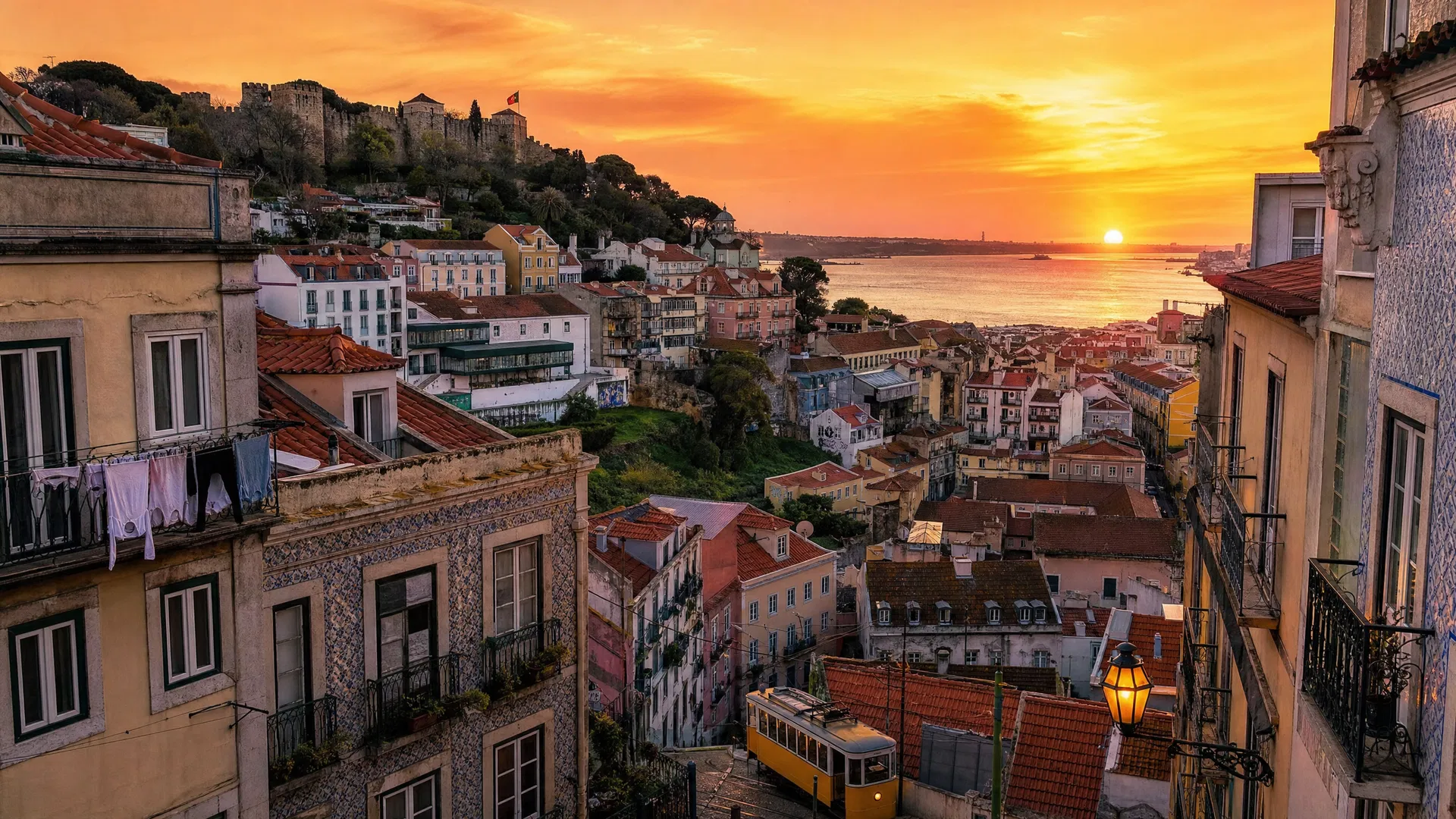
You arrive and the light hits you first. Not the heat, not the smell of the sea, but the quality of the light — a particular golden clarity that makes the azulejo tiles on every building glow as if lit from within. The city is built on seven hills, and from every high point — every miradouro — you can see the Tagus River stretching toward the Atlantic, wide and silver in the afternoon sun. Lisbon is one of the oldest cities in Europe, older than Rome by several centuries according to local legend, and it carries its age with a grace that most cities have long since abandoned.
For years it was Europe's best-kept secret: cheaper than Paris, warmer than London, more authentic than Barcelona. That secret is out now, but Lisbon has absorbed the attention without losing the thing that made it worth discovering in the first place.
Alfama: The Oldest Quarter and the Soul of the City
Alfama is where Lisbon begins and where it always returns. The oldest neighbourhood in the city, it survived the catastrophic earthquake of 1755 that destroyed most of Lisbon, which is why its streets still follow the medieval Moorish layout — narrow, winding, impossible to navigate without getting lost, which is entirely the point.
The Castelo de São Jorge sits at the top, a Moorish castle with views over the entire city and the river. But the castle is almost secondary to the experience of walking up to it: through alleys where laundry hangs between windows, past old women in black sitting in doorways, past tiny grocery shops and tascas serving grilled sardines on paper plates. The neighbourhood smells of charcoal and salt and something floral that you cannot quite identify.
Fado — the traditional Portuguese music of longing and fate — was born in Alfama, and it is still performed here in small, intimate venues where the fadista sings with a rawness that makes the hair on your arms stand up. The best fado is not in the tourist restaurants on the main streets. It is in the smaller places, the ones without menus in English, where you eat whatever is on the menu that night and the music starts late and goes until it is finished.
The Feira da Ladra, Lisbon's famous flea market, runs on Tuesday and Saturday mornings in the Campo de Santa Clara, just below the Alfama. It is the kind of market where you can find anything: old tiles, vintage postcards, handmade ceramics, things that appear to have no purpose but that you buy anyway.
For travellers who want to spend their days deep in the historic quarters — Alfama, Mouraria, Graça — while building in the essential day trips and the practical logistics of getting around, the Lisbon 5-day city culture guide structures the experience around the neighbourhood rhythm: mornings in the markets, afternoons in the museums, evenings in the fado bars.
Belém: Where Portugal Faced the Ocean
Belém sits at the western edge of Lisbon, where the Tagus meets the sea, and it is where the great Portuguese explorers departed for the unknown. Vasco da Gama left from here in 1497 to find the sea route to India. The Torre de Belém — a sixteenth-century fortress standing in the river — is the most photographed building in Portugal, and it earns the attention: the Manueline architecture, with its elaborate stone carvings of ropes and armillary spheres, is unlike anything else in Europe.
The Jerónimos Monastery, a few hundred metres from the tower, is one of the most magnificent buildings on the continent. Built to celebrate the wealth that came from the Age of Discovery, it took a hundred years to complete and shows. The cloisters — two levels of carved stone arcades around a central garden — are the kind of place where you sit down for five minutes and look up an hour later.
And then there are the pastéis de nata. The custard tarts from the Pastéis de Belém bakery, which has been making them to the same secret recipe since 1837, are the most famous food in Portugal. The queue is always long. The wait is always worth it. You eat them warm, dusted with cinnamon and powdered sugar, standing at the counter, and you understand immediately why people come back to Lisbon just for these.
The Lisbon Portugal 5-day travel guide builds Belém into the itinerary as a full half-day, with enough time to do the monastery and the tower without rushing, and to eat at least two pastéis de nata.
Sintra: The Fairy-Tale Day Trip
Sintra is thirty minutes from Lisbon by train and it feels like a different century. A UNESCO World Heritage Site, it is a forested hillside covered in palaces: the Pena Palace, a nineteenth-century Romantic folly painted in yellow and red that looks like it was designed by someone who had read too many fairy tales; the Quinta da Regaleira, a Gothic estate with a spiral well that descends into the earth; the Moorish Castle, a medieval fortification with views over the Atlantic.
The town itself — narrow streets, pastry shops, the smell of pine and eucalyptus — is worth a morning before the day-trippers arrive. Come early. The Pena Palace queue at midday in summer is a test of character.
Sintra is the day trip that most visitors to Lisbon do, and it is the one that most visitors to Lisbon remember longest. It is the moment when the trip shifts from "nice city break" to something more like wonder.
For travellers considering both Lisbon and Porto — Portugal's second city, three hours north by train, with its port wine cellars and dramatic riverside — the Lisbon and Porto 7-day Portugal itinerary covers both cities in a single trip, with Sintra built into the Lisbon days and the Douro Valley as a possible extension from Porto.
The Neighborhoods Beyond the Postcard
Chiado and Bairro Alto are the twin hearts of Lisbon's cultural and nightlife scene. Chiado is the literary neighbourhood — the Livraria Bertrand, founded in 1732, is the oldest operating bookshop in the world. The Brasileira café, where Fernando Pessoa used to sit, still has a bronze statue of him at an outdoor table. Bairro Alto, directly above Chiado, comes alive after midnight: the streets fill with people moving between bars, the music spills out of open doors, and the whole neighbourhood becomes one long, loosely organized party.
Mouraria is the old Moorish quarter, adjacent to Alfama and less visited. It is where Lisbon's immigrant communities have settled over the centuries — Cape Verdean, Mozambican, Indian, Chinese — and the food reflects this: you can eat a Cape Verdean cachupa for lunch and a Goan curry for dinner within a few minutes' walk. The neighbourhood has been gentrifying but more slowly than Alfama, and it retains a rougher, more genuine energy.
LX Factory is a converted nineteenth-century industrial complex in the Alcântara neighbourhood, now home to restaurants, bookshops, design studios, a Sunday market, and a rooftop bar with views of the 25 de Abril Bridge (which looks, from a distance, exactly like the Golden Gate Bridge, because it was built by the same company). It is the kind of place that should feel contrived and somehow does not.
Príncipe Real is where Lisbon's design and antiques scene lives: wide streets lined with jacaranda trees, independent boutiques, wine bars, and the kind of neighbourhood restaurants where the menu changes daily and the wine list is all natural.
For couples who want to build an itinerary around the romantic side of Lisbon — the miradouros at sunset, the fado evenings, the wine bars in Príncipe Real, the day trip to Sintra — both the Lisbon Portugal 5-day couples guide and the Lisbon Portugal 4-day couples guide approach the city from this angle, with different day counts to suit different trip lengths.
The Food: Petiscos, Grilled Fish, and the Best Egg Tart in the World
Portuguese food is one of the great underrated cuisines of Europe, and Lisbon is where it is at its best. The organizing principle is simplicity: the best ingredients, cooked without complication, served with good wine.
Petiscos are the Portuguese version of tapas — small plates meant for sharing, eaten slowly over several hours. Grilled chouriço, fried croquettes, salt cod fritters, clams in white wine and garlic, slices of presunto with bread. The best petiscos bars are the ones that have been there for decades, with handwritten menus and wine served in ceramic jugs.
Bacalhau — salt cod — is the national obsession. There are said to be 365 ways to cook it, one for every day of the year. The most common is bacalhau à brás, shredded cod scrambled with eggs and thin-cut fried potatoes. It sounds simple. It is extraordinary.
Grilled sardines are the summer dish, eaten at the arraiais — the neighbourhood street festivals — on paper plates with bread and beer. The smell of sardines on a charcoal grill is the smell of Lisbon in June.
Bifanas are the street food: pork sandwiches in a spiced sauce, eaten standing at a counter, costing almost nothing, tasting like everything.
The wine is exceptional and cheap. Vinho verde from the north, light and slightly fizzy. Alentejo reds, full and warm. Natural wines from small producers that cost less than a glass of mediocre wine in London or New York.
For travellers who want to structure their Lisbon trip around the food — the markets, the petiscos bars, the wine shops, the pastry stops — the Lisbon Portugal 4-day food guide maps out the eating itinerary from the Mercado da Ribeira breakfast to the late-night bifana.
Solo in Lisbon: The City That Welcomes the Wanderer
Lisbon is one of the best cities in Europe for solo travel. It is safe, walkable, and designed — in the way that all old European cities are designed — for the person who wants to get lost. The tram lines and the funiculars (the elevadores) take you up the hills; the streets take you wherever they want to.
The solo traveller's Lisbon is the one discovered on foot: the miradouro at Graça at sunset, when the whole city turns gold; the Alfama back streets at 10am before the tour groups arrive; the Mouraria market on a Tuesday morning; the LX Factory on a Sunday afternoon.
The Lisbon Portugal 4-day solo guide is built around this kind of wandering — a city that rewards the curious and punishes the rushed.
Families in Lisbon
Lisbon is more family-friendly than its reputation as a romantic city might suggest. The Oceanarium in Parque das Nações is one of the best aquariums in Europe. The Belém attractions — the tower, the monastery, the Maritime Museum — hold children's attention in a way that most historical sites do not. The cable cars and funiculars are an adventure in themselves. And the food is universally child-friendly: grilled fish, rice, bread, pastéis de nata.
The Lisbon Portugal 4-day family guide works through the logistics of Lisbon with children: which neighbourhoods to base yourself in, how to structure the Sintra day trip with kids, which restaurants have the patience for small travellers.
Lisbon on a Budget: Europe's Most Affordable Capital
Lisbon is, by the standards of Western European capitals, remarkably affordable. A meal at a neighbourhood tasca — soup, main course, dessert, wine — costs €10–15. A glass of wine at a bar is €2–4. The public transport system (trams, metro, buses) is cheap and comprehensive. Most of the best things to do are free: the miradouros, the Alfama streets, the Belém waterfront, the Jardim da Estrela.
The budget traveller in Lisbon is not making compromises. They are eating the same food as everyone else, walking the same streets, and spending a fraction of what they would in Paris or Amsterdam.
The Lisbon Portugal 5-day budget guide works through exactly this: how to spend five days in one of Europe's most beautiful capitals without spending like it.
What Nobody Tells You Before You Go
The hills are real. Lisbon is built on seven hills and the streets are steep, often cobbled, and occasionally treacherous in the rain. Wear shoes with grip. The calçada portuguesa — the traditional black and white mosaic paving — is beautiful and slippery.
Tram 28 is worth the queue. The famous yellow tram that climbs through Alfama and Chiado is genuinely scenic and genuinely crowded. Go early in the morning or late in the afternoon. Watch your pockets.
The miradouros are the secret. Lisbon has dozens of viewpoints scattered across the hills, and most of them are free, uncrowded (except for Portas do Sol and Santa Luzia), and more beautiful than anything you will pay to see. Graça, Sophia de Mello Breyner Andresen, Senhora do Monte — these are the ones the locals go to.
Eat lunch. The Portuguese lunch is the main meal of the day, and the prato do dia — the daily special — at a neighbourhood restaurant is the best value in the city. Two courses, bread, wine, coffee: €10–12.
Go to a fado show in Alfama, not in Chiado. The tourist fado in the Chiado restaurants is fine. The fado in the small Alfama venues, where the singer is performing because they have to, not because they are paid to, is something else entirely.
Sintra requires an early start. The first train from Rossio station leaves at 6:30am. Take it. The palaces at 8am, before the crowds, are a completely different experience from the palaces at noon.
Planning Your Lisbon Trip
Lisbon rewards the traveller who slows down. The city is not built for efficiency — it is built for wandering, for sitting, for eating slowly, for getting lost and finding something better than what you were looking for. It is the city that makes you feel saudade before you leave, and keeps you feeling it long after.
Whether you are coming for four days or five, travelling solo or with a partner, eating on a budget or splurging on natural wine in Príncipe Real — Leif builds your Lisbon itinerary around your actual travel style. The fado evenings, the Sintra day trip, the miradouro sunsets, the pastéis de nata — all of it shaped around your dates, your budget, and what you actually want from a trip.
Start with the Lisbon 5-day city of seven hills guide and let Leif take it from there.