Southeast Asia's Most Underrated Capital Has Been Hiding in Plain Sight
Destination: Kuala Lumpur, Malaysia
Category: destination
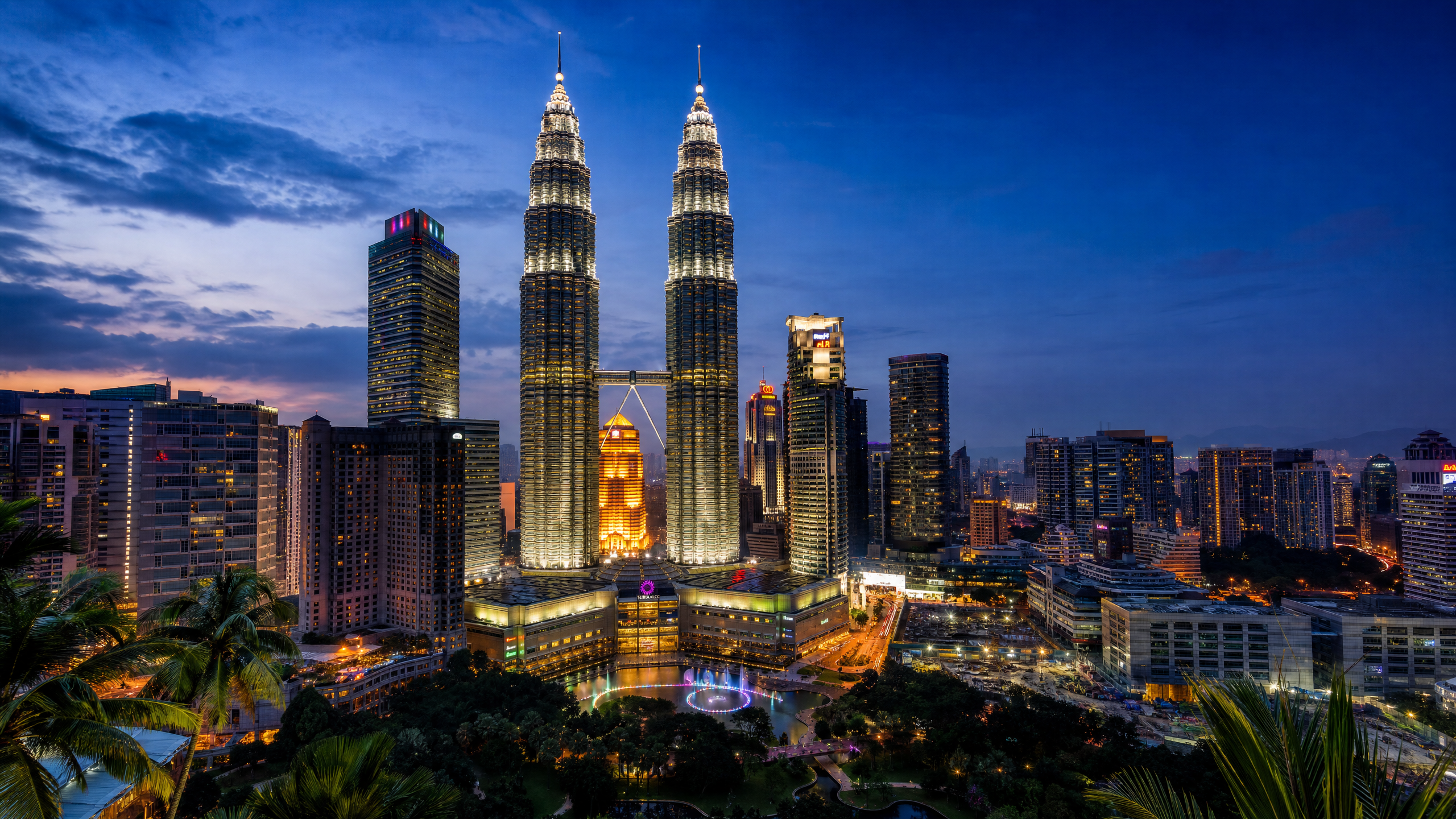
The Petronas Twin Towers appear before you think you're ready for them.
You might be in a taxi from the airport, half-asleep, watching the highway cut through a canopy of palm trees, and then suddenly — there they are, rising from the city's skyline like two silver rockets frozen mid-launch, connected at the 41st floor by a skybridge that looks, from a distance, like a hyphen between two exclamation points. For a moment, you forget everything you thought you knew about Kuala Lumpur. You forget that you were going to treat it as a layover city, a transit stop between Bangkok and Bali. You sit up straighter. You press your face to the glass.
That is the moment Kuala Lumpur gets you. And it does not let go.
This is a city that has been systematically underestimated by the Southeast Asia travel circuit for decades. Travelers pour into Bangkok, Bali, Chiang Mai, and Ho Chi Minh City, treating KL as a place to change planes rather than a destination in its own right. This is one of the great miscalculations in modern travel. Kuala Lumpur is not a consolation prize. It is not a stopover. It is one of the most genuinely exciting cities in Asia — a place where three of the world's great culinary traditions (Malay, Chinese, Indian) have been cooking side by side for over a century and a half, producing a food culture so complex and so delicious that serious food travelers fly here specifically to eat, treating the sightseeing as a pleasant interruption between meals.
The city is also, by the standards of Southeast Asian capitals, remarkably liveable. The infrastructure is excellent, the English is universally spoken, the MRT system is clean and efficient, and the cost of living — particularly for food and accommodation — is among the lowest of any major Asian city. You can eat extraordinarily well here for under $5 USD. You can stay in a genuinely good hotel for $40. You can spend a week in Kuala Lumpur and come home having spent less than you would on a long weekend in Singapore, while eating better than you would almost anywhere.
This is the guide that does KL justice.
The City That Three Cultures Built
To understand Kuala Lumpur, you need to understand how it came to exist. The city was founded in 1857 at the confluence of the Gombak and Klang rivers — Kuala Lumpur means "muddy confluence" in Malay — as a tin-mining settlement. The British colonial administration brought in waves of Chinese and Indian laborers to work the mines and build the infrastructure of empire, and the city that grew from that confluence of peoples is unlike any other in Asia.
Today, Kuala Lumpur is roughly 46% Malay, 40% Chinese Malaysian, and 10% Indian Malaysian, with the remainder made up of expatriates and other communities. These groups do not merely coexist — they have been interacting, trading, cooking for, and borrowing from each other for generations, producing a cultural synthesis that is entirely unique to Malaysia. The food is the most obvious expression of this synthesis, but it runs deeper: into the architecture, the festivals, the languages (most KL residents speak at least three), and the particular social texture of a city that has learned to be many things at once.
The colonial legacy is visible in the architecture of Merdeka Square (Dataran Merdeka), where the British-built Sultan Abdul Samad Building — a magnificent Moorish Revival structure with copper domes and a clock tower — faces the field where the Union Jack was lowered on August 31, 1957, the day Malaysia became independent. The square is surrounded by some of the most beautiful colonial-era buildings in Southeast Asia, and the contrast between this Victorian-Moorish streetscape and the glass towers of the modern city visible just beyond it is one of those visual juxtapositions that makes Kuala Lumpur endlessly interesting to photograph and endlessly interesting to think about.
The Neighborhoods: A City in Layers
Kuala Lumpur rewards the traveler who moves between neighborhoods rather than staying anchored to a single district. Each area of the city has its own character, its own food specialties, its own rhythm.
Bukit Bintang is the city's commercial and entertainment heart — a dense grid of shopping malls, hotels, rooftop bars, and street food lanes that represents KL at its most cosmopolitan. The neighborhood is anchored by Jalan Alor, a street-food lane that comes alive after dark, its plastic tables spilling onto the pavement, the air thick with the smoke of woks and the smell of char kway teow and satay and grilled seafood. Jalan Alor has become somewhat touristy over the years, but the food quality at the best stalls remains genuinely excellent — the chicken wings at Wong Ah Wah, lacquered with a sweet-soy glaze and grilled over charcoal, are among the most addictive things you will eat in the city.
Chinatown (Petaling Street) is older, louder, and more layered. The main street is a covered market selling everything from counterfeit goods to genuine antiques, but the real reward is in the lanes and alleys that branch off from it. Kwai Chai Hong — "Ghost Boy Lane" in Cantonese — is a narrow alley behind Petaling Street that was restored in 2019 from a derelict back lane into a living museum of 1960s KL life. The walls are covered in murals depicting scenes from the neighborhood's past: the kopitiam (coffee shop) culture, the street vendors, the children playing in the monsoon drains. The century-old lamp posts are still standing. It is one of the most quietly beautiful spots in the city, and almost nobody outside the neighborhood knows it exists.
Brickfields is KL's Little India, a dense, fragrant, slightly overwhelming neighborhood south of the city center where Tamil culture has been rooted since the 19th century. The streets are lined with shops selling saris, jasmine garlands, and brass temple lamps. The air smells of incense and frying ghee. The restaurants serve some of the best South Indian food outside of Chennai: banana leaf rice loaded with curries and pickles, roti canai (flaky flatbread served with dal and sambal) at breakfast, teh tarik (pulled tea, frothed by pouring between two cups from a great height) at any hour. The Sri Mahamariamman Temple on Jalan Tun H.S. Lee — a riot of painted deities and intricate gopuram (tower) carvings — is one of the most visually spectacular Hindu temples in Southeast Asia.
Kampung Baru is the neighborhood that most tourists miss entirely, and it is the one that most clearly shows you what Kuala Lumpur looked like before the glass towers arrived. This is a traditional Malay village — kampung means village — that somehow survived intact in the middle of the modern city, its wooden houses on stilts surrounded by fruit trees, its streets quiet and residential, its food stalls serving the kind of home-style Malay cooking that you cannot find in restaurants. The Kampung Baru Sunday Market is one of the great food markets in the city: nasi lemak wrapped in banana leaf, mee goreng (fried noodles), ikan bakar (grilled fish marinated in spices), and the kind of kuih (traditional Malay sweets) that you eat standing up, in the street, with your fingers.
Chow Kit sits just north of Kampung Baru and has a reputation as one of the grittier parts of the city — but it is also home to the largest wet market in KL, a sprawling, chaotic, completely authentic labyrinth of stalls selling every ingredient in the Malaysian culinary canon. Wandering through Chow Kit market in the morning is one of the most sensory-rich experiences available in the city: the colors of the tropical produce, the smell of fresh fish and lemongrass and pandan leaves, the sound of vendors calling out their prices in a mix of Malay, Cantonese, and Tamil. It is not a tourist attraction. It is a working market, and that is exactly what makes it extraordinary.
The Food: The Real Reason to Come
Let us be honest about something: the food is the reason to come to Kuala Lumpur. Everything else — the Petronas Towers, the temples, the shopping, the nightlife — is excellent, but the food is what makes KL genuinely irreplaceable. This is one of the great food cities on earth, and it is still criminally underrated on the global culinary map.
The foundation of KL's food culture is the hawker stall — a single-dish specialist who has spent decades, sometimes generations, perfecting one recipe. The hawker culture in Malaysia is so significant that it has been recognized by UNESCO as Intangible Cultural Heritage, and the best hawker stalls in KL are institutions with decades-long histories and queues that form before they open.
Nasi lemak is the national dish, and it is available at every hour of the day and night. The base is rice cooked in coconut milk and pandan leaf, served with crispy fried anchovies (ikan bilis), roasted peanuts, half a hard-boiled egg, cucumber slices, and sambal — a chili paste that ranges from gently warming to genuinely incendiary depending on the cook. The best nasi lemak in KL is a matter of fierce local debate, but the version served at the nasi lemak stalls in Kampung Baru, wrapped in banana leaf and eaten standing up at dawn, is as good as it gets.
Char kway teow is the dish that food travelers fly to Malaysia specifically to eat. Flat rice noodles, stir-fried in a screaming-hot wok with prawns, cockles, Chinese sausage, bean sprouts, and eggs, the whole thing unified by a dark, slightly sweet soy sauce and the wok hei — the smoky, caramelized flavor that comes only from cooking over an extremely high flame. The best char kway teow in KL is found at the hawker stalls of Pudu Wai Sek Kai, a local food court in the Pudu neighborhood that operates largely off the tourist radar.
Roti canai is breakfast, and it is one of the great breakfast foods on earth. This flaky, layered flatbread — brought to Malaysia by Indian Tamil workers in the 19th century and evolved into something entirely Malaysian — is made by stretching and folding dough repeatedly until it is gossamer-thin, then cooking it on a flat iron griddle until it is crisp on the outside and soft within. It is served with dal and sambal for dipping, and the best version costs less than $1 USD. The mamak stalls (Indian-Muslim restaurants) that serve roti canai are open 24 hours, and they are among the most democratic social spaces in the city — you will find construction workers, office workers, students, and tourists all eating at the same plastic tables at 2 AM.
Bak kut teh is the Chinese Malaysian contribution to the morning meal: a rich, herbal pork rib broth that has been simmering for hours, served with rice and a side of braised tofu and mushrooms. The Klang Valley (the greater KL metropolitan area) is the spiritual home of bak kut teh, and the debate between the Klang style (dark, rich, heavily spiced) and the Penang style (lighter, more peppery) is one of the great ongoing arguments of Malaysian food culture.
For a more contemporary dining experience, Jalan Telawi in the Bangsar neighborhood is where KL's food scene has evolved furthest from its hawker roots: independent restaurants, wine bars, and cafes run by a new generation of Malaysian chefs who trained in London, Tokyo, and Copenhagen and came home to cook with local ingredients and global techniques. The neighborhood has a particular energy on weekend evenings — young, cosmopolitan, genuinely exciting — that gives you a sense of where Kuala Lumpur is going.
Batu Caves: Where the Sacred Meets the Spectacular
Fourteen kilometers north of the city center, the limestone hills of Batu Caves rise from the jungle like something from a fever dream. The caves — a series of enormous caverns inside a 400-million-year-old limestone outcropping — have been a sacred Hindu site since the 1890s, when a Tamil merchant installed a shrine to Lord Murugan inside the largest cave. Today, the complex is one of the most important Hindu sites outside of India, and the 272 rainbow-colored steps leading to the main Temple Cave are one of the most photographed sights in Southeast Asia.
The centerpiece is the 42.7-meter golden statue of Lord Murugan at the base of the steps — the tallest statue of a Hindu deity in the world — which was completed in 2006 and has become the defining image of Batu Caves. The climb to the top is steep and hot, and the steps are shared with a population of macaque monkeys who have learned that tourists carry food and are entirely unafraid of humans. At the top, the Temple Cave opens into a vast, cathedral-like space, its ceiling lost in shadow, shafts of light falling through natural openings in the rock. The shrines inside are active places of worship, and the atmosphere — incense smoke, the sound of bells, the scale of the cave itself — is genuinely awe-inspiring.
The best time to visit Batu Caves is early morning, before the heat and the crowds arrive. The light on the golden statue at 8 AM, with the jungle-covered limestone cliffs rising behind it, is extraordinary.
The Petronas Towers: Still the Most Dramatic Skyline in Asia
The Petronas Twin Towers were the tallest buildings in the world from 1998 to 2004, and while they have since been surpassed in height, they remain arguably the most beautiful skyscrapers ever built. Designed by Argentine-American architect César Pelli and inspired by Islamic geometric patterns, the towers rise 452 meters from the KLCC district, their stainless steel and glass facades catching the light differently at every hour of the day.
The skybridge connecting the two towers at the 41st and 42nd floors is open to visitors on a timed-entry basis, and the views from the observation deck on the 86th floor of Tower 2 are among the best in Asia. But the towers are perhaps most spectacular from the ground: the KLCC Park at their base is a beautifully landscaped public space with a lake, a fountain that performs a light show after dark, and the kind of view of the towers that makes you understand why they have become one of the defining images of modern Asia.
The neighborhood around the towers — KLCC (Kuala Lumpur City Centre) — is the most polished and international part of the city, with luxury hotels, high-end restaurants, and the Suria KLCC mall at the base of the towers. It is not where you go to find the authentic soul of KL, but it is where you go to understand the city's ambition and its confidence in its own future.
Practical Matters: Getting Here, Getting Around, Getting the Most Out of It
Getting to Kuala Lumpur is straightforward from almost anywhere in Asia. Kuala Lumpur International Airport (KLIA) is one of the busiest airports in Southeast Asia, with direct connections to most major Asian cities and increasingly good connections to Europe, the Middle East, and Australia. AirAsia, which is headquartered in KL, has made the city one of the most accessible budget-airline hubs in the region.
From the airport, the KLIA Ekspres train connects to KL Sentral station in 28 minutes — this is by far the fastest and most comfortable option. Taxis and ride-hailing apps (Grab is the dominant platform in Malaysia) are also available.
Getting around the city is easy by Southeast Asian standards. The MRT, LRT, and monorail systems cover most of the major tourist areas, and the network has been significantly expanded in recent years. Grab is reliable, affordable, and available throughout the city. Walking is feasible in the cooler morning hours, but the midday heat and humidity make it challenging — most neighborhoods are best explored in the morning or after 4 PM when the temperature drops slightly.
When to go requires some thought. Malaysia sits close to the equator and has a tropical climate with two monsoon seasons. The southwest monsoon (May–September) brings rain primarily to the west coast, while the northeast monsoon (October–February) affects the east coast more. Kuala Lumpur itself receives rain year-round, but the showers are typically short and intense rather than all-day affairs. The coolest and driest months for KL are generally February through April. The city's major festivals — Chinese New Year (January/February), Thaipusam at Batu Caves (January/February), Hari Raya Aidilfitri (varies with the Islamic calendar) — are among the most spectacular in Southeast Asia and are worth planning a trip around.
The currency is the Malaysian Ringgit (MYR). At current exchange rates, KL is one of the most affordable major cities in Asia for international visitors. A full hawker meal costs RM8–15 ($2–4 USD). A good hotel in a central location costs RM150–250 ($35–60 USD) per night. A day of sightseeing, including transport, meals, and entry fees, can easily be done for under RM100 ($25 USD).
Safety is generally good in the tourist areas of KL. Petty theft — particularly bag snatching — is the primary concern, and the usual precautions apply: keep valuables secure, be aware of your surroundings in crowded markets, and use Grab rather than hailing taxis from the street. The city is generally safe for solo travelers, including women traveling alone, though the usual common-sense precautions apply after dark.
Plan Your Kuala Lumpur Trip with Ask Leif
Kuala Lumpur is a city that rewards different types of travelers in different ways, and the best way to experience it depends entirely on what you are looking for. The food traveler and the budget backpacker and the family with young children and the couple on a romantic escape will all find something extraordinary here — but they will find it in different neighborhoods, at different hours, through different doors.
Ask Leif has built a full suite of KL itineraries to match every travel style:
- Kuala Lumpur 3-Day Romantic Foodie Getaway: Towers, Temples & Hawker Delights for Couples — A carefully curated three-day itinerary for couples who want to experience KL's most iconic sights alongside its most memorable meals, from the Petronas Towers at golden hour to late-night roti canai at a mamak stall.
- Kuala Lumpur on a Budget: 4-Day Itinerary for RM150/Day — Proof that KL is one of the world's great budget travel destinations: four full days of world-class food, iconic sights, and genuine cultural experiences for under RM150 per day.
- Kuala Lumpur Family Adventure: 4-Day Itinerary with Kids — A family-focused itinerary that balances the Petronas Towers sky bridge and Batu Caves with the KL Bird Park, Aquaria KLCC, and the kind of street food evenings that turn children into adventurous eaters.
- Kuala Lumpur Food Lover's Guide: 4 Days Eating Through Southeast Asia's Underrated Culinary Capital — The definitive food-first itinerary for KL: four days structured entirely around the city's hawker stalls, kopitiam culture, mamak restaurants, and the neighborhoods where the best eating happens.
- Kuala Lumpur Solo Travel: 4-Day Budget Adventure & Iconic Sights — For the solo traveler who wants to move fast, eat well, and experience the full breadth of the city — from the Petronas Towers to the back alleys of Chow Kit — without spending a fortune.
The Thing About Kuala Lumpur
There is a particular kind of city that does not announce itself. It does not have a single, overwhelming image — the Eiffel Tower, the Colosseum, the Sydney Opera House — that precedes it in the imagination and shapes your expectations before you arrive. Kuala Lumpur has the Petronas Towers, yes, but the towers are only the beginning. The city behind them is more complex, more layered, more surprising than any single image can convey.
What Kuala Lumpur has, in abundance, is the thing that the most interesting cities always have: the feeling that something is happening. Not the manufactured energy of a tourist destination, but the genuine, slightly chaotic vitality of a place that is building itself in real time — a city of 1.8 million people (8 million in the greater metropolitan area) that is simultaneously ancient and modern, traditional and cosmopolitan, deeply rooted in its three cultural traditions and completely open to the world.
The food is the most immediate expression of this vitality. When you sit down at a hawker stall in Kampung Baru at 7 AM and eat nasi lemak wrapped in banana leaf while the city wakes up around you, you are not eating a tourist experience. You are eating the same breakfast that Malaysians have been eating for generations, at the same stalls, in the same way. The continuity is part of what makes it extraordinary.
But KL is also a city that is changing rapidly, and the new generation of Malaysian chefs, artists, and entrepreneurs who are shaping its future are doing so with a confidence and creativity that is genuinely exciting to witness. The restaurants in Bangsar, the street art in Chow Kit, the independent coffee shops in Bukit Bintang — these are not imitations of what is happening in Tokyo or London. They are something new, something specifically Malaysian, something that could only have emerged from this particular confluence of cultures and histories.
That is what Kuala Lumpur is. A muddy confluence that turned into something extraordinary. A city that has been hiding in plain sight, waiting for travelers to stop treating it as a layover and start treating it as a destination.
It has been worth the wait.