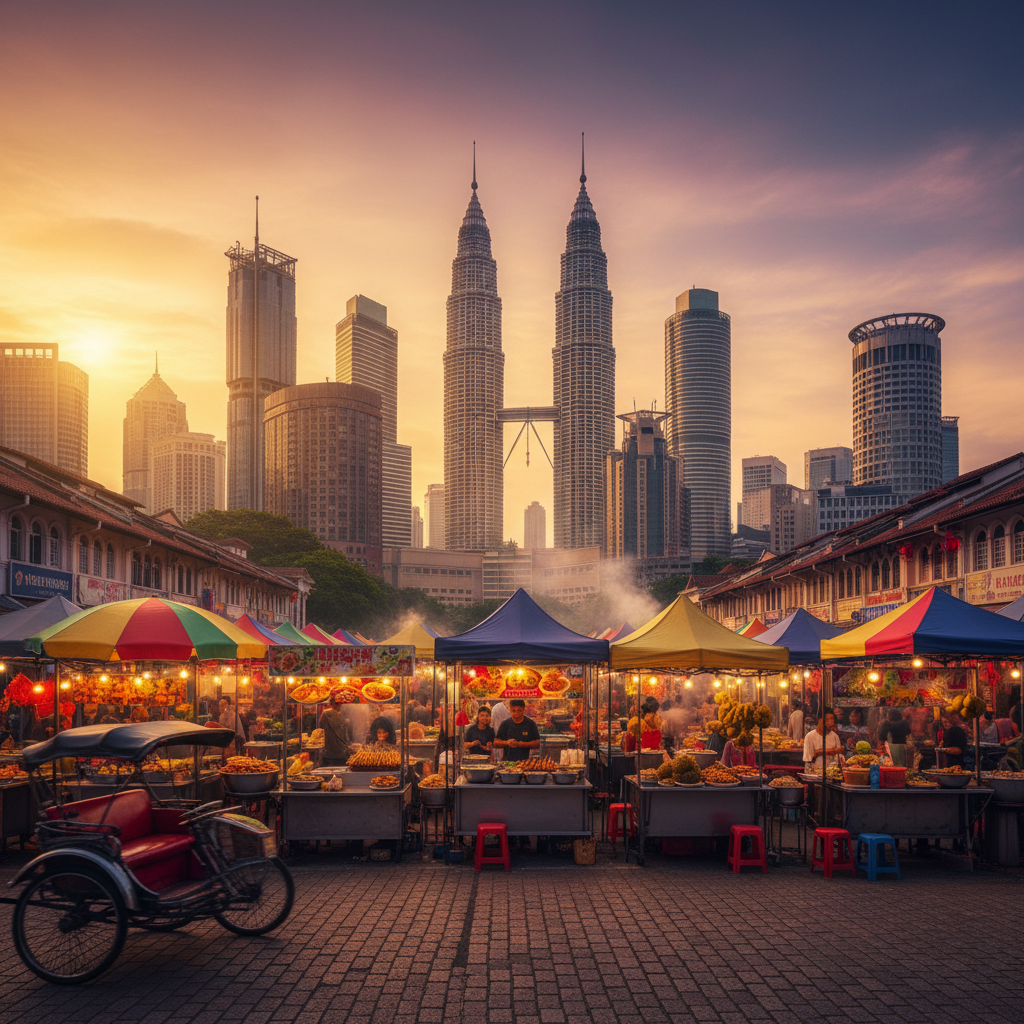
Kuala Lumpur Food Lover's Guide: 4 Days Eating Through Southeast Asia's Underrated Culinary Capital
Uncover Kuala Lumpur's hidden culinary gems on a 4-day food adventure. This guide dives deep into KL's diverse food neighborhoods, from hawker stalls to fine dining.
- Duration: 4 Days
- Estimated Budget: $300–$700
- Best Time to Visit: May-July for drier weather, but generally good year-round with occasional rain
- Destination: Kuala Lumpur, Malaysia
<p><em>Planning a trip to Kuala Lumpur? Read our <a href="/blog/kuala-lumpur-malaysia-travel-guide">complete Kuala Lumpur travel guide</a> for everything you need to know — neighborhoods, hawker food, Petronas Towers, Batu Caves, and the practical details that make the difference.</em></p> Kuala Lumpur is Southeast Asia's most underrated food city, a place where Malay, Chinese, Indian, and Peranakan cuisines have been evolving side by side for over 150 years. This guide is your passport to an extraordinary food culture, structured around the city's distinct culinary neighborhoods for a truly immersive gastronomic journey.
The moment you step into the bustling lanes of Chow Kit Market, the air hums with a symphony of sights and smells unique to Kuala Lumpur. Here, vendors expertly chop exotic fruits, mountains of vibrant spices perfume the air, and the sizzle of street food stalls creates an irresistible invitation. This isn't just a market; it's a living, breathing testament to the city's multicultural heart, offering an unvarnished glimpse into daily life and the foundational ingredients of Malaysian cuisine. You'll navigate narrow aisles filled with everything from fresh seafood to traditional Malay kuih, discovering rare herbs and local delicacies that form the backbone of the city's culinary identity, far from the typical tourist trails.
Is navigating Kuala Lumpur's diverse food scene overwhelming for a food lover? Absolutely, if you don't know where to start. The sheer volume of incredible eateries, from humble hawker stalls to acclaimed fine dining, can feel like trying to drink from a firehose. The challenge isn't finding good food, but rather discerning the truly exceptional, authentic spots that locals frequent, and understanding the nuances between regional variations of dishes like laksa or bak kut teh. Without a curated path, you risk missing the hidden gems and settling for tourist traps, which would be a culinary tragedy in a city so rich with gastronomic treasures.
Food lovers spend their mornings chasing the perfect breakfast, often starting with a steaming bowl of noodles or a plate of fluffy roti, before diving into the city's vibrant markets. You'll find yourself venturing beyond the well-trodden paths, seeking out legendary hawker stalls tucked away in unassuming alleys, where generations of culinary mastery are evident in every bite. Afternoons might involve a deep dive into a specific cuisine, like the rich, aromatic curries of Little India, or the delicate flavors of Peranakan dishes. Evenings are a celebration, perhaps at a bustling night market, sampling a dizzying array of grilled delights and sweet treats, all while soaking in the city's electric atmosphere.
Kuala Lumpur is Southeast Asia's most underrated food city, a place where Malay, Chinese, Indian, and Peranakan cuisines have been evolving side by side for over 150 years. This guide is your passport to an extraordinary food culture, structured around the city's distinct culinary neighborhoods for a truly immersive gastronomic journey.
Chow Kit's Culinary Canvas: A Malay Food Deep Dive
Immerse yourself in the vibrant sights, sounds, and smells of Chow Kit Market, KL's best wet market, where local vendors sell an incredible array of fresh produce, spices, and prepared foods.
This is where KL's culinary heart beats, offering an authentic glimpse into daily life and the freshest ingredients that fuel the city's diverse kitchens. You'll find everything from exotic fruits to live seafood.
Head to Village Park Restaurant for their legendary Nasi Lemak, often hailed as the best in KL. Expect a queue, but the fragrant coconut rice, crispy fried chicken, and spicy sambal are worth every minute.
Nasi Lemak is Malaysia's national dish, and Village Park's version is the gold standard, perfectly balancing rich flavors and textures. It's a quintessential Malaysian breakfast experience.
Experience the art of Roti Canai at Restoran Yusoof Dan Zakhir, a 24-hour institution known for its perfectly flaky flatbreads and rich curries.
Roti Canai is a Malaysian breakfast staple, and watching the chefs expertly flip and stretch the dough is a mesmerizing performance. Their dhal and fish curry are exceptional dipping companions.
Savor the iconic Satay Kajang at Sate Kajang Hj Samuri, a renowned spot for its tender, charcoal-grilled skewers served with a rich peanut sauce.
Satay is a beloved Malaysian street food, and this place is famous for its generous portions and flavorful marinades. It's an essential culinary stop to understand Malaysian grilling traditions.
Indulge in a traditional Malay dinner at Bijan Bar & Restaurant, an upscale establishment offering refined Malay cuisine in a beautiful setting.
Bijan elevates traditional Malay dishes with fresh ingredients and elegant presentation, perfect for a sophisticated introduction to the cuisine beyond hawker stalls. It’s an ideal way to appreciate the depth of Malay flavors.
Leif's Tip: Embrace the heat and humidity by staying hydrated with fresh coconut water or local fruit juices. Many of the best food experiences are found in non-air-conditioned settings, so dress comfortably and be ready to sweat a little – it's all part of the adventure!
Kuala Lumpur has countless culinary neighborhoods, and knowing which ones offer the most authentic and diverse food experiences is the difference between a good meal and a truly unforgettable gastronomic journey. The sheer volume of options, from tiny street stalls to bustling hawker centers, can be overwhelming, making it difficult to discern the must-try dishes from the merely good. Then there's the challenge of navigating opening hours, especially for popular breakfast or lunch spots that close by early afternoon, or finding the best rendition of a specific dish like Bak Kut Teh (Klang vs. KL style). This is precisely where many food enthusiasts get lost, spending precious time researching instead of savoring. Leif cuts through this complexity, providing a meticulously curated path through the city's culinary heart.
Say you're craving the perfect Roti Canai for breakfast, but you're not sure which humble stall at Restoran Yusoof Dan Zakhir serves the flakiest, crispiest version with the most flavorful dhal. You land in Kuala Lumpur, pull up Leif, and within seconds you know exactly where to go, what to order, and even an insider tip on the best time to avoid the longest queues. Or perhaps you're in the mood for an adventurous dinner in Jalan Alor, wondering which of the dozens of BBQ chicken wing stalls truly stands out. Leif guides you directly to Wong Ah Wah, ensuring you experience the legendary smoky, sweet, and perfectly charred wings that locals rave about, transforming a potential guessing game into a guaranteed culinary triumph.
You'll arrive in Kuala Lumpur knowing exactly which hawker stalls are worth the hype, which neighborhoods offer the best deep dives into specific cuisines, and how to navigate the city's vibrant food scene like a seasoned local. Instead of wasting time on generic tourist traps or mediocre meals, you'll be confidently ordering legendary Nasi Lemak, savoring authentic Banana Leaf Rice, and exploring hidden culinary gems. The difference is arriving in this incredible city with a personalized, expert-crafted food itinerary that unlocks the true flavors of Malaysia, allowing you to immerse yourself fully in the extraordinary blend of Malay, Chinese, and Indian culinary traditions without a single moment of doubt or disappointment. Your taste buds will thank you.
Best Time to Visit Kuala Lumpur, Malaysia
Avoid the monsoon season (October to March) for less rain and more comfortable hawker hopping.
Weekdays are generally less crowded at popular food stalls and markets, especially for lunch.
Evenings are when many hawker centers truly come alive, with a vibrant atmosphere and fresh cooking.
Aim for shoulder seasons (April-May or September) for good weather and fewer tourists.
Getting Around Kuala Lumpur, Malaysia
Grab (Southeast Asia's Uber) is your best friend for getting between food neighborhoods quickly and affordably. It's reliable and prices are upfront.
The LRT and Monorail systems are efficient for reaching areas like KL Sentral, Bukit Bintang, and Chinatown, often bypassing traffic.
For exploring specific food streets like Jalan Alor or Petaling Street, walking is essential to soak in the atmosphere and discover hidden gems.
Consider a 'Touch 'n Go' card for seamless public transport payments and some toll roads if you rent a car (though not recommended for food touring).
What to Pack
- Light, breathable clothing (cotton, linen) due to KL's tropical heat and humidity.
- Comfortable walking shoes – you'll be doing a lot of walking between stalls and markets.
- A small umbrella or light rain jacket for sudden tropical downpours, especially in the afternoons.
- Hand sanitizer and wet wipes – essential for hawker dining where facilities might be basic.
- A reusable water bottle to stay hydrated; tap water isn't generally potable.
- An empty stomach and an adventurous palate!
- Power bank for your phone – you'll be using it for navigation and food photos.
- A small backpack or tote bag for market purchases and personal items.
Money-Saving Tips
- Embrace hawker food! It's incredibly delicious and where you'll find the best value, with meals often costing less than RM15 ($3-4 USD).
- Look for 'set lunches' at more established restaurants during weekdays for great deals.
- Always carry small denominations of Malaysian Ringgit (RM) as many hawker stalls are cash-only.
- Skip expensive Western chain restaurants; KL's local food scene offers far more exciting and affordable options.
- Consider staying in areas like Chow Kit or Brickfields where local eateries are plentiful and accommodation can be more budget-friendly than Bukit Bintang.
Local Insights
- Don't be afraid to try street food; hygiene standards are generally good, and it's where the most authentic flavors are found. Look for stalls with long queues – a sure sign of quality.
- When ordering at hawker stalls, be clear if you have dietary restrictions (e.g., 'no pork' or 'vegetarian'). Many vendors understand basic English.
- It's common to share tables at busy hawker centers. Don't be shy; it's part of the experience and sometimes leads to friendly conversations.
- Tipping isn't customary in Malaysia, though a service charge (usually 10%) and government tax (6%) are often added to restaurant bills.
- Be adventurous with your choices! KL's food scene is a tapestry of Malay, Chinese, and Indian influences – try a bit of everything.
Frequently Asked Questions
What is the best food in Kuala Lumpur?
Kuala Lumpur's 'best' food is subjective, but iconic dishes include Nasi Lemak (coconut rice with sambal), Char Kway Teow (wok-fried noodles), Curry Laksa (spicy coconut noodle soup), and Satay (grilled skewers). Don't miss trying a variety of Indian curries and Peranakan specialties like Assam Laksa for a full culinary experience.
Is KL food cheap?
Yes, Kuala Lumpur is incredibly affordable for food lovers. A satisfying meal at a hawker stall or local restaurant typically costs between RM8-15 ($2-4 USD). Even mid-range restaurants offer excellent value, making it easy to indulge without breaking the bank.
What is nasi lemak?
Nasi Lemak is Malaysia's national dish, a fragrant rice dish cooked in coconut milk and pandan leaves. It's traditionally served with a spicy sambal (chilli paste), crispy anchovies, roasted peanuts, a hard-boiled egg, and cucumber slices. It's a popular breakfast, but enjoyed throughout the day.
Where is the best hawker food in KL?
For an authentic hawker experience, explore areas like Petaling Street (Chinatown) for legendary stalls, Madras Lane for exceptional curry laksa, and Jalan Alor for a vibrant night market scene. Each neighborhood offers unique specialties, so exploring widely is key.
Is Kuala Lumpur good for vegetarians?
Kuala Lumpur is surprisingly vegetarian-friendly, especially in areas like Brickfields (Little India) where South Indian vegetarian thalis and curries are abundant. Many Chinese and Malay restaurants also offer vegetarian options, and you'll find plenty of fresh fruit and vegetable stalls in markets.
What's the difference between Curry Laksa and Asam Laksa?
Curry Laksa is a rich, spicy, and creamy coconut milk-based noodle soup, often with chicken, prawns, and tofu puffs. Asam Laksa, on the other hand, is a sour, tangy, and spicy fish-based noodle soup, usually with shredded fish, tamarind, and pineapple, offering a completely different flavor profile.
What is Durian and should I try it?
Durian is the 'King of Fruits' in Southeast Asia, famous for its distinctive pungent aroma and creamy, custardy flesh. It's a love-it-or-hate-it experience. If you're a food adventurer, definitely try it from a reputable stall, especially during durian season (typically June-August) for the freshest taste.