Dubai Doesn't Care What You Think It Is. That's Exactly Why You Need to Go.
Destination: Dubai, United Arab Emirates
Category: Destination Guides
Dubai Doesn't Care What You Think It Is. That's Exactly Why You Need to Go.
You've already built a picture of Dubai in your head. Skyscrapers so tall they pierce the clouds. Malls the size of small towns. Gold-plated everything. Influencers dangling off infinity pools above a city that looks like someone handed a twelve-year-old unlimited SimCity funds and said, "go."
You're not entirely wrong. But you're not even close to right.
Dubai is one of the most misread cities on the planet — dismissed by the culturally cautious as a theme park for the obscenely wealthy, and misunderstood by first-timers who spend five days in Downtown and leave thinking they've seen it. They haven't. Not even close.
The real Dubai lives in the narrow lanes of Al Fahidi, where wind towers cast shadows over 19th-century courtyard houses and the smell of cardamom drifts out of teahouses that have been there longer than the skyscrapers have been imagined. It lives on the abra — a wooden water taxi that costs one dirham and crosses Dubai Creek the same way it has for over a century, carrying laborers and tourists and grandmothers with grocery bags, all of them watching the same ancient skyline from the water. It lives in the Karama neighborhood at 11pm, where Pakistani and Indian and Filipino and Emirati families crowd into fluorescent-lit restaurants and eat food that would make a Michelin inspector weep with envy, for the price of a coffee back home.
Dubai is a city of 3.5 million people. Fewer than 12% of them are Emirati nationals. The rest — the vast, extraordinary majority — are from everywhere else on earth. That fact alone should tell you something. This isn't a city that happened to become cosmopolitan. It was built cosmopolitan, deliberately, at a speed that has no parallel in human history.
Fifty years ago, this was a fishing village and a pearl diving port. Today it has the world's tallest building, the world's largest mall, the world's busiest international airport, and an indoor ski slope in the desert. The audacity of that transformation is, in itself, worth the flight.
But the audacity is only the beginning.
The Dubai Nobody Photographs
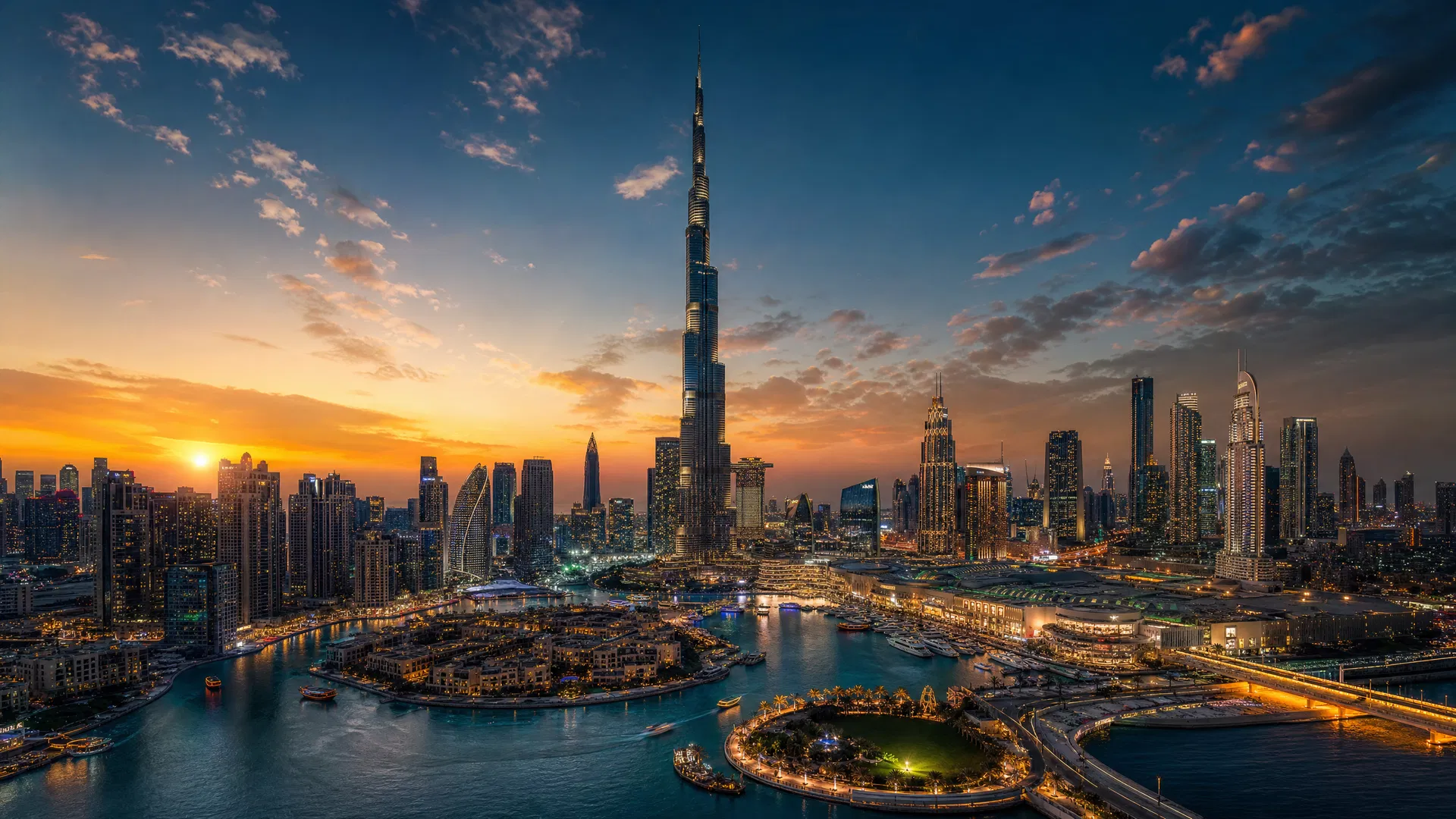
Every travel photographer in the world has shot the Burj Khalifa at golden hour. You've seen that image ten thousand times. What you haven't seen — what most visitors never bother to find — is the Dubai that existed before any of that was built, and that still exists today, stubbornly and beautifully, on the banks of Dubai Creek.
The Al Fahidi Historical Neighbourhood is the oldest surviving quarter of the city, and it is genuinely extraordinary. The architecture is a labyrinth of coral-stone buildings and wind towers — the ancient air conditioning of the Gulf, designed to catch and funnel the slightest breeze down into the rooms below. The lanes are narrow enough that you could touch both walls with your arms outstretched. The light falls in slanted golden bars across the whitewashed walls. It is quiet in a way that feels almost impossible for a city this size.
Wander here without a plan. Stop at the Arabian Tea House, tucked inside a courtyard garden, and order karak chai — a spiced, condensed milk tea that is the unofficial beverage of the UAE, drunk by everyone from construction workers to CEOs. Order the luqaimat, too: small fried dough balls drizzled with date syrup and sesame, warm and slightly crisp and absolutely addictive. This is Emirati street food at its most honest.
From Al Fahidi, walk to the Dubai Creek and take the abra across. One dirham. Less than thirty cents. The crossing takes about ten minutes and it is, without exaggeration, one of the best ten minutes you will spend in this city. The creek is wide and brown and busy with dhows — traditional wooden cargo boats that still carry goods between Dubai and Iran and India, the same trade routes that have existed for centuries. On the Deira side, you step off the boat directly into the Spice Souk, where sacks of turmeric and dried limes and frankincense and rose petals spill onto the narrow walkways and the air is thick with something that smells like the entire history of the Silk Road compressed into one city block.
Two minutes further is the Gold Souk — 300 shops selling more gold than most countries hold in reserve. The numbers are staggering: an estimated ten tonnes of gold on display at any given time. You don't have to buy anything. Just walk through it. The sheer scale of human desire for beautiful things, concentrated in one place, is worth seeing.
The Skyline You Came For (And Why It's Still Worth It)
Yes, you should go up the Burj Khalifa. Not because it's on every tourist's checklist, but because standing 555 meters above the ground and watching the desert stretch to the horizon in every direction while the city below you looks like a circuit board is a genuinely humbling experience. The building is 163 floors tall. It took 22 million man-hours to construct. On a clear day, you can see Oman.
Book the At the Top SKY experience on the 148th floor rather than the standard 124th floor observation deck — the difference in crowd size and atmosphere is significant, and the higher vantage point changes the experience entirely. Go at sunset. The light on the desert at that hour, turning the sand from beige to amber to deep copper, is something that photographs cannot capture and that you will think about for years.
Below the Burj, the Dubai Fountain performs every evening — the world's largest choreographed fountain system, shooting water 150 meters into the air in sync with music that ranges from Andrea Bocelli to Fairuz to Michael Jackson. It sounds kitsch. It is, in fact, spectacular. The fountain sits on the edge of the Dubai Mall, which contains an aquarium, an ice rink, a dinosaur skeleton, and approximately 1,200 shops. You don't need to shop. But you should walk through it at least once, if only to understand the scale of what human ambition looks like when it has essentially unlimited funding.
The Desert: Where Dubai Becomes Something Else Entirely
Thirty minutes from Downtown Dubai, the city ends. Not gradually — abruptly. One moment you're on a six-lane highway lined with glass towers, and the next you're on a two-lane road and there is nothing in any direction but sand dunes the color of cinnamon, rolling to the horizon like a frozen ocean.
A desert safari is the single experience that most dramatically reframes what Dubai is. Not the dune bashing — though hurtling up and down 100-meter sand dunes in a Land Cruiser with a driver who has clearly made peace with mortality is genuinely thrilling — but the moment after, when the 4x4 stops at the top of a dune and the engine cuts and there is absolute silence. No city. No traffic. No air conditioning hum. Just the wind moving the sand, and the light changing on the dunes, and the realization that this landscape was here long before the city and will be here long after.
The best desert experiences go beyond the standard tourist camp. Platinum Heritage offers morning safaris in vintage Land Rovers with falconry demonstrations and Emirati guides who can explain the ecology of the desert — which plants hold water, which dunes are stable and which shift, how Bedouin tribes navigated this landscape for centuries without GPS or roads. It is more expensive than the standard evening safari. It is worth every dirham.
If you do the evening safari, skip the large group camps and book a private or semi-private experience. The food at the big camps is mediocre and the entertainment is performative. A smaller operator will give you better food, a quieter camp, and a sky full of stars that you absolutely cannot see from the city.
Eating in Dubai: Ignore the Hotel Restaurants
Dubai has some of the best food in the world. It also has some of the most overpriced, tourist-facing, mediocre food in the world. The key is knowing which is which.
The hotel restaurants along Sheikh Zayed Road and in Downtown Dubai are largely for expense accounts and first dates. The real eating happens elsewhere.
Al Dhiyafah Road (officially 2nd December Street) in Satwa is the city's great democratic eating street — a long stretch of Lebanese, Iranian, and Emirati restaurants that have been feeding Dubai's working population since the 1970s. Al Mallah is the anchor: a Lebanese fast-food institution that serves shawarma and fresh-squeezed juice and man'oushe at any hour of the day or night, to a clientele that ranges from taxi drivers to architects. The chicken shawarma here is the platonic ideal of the form.
Two minutes away, Ravi Restaurant has been serving Pakistani food since 1978 and has not changed its formula once. The karahi gosht — slow-cooked lamb with tomatoes and green chilies — is extraordinary. The bill for two people, with bread and drinks, will be under 50 AED. That is approximately $14.
For Emirati food specifically — the actual cuisine of the people who built this country — go to Al Fanar Restaurant in Festival City or the Arabian Tea House in Al Fahidi. Order the harees (slow-cooked wheat and meat, the texture of porridge, deeply comforting), the machboos (spiced rice with meat or fish, fragrant with dried limes and loomi), and the balaleet (sweet vermicelli with egg, eaten for breakfast, confusing and wonderful). This is food that has been eaten in the Gulf for centuries, and it deserves your full attention.
In Karama, the neighborhood that functions as the city's South Asian heart, you can eat your way through India, Sri Lanka, Bangladesh, and Pakistan in a single evening. The restaurants here are not glamorous. They are, in many cases, brilliant.
Understanding Dubai: The Things Nobody Tells You
Dubai operates on a set of cultural norms that are different from most Western cities, and understanding them will make your trip significantly better.
The city is 90% expat, which means it is simultaneously one of the most international places on earth and one of the most culturally specific. The Emirati population — the actual citizens of the UAE — are a minority in their own country, and their culture and traditions are worth engaging with seriously, not just photographing from a distance.
Ramadan transforms the city entirely. During the holy month, eating, drinking, and smoking in public during daylight hours is prohibited (this applies to non-Muslims as well). Restaurants operate with curtained-off sections during the day. The city slows down during daylight and comes alive after dark in a way that is genuinely beautiful — the streets fill with people after Iftar (the breaking of the fast), the mosques glow, and there is a warmth and communal energy that you will not find at any other time of year. If you can visit during Ramadan, do it. It is the most authentic version of the city.
Dress code: Dubai is significantly more relaxed than many people expect, but there are rules. In malls, on the street, and in non-beach public spaces, shoulders and knees should be covered. On beaches and at pools, standard swimwear is fine. In mosques and souks, conservative dress is required. The Jumeirah Mosque — one of the few mosques in the UAE open to non-Muslim visitors — offers guided tours that are genuinely illuminating and worth making time for.
The best time to visit is November through March, when temperatures sit between 20°C and 28°C (68°F–82°F) and the city is at its most comfortable. Summer (June through September) is brutal — temperatures regularly exceed 45°C (113°F) and the humidity is punishing. If you must visit in summer, the city is designed for it: every building, every mall, every taxi is aggressively air-conditioned, and hotel rates drop dramatically.
The Neighborhoods Worth Knowing
Downtown Dubai is what most people picture when they think of the city: the Burj Khalifa, the Dubai Mall, the Dubai Fountain, the Dubai Opera. It is spectacular and worth a day, but it is not the whole story.
Jumeirah Beach Residence (JBR) is the city's beachfront promenade — a long stretch of cafes, restaurants, and the public beach that is genuinely excellent. The water is warm, the beach is clean, and the view of the Marina skyline from the water is one of the best in the city.
Dubai Marina is where the city's young professional expat population lives and eats and drinks. The Marina Walk is a pleasant evening stroll, and the restaurants here are generally better value than Downtown.
Deira is Old Dubai — the original commercial heart of the city, now a dense, chaotic, wonderful neighborhood of souks and spice shops and textile merchants and the kind of street-level energy that Downtown Dubai, for all its polish, cannot replicate.
Al Quoz is the city's arts district — a former industrial area that has been colonized by galleries, studios, and creative businesses. Alserkal Avenue is the center of it: a complex of converted warehouses that houses some of the best contemporary art galleries in the Middle East. It is free to visit and almost entirely unknown to tourists.
Palm Jumeirah is the artificial island shaped like a palm tree that you've seen from satellite images. It is worth seeing from the water (take the Palm Monorail for the best views) and the Atlantis resort at the tip is genuinely impressive in its excess. The Aquaventure Waterpark there is, by any measure, one of the best waterparks in the world.
Planning Your Dubai Trip: The Ask Leif Guides
Whether you're coming for a long weekend, a family holiday, a romantic escape, or a deep dive into the city's food culture, we've built the itineraries to match exactly what you're looking for.
If this is your first time in Dubai and you want to see everything — the skyline, the desert, the old city, the beach — our 5-Day Dubai Adventure: Your Ultimate First-Timer's Guide is built for exactly that. Five days, fully mapped, with the right balance of iconic landmarks and off-the-beaten-path moments.
Traveling on a tighter budget? Dubai is far more affordable than its reputation suggests when you know where to eat and what to skip. Our Dubai on a Budget: 4-Day Itinerary for AED 300/Day proves you can experience the authentic side of the city — free beaches, Deira souks, Al Fahidi, abra rides, and the best street food in the Gulf — for under $80 a day.
For couples looking for the full luxury experience — Burj Khalifa at sunset, private desert safari, rooftop dining, the Gold Souk — our Dubai for Couples: A 4-Day Luxury Romantic Getaway is the definitive guide to doing Dubai the way it was designed to be done.
Bringing the family? Dubai is one of the best family travel destinations in the world, with a depth of kid-friendly experiences that goes far beyond what most cities can offer. Our Dubai Family Adventure: 4-Day Itinerary for Thrills & Memories covers the Dubai Frame, IMG Worlds of Adventure, Legoland, Wild Wadi Waterpark, and a desert safari that kids will talk about for years.
And for the food obsessives — the people who plan trips around meals — our Dubai Food & Culture: A 4-Day Culinary Journey from Souks to Skyscrapers takes you from the Deira spice souks to rooftop dining above the clouds, with every significant stop in between.
The Question Everyone Asks
Is Dubai worth it?
Here is the honest answer: Dubai is worth it if you go in with your eyes open. If you expect a city of pure spectacle with nothing underneath, you'll find exactly that and leave underwhelmed. If you go looking for the layers — the old city and the new, the Emirati culture and the expat energy, the desert silence and the urban roar — you'll find a place that is genuinely unlike anywhere else on earth.
The Burj Khalifa is extraordinary. The desert is transformative. The food in Karama at midnight is one of the great pleasures of travel. The abra crossing costs one dirham and is worth a thousand.
Dubai is not subtle. It was not built to be subtle. But underneath the superlatives and the records and the gold-plated everything, there is a city with a real history, a real culture, and real people who built something remarkable in the middle of the desert in less than a human lifetime.
That, more than any skyscraper, is what makes it worth going.
Ready to plan your Dubai trip? Use the Ask Leif itinerary builder to create a personalized day-by-day plan tailored to your travel style, budget, and dates — in under 60 seconds.
Getting Around: The Practical Reality
Dubai's Metro is clean, air-conditioned, punctual, and covers the main tourist corridor along Sheikh Zayed Road from the airport to the Marina. It will not get you everywhere, but it will get you to the Burj Khalifa, the Mall of the Emirates, and the Marina for a fraction of what a taxi costs. The Gold and Women's carriages at the front of each train are reserved — sit in the regular carriages.
Taxis are metered, plentiful, and cheap by Western standards. Uber and Careem (the regional equivalent) both operate here. For getting to Old Dubai and Deira, a taxi is often the most practical option.
Renting a car is straightforward if you want to explore beyond the city — the desert roads are excellent and the drive to Hatta, a mountain enclave about 90 minutes from Downtown, is one of the best day trips available. The Hatta Dam, the heritage village, and the mountain biking trails there represent a completely different face of the emirate.
Tipping is appreciated but not mandatory. 10% in restaurants is standard. Taxi drivers don't expect tips but won't refuse them. Hotel staff appreciate small amounts for good service.
Currency is the UAE Dirham (AED). At the time of writing, 1 USD is approximately 3.67 AED — the rate has been essentially fixed for decades. Cash is useful in the souks and for the abra; everywhere else accepts cards.
One Last Thing
There is a moment that happens to almost every first-time visitor to Dubai, usually somewhere around day two or three. You're standing somewhere — maybe on the observation deck of the Burj Khalifa, maybe on the deck of an abra crossing the Creek at dusk, maybe in the silence of the desert with the city invisible behind the dunes — and you feel the full weight of what this place actually is.
Not a theme park. Not a tax haven with a skyline. Not a stopover between London and Sydney. A city. A real, complicated, contradictory, astonishing city that was built by human hands and human ambition in an eyeblink of historical time, in the middle of one of the most inhospitable environments on earth.
The people who built it — the Emirati families who turned a fishing village into a global hub, the millions of workers from South Asia and Southeast Asia and the Arab world who poured the concrete and laid the cables and staffed the hotels — deserve to have their city seen clearly, not through the lens of a highlight reel.
Go to Dubai. See all of it. The gold and the grit, the skyline and the souk, the luxury resort and the 14-AED curry in Karama. See the desert at dawn when the light is pink and the dunes are still and there is not a single human sound in any direction.
Then come back and tell us it was just a stopover.