The Landscape That Rewires Your Brain: Why Cappadocia Is the Most Otherworldly Place on Earth
Destination: Cappadocia, Turkey
Category: Destination Guides
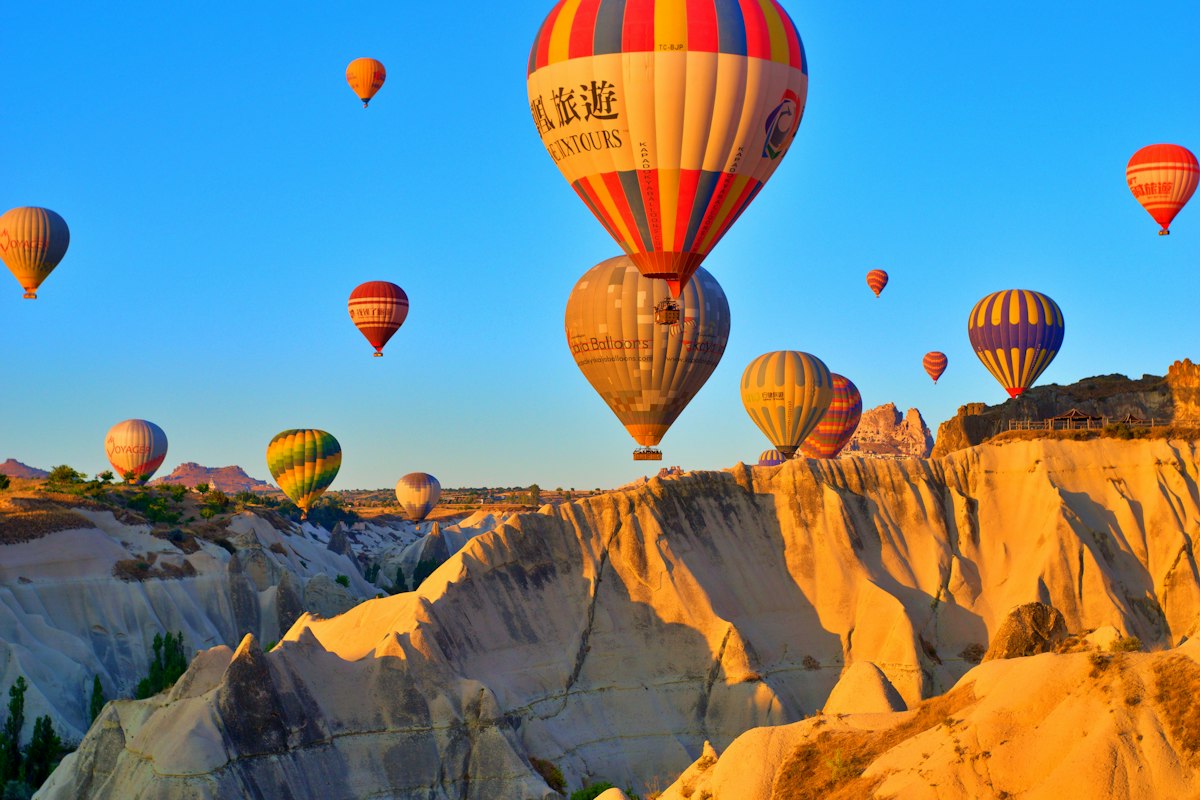
The photographs don't prepare you. You've seen them — the hot air balloons drifting over the fairy chimneys at dawn, the pink and amber light catching the volcanic spires, the whole landscape looking like something that was designed by an artist who had never been constrained by the laws of physics. You've seen those photographs hundreds of times, and you think you know what Cappadocia looks like.
You don't. Not really. Because the photographs can't capture the scale of it, or the silence, or the particular quality of disorientation that hits you when you step out of your cave hotel at 5:30 AM and realize that the landscape in every direction looks like nothing you have ever seen in your life. The photographs can't capture the moment when the first balloon appears over the ridge, then another, then a dozen, then fifty, then a hundred, rising out of the valleys in the pre-dawn dark like something from a mythology you don't have a name for yet.
Cappadocia is the most visually extraordinary place most travelers will ever visit. That is not hyperbole. It is a geological accident of such improbable beauty that humans have been trying to make sense of it for 3,000 years — by carving their homes into it, by hiding their cities beneath it, by painting their churches inside it, and now by floating above it in wicker baskets attached to silk envelopes filled with hot air, watching the sun come up over a landscape that looks like it belongs on another planet.
This is how you experience it properly.
How the Earth Made Cappadocia
Understanding what you're looking at in Cappadocia requires a brief detour into geology, because the landscape is not just beautiful — it is the result of a specific, improbable sequence of events that happened to produce something unlike anything else on earth.
Between 9 and 3 million years ago, three volcanoes in central Anatolia — Erciyes, Hasandağ, and Güllüdağ — erupted repeatedly, blanketing the region in thick layers of volcanic ash and lava. The ash compressed over millennia into a soft, porous rock called tuff. On top of the tuff, harder layers of basalt formed from the lava flows.
Then erosion began its work. Wind and water wore down the softer tuff at different rates, leaving behind columns and spires where the harder basalt cap protected the rock beneath it. These are the fairy chimneys — "peri bacaları" in Turkish — and they stand as tall as 40 meters in some valleys, their mushroom-shaped caps balanced on narrowing stems with an improbability that looks engineered rather than accidental.
The tuff itself is the key to everything that followed. It is soft enough to be carved with hand tools. The early inhabitants of Cappadocia — the Hittites, then the Phrygians, then the Persians, then the Romans, then the early Christians — discovered that you could excavate a room in a fairy chimney in a matter of days. You could carve a church. You could carve an entire city, going down instead of up, burrowing into the earth to create a refuge that was invisible from the surface.
This is how Derinkuyu was built.
Derinkuyu: The Underground City That Sheltered 20,000 People
Beneath an unremarkable village in the Cappadocia region, there is a city. It goes down 85 meters — 18 levels — into the earth. It has stables, wineries, oil presses, churches, schools, and ventilation shafts that still move air today. At its peak, it sheltered an estimated 20,000 people, along with their livestock and food stores, for months at a time.
Derinkuyu was not built by one civilization. It was expanded over centuries, beginning with the Phrygians in the 8th century BCE and continuing through the Byzantine period, when persecuted Christians used it as a refuge from Arab raids. The stone doors that sealed each level from the inside — circular millstone-like slabs that could be rolled into place and locked with a wooden bar — are still in position. The ventilation shafts, which the builders understood would be essential for long-term habitation, are still functional.
Walking through Derinkuyu is one of the genuinely disorienting experiences available to travelers. The passages are narrow — you stoop through most of them — and the deeper you go, the more the scale of the undertaking becomes apparent. This was not a temporary shelter. This was a city, designed for permanent habitation, built by people who understood engineering, hydrology, and human psychology well enough to create a space where 20,000 people could live underground without going mad.
The nearby underground city of Kaymaklı is smaller but more accessible, with wider passages and better lighting. Most visitors do both in a single day, which is the right approach — the two cities have different characters and complement each other.
The Hot Air Balloon: What It Actually Feels Like
Every travel writer who has been to Cappadocia has written about the balloon ride. This is because the balloon ride is, genuinely, one of the most extraordinary experiences available to a traveler anywhere in the world, and no amount of repetition in travel writing diminishes the reality of it.
You are picked up from your hotel at 4:30 or 5 AM, depending on the season and the sunrise time. You are driven to a field on the edge of the valley where the balloons are being inflated — enormous silk envelopes lying on their sides, the burners roaring, the fabric slowly filling with hot air and rising. There are dozens of balloons inflating simultaneously. The sound is industrial: the roar of the burners, the creak of the baskets, the voices of the pilots and ground crew. And then, one by one, the balloons lift.
The ascent is gentle. You rise above the valley rim and the landscape opens up below you: the fairy chimneys in their thousands, the rose-colored valleys, the villages, the distant snow-capped cone of Mount Erciyes. The sun is just beginning to clear the horizon. The light is the color of warm honey. And around you, in every direction, there are balloons — sometimes 150 of them, drifting in the same thermal currents, the pilots calling to each other across the air.
The flight lasts 45 to 75 minutes. The landing is in a field somewhere in the valley, marked by the ground crew who have been tracking your position. There is champagne afterward, which is a tradition dating back to the early days of ballooning in France, when pilots would offer champagne to landowners whose fields they had landed in as a gesture of goodwill. In Cappadocia, it has become a ritual that marks the end of something genuinely extraordinary.
The cost runs $150–250 USD per person, depending on the operator and the season. This is not cheap. It is also not optional, if you are going to Cappadocia. Book in advance — the reputable operators fill up weeks ahead during peak season (April–June and September–October). The most respected companies include Kapadokya Balloons, Royal Balloon, and Butterfly Balloons, all of which have strong safety records and experienced pilots.
A note on cancellations: balloon flights are weather-dependent, and Cappadocia's winds can be unpredictable. Cancellations happen. If your flight is cancelled, reputable operators will reschedule or refund. Build flexibility into your itinerary — don't make the balloon your only morning and then leave the next day.
The Valleys: Where Cappadocia's Real Character Lives
The fairy chimneys are the headline, but the valleys are where you understand what Cappadocia actually is. There are six main valleys within easy reach of Göreme, each with its own character, its own geology, and its own history.
Rose Valley (Güllüdere) is named for the pink and rose hues of its rock formations, which change color through the day as the light shifts. The valley is carved with rock-cut churches — small chapels hollowed from the tuff by Byzantine monks, their interiors still painted with frescoes that have survived 1,000 years in the dry Anatolian air. The most famous, the Church of the Cross, has a carved cross relief above the entrance that is still sharp and clear. The hike through Rose Valley takes two to three hours at a relaxed pace and ends at the village of Çavuşin, where you can get lunch before returning.
Love Valley is the one with the phallic-shaped fairy chimneys that appear in every photograph of Cappadocia and that the local tour guides discuss with practiced nonchalance. The formations are genuinely remarkable — columns 30 meters tall with rounded caps, clustered in groups that the erosion process has shaped with an improbability that feels deliberate. The valley is best seen from the ridge above Göreme at sunset, when the light turns the stone from white to gold to deep amber.
Ihlara Valley is the most dramatic of all: a 14-kilometer canyon cut by the Melendiz River through the volcanic plateau, its walls rising 150 meters above the river. The canyon floor is green and shaded, a sharp contrast to the dry plateau above. The walls are riddled with rock-cut churches — more than 100 of them, many with frescoes still intact — carved by the Byzantine monks who lived here in the 9th and 10th centuries. The full canyon walk takes four to five hours. The village of Selime at the north end has a monastery complex carved into a cliff face that is one of the most extraordinary architectural achievements in Cappadocia.
Göreme Open Air Museum is the most visited site in the region and the most concentrated collection of rock-cut churches in the world. The Dark Church — the Karanlık Kilise — has the best-preserved Byzantine frescoes in Cappadocia, their colors still vivid after 900 years because the lack of windows kept out the light that would have faded them. The entry fee for the Dark Church is separate from the museum admission, and it is worth every lira.
Cave Hotels: Sleeping Inside the Landscape
The cave hotels of Cappadocia are not a gimmick. They are the natural extension of 3,000 years of humans carving their homes into the tuff, and the best of them are genuinely extraordinary places to sleep.
The rock maintains a constant temperature of around 13°C (55°F) year-round, which means cave rooms are naturally cool in summer and retain heat in winter. The walls are thick enough to muffle sound completely. The silence inside a cave room at night is absolute — the kind of silence that most people have never experienced in their lives.
Museum Hotel in Uçhisar is the benchmark: a collection of antique-furnished cave rooms built into a cliff face, with a terrace that looks out over the entire Cappadocia landscape and a restaurant that serves some of the best food in the region. It is expensive. It is also one of the most extraordinary hotels in the world.
Argos in Cappadocia is carved into the cliff face of Uçhisar village, with rooms that look out over the valley and a wine cave where you can taste local Cappadocian wines made from the volcanic soil. The region produces Öküzgözü and Boğazkere grapes that yield wines with a minerality that reflects the volcanic terroir — worth seeking out even if you're not a dedicated wine traveler.
For mid-range travelers, Kelebek Cave Hotel in Göreme offers cave rooms with valley views at a fraction of the price of the luxury properties, with a rooftop terrace that is one of the best balloon-watching spots in the region.
The advice on booking: stay in Göreme or Uçhisar rather than the larger town of Nevşehir. Göreme is the center of the valley, walkable to most of the major sites, and has the best concentration of restaurants and cafes. Uçhisar offers more dramatic views from the castle rock that dominates the village.
Eating and Drinking in Cappadocia
Cappadocian cuisine is Central Anatolian cooking at its most honest: slow-cooked meats, clay pot stews, flatbreads baked in wood-fired ovens, and vegetables grown in the volcanic soil that gives everything a particular depth of flavor.
Testi kebabı — clay pot kebab — is the dish you must order at least once. The meat (lamb or chicken) is slow-cooked in a sealed clay pot that is brought to the table and broken open with a knife, releasing a cloud of steam and the smell of slow-cooked meat and spices. It is theater and dinner simultaneously. Dibek Restaurant in Göreme has been serving it for decades and remains the most reliable version in the region.
Pumpkin dessert — kabak tatlısı — is the local sweet: pumpkin cooked in sugar syrup until it becomes translucent, served with tahini and crushed walnuts. It sounds unlikely. It is extraordinary.
The local wines deserve more attention than they typically receive. Cappadocia's volcanic soil and high altitude (1,000–1,200 meters) produce wines with a character that is genuinely distinct from anything produced in western Turkey or Europe. The Turasan and Kocabağ wineries both offer tastings and tours, and the Öküzgözü grape produces a red wine with dark fruit, leather, and a volcanic mineral finish that pairs perfectly with testi kebabı.
For breakfast — and breakfast in Cappadocia is a serious affair — the Turkish spread of olives, white cheese, tomatoes, cucumbers, eggs, honey, and fresh bread is available at almost every hotel and café. The Old Greek House in Mustafapaşa serves an extended version of this spread in a restored Greek mansion that is one of the most beautiful dining rooms in the region.
The Practical Guide to Cappadocia
When to go: April through June and September through October are the ideal windows — mild temperatures, clear skies, and the best balloon conditions. July and August are hot and crowded. December through February is cold but beautiful, with occasional snow that transforms the fairy chimneys into something even more surreal, and far fewer tourists.
Getting there: Fly into Kayseri (ASR) or Nevşehir (NAV) airports. Kayseri is larger and has more flight options, including direct connections from Istanbul, Ankara, and several European cities. The drive from Kayseri to Göreme takes about 75 minutes. Shuttle services and rental cars are both available.
Getting around: The valleys and main sites are best explored by rental car or scooter — the distances between them are too large for walking and the public transport connections are infrequent. Guided tours are a good option for the underground cities and Ihlara Valley, where the historical context significantly enriches the experience.
How long to stay: Three nights is the minimum to do Cappadocia justice — one morning for the balloon, one day for the valleys and open air museum, one day for the underground cities. Four or five nights allows you to slow down, hike the valleys at your own pace, and spend an evening at a winery.
Combining with Istanbul: The classic Turkey itinerary pairs Cappadocia with Istanbul — fly into Istanbul, spend three to four days in the city, then fly to Kayseri for Cappadocia. The two destinations are complementary in every way: Istanbul is dense, layered, and urban; Cappadocia is open, ancient, and geological. Together they give you a version of Turkey that is genuinely comprehensive.
If you're building that Istanbul itinerary, the 5-Day Istanbul City & Culture Guide covers the essential first-timer's circuit — Hagia Sophia, the Grand Bazaar, the Bosphorus, and the neighborhoods that most tourists miss. For couples making the Istanbul-Cappadocia circuit, the Romantic Istanbul: 5-Day Couple's Journey pairs beautifully with a Cappadocia cave hotel stay. And for those who want to go deep on Istanbul's food culture before heading inland, the Istanbul Food & Culture: 4-Day Culinary Journey is the guide that covers the city's extraordinary eating scene in the depth it deserves.
What Nobody Tells You About Cappadocia
The thing that surprises most visitors is how quiet it is. Not the silence of the cave rooms — you expect that — but the quiet of the landscape itself. The valleys between the fairy chimneys absorb sound. You can walk for an hour through Rose Valley and hear nothing but wind and birdsong and the occasional distant sound of a tractor. In a world where genuine quiet has become rare, this is not a small thing.
The second surprise is the food. Cappadocia is not on the international food circuit the way Istanbul is, and most travelers arrive without expectations. They leave having eaten some of the best food of their trip — the testi kebabı, the pumpkin dessert, the volcanic wines, the breakfast spreads that go on for an hour. The cuisine here is honest and deeply rooted in the land, and the volcanic soil that produced the fairy chimneys also produces vegetables and grapes with a flavor that reflects it.
The third surprise is how personal it feels. The photographs make Cappadocia look like a theme park — too perfect, too photogenic, too obviously extraordinary to be real. In person, it is intimate. The valleys are human-scaled. The cave churches are small. The fairy chimneys are close enough to touch. The landscape that looks alien in photographs turns out, when you're standing in it, to feel strangely familiar — as if some part of your brain recognizes it from a dream you had a long time ago.
The Landscape That Changes You
There is a reason that every civilization that has ever encountered Cappadocia has felt compelled to carve into it, to paint it, to build inside it, to make it their own. The landscape does something to people. It is too strange and too beautiful to leave alone. The Hittites carved their cities into the tuff. The Byzantine monks painted their theology onto the cave walls. The Ottoman villagers built their houses into the fairy chimneys. And now travelers come from every country on earth and float above it in balloons, trying to find the angle that captures what it actually feels like to be here.
None of them fully succeed. The photographs never do. But the attempt is worth making, because Cappadocia is the kind of place that rewires something in you — that makes you understand, in a way that no amount of reading can, that the earth is older and stranger and more beautiful than you had previously given it credit for.
Go in spring, when the apricot trees are blooming in the valleys. Book your balloon early. Stay in a cave. Drink the volcanic wine. Walk through Derinkuyu and try to comprehend what it means that 20,000 people once lived in the dark beneath your feet. Eat testi kebabı at a table on a terrace overlooking the fairy chimneys as the sun goes down.
And then, when you get home and people ask you what Cappadocia was like, you will understand why every traveler who has been there pauses before answering. Because the honest answer — "it looks like nothing else on earth, and it makes you feel like you've been somewhere that exists outside of normal time" — sounds like hyperbole until you've been there.
It isn't.