White Sands National Park: 2-Day Sunset & Photography Guide
Capture the magic of White Sands National Park with this 2-day guide for photographers and sunset lovers. Explore golden hour dunes, full moon nights, and sledding.
- Duration: 2 Days
- Estimated Budget: $180–$400
- Best Time to Visit: October-April for cooler temperatures; summer is hot but sunsets are year-round. Check park missile test closures.
- Destination: White Sands National Park, New Mexico, USA
White Sands National Park, with its vast gypsum dunes, transforms into an otherworldly canvas during golden hour and under the full moon. This guide is crafted for those who chase the perfect light, offering insider tips to capture the stunning beauty of this unique landscape through your lens and your heart. Prepare for an unforgettable experience where every sunset paints a masterpiece and every moonlit dune walk feels like a dream.
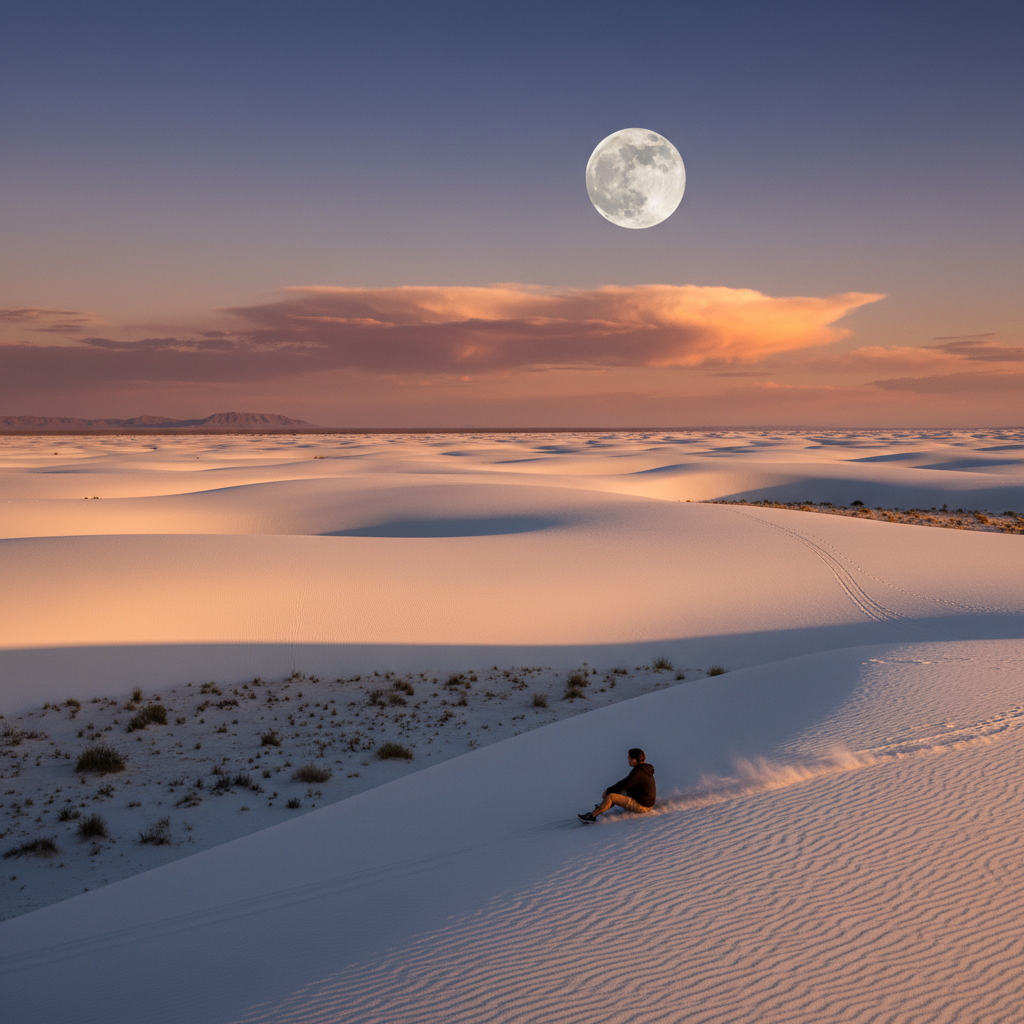
White Sands National Park transforms as golden hour descends upon its gypsum dunes, with... the sun dipping below the distant San Andres Mountains, painting the sky in hues of gold, rose, and lavender. This isn't a dream; it's White Sands National Park at magic hour, a photographer's paradise and an experience unlike any other. The dunes, sculpted by wind into mesmerizing patterns, become a canvas for light and shadow, offering endless compositions. You'll capture the ethereal glow on the gypsum, the long, dramatic shadows stretching across the landscape, and the sheer scale of this otherworldly environment. From the Alkali Flat Trail to the Dune Life Nature Trail, every step offers a new perspective on this stunning wilderness.
But White Sands isn't just about the golden hour; it's about the full spectrum of its unique beauty, from the vibrant dune life to the profound stillness of a full moon night. We'll guide you through the best spots for sunset sledding, where the joy of gliding down a gypsum dune is matched only by the stunning backdrop. You'll discover the subtle intricacies of the Interdune Boardwalk, a perfect introduction to the resilient ecosystem thriving in this harsh environment. And for the truly adventurous, the Alkali Flat Trail offers a remote journey into the heart of the dune field, revealing ancient lake beds and a sense of profound isolation that's perfect for contemplative photography. This trip is designed to immerse you in the park's natural artistry, ensuring every moment is a photo opportunity.
Beyond the dunes, this itinerary taps into the rich history and unique character of the surrounding Tularosa Basin. From the New Mexico Museum of Space History in Alamogordo, offering a fascinating glimpse into the region's pioneering role in space exploration, to the somber historical significance of the White Sands Missile Range Museum, you'll find plenty to enrich your experience. And if your timing aligns, a Full Moon Night program offers an unparalleled opportunity to walk the dunes under the glow of a lunar landscape – an ethereal experience that will undoubtedly yield some of your most memorable photographs. Prepare for two days of awe-inspiring beauty, historical intrigue, and photographic magic in one of America's most unique national parks.
Golden Hour Dunes & Sunset Sledding Spectacle
Start your White Sands adventure with a gentle stroll on the Interdune Boardwalk, a raised path that offers a fantastic introduction to the park's unique ecosystem.
This accessible loop provides an excellent overview of the dunes without getting your shoes full of sand. It's a perfect way to ease into the otherworldly landscape and spot some of the hardy plants that thrive here.
Next, explore the Dune Life Nature Trail, a 1-mile loop that takes you deeper into the dune field, showcasing the unique flora and fauna adapted to this harsh environment.
This trail offers a more immersive experience than the boardwalk, allowing you to witness firsthand how life persists in the shifting sands. You'll see plants like soaptree yucca and animals like the bleached earless lizard.
Head to the Heart of the Dunes picnic area, rent a sled from the visitor center, and prepare for some exhilarating sunset sledding down the gypsum slopes.
Sledding down the soft, cool gypsum dunes as the sun begins to dip is an incredibly fun and unique experience. It's a fantastic way to feel like a kid again and create some truly memorable photos.
As golden hour approaches, position yourself in a prime spot within the dunes for unparalleled photography opportunities. The light transforms the landscape into a painter's dream.
This is the magical time when the white dunes catch the golden light, creating incredible textures and shadows. The landscape shifts from stark white to hues of gold, pink, and purple, offering endless photographic possibilities.
Witness the spectacular sunset over the San Andres Mountains from within the heart of the dunes, a truly breathtaking end to your first day.
The sunset at White Sands is unlike anywhere else; the vastness of the dunes combined with the dramatic colors of the sky creates an unforgettable panorama. It's a moment of pure tranquility and natural beauty.
Leif's Tip: The gypsum sand reflects light intensely, so bring sunglasses even on cloudy days. Also, wear closed-toe shoes to protect your feet from the fine sand, and bring plenty of water – the desert air is incredibly dry!
Most visitors to White Sands arrive with a camera, but without a clear strategy for capturing its elusive beauty, you'll find yourself chasing light instead of composing shots. The challenge isn't just finding the dunes; it's understanding the subtle shifts in light that transform the landscape from stark white to a painter's palette. Knowing precisely when and where to position yourself for the golden hour glow on the Alkali Flat Trail, or how to navigate the park safely after dark for full moon photography, requires more than just a map. You need to account for the sun's angle, the moon's phase, and the best spots for sledding that offer both excitement and a stunning backdrop. Without this granular insight, you risk missing those fleeting, perfect moments that define a photographic journey here. Leif cuts through this complexity, ensuring your time is spent creating, not searching.
Dune Life Nature Trail, with its unique gypsum formations and vast skies, offers unparalleled photographic opportunities, especially at sunset. Instead of fumbling with your camera settings or wondering if you've found the optimal vantage point, you'll already be set up, tripod extended, lens cap off, ready to capture the gypsum glowing with an ethereal warmth. Leif anticipates the exact moment the light will hit the ripples just so, or where the shadows will stretch longest for dramatic effect. When the full moon rises, casting a silvery sheen across the landscape, you'll know the precise trail to follow for an unobstructed view, avoiding any navigational guesswork in the dark. This isn't about generic directions; it's about curated, moment-by-moment advice that maximizes your creative output and ensures you're always in the right place at the right time.
The crisp, cool air of a White Sands evening, carrying the faint scent of gypsum and desert flora, signals the end of a day filled with unparalleled photographic opportunities. You'll feel the satisfaction of having captured images that truly reflect the otherworldly magic of this place, from the vibrant hues of a sunset-drenched dune to the serene glow of a moonlit landscape. There's a profound sense of accomplishment in knowing you've experienced the park's unique rhythms, not just observed them. Every frame you've composed, every angle you've explored, will be a testament to a journey meticulously planned and perfectly executed. Your next adventure awaits, with every detail considered and every moment optimized for discovery.
Best Time to Visit White Sands National Park, New Mexico, USA
October to April offers the most pleasant temperatures for exploring the dunes and enjoying sunsets without extreme heat.
Target your visit for the two hours before sunset to capture the most stunning golden hour photography opportunities.
Check the park's schedule for missile tests at recreation.gov before you finalize your travel dates, as the park closes frequently.
If possible, align your visit with a full moon night to experience the park's magical Full Moon Night program.
While summer is hot, the sunset experience is still spectacular year-round, just be prepared for daytime temperatures over 100°F.
Getting Around White Sands National Park, New Mexico, USA
Renting a car is absolutely essential for this trip, as public transportation is not available and the park is remote.
Fly into El Paso (ELP) for a shorter 90-minute drive to the park, or Albuquerque (ABQ) if you prefer a 3.5-hour scenic drive.
Be aware that cell service can be spotty within the park, so download offline maps and park information beforehand.
The park roads are paved and well-maintained, but be mindful of sand on the shoulders, especially if you pull over for photos.
Consider filling up your gas tank in Alamogordo or Las Cruces before heading to the park, as there are no services inside.
What to Pack
- Camera gear with extra batteries, memory cards, and a tripod for golden hour and full moon photography.
- Plenty of water and snacks, as services inside the park are limited to the visitor center.
- Sunscreen, a wide-brimmed hat, and sunglasses to protect against the intense desert sun and reflective sand.
- Layers of clothing, as desert temperatures can fluctuate significantly between day and night.
- Comfortable closed-toe shoes for walking on sand, as open-toed shoes will fill with gypsum.
- A headlamp or flashlight for navigating the dunes after sunset or during a full moon program.
- A plastic sled if you plan on dune sledding (or rent one at the visitor center).
- A light jacket or sweater for evenings, even in warmer months, as desert nights can be cool.
Money-Saving Tips
- Stay in Alamogordo for more budget-friendly lodging options compared to Las Cruces.
- Pack your own food and drinks to save on dining costs, especially for snacks and lunches within the park.
- Take advantage of the free Full Moon Night programs if your visit coincides with one.
- The White Sands Missile Range Museum is free to enter and offers a fascinating historical perspective.
- Consider purchasing an America the Beautiful Pass if you plan to visit multiple national parks within a year, as it can save on entrance fees.
Local Insights
- The white sand is actually gypsum, not silica, so it doesn't get as hot as regular sand, making it more comfortable to walk on.
- The park closes for missile tests 1-3 times a week; always check the schedule in advance to avoid disappointment.
- The best time for photography is truly the golden hour, when the white dunes take on incredible hues of gold, pink, and purple.
- If you plan to hike the Alkali Flat Trail, start early in the morning or late in the afternoon to avoid the midday sun and heat.
- The Tularosa Basin has a rich history, from ancient lake beds to significant space and military developments; take time to explore beyond the dunes.
Frequently Asked Questions
What's the best time of day for photography at White Sands?
Hands down, the golden hour (the hour before sunset) and the hour after sunrise offer the most magical light. The white gypsum glows with warm hues, and the shadows create incredible texture and depth. Midday light can be harsh, flattening the landscape, so plan your main photography sessions around these times.
Do I need any special gear for sunset photography?
A sturdy tripod is essential for capturing those long-exposure sunset and full moon shots. A wide-angle lens will help you capture the vastness of the dunes, while a telephoto can compress the landscape and highlight distant features. Don't forget extra batteries – the cold can drain them quickly, especially at night!
Is it safe to be in the park after dark for full moon nights?
Yes, the park's Full Moon Night programs are ranger-led and perfectly safe. It's an incredible experience to walk the dunes under the moonlight. Just be sure to stay with the group and bring a headlamp for navigating, though you'll want to turn it off for stargazing and photography.
Can I fly a drone for aerial photography?
No, drone use is strictly prohibited within White Sands National Park to protect wildlife and visitor experience. Please respect park regulations to preserve this unique environment for everyone.
What should I wear for sunset and night photography?
Evenings and nights in the desert can get surprisingly cool, even after a warm day. Dress in layers, including a warm jacket, hat, and gloves. Sturdy closed-toe shoes are a must for walking on the sand, and sunglasses are helpful for the bright daytime glare.
Where are the best spots for sunset sledding and photography?
The dunes near the Heart of the Dunes picnic area are ideal for sledding, offering gentle slopes and easy access. For photography, any spot along Dunes Drive offers incredible views, but venturing a bit further into the dunes (while staying on marked trails) will give you more pristine, untouched landscapes for your shots.
What if the park closes for missile tests during my visit?
It's crucial to check the park's closure schedule on recreation.gov before your visit. Closures typically last a few hours, but occasionally a full day. If a closure impacts your plans, use that time to explore nearby attractions like the New Mexico Museum of Space History or the White Sands Missile Range Museum.