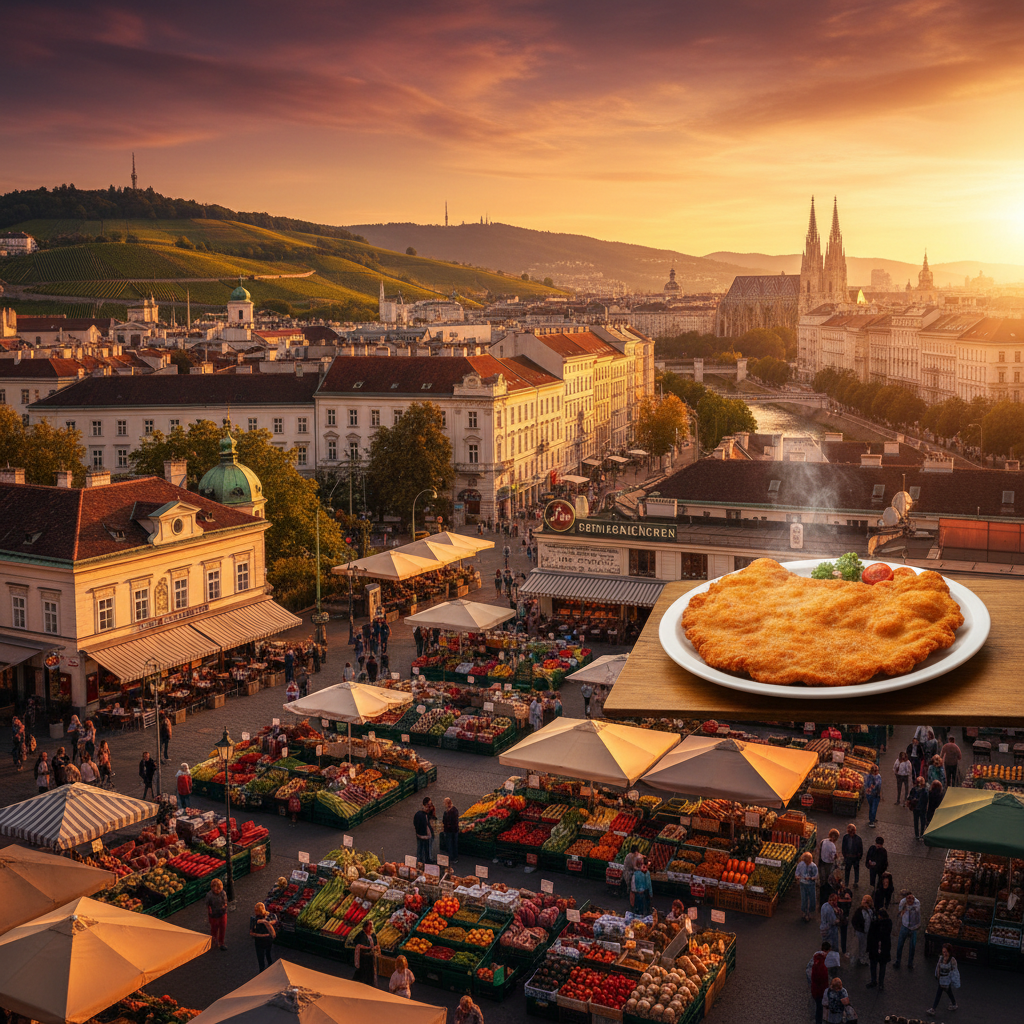
Vienna Food Guide: 4 Days of Schnitzel, Coffee Houses & Heuriger Wine
Indulge in Vienna's iconic culinary scene over 4 days. Discover the best schnitzel, historic coffee houses, and charming Heuriger wine taverns with Leif's expert food guide.
- Duration: 4 Days
- Estimated Budget: $800–$1,500
- Best Time to Visit: April-May and September-October for pleasant weather and outdoor dining.
- Destination: Vienna, Austria
Vienna's culinary landscape is a delightful journey through ritual and flavor, a city where every dish tells a story. From the grand Kaffeehaus where time slows to a Melange-fueled crawl, to the rustic Heuriger vineyards offering crisp Grüner Veltliner, this guide is your passport to savoring authentic Viennese tastes.
The Spittelberg quarter, with its charming cobblestone streets and Biedermeier architecture, is a delightful place to begin your culinary exploration. Tucked away from the grand boulevards, this area offers a glimpse into Vienna's traditional gastronomic heart, where cozy Beisln serve up hearty, authentic dishes like Zwiebelrostbraten. It's a neighborhood that rewards slow wandering, allowing you to stumble upon hidden courtyards and local eateries that have been perfecting their recipes for generations. The atmosphere here is distinctly Viennese, a blend of historical elegance and unpretentious charm, making it the perfect backdrop for savoring the city's rich food heritage beyond the usual tourist paths.
Should you worry about navigating the complex world of Viennese dining traditions? Here's the reality: while there are indeed specific customs, like the proper way to enjoy a Kaffeehaus or the nuances of ordering at a Heuriger, these are part of the charm, not a barrier. Locals are generally very welcoming and appreciate any effort to engage with their culture. Understanding that a Melange comes with a glass of water, or that a Heuriger only serves its own wine, simply enhances the experience, allowing you to participate authentically rather than just observe. These traditions are what make eating in this city so unique and memorable.
Food-focused travelers spend their mornings discovering the nuances of Viennese pastries, perhaps indulging in a Topfenstrudel at a lesser-known Konditorei before the crowds arrive. Afternoons often involve a deep dive into the city's market culture, exploring stalls filled with local cheeses and artisanal products, perhaps even picking up some Styrian pumpkin seed oil to take home. Evenings are dedicated to savoring classic dishes in atmospheric settings, whether it's a perfectly prepared Tafelspitz in a traditional Beisl or a lively dinner at a Heuriger, accompanied by fresh, young wine and panoramic views of the vineyards. It's a journey of continuous culinary discovery.
A Grand Welcome: Coffee House Rituals & Schnitzel Feasts
Start your Viennese culinary adventure with a classic Melange at the iconic Café Central, nestled in the stunning Palais Ferstel.
This isn't just coffee; it's an institution, a UNESCO Intangible Cultural Heritage. You'll soak in history where Trotsky and Freud once pondered over their own Melanges.
Immerse yourself in the vibrant sensory explosion of Naschmarkt, Vienna's oldest and most famous outdoor market.
This market is a microcosm of Vienna's diverse food scene, from local Austrian delicacies to exotic spices. It's the perfect place to graze and discover new flavors.
Enjoy a casual, authentic lunch right within the Naschmarkt at Gasthaus Ubl, known for its hearty Austrian fare.
After exploring the market, you'll want a proper sit-down meal that reflects local flavors. Gasthaus Ubl offers traditional dishes in a lively market setting.
Take a leisurely stroll through the historic First District, admiring the architecture and working up an appetite for dinner.
This walk helps you digest and appreciate Vienna's imperial grandeur. It's a beautiful way to connect the city's history with its culinary present.
Indulge in the definitive Wiener Schnitzel experience at Figlmüller Bäckerstraße, a legendary establishment where the schnitzel hangs off the plate.
This is the pinnacle of Viennese schnitzel, a culinary pilgrimage for any food lover. The crispy, thin veal is an absolute must-try.
Leif's Tip: On your first day, embrace the Viennese pace. Don't rush your coffee house experience; it's meant for lingering. And for Figlmüller, I cannot stress enough: book your table as soon as your travel dates are firm, or you'll likely miss out on this iconic meal.
Vienna has countless charming eateries, and knowing which one truly offers an authentic experience versus a tourist-centric imitation is the difference between a memorable meal and a forgettable one. The sheer volume of coffee houses, each with its own history and subtle nuances, can feel overwhelming before you even decide where to have your first Melange. Then there's the challenge of reserving a table at a legendary schnitzel institution, or understanding the seasonal opening hours of a Heuriger in the Vienna Woods. These are the specific pain points that often lead travelers to generic choices, missing out on the city's true culinary gems. This is precisely where Leif steps in, transforming potential confusion into effortless discovery.
Say you're craving a traditional Austrian pastry for an afternoon pick-me-up, but you're not sure which Konditorei offers the best Palatschinken or Kaiserschmarrn without being overly crowded. Leif will guide you to a local favorite in the Josefstadt district, perhaps a cozy spot known for its exquisite strudels, complete with directions and a note about their special apricot jam. Or imagine you've spent the day exploring and now you're wondering where to find a Beisl that serves a hearty Erdäpfelgulasch, away from the main tourist drag. Leif will have a recommendation ready in a neighborhood like Favoriten, a place where locals gather, ensuring you experience the true warmth of Viennese hospitality and cuisine.
Arriving in the city with your culinary itinerary already mapped out means you'll spend less time searching and more time savoring. Instead of wandering aimlessly, you'll confidently stroll into a historic coffee house, knowing exactly which pastry to order and the story behind it. You'll approach a Würstelstand with the insider knowledge of whether to ask for a Käsekrainer or a Burenwurst, feeling like a local. The difference is the freedom to fully immerse yourself in the rich flavors and traditions of this magnificent city, from the first sip of Grüner Veltliner at a vineyard overlooking the Danube to the last bite of a perfectly crisp Wiener Schnitzel. You'll leave Vienna not just well-fed, but deeply connected to its unique gastronomic soul.
Best Time to Visit Vienna, Austria
Spring (April-May) and Fall (September-October) offer pleasant weather for walking between food spots and enjoying outdoor Heuriger gardens, with fewer crowds than summer.
December is magical for the Christmas markets, where you can sample Glühwein and various seasonal treats, though it will be colder.
Avoid mid-summer (July-August) if you dislike heat and larger tourist crowds, as many locals also go on holiday.
For the freshest produce and best atmosphere at Naschmarkt, aim for a weekday morning or Saturday morning for the flea market.
Getting Around Vienna, Austria
Vienna has an excellent public transport system (U-Bahn, tram, bus). A 72-hour Vienna Pass or a weekly ticket (Wiener Linien) is cost-effective if you plan to use it frequently.
Many central food destinations like Café Central, Hotel Sacher, and Figlmüller are within walking distance of each other in the 1st district.
To reach the Heuriger in Nussdorf, take the D tram directly from the city center – it's a scenic ride.
Consider walking as much as possible; it's the best way to discover hidden Beisln and work up an appetite for your next meal.
What to Pack
- Comfortable walking shoes are essential for exploring markets and walking between coffee houses.
- Layers of clothing, as temperatures can change throughout the day, especially when moving from indoors to outdoor Heuriger.
- A reusable water bottle to stay hydrated between coffee and wine.
- A small umbrella or light rain jacket, particularly in spring and fall.
- A camera or smartphone with good battery life for capturing all the delicious food.
- An appetite – seriously, come hungry!
- A small tote bag for any market purchases from Naschmarkt.
- A portable charger for your phone.
Money-Saving Tips
- Opt for lunch specials (Mittagsmenü) at Beisln; they often offer excellent value for traditional Viennese dishes.
- Enjoy a Würstelstand meal for a budget-friendly and authentic Viennese street food experience.
- Instead of a full breakfast at a fancy café, grab a pastry (Gebäck) from a local bakery and a coffee to go.
- Share larger portions like Kaiserschmarrn or a massive Figlmüller schnitzel, as they can be quite generous.
- Buy wine directly from Heuriger for a better price per liter if you plan to enjoy it later, rather than just by the glass.
Local Insights
- When ordering coffee at a Kaffeehaus, remember that a 'Melange' is the classic Viennese choice, and you'll always get a glass of water with it.
- Don't rush your coffee house experience; it's a place to linger, read a newspaper (often provided), and soak in the atmosphere.
- At a Heuriger, look for the 'Ausg'steckt' sign (a pine branch) indicating they are open and serving their own wine.
- It's customary to tip around 5-10% in restaurants and coffee houses by rounding up the bill or stating the total amount you wish to pay.
- When at a Würstelstand, try a Käsekrainer 'mit allem' (with everything) – usually mustard and a slice of dark bread.
Frequently Asked Questions
What's the difference between a Wiener Schnitzel and a Schnitzel Wiener Art?
A true Wiener Schnitzel is always made from veal, pounded thin, breaded, and fried until golden. Schnitzel Wiener Art, on the other hand, is made with pork. While both are delicious, if you want the authentic Viennese experience, always opt for the veal.
Can I visit a Heuriger if I don't drink alcohol?
Absolutely! While wine is central to the Heuriger experience, they also offer a selection of non-alcoholic beverages, including grape juice (Traubensaft) from their own vineyards. The atmosphere, food, and views are still very much worth the trip, even without the wine.
Is it rude to linger in a Viennese coffee house for a long time after ordering just one drink?
Not at all, it's expected! Viennese coffee house culture is built around the idea of lingering. You're encouraged to sit, read the newspapers (often provided), chat, or simply people-watch for as long as you like. It's a social institution where time slows down, and no one will rush you.
How do I choose between Hotel Sacher and Café Demel for Sachertorte?
Both offer an excellent Sachertorte, and the choice often comes down to preference and atmosphere. Hotel Sacher provides a more formal, historic setting, while Café Demel offers a slightly more bustling, traditional patisserie experience. Many locals recommend trying both to decide your favorite – you can't go wrong!
What's the best way to get to the Heuriger villages outside the city center?
The most convenient way is often by public transport. For villages like Nussdorf, you can take the D tram directly from the city center, which offers scenic views along the way. For others like Grinzing or Neustift am Walde, buses connect from various U-Bahn stations. It's an easy and enjoyable journey.
Are Würstelstands open late, and are they only for quick snacks?
Many Würstelstands, especially the popular ones, are open very late, some even 24 hours, making them perfect for a late-night bite. While they are great for quick snacks, they're also a beloved part of Viennese street food culture, offering a satisfying and affordable meal at any time of day or night.
What should I order at a Beisl if I want something truly traditional beyond schnitzel?
Beyond schnitzel, look for classics like Tafelspitz (boiled beef with apple-horseradish and chive sauce), Zwiebelrostbraten (onion roast beef), or Erdäpfelgulasch (potato goulash). These dishes represent the heart of Viennese home cooking and are perfectly paired with a local Austrian beer or wine.