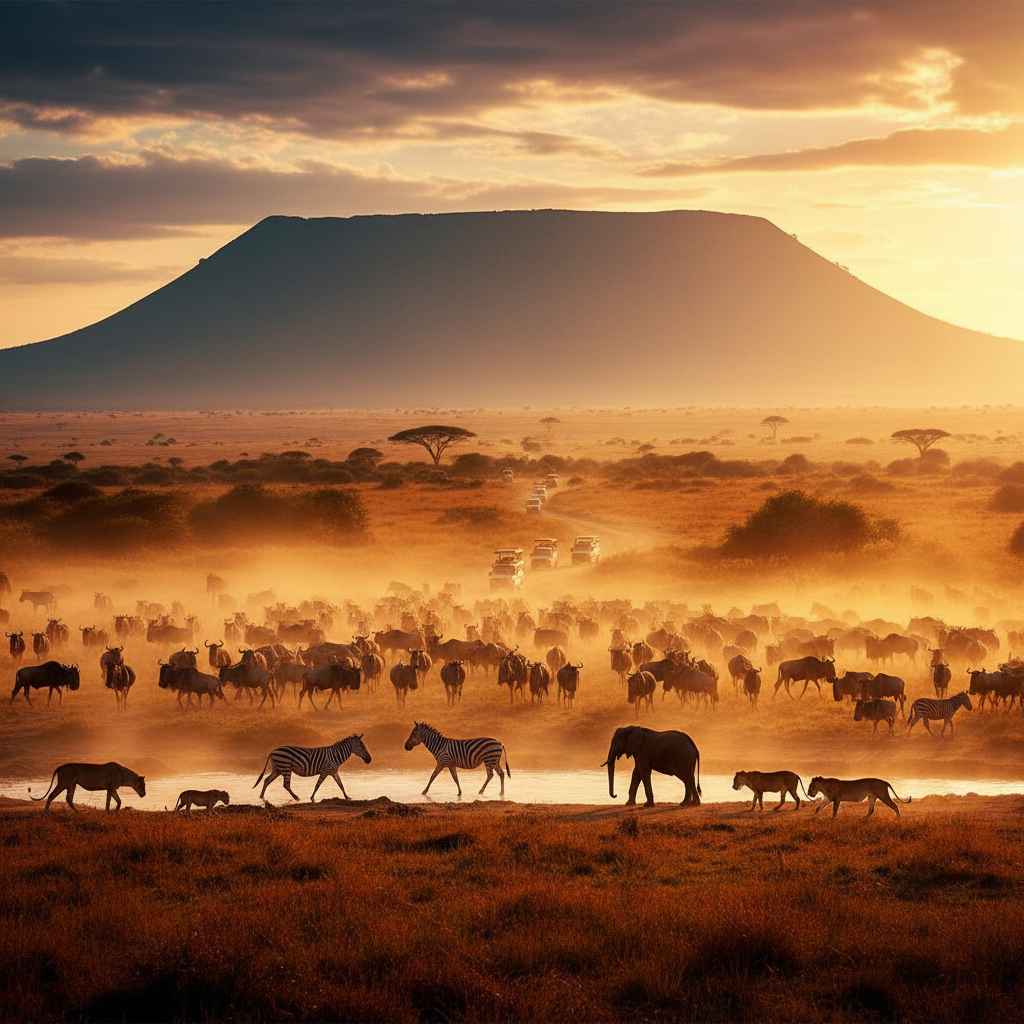
6-Day Tanzania & Serengeti Adventure Safari: Witness the Great Migration
Embark on a thrilling 6-day adventure safari in Tanzania & Serengeti, witnessing the Great Migration, Ngorongoro Crater, and extraordinary wildlife up close.
- Duration: 6 Days
- Estimated Budget: $2,400–$4,800
- Best Time to Visit: June-October for the Great Migration; January-March for calving season.
- Destination: Tanzania & Serengeti
Prepare for the adventure of a lifetime in Tanzania, where the raw power of nature unfolds before your eyes. This 6-day safari plunges you into the heart of the Serengeti's Great Migration and the wildlife-rich Ngorongoro Crater, promising an unparalleled experience for every thrill-seeker and animal lover. Witnessing millions of wildebeest on their epic journey is a spectacle that will redefine your understanding of the wild.
Waking to the distant roar of a lion across the Serengeti plains, you anticipate the day's adventure then stepping out onto your private veranda to watch a herd of wildebeest graze just beyond your tent. This isn't a dream; it's a typical morning in the Serengeti, the world's most iconic wildlife reserve. Covering a staggering 14,750 square kilometers of golden savanna, this is where 1.5 million wildebeest, 250,000 zebra, and 500,000 Thomson's gazelle embark on the greatest land migration on Earth. You'll witness this epic drama unfold, with predators like lions, leopards, and cheetahs always lurking, turning every game drive into a pulse-pounding adventure. Prepare for an immersion into the wild heart of Africa, where every turn reveals a new, breathtaking spectacle.
Beyond the endless plains of the Serengeti, your adventure takes you to the Olduvai Gorge, often called the "Cradle of Mankind," where ancient hominid fossils whisper tales of our earliest ancestors. This colossal intact volcanic caldera, 19 kilometers in diameter and 600 meters deep, is a natural amphitheater teeming with an unparalleled density of wildlife. Here, you'll encounter the highest concentration of lions in Africa and a rare glimpse of the last black rhinos in Tanzania, all against a backdrop of stunning, verdant landscapes. The crater floor is an extraordinary arena where life thrives in abundance, offering an intimate and unforgettable safari experience that truly sets Tanzania apart.
This journey isn't just about spotting the 'Big Five'; it's about experiencing the raw, untamed beauty of nature in its purest form. From the thrill of a hot air balloon safari at dawn, drifting silently over the Serengeti as the sun paints the savanna in hues of gold, to the authentic cultural immersion of a Maasai village visit, every moment is crafted for discovery. You'll taste local flavors like smoky nyama choma, sip a crisp Kilimanjaro beer, and fall asleep to the sounds of the African night. This is more than a trip; it's an expedition into the soul of Africa, a place where adventure and wonder converge to create memories that will last a lifetime.
Arrival in Arusha: Coffee, Culture, and the Center of Africa
Arrive at Kilimanjaro International Airport (JRO), clear customs, and transfer to your lodge in Arusha.
This is your gateway to the Tanzanian adventure, allowing you to settle in and acclimate to the East African rhythm. The journey from the airport offers your first glimpse of the Tanzanian landscape.
Visit the Cultural Heritage Centre in Arusha, a vibrant hub showcasing Tanzanian art, crafts, and gemstones.
This center offers an excellent introduction to Tanzanian culture and is the best place to find authentic Maasai crafts and exquisite tanzanite jewelry. You'll see skilled artisans at work and learn about traditional art forms.
Take a quick stop at the Arusha Clock Tower, famously known as the geographic center of Africa.
It's a fun, quirky landmark and a great photo opportunity to mark your arrival at the heart of the continent. It offers a sense of place and connection to the vastness of Africa.
Enjoy a leisurely stroll through the lush grounds of the Arusha Coffee Lodge, learning about coffee cultivation.
This is a wonderful way to unwind after your journey, surrounded by the fragrant coffee plantations. You'll gain insight into one of Tanzania's most important agricultural products.
Settle into your luxurious accommodations at the Arusha Coffee Lodge, enjoying the tranquility of the estate.
The lodge offers unparalleled comfort and service, providing a perfect start to your safari adventure. You'll wake up refreshed and ready for the excitement of the coming days.
Leif's Tip: Upon arrival, take a moment to breathe in the African air and soak it all in. Don't rush your first day; allow yourself to settle into the pace, hydrate well, and enjoy the unique charm of Arusha before the safari excitement truly begins.
Most visitors to Tanzania struggle with the sheer volume of safari operators, trying to discern reputable companies from those offering cut-rate, unethical experiences, or navigating the complex logistics of internal flights between distant parks like the Serengeti and Ruaha. You're faced with the daunting task of understanding seasonal wildlife movements to catch the Great Migration, knowing which tented camps offer genuine wilderness immersion versus glorified hotels, and deciphering the best time to visit the Ndutu plains for calving season without getting caught in peak tourist crowds. Then there's the challenge of securing permits for exclusive areas or understanding the nuances of tipping culture in a way that feels respectful and appropriate. This is precisely where Leif steps in, transforming what could be an overwhelming planning process into a seamless, confident journey.
Arusha Coffee Lodge sets the stage for a journey where every detail is meticulously handled from the moment you arrive. You won't be wondering if your driver is taking you to the best spots or if you're missing a crucial photographic opportunity. Instead, Leif ensures your packed breakfast is ready, your camera settings are optimized for low light, and even offers a quick Swahili phrase to greet your guide. Leif anticipates your need for a mid-morning break at a scenic kopje, away from the main tracks, ensuring every moment of your safari is curated for discovery and comfort, not second-guessing.
The crisp morning air, carrying the scent of acacia and damp earth, fills your lungs as you set out on your daily adventure, completely unburdened by logistics. You feel the profound satisfaction of knowing every detail has been meticulously handled, allowing you to fully immerse yourself in the vastness of the savanna and the drama of the wild. There's a deep sense of presence as you watch a pride of lions stalk their prey, or witness a herd of elephants gracefully move through the plains, because you're not distracted by planning anxieties. This journey becomes an intimate dance with nature, leaving you with vivid memories and a profound connection to Africa's heartland, ready for the next breathtaking spectacle.
Best Time to Visit Tanzania & Serengeti
June-July for the dramatic Grumeti River crossings of the Great Migration, offering incredible predator action.
August-October for the iconic Mara River crossings, where wildebeest face down crocodiles and strong currents.
January-March for the calving season in the Southern Serengeti (Ndutu region), a time of new life and easy predator sightings.
Avoid the heavy rainy season (April-May) as some roads can become impassable and wildlife viewing can be challenging.
For a balance of good weather and fewer crowds, consider late May or early November, often referred to as 'shoulder seasons'.
Getting Around Tanzania & Serengeti
Flying into Kilimanjaro International (JRO) is generally the most convenient for northern circuit safaris, with direct flights to major hubs.
Internal bush flights are essential for saving time between Arusha, the Serengeti, and Ngorongoro; book these well in advance as seats are limited.
Safari vehicles are typically 4x4s with pop-up roofs for optimal game viewing; ensure your tour operator provides comfortable, well-maintained vehicles.
Confirm that your safari package includes all transfers, from airport pickups to inter-camp movements, to avoid unexpected costs or logistical headaches.
Consider a private vehicle and guide if your budget allows for maximum flexibility and personalized game drive experiences.
What to Pack
- Lightweight, breathable clothing in neutral colors (khaki, olive, brown) to blend in and avoid attracting insects.
- A wide-brimmed hat and sunglasses for sun protection during long hours in the open safari vehicle.
- Good quality binoculars are non-negotiable for spotting distant wildlife and enhancing your viewing experience.
- A reliable camera with a telephoto lens to capture incredible wildlife moments from a distance.
- High SPF sunscreen and insect repellent (containing DEET) are crucial for protection against the elements and mosquitoes.
- Comfortable walking shoes or hiking boots if you plan on any walking safaris or village visits.
- A light jacket or fleece for early morning game drives and cooler evenings, as temperatures can drop significantly.
- A small daypack for carrying essentials like water, snacks, camera, and binoculars during game drives.
Money-Saving Tips
- Opt for mid-range tented camps over luxury lodges; many offer excellent experiences with comfortable amenities at a fraction of the cost.
- Travel during the shoulder seasons (April-May, November) to potentially find lower rates on accommodations and fewer crowds.
- Consider a group safari rather than a private one; sharing the cost of the vehicle and guide can significantly reduce per-person expenses.
- Book your safari package well in advance to secure better deals and availability, especially during peak migration season.
- Bring some Tanzanian Shillings for small purchases, but US dollars are widely accepted for larger expenses and tips.
Local Insights
- Learn a few basic Swahili phrases like 'Jambo' (Hello) and 'Asante sana' (Thank you very much); locals appreciate the effort.
- Tipping is customary and expected; budget around $15-20 per person per day for your guide and camp staff, and tip in USD.
- Always ask for permission before taking photos of local people, especially in Maasai villages, and be prepared for a small fee.
- Respect wildlife by maintaining a safe distance and never feeding animals; your guide will ensure ethical viewing practices.
- Be mindful of water conservation, especially in remote camps, as water is a precious resource in many parts of Tanzania.
Frequently Asked Questions
What's the best time to witness the Great Migration?
For the dramatic river crossings, aim for June-July at the Grumeti River or August-October at the Mara River. If you're hoping to see the wildebeest calving, January-March in the Ndutu region of the southern Serengeti is prime time for adorable baby animals and intense predator action.
Do I need any vaccinations or malaria medication?
Yes, a yellow fever vaccination is required for entry into Tanzania. It's also highly recommended to take malaria prophylactics, as malaria is present in many areas. Always consult your doctor or a travel clinic well in advance of your trip for the most current health advice.
How do I get to the Serengeti and Ngorongoro Crater?
You'll typically fly into Kilimanjaro International Airport (JRO). From there, you'll take a bush plane directly into the Serengeti (often from Arusha) for convenience. For the Ngorongoro Crater, it's usually accessed by a 4WD vehicle from Arusha or a nearby lodge, as bush planes don't land directly in the crater.
What kind of accommodation can I expect on safari?
Accommodation ranges from luxurious tented camps like Four Seasons Serengeti and Singita Grumeti (often all-inclusive with incredible amenities) to more mid-range tented camps. These camps offer a blend of comfort and immersion in nature, with amenities like en-suite bathrooms, comfortable beds, and delicious meals. Ngorongoro Crater Lodge offers a truly unique experience perched on the crater rim.
Is it safe to travel to Tanzania for a safari?
Tanzania is generally safe for tourists, especially on organized safaris. Tour operators prioritize safety, and guides are highly experienced. As with any travel, it's wise to take standard precautions like securing valuables and being aware of your surroundings, especially in urban areas. In the parks, always follow your guide's instructions regarding wildlife.
What should I pack for a safari?
Pack light, breathable clothing in neutral colors (khakis, greens, browns) to blend in and avoid attracting insects. Include a warm jacket or fleece for cool mornings and evenings, a wide-brimmed hat, sunglasses, sunscreen, insect repellent, comfortable walking shoes, and a good camera with extra batteries and memory cards. Don't forget any personal medications.
What's the tipping etiquette in Tanzania?
Tipping is customary and appreciated. For safari guides and camp staff, a general guideline is $15-20 per person per day. This can be given at the end of your safari or stay. For other services like porters or restaurant staff, smaller amounts are appropriate. Always tip in local currency or US dollars.