Singapore Food Lover's Guide: 5 Days Eating Through the World's Best Hawker City
Devour Singapore's legendary hawker scene and Michelin-starred dining over 5 days. This guide is your passport to the city's best eats.
- Duration: 5 Days
- Estimated Budget: $1,200–$3,500
- Best Time to Visit: February-April and July-September for drier weather and fewer crowds.
- Destination: Singapore
Singapore isn't just a city; it's a culinary pilgrimage. For five days, we're diving headfirst into the vibrant hawker centres, Michelin-starred street food, and innovative modern Singaporean restaurants that make this island nation a global food mecca.
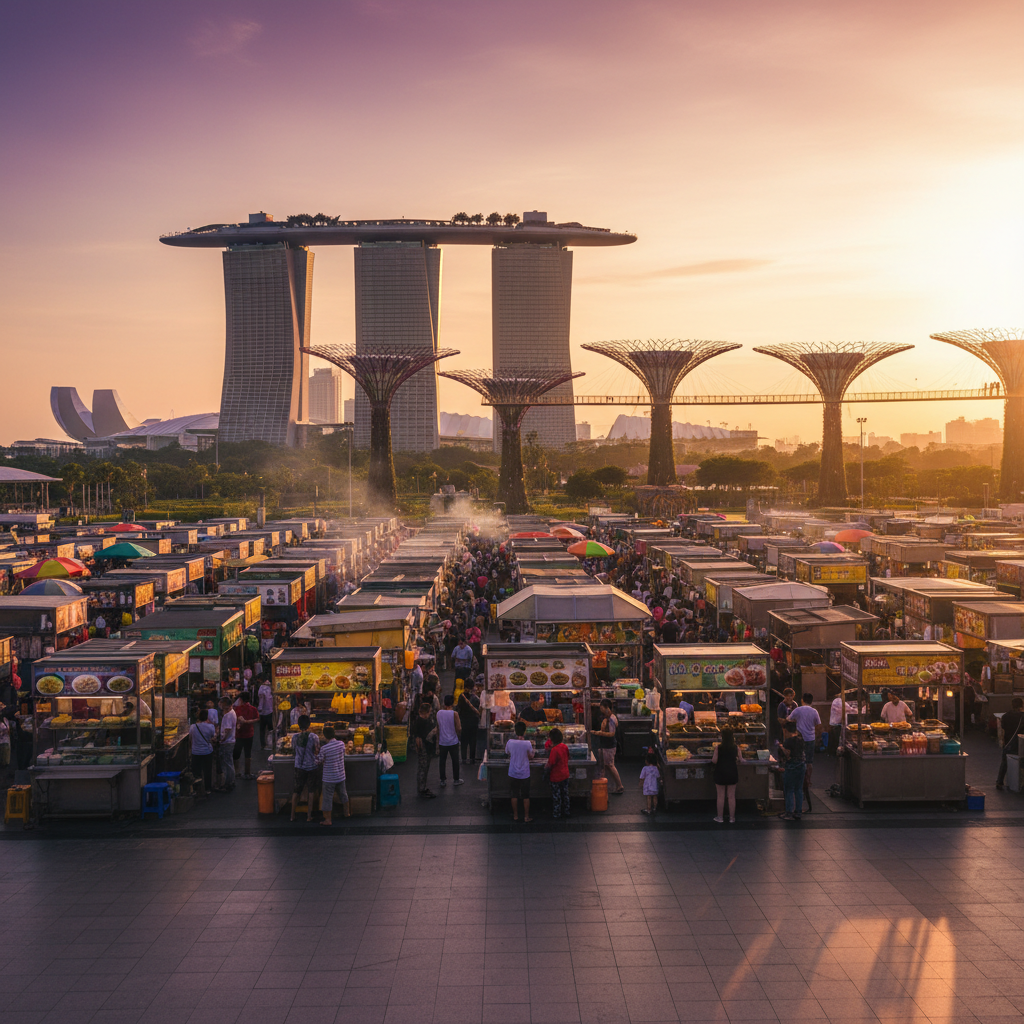
Stepping into the bustling lanes of a hawker center, like the one nestled beneath a multi-story carpark, is an immediate immersion into the heart of local life. The air thrums with the sizzle of woks, the clatter of plates, and the murmur of a hundred conversations, all underscored by the tantalizing aroma of spices, grilled meats, and simmering broths. Here, generations-old recipes are perfected daily, served from humble stalls that often boast Michelin recognition. It's a democratic dining experience where everyone, from office workers to families, gathers for affordable, world-class meals. This isn't just about eating; it's about experiencing the vibrant tapestry of cultures that have shaped this nation's unique culinary identity, one delicious, steaming plate at a time. You'll quickly discover that the true pulse of the city beats strongest around its communal dining tables.
How do you navigate the sheer volume of incredible food options without feeling overwhelmed? It's a valid concern when every corner seems to offer another mouth-watering discovery. The reality is, you don't need to try everything; you need to try the right things, at the right places, and at the right time. This guide cuts through the noise, steering you towards the legendary stalls and hidden gems that define Singapore's food scene. We'll show you how to identify the best versions of classic dishes, from the perfect char on a satay stick to the most fragrant chicken rice, ensuring every bite is a highlight. Forget endless scrolling through reviews; we've done the legwork so you can focus on savoring each culinary adventure.
Food lovers spend their mornings chasing the perfect breakfast, whether it's a traditional kaya toast set with soft-boiled eggs and strong kopi at an old-school coffee shop, or a peppery bowl of bak kut teh to kickstart the day. Afternoons are often a delicious blur of hawker hopping, sampling different regional specialties, from fiery laksa to smoky char kway teow, punctuated by refreshing ice kachang. Evenings transition into exploring more refined dining experiences, perhaps a modern take on local flavors or an international culinary masterpiece. The rhythm of Singapore for a food enthusiast means constant discovery, from the simplest street food to the most elaborate tasting menu, all while soaking in the city's unique blend of tradition and innovation.
Chinatown Feast: From Hawker Legends to Craft Cocktails
Kick off your culinary adventure at Maxwell Food Centre, home to some of Singapore's most iconic hawker stalls.
This bustling hawker centre is a must-visit for any food lover, offering a fantastic introduction to Singapore's diverse street food scene. It's where you'll find the legendary Tian Tian Hainanese Chicken Rice.
Explore the historic Chinatown Complex Food Centre, the largest hawker centre in Singapore with over 260 stalls.
This multi-story complex offers an incredible array of traditional dishes, many at incredibly affordable prices. It's a true local experience, showcasing the heart of Chinatown's culinary heritage.
Wander through the vibrant Chinatown Street Market, soaking in the sights, sounds, and smells.
Beyond the food, the street market offers a glimpse into Chinatown's cultural tapestry, with traditional goods, souvenirs, and snacks. It's perfect for a leisurely post-lunch stroll.
Experience modern Singaporean cuisine and craft cocktails on Ann Siang Hill, a charming area known for its beautifully restored shophouses.
Ann Siang Hill offers a sophisticated contrast to the hawker centres, with upscale restaurants and trendy bars. It's the perfect spot to unwind and enjoy Singapore's contemporary dining scene.
End your evening with a nightcap at a speakeasy bar hidden within the Ann Siang Hill area.
Singapore has a thriving cocktail scene, and Ann Siang Hill is home to some of the best hidden gems. It's a great way to experience the city's nightlife in a relaxed, intimate setting.
Leif's Tip: Upon arrival, grab a local SIM card for easy navigation and food research on the go. Also, always carry small denominations of Singapore dollars, as many hawker stalls prefer cash and may not accept cards. Don't be afraid to try new things – that's where the real culinary discoveries happen!
The sheer number of food options in a city like Singapore can be genuinely overwhelming. You might find yourself staring at a hawker centre menu with hundreds of dishes, unsure which stall offers the authentic version, or how to distinguish between a tourist trap and a true local gem. Then there's the challenge of navigating different neighborhoods, understanding local customs like 'chope-ing' a table, and knowing the best times to visit popular spots to avoid the longest queues. Without a clear plan, you could spend precious hours researching or, worse, end up with a mediocre meal in a city renowned for its culinary excellence. This is precisely where Leif steps in, transforming potential frustration into effortless discovery, guiding you through the culinary labyrinth with precision and insider knowledge.
When you're standing at the entrance of Tekka Centre in Little India, the vibrant aromas and bustling energy might feel a bit dizzying. You might wonder which stall serves the most authentic roti prata, or where to find a truly fiery fish head curry. Leif has already anticipated this moment. Your personalized itinerary will highlight the exact stall, perhaps 'Prata Saga' for its crispy, flaky prata, or 'Allauddin's Briyani' for a fragrant, spiced rice dish, complete with the 'why visit' and 'insider tip' that makes all the difference. You'll know what to order, how to order it, and even the best time to go to avoid peak crowds, ensuring you savor every moment without a hint of uncertainty.
You'll arrive in Singapore with a culinary roadmap that feels like it was crafted by a local food critic who's also your best friend. Instead of aimlessly wandering, you'll confidently stride towards the next gastronomic adventure, knowing exactly what delights await. The difference is savoring a perfectly balanced bowl of laksa, its rich coconut broth warming you from within, without having wasted a single moment searching for it. You'll experience the joy of discovering a new favorite dish, the satisfaction of a perfectly executed meal, and the sheer delight of a trip where every bite is a revelation. Arriving in this food paradise with such a meticulously planned itinerary means your only task is to eat, explore, and enjoy.
Best Time to Visit Singapore
Singapore is a year-round destination, but for food lovers, avoid major public holidays when some hawker stalls might have shorter hours or be closed.
The shoulder months of February to April and July to September often offer slightly less intense heat and humidity, making hawker hopping more comfortable.
Go early for breakfast hawkers (before 8 AM) and late for lunch (after 1:30 PM) to beat the infamous queues at popular stalls.
Evenings are perfect for exploring hawker centres like Lau Pa Sat's Satay Street or East Coast Lagoon Food Village, which come alive after sunset.
Getting Around Singapore
The MRT (Mass Rapid Transit) is your best friend for navigating Singapore's food scene. It's efficient, air-conditioned, and connects you to almost every major hawker centre and food neighbourhood.
For destinations slightly off the MRT line, use ride-hailing apps like Grab or ComfortDelGro. They are readily available and reasonably priced.
Consider getting an EZ-Link card for seamless travel on the MRT and buses. You can top it up at any MRT station.
Walking is essential for exploring food neighbourhoods like Katong/Joo Chiat and Chinatown. Wear comfortable shoes and be prepared for the heat.
What to Pack
- Light, breathable clothing (cotton, linen) to combat the tropical humidity.
- Comfortable walking shoes – you'll be doing a lot of hawker hopping and exploring.
- A small umbrella for sun protection or unexpected rain showers.
- Reusable water bottle to stay hydrated; Singapore is hot!
- Hand sanitizer and wet wipes – essential for hawker centre dining.
- Portable power bank for your phone, especially if you're using it for navigation and food photography.
- A small, foldable bag for any food souvenirs or extra snacks you might pick up.
- Cash in small denominations (SGD) for hawker stalls, as many prefer it over cards.
Money-Saving Tips
- Embrace hawker centres! They offer incredible value for money, with full meals often costing between S$4-S$8.
- Share dishes at hawker centres to sample more variety without overspending or wasting food.
- Look out for 'set meals' at cafes like Ya Kun Kaya Toast for a complete breakfast experience at a good price.
- Skip expensive bottled water; tap water in Singapore is safe to drink, so refill your reusable bottle.
- Consider a Singapore Tourist Pass if you plan on using public transport extensively over several days.
Local Insights
- The 'chope' system: If you see a packet of tissues or an umbrella on a table or chair at a hawker centre, it means the seat is reserved. Respect this local custom!
- Don't be afraid to queue: The longest queues often indicate the best food. Join the line, it moves faster than you think, and the reward is worth it.
- Ask for recommendations: Don't hesitate to ask locals or even the hawkers themselves what their specialties are. They're usually happy to share.
- Embrace the heat: Many hawker centres are open-air. While some have fans, be prepared for the warmth. It's part of the authentic experience.
- Don't waste food: Portions can be generous, but it's considered impolite to leave a lot of food on your plate. Order judiciously or share.
Frequently Asked Questions
What is the best hawker centre in Singapore?
There's no single 'best' – it truly depends on what you're craving! For sheer variety and historical significance, Chinatown Complex Food Centre is a must. For a vibrant evening atmosphere and incredible satay, Lau Pa Sat is fantastic. If you're after Michelin-starred street food, Maxwell Food Centre is home to Tian Tian Chicken Rice. Each has its own charm and specialties, so exploring a few is key to finding your personal favorite.
How much does food cost in Singapore?
Eating at hawker centres is incredibly affordable. A full meal with a drink can easily cost between S$5-S$10. Even Michelin-starred hawker stalls usually price their dishes under S$10. Mid-range restaurants might cost S$20-S$40 per person, while fine dining can range from S$100 to several hundred per person, especially for tasting menus. You can eat exceptionally well on a budget here.
Is Singapore food expensive?
Compared to many Western cities, street food and hawker centre dining in Singapore is very inexpensive, offering incredible value for money. Restaurant dining can be comparable to other major global cities, but the ubiquity of high-quality, affordable hawker food means you can enjoy world-class cuisine without breaking the bank. It's only expensive if you choose to eat exclusively at high-end establishments.
What is the must-eat food in Singapore?
If you have to pick just one, Hainanese Chicken Rice is the national dish and an absolute must-try. Beyond that, don't miss Laksa (especially the Katong style), Char Kway Teow for its smoky 'wok hei' flavor, and Chilli Crab for a quintessential seafood experience. For breakfast, a Kaya Toast set is essential, and for dessert, Ice Kachang or Chendol are wonderfully refreshing.
How do you find the best hawker stalls?
Look for the longest queues – locals know where the good food is! Also, many stalls proudly display Michelin Bib Gourmand or Michelin Star stickers, or 'Singapore Food Masters' awards. Don't be afraid to ask locals for recommendations; Singaporeans are passionate about their food. Our guide also points you directly to many of the most acclaimed and beloved stalls.
What's the etiquette for reserving a table at a hawker centre?
The unofficial but universally understood rule is to place a packet of tissues (or a small item like a water bottle) on an unoccupied table or chair. This 'chope-ing' indicates the seat is taken while you queue for your food. It's a polite and efficient system, just remember to retrieve your tissues once you're done eating!
Can I use credit cards at hawker stalls?
While some larger or more modern hawker centres and stalls are starting to accept cashless payments (like PayNow or e-wallets), cash is still king at the majority of hawker stalls, especially the older, more traditional ones. It's always a good idea to carry small denominations of Singapore dollars to avoid any inconvenience.