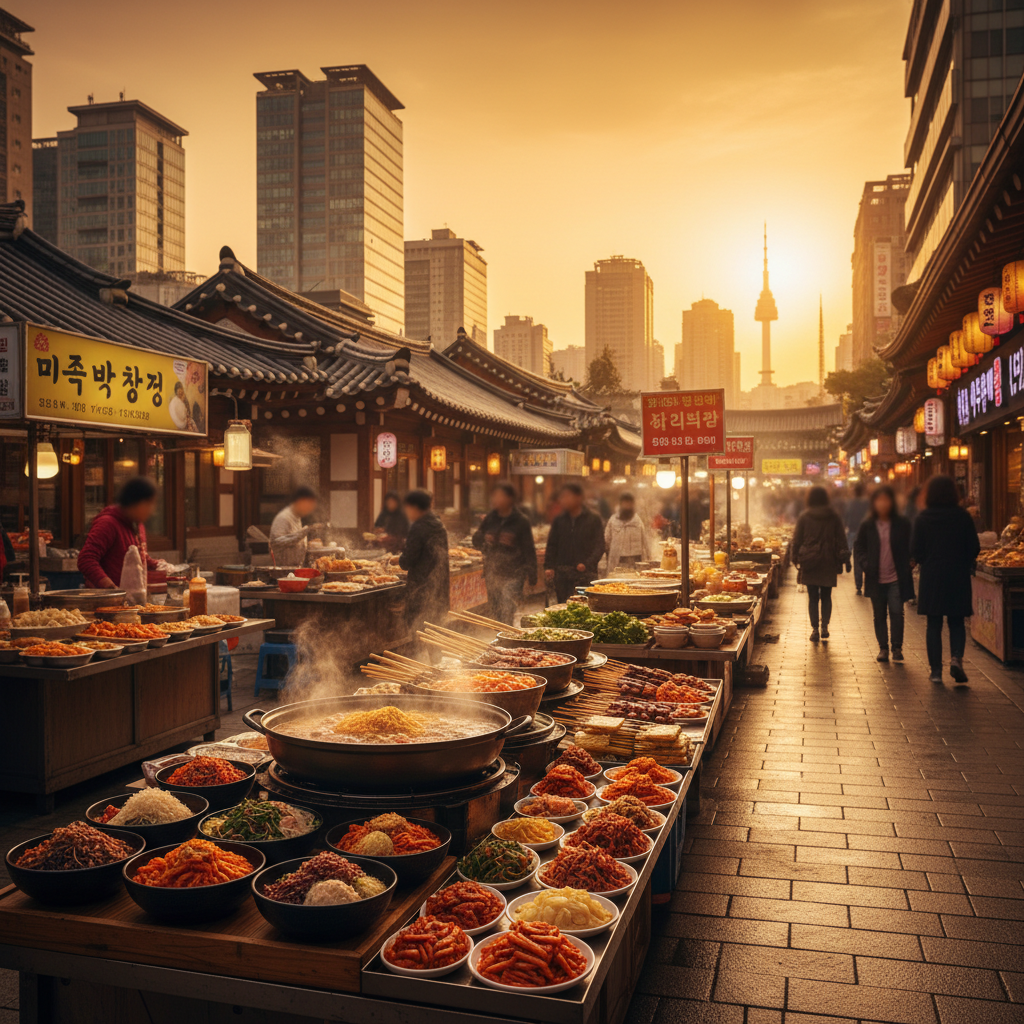
Seoul Food Lover's Guide: 4-Day Korean Cuisine Adventure
Dive into Seoul's vibrant food scene with this 4-day guide. Explore markets, BBQ alleys, and hidden gems for an authentic Korean culinary journey.
- Duration: 4 Days
- Estimated Budget: $200–$320
- Best Time to Visit: April-May and September-October for pleasant weather and vibrant outdoor markets.
- Destination: Seoul, South Korea
<p class="guide-blog-backlink">📖 Planning a trip to Seoul? Read our complete <a href="/blog/seoul-south-korea-complete-travel-guide">Seoul, South Korea Travel Guide</a> for everything you need to know before you go.</p> Seoul in 2025–2026 is undeniably Asia's most thrilling food destination, a dynamic city where ancient culinary traditions meet cutting-edge innovation. This guide bypasses the typical tourist trail, routing you directly to the heart of Korean gastronomy through bustling markets, iconic BBQ alleys, and hidden neighborhood eateries.
Stepping into the vibrant energy of Namdaemun Market, you're immediately enveloped in a symphony of sizzling street food, the chatter of vendors, and the intoxicating aroma of spices. This sprawling traditional market, one of the oldest and largest in the city, isn't just a place to shop; it's a living, breathing testament to Seoul's culinary soul. Here, you'll find generations-old stalls serving up everything from steaming bowls of kalguksu (handmade noodle soup) to crispy hotteok (sweet pancakes). It’s a place where the city’s heartbeat is palpable, and every bite tells a story of tradition and community, offering an authentic glimpse into the daily life and tastes of Seoulites.
How do you navigate the sheer volume of incredible food choices without feeling overwhelmed or missing out on true local gems? The reality is that Seoul’s culinary landscape is vast and ever-changing, with new trends emerging constantly alongside time-honored classics. Simply wandering aimlessly, while fun, often leads to tourist traps or overlooking the truly exceptional. Understanding the specific dishes each neighborhood excels at, knowing the best time to visit bustling food alleys, and recognizing the subtle cues that distinguish a local favorite from a generic eatery are crucial for a truly rewarding gastronomic journey. It’s about more than just eating; it’s about informed exploration.
Food travelers spend their evenings exploring the vibrant street food scene that ignites after dark, particularly around areas like Gwanghwamun, where temporary stalls pop up, serving an array of delicious bites. You'll find yourself sharing plastic stools with locals, savoring skewers of tteokbokki (spicy rice cakes) or odeng (fish cakes) from a vendor who has perfected their craft over decades. The rhythm of Seoul for food enthusiasts means starting your day with a traditional breakfast at a local diner, indulging in a hearty lunch at a specialized restaurant, and then diving into the bustling night markets for an unforgettable supper experience. It's a continuous feast for the senses, from morning until late night.
You'll arrive in Seoul knowing exactly where to find that perfect bowl of bibimbap or the most authentic kimchi stew, without wasting precious time sifting through endless online reviews or getting lost in translation. Instead of the common anxiety of wondering if you're eating at a tourist trap, you'll have the confidence of knowing each meal is a curated experience, a genuine taste of Korea. The difference is savoring every bite of a perfectly grilled galbi, knowing you're at a spot cherished by locals for generations, rather than settling for a generic chain. Arriving in Seoul with your culinary roadmap already laid out means you can immerse yourself fully in the flavors and culture, turning every meal into a cherished memory.
Gwangjang Market Immersion & Euljiro's Old Soul
Arrive at Incheon International Airport (ICN), clear customs, and take the AREX Express train directly to Seoul Station.
The AREX Express is the fastest and most convenient way to get from Incheon Airport to downtown Seoul, ensuring a smooth start to your culinary adventure. It bypasses traffic and drops you right in the heart of the city's transportation hub.
Check into your hotel and drop off your luggage, then head straight to Gwangjang Market, one of Seoul's oldest and largest traditional markets.
Gwangjang Market is a sensory explosion and the perfect introduction to Korean street food culture, offering an unparalleled variety of authentic dishes in a vibrant, bustling atmosphere. It's where locals and visitors alike come for classic market eats.
Dive into Gwangjang Market's famous bindaetteok (mung bean pancakes) and mayak gimbap (addictive mini seaweed rice rolls).
These two dishes are quintessential Gwangjang Market experiences, offering incredible flavor and texture for an unbeatable price. The bindaetteok are freshly ground and fried before your eyes, while the gimbap's addictive mustard sauce is legendary.
Explore the yukhoe (raw beef) alley within Gwangjang Market, a unique culinary experience.
Gwangjang Market is renowned for its fresh yukhoe, often served with a raw egg yolk and Korean pear, offering a surprisingly delicate and flavorful dish. It's a must-try for adventurous eaters and a true taste of traditional Korean cuisine.
Experience the nostalgic charm of Euljiro 3-ga's pojangmacha (tent restaurants) alley for dinner and drinks.
Euljiro's pojangmacha offer a distinctly old-Seoul vibe, with plastic-covered tents serving up hearty comfort food and plenty of soju or makgeolli. It's an atmospheric and authentic way to experience Korean nightlife and casual dining.
Leif's Tip: Upon arrival, purchase a T-Money card at any convenience store (GS25, CU, 7-Eleven) and load it with at least ₩30,000. This card is essential for seamless public transport (subway, bus) and can even be used for small purchases, making your food explorations incredibly convenient.
Seoul has countless districts, each with its own distinct culinary personality, and knowing which one offers the best sundubu jjigae versus the most authentic gopchang is the difference between a good meal and an unforgettable one. The sheer volume of choices, often with menus solely in Korean and without clear English translations, can feel like navigating a delicious but impenetrable maze. Then there's the challenge of distinguishing between a genuinely local, high-quality eatery and a tourist-oriented spot that might compromise on flavor or authenticity. Without insider knowledge, you might find yourself missing out on the hidden gems tucked away in alleys, or wasting time in areas that don't align with your specific culinary interests. This is precisely where Leif steps in, cutting through the noise to deliver a curated, authentic, and delicious food journey tailored just for you.
When you're standing in the bustling heart of Jongno 3-ga, wondering which of the dozens of gopchang restaurants in the alley truly offers the most tender, perfectly grilled intestines, Leif has already done the legwork. Say you want to experience the vibrant energy of a pojangmacha tent, but you're not sure which ones are welcoming to foreigners or offer the freshest anju (drinking snacks) – Leif provides the specific location and even suggests what to order. You land in Incheon, pull up Leif, and within seconds you know exactly where to head for your first authentic Korean meal, complete with precise directions and a brief history of the dish. That moment when you realize you're craving some late-night tteokbokki, Leif already has a highly-rated, easily accessible spot ready for you, complete with opening hours and price estimates.
You'll arrive in Seoul feeling like a seasoned local, confident in your ability to navigate the city's incredible food scene. Instead of spending hours on your phone searching for "best restaurants near me," you'll be savoring every bite of a perfectly crisp pajeon (savory pancake) in a lively market, or enjoying a comforting bowl of budae jjigae (army stew) at a restaurant known for its rich broth. The difference is the joy of discovery without the stress of planning, allowing you to fully immerse yourself in the flavors and aromas of this dynamic city. Arriving in Seoul with a meticulously crafted food itinerary already done means your only task is to eat, explore, and enjoy, making every meal an authentic and memorable adventure.
Best Time to Visit Seoul, South Korea
Spring (April-May) offers pleasant weather for walking between food stalls and outdoor markets, with cherry blossoms adding to the ambiance.
Autumn (September-October) provides crisp, clear days perfect for exploring food alleys and enjoying outdoor dining without extreme heat or cold.
Avoid peak summer (July-August) as it can be very hot and humid, making extended outdoor food tours less comfortable.
Winter (December-February) can be cold, but it's an excellent time for hot stews, grilled meats, and cozy indoor dining experiences.
Getting Around Seoul, South Korea
Purchase a T-Money card immediately upon arrival at any convenience store (like GS25 or 7-Eleven) for seamless use on subways and buses; it's much more convenient than single-use tickets.
Seoul's subway system is incredibly efficient, clean, and extensive, making it the best way to navigate between different food districts. Download a subway app like 'KakaoMetro' or 'Naver Map'.
Buses are also excellent for shorter distances or reaching areas not directly on a subway line. They are color-coded (blue for main routes, green for local).
Taxis are readily available and affordable, especially for late-night returns after enjoying a few soju with your meal. Use 'Kakao T' app for easy booking.
Walking is essential for exploring food markets and alleys; wear comfortable shoes and be prepared for plenty of steps.
What to Pack
- Comfortable walking shoes – you'll be on your feet a lot exploring markets and food streets.
- A portable power bank – for keeping your phone charged for navigation, photos, and translations.
- A small, collapsible bag – for carrying delicious street food snacks and market finds.
- Wet wipes or hand sanitizer – essential for street food adventures where washing facilities might be scarce.
- An empty stomach and an adventurous palate – truly the most important items for this trip!
- Layers of clothing – Seoul's weather can change, and you'll be moving between warm indoor restaurants and cooler outdoor markets.
- A translation app (like Papago) – while many menus have English, it's invaluable for asking about ingredients or dietary needs.
- A reusable water bottle – stay hydrated while exploring, and you can refill it easily.
Money-Saving Tips
- Embrace street food and market stalls for breakfast and lunch; you can eat incredibly well for under 10,000 KRW per meal.
- Look for 'baekban' (set meal) restaurants for lunch, offering a variety of side dishes (banchan) with your main dish at a great value.
- Share larger dishes like Korean BBQ or stews with travel companions; most portions are generous.
- Utilize convenience stores (like CU, GS25, 7-Eleven) for affordable snacks, drinks, and even simple meals.
- Consider eating at local, non-touristy restaurants found in residential areas, as they often offer better prices and authentic flavors.
Local Insights
- Don't be afraid to try new things! Many of Seoul's best food experiences come from stepping outside your comfort zone.
- Eating is often a communal experience in Korea; expect to share dishes, especially at BBQ joints and stew restaurants.
- Learn a few basic Korean phrases like 'Annyeonghaseyo' (hello), 'Kamsahamnida' (thank you), and 'Juseyo' (please give me) – locals appreciate the effort.
- Tipping is not customary in Korea, so don't feel obligated to leave extra money.
- Many restaurants specialize in one or two dishes; if a place only serves 'sundubu jjigae,' it's likely the best you'll find.
- Be prepared for spicy food! Korean cuisine is known for its heat, but you can often request less spicy versions if needed.
Frequently Asked Questions
What's the best way to get around Seoul for food exploration?
Seoul's subway system is incredibly efficient and will get you within a short walk of almost every food destination. For shorter distances or after a late-night meal, taxis are plentiful and affordable. Consider getting a T-Money card for seamless public transport.
Is it easy to find vegetarian or vegan options in Seoul?
While traditional Korean cuisine often features meat and seafood, vegetarian and vegan options are becoming more prevalent, especially in trendy neighborhoods like Hongdae and Itaewon. Look for temple food restaurants (sanchaejeongsik) for authentic vegan experiences, and use apps like HappyCow to find dedicated eateries.
How much should I budget for food per day?
You can eat incredibly well on 50,000–80,000 KRW (€35–55) per day. Street food ranges from 3,000–8,000 KRW per item, while a satisfying Korean BBQ dinner typically costs 15,000–25,000 KRW per person. This budget allows for a mix of street food, casual meals, and a few nicer dinners.
Do I need to make reservations for restaurants?
For popular Korean BBQ spots or Michelin-starred restaurants, reservations are highly recommended, especially for dinner or on weekends. For most casual eateries and street food stalls, walk-ins are the norm. Leif will specify when a reservation is advised.
What are some essential food etiquette tips in Korea?
Wait for the eldest to start eating before you do. Don't stick your chopsticks upright in your rice bowl (it resembles incense at a funeral). It's generally considered polite to finish your banchan (side dishes) but not required. Pour drinks for others, and they will pour for you.
Can I drink the tap water in Seoul?
Yes, tap water in Seoul is generally safe to drink, though many locals and visitors prefer bottled water. Restaurants will almost always provide filtered water. If you're concerned, stick to bottled water or boiled water.
What's the best time of year to visit Seoul for a food trip?
Spring (April-May) and Autumn (September-October) offer pleasant weather for exploring markets and street food, avoiding the summer humidity and winter chill. These seasons also coincide with various food festivals, adding to the culinary experience.