2-Day Saguaro National Park Desert Adventure Guide
Explore Saguaro National Park in 2 days! Discover iconic saguaro forests, ancient petroglyphs, and breathtaking desert sunsets on this Arizona adventure.
- Duration: 2 Days
- Estimated Budget: $280–$640
- Best Time to Visit: October-April for comfortable temperatures; July-August for monsoon thunderstorms and wildflowers.
- Destination: Saguaro National Park, Arizona, USA
Beyond Tucson's city limits, Saguaro National Park unfolds into an iconic cactus forest... where towering cacti stand sentinel against a backdrop of dramatic mountains and fiery sunsets. This guide is your ticket to experiencing the most photogenic national park in the American Southwest, combining iconic natural beauty with rich cultural history. Prepare to be mesmerized by the unique Sonoran Desert landscape, unlike anywhere else on Earth.
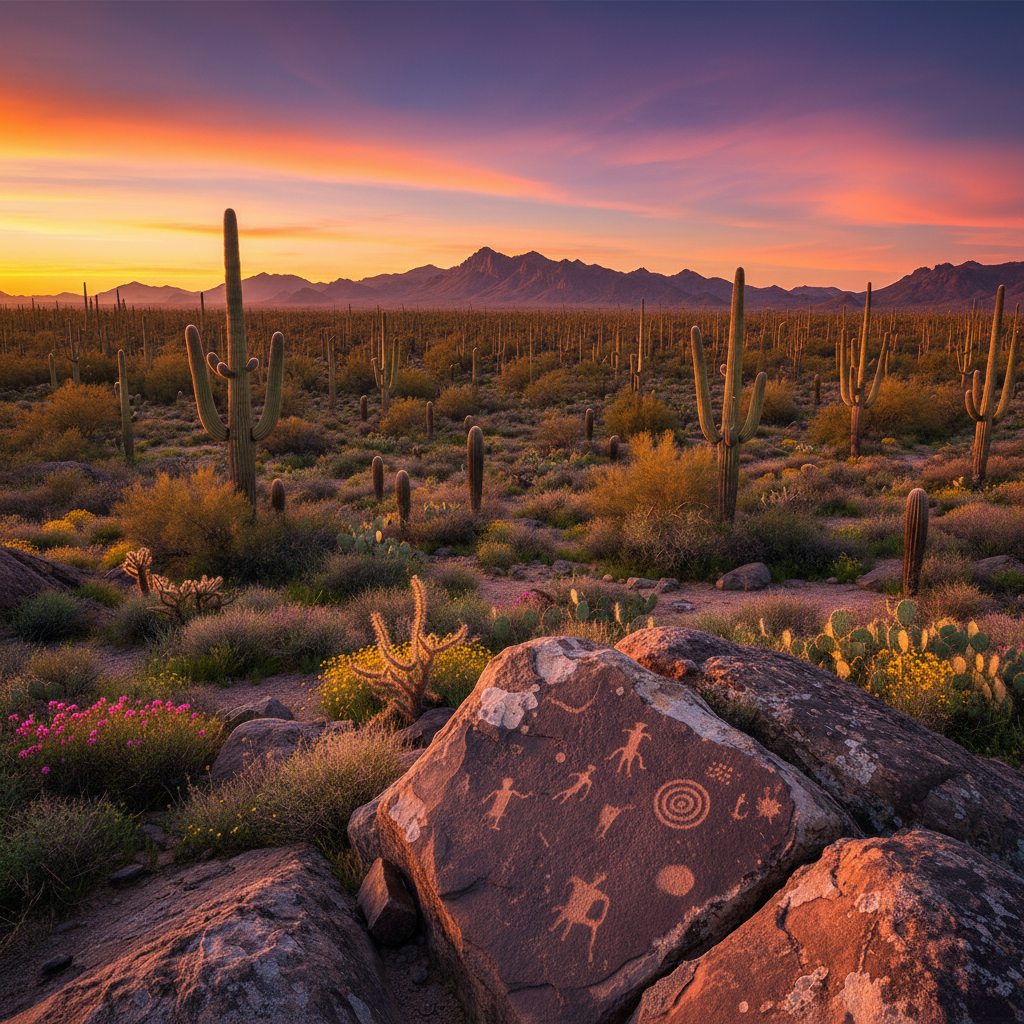
Beyond Tucson's city limits, Saguaro National Park reveals an ancient forest, not of trees, but of towering saguaro cacti, their majestic arms reaching towards the azure Arizona sky. Saguaro National Park isn't just a desert; it's a vibrant tapestry woven with t... ancient forest, not of trees, but of towering saguaro cacti, their majestic arms reaching towards the azure Arizona sky. Saguaro National Park isn't just a desert; it's a vibrant tapestry woven with the history of its indigenous peoples and the enduring spirit of the Sonoran Desert. This 2-day adventure is crafted for those who crave iconic desert scenery, a deep dive into ancient cultures, and the kind of sunsets that paint the sky in fiery hues you'll never forget. We'll explore both districts of the park, from the dense saguaro forests of the Rincon Mountains to the ancient petroglyphs of the Tucson Mountains, ensuring you capture the most photogenic vistas and experience the true heart of this unique ecosystem. Prepare to be awestruck by the sheer scale and resilience of these desert giants, some standing for over 150 years, silent sentinels guarding the secrets of the Sonoran Desert.
Our journey begins in the Rincon Mountain District (East), home to the densest saguaro forests and the breathtaking Cactus Forest Drive. Here, you'll feel truly immersed in the saguaro's world, understanding why this park is considered the most photogenic. We'll guide you to the best short hikes, like the Freeman Homestead Trail, where you can walk among these giants and truly appreciate their scale. Then, we'll shift gears to the Tucson Mountain District (West), where the landscape offers a different kind of beauty, leading us to ancient Hohokam petroglyphs at Signal Hill. These carvings, etched into the rocks centuries ago, offer a profound connection to the people who once thrived in this seemingly harsh environment. This isn't just sightseeing; it's an exploration of natural wonder and human history intertwined.
The grand finale of our desert adventure is chasing the legendary Saguaro sunset. While many places claim spectacular sunsets, Saguaro National Park delivers an experience that is truly unparalleled. We'll position you at Picture Rocks Road, a local secret and the most photographed sunset location, where the silhouetted saguaros create a dramatic, unforgettable tableau against a sky ablaze with color. This isn't just a photo opportunity; it's a moment of quiet contemplation, a chance to witness the desert's daily farewell in its most spectacular form. From the first light illuminating the saguaro arms to the last fiery glow fading behind them, this itinerary ensures you experience the full, majestic beauty of Saguaro National Park, leaving you with memories and photographs that will last a lifetime.
Saguaro Majesty: Exploring the Rincon Mountain District
Begin your desert adventure at the Rincon Mountain Visitor Center to get oriented and pick up maps.
This is your essential first stop to understand the park's layout and get expert advice from rangers. You'll also find restrooms and a gift shop here.
Drive the 8-mile one-way Cactus Forest Drive, immersing yourself in the densest saguaro forest in the park.
This scenic loop offers continuous breathtaking views of towering saguaros, providing countless photo opportunities right from your car or at designated pull-offs. It's the quintessential Saguaro National Park experience.
Hike the Freeman Homestead Trail, a 1-mile round trip loop offering intimate views of the saguaro forest and a historic homestead site.
This easy, well-maintained trail is perfect for all skill levels and provides a close-up encounter with the saguaros and other desert flora. You'll also see remnants of early desert life.
Visit the Tucson Botanical Garden for an in-depth introduction to the diverse plants of the Sonoran Desert.
This garden provides a curated and educational experience of desert flora, complementing your park visit with detailed information and beautifully arranged displays. It's a peaceful oasis.
Return to the Rincon Mountain District for sunset photography along Cactus Forest Drive or one of its overlooks.
The eastern district offers spectacular sunset views with the saguaro silhouettes against the vibrant desert sky. The light is incredible for photography.
Leif's Tip: Hydration is key in the desert, even in cooler months. Carry more water than you think you'll need, especially on any trails. Also, remember to look up for nesting owls and hawks in the saguaro arms – they're masters of camouflage!
Navigating the vastness of Saguaro National Park, especially when seeking out its most photogenic spots and ancient cultural sites, presents unique challenges. You'll quickly discover that simply driving through doesn't reveal the true magic; knowing which trails offer the best views of the iconic saguaro forests, or how to time your visit to Signal Hill for optimal petroglyph viewing without the harsh midday sun, requires insider knowledge. Many visitors miss the subtle beauty or the best light for photography because they're unsure where to go, which district offers what, or how to avoid the crowds at peak times. Distinguishing between the truly breathtaking vistas and merely pleasant scenery, or understanding the historical significance of a site beyond a simple sign, can be difficult without a curated plan. This is precisely where Leif steps in, transforming potential confusion into a seamless, enriching desert exploration.
Rincon Mountain Visitor Center, your first stop, sets the stage for a seamless exploration of the park's majestic landscapes and hidden wonders. Instead of fumbling with maps or relying on spotty cell service, you'll know exactly which turn to take off Picture Rocks Road, ensuring you arrive when the morning light perfectly illuminates the ancient Hohokam petroglyphs, bringing their stories to life without the harsh shadows of later in the day. Leif anticipates your desire for that perfect shot of the towering saguaros silhouetted against a fiery sky, guiding you to a lesser-known vantage point that avoids the main tourist clusters, allowing for an uninterrupted, personal experience. You won't waste precious daylight searching for trailheads or wondering if you've missed a key overlook; every moment is optimized for discovery and visual splendor, from the dense cactus forests to the expansive desert panoramas.
The crisp, dry air of the Sonoran Desert, carrying the faint scent of creosote after a rare rain, is what truly sets this park apart. With Leif, you'll feel that profound connection to the landscape, knowing you're experiencing Saguaro National Park not just as a tourist, but as an informed explorer. You'll arrive at each iconic viewpoint, from the majestic Rincon Mountain District to the historic sites in the Tucson Mountain District, with a sense of purpose and anticipation, confident that you're witnessing the most spectacular desert scenery North America has to offer. This isn't just about seeing saguaros; it's about feeling the ancient pulse of the desert, understanding its resilience, and capturing its unparalleled beauty through your lens and in your memories, long after the last fiery sunset has faded.
Best Time to Visit Saguaro National Park, Arizona, USA
October to April offers ideal temperatures for hiking and exploring, avoiding the intense summer heat.
Visit in spring (March-April) for vibrant wildflower blooms, adding extra beauty to the desert landscape.
Consider the monsoon season (July-August) if you're keen on dramatic thunderstorms and lush, green desert scenery, but be prepared for high heat and humidity.
Avoid May and June if possible, as these are typically the hottest and driest months before the monsoons arrive.
Early mornings are best for hiking to beat the heat and catch the desert wildlife at its most active.
Getting Around Saguaro National Park, Arizona, USA
Renting a car is non-negotiable; public transportation options to and within Saguaro National Park are extremely limited.
Be sure to fill up your gas tank before heading into the park districts, as there are no gas stations inside.
Download offline maps for the park districts, as cell service can be spotty, especially in more remote areas.
Allow ample time for driving between the Rincon Mountain District (East) and the Tucson Mountain District (West), as it can take 45-60 minutes.
Consider a high-clearance vehicle if you plan on exploring any unpaved roads, though most main attractions are accessible by paved roads.
What to Pack
- Hydration pack or reusable water bottles (at least 2-3 liters per person, even for short hikes)
- Wide-brimmed hat for sun protection
- Sunscreen with high SPF
- Lightweight, breathable clothing (long sleeves and pants are recommended for sun and scratch protection)
- Sturdy closed-toe hiking shoes or boots
- Sunglasses
- Camera with extra batteries and memory cards for those epic saguaro shots
- Snacks, especially if you plan on longer hikes, as food options are limited within the park
Money-Saving Tips
- Purchase a National Parks Pass if you plan to visit multiple national parks within a year; it's often cheaper than individual entry fees.
- Pack your own picnic lunches and snacks to avoid higher prices at limited park concessions or nearby eateries.
- Look for hotels slightly outside the immediate downtown area of Tucson for potentially better rates, while still being conveniently located.
- Take advantage of free ranger programs and guided walks offered by the park for educational and entertaining experiences.
- If staying for multiple nights, consider booking accommodations with kitchenettes to prepare some of your own meals.
Local Insights
- Always maintain a safe distance from all wildlife, especially javelina and rattlesnakes; they are part of the desert ecosystem.
- Respect the petroglyphs at Signal Hill; do not touch or deface them, as they are ancient and fragile cultural artifacts.
- The desert can be surprisingly cool after sunset, even after a hot day; bring a light jacket or sweater for evening activities.
- Be mindful of 'desert varnish' – the dark coating on rocks – as it's a natural phenomenon and part of the landscape's history.
- Support local businesses in Tucson; explore the vibrant culinary scene beyond the tourist traps for authentic Sonoran flavors.
Frequently Asked Questions
What's the best time of year to visit Saguaro National Park?
The ideal time to visit is from October to April when temperatures are pleasant for hiking and exploring. Summers (May-September) are extremely hot, often exceeding 110°F, but the July-August monsoon season brings dramatic thunderstorms and vibrant wildflower blooms, offering a different kind of beauty if you can brave the heat.
Do I need a car to explore Saguaro National Park?
Absolutely, a rental car is essential. The park is split into two districts (east and west) which are about an hour's drive apart, and public transportation within the park is non-existent. Having your own vehicle gives you the freedom to explore at your own pace, especially for sunset viewing.
What's the difference between the Rincon Mountain District (East) and the Tucson Mountain District (West)?
The Rincon Mountain District (East) generally has denser saguaro forests and is home to the scenic Cactus Forest Drive. The Tucson Mountain District (West) offers more accessible petroglyphs at Signal Hill and often provides more expansive, panoramic views of the saguaro landscape, especially at sunset.
Are there good hiking trails for all fitness levels?
Yes! Both districts offer a range of trails. For easy walks, the Freeman Homestead Trail (East) and Valley View Overlook Trail (West) are perfect. If you're looking for a challenge, the Tanque Verde Ridge Trail (East) and Hugh Norris Trail (West) offer strenuous, full-day hikes with incredible views.
Where should I stay in Tucson for easy access to the park?
For a historic and central experience, Hotel Congress in downtown Tucson is a fantastic choice ($100-150/night). If you prefer luxury and closer proximity to the Rincon Mountain District, the Loews Ventana Canyon Resort ($250-400/night) is an excellent option with stunning views.
What should I bring for a day of exploring Saguaro National Park?
Bring plenty of water (more than you think you'll need), sun protection (hat, sunscreen, sunglasses), sturdy hiking shoes, and snacks. Even in cooler months, the desert sun is intense. Don't forget your camera for those incredible saguaro and sunset shots!
Is there an entrance fee for Saguaro National Park?
Yes, there is an entrance fee. A 7-day private vehicle pass typically costs $25, which covers both districts. You can also use an America the Beautiful Pass if you have one.