Rocky Mountain National Park: 7-Day Wildlife & Photography Guide
Capture stunning wildlife and landscapes in Rocky Mountain National Park. This 7-day guide offers expert tips, locations, and itineraries for photographers.
- Duration: 7 Days
- Estimated Budget: $1,400–$2,800
- Best Time to Visit: September-October for elk rut and fall colors, June-August for wildflowers and active wildlife.
- Destination: Rocky Mountain National Park, Colorado, USA
Rocky Mountain National Park is an absolute paradise for wildlife photographers, offering unparalleled opportunities to capture iconic species against a backdrop of breathtaking alpine scenery. Right now, the park is teeming with activity, from majestic elk bugling in the meadows to bighorn sheep scaling rocky peaks, making it the perfect moment to hone your lens on nature's grandeur.
Rocky Mountain National Park isn't just a park; it's a living, breathing canvas for wildlife photographers. Imagine capturing the raw power of an elk bugling during the rut, steam rising from its breath in the crisp autumn air. This guide is crafted for those who chase the perfect light and the elusive shot, offering insights into where and when to find the park's most iconic creatures.
From the majestic moose grazing in willow-lined meadows to the delicate pikas darting among alpine rocks, RMNP offers unparalleled opportunities. The golden hours here are truly magical, painting the landscape in hues that make every reflection in Sprague Lake or Bear Lake a masterpiece. We'll delve into the best spots for those mirror-like alpine lake reflections, ensuring your portfolio shines.
But it's not just about the big game; the tundra itself is a treasure trove of unique wildlife, often overlooked by the casual visitor. This guide will lead you to the best vantage points for spotting ptarmigan, marmots, and other high-altitude specialists. Get ready to fill your memory cards with images that tell the story of the Rockies' wild heart, from the valley floors to the highest peaks.
Golden Hour Arrivals: Bear Lake Reflections & Moraine Park Elk
Check into The Stanley Hotel in Estes Park — the Victorian landmark that inspired Stephen King's The Shining, with sweeping views of the Front Range.
The Stanley is the most atmospheric base for a Rocky Mountain wildlife trip — its mountain-facing rooms give you a preview of the terrain you'll be exploring all week. The wraparound porch is the best place in Estes Park to watch the sun set on Longs Peak.
Bear Lake at sunset — the most photographed lake in the park, where Hallett Peak and Flattop Mountain reflect perfectly in the still water as the light turns golden.
The Bear Lake reflection shot is the signature image of Rocky Mountain National Park — the way the Continental Divide peaks turn pink-orange in the last 30 minutes of light is genuinely extraordinary. This is the shot that makes the whole trip worth it.
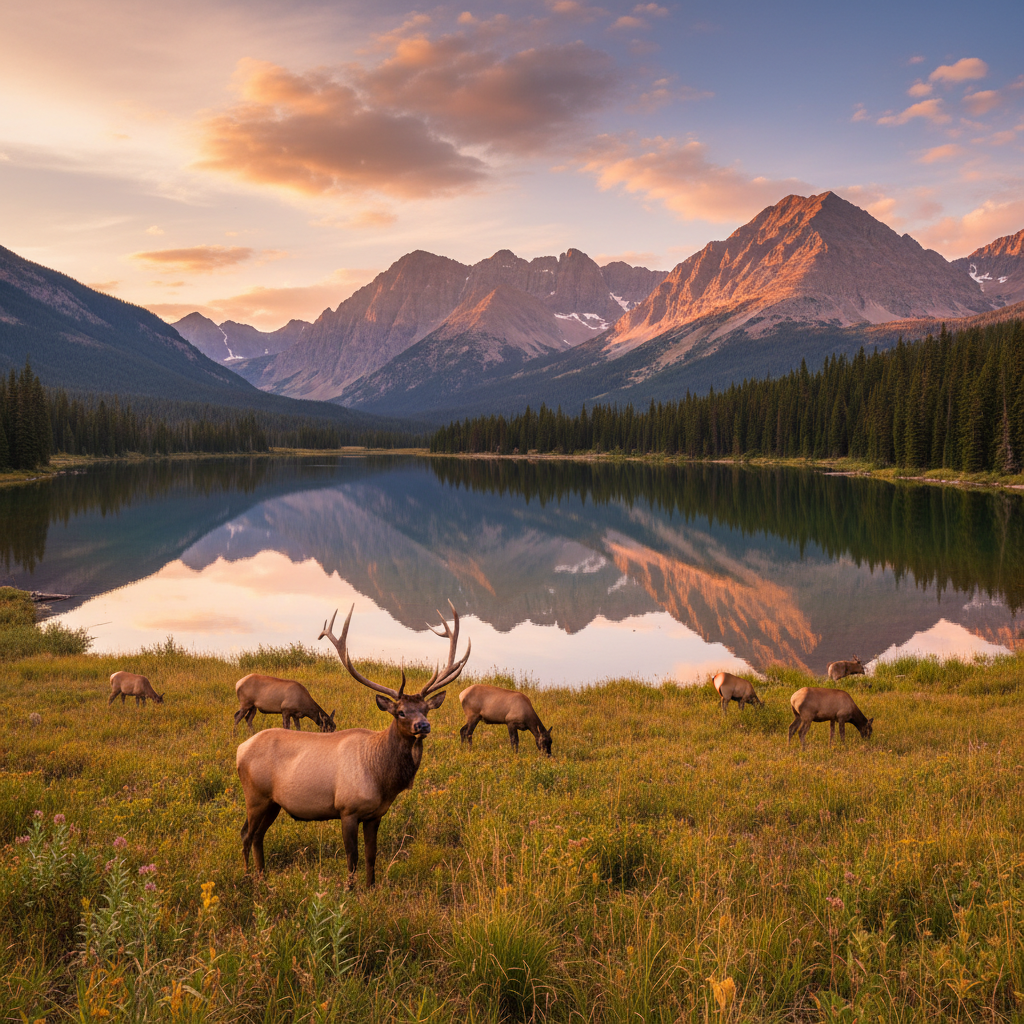
Moraine Park at dusk — the wide open meadow where elk gather during the September rut, with bulls bugling and sparring as the light fades.
Moraine Park is the best wildlife viewing location in the park — in September, hundreds of elk fill the meadow at dawn and dusk, with bulls bugling their haunting calls across the valley. Even outside rut season, the meadow reliably has elk, deer, and coyotes at golden hour.
Dinner at Seasoned in Estes Park — the best farm-to-table restaurant in town, with a menu built around Colorado ingredients and a wine list that punches above its weight.
After a day of hiking and photography, Seasoned is where Estes Park locals eat when they want a proper meal — not a tourist trap. The elk tenderloin (when available) is the obvious order, but the Colorado lamb is equally outstanding.
Night sky photography from Sprague Lake — the flat 0.8-mile loop around this accessible lake offers perfect Milky Way reflections with the Continental Divide as a backdrop.
Rocky Mountain National Park is a certified Dark Sky Park, and Sprague Lake is the most accessible night photography location in the park — the flat path means you can set up a tripod without worrying about terrain in the dark. The Milky Way core is visible June through September.
Leif's Tip: The timed entry permit system (required May-October) means you need to book your park entry reservation months in advance at recreation.gov. Buy the America the Beautiful annual pass ($80) — it covers Rocky Mountain plus every other national park and pays for itself in one trip.
Navigating the vast expanse of Rocky Mountain National Park to perfectly time the elk rut, locate elusive moose in willow-choked meadows, and capture alpine lakes at their golden hour peak presents a unique set of challenges. You're not just looking for wildlife; you're seeking the optimal light, the ideal vantage point, and the knowledge of animal behavior that transforms a snapshot into art. Without insider knowledge, you could spend precious hours driving winding roads, missing the brief window when the light is perfect over Sprague Lake or the elk are most active in Moraine Park. Furthermore, understanding the park's ever-changing weather patterns and seasonal animal movements is crucial for success, yet often difficult to ascertain from general travel guides. This is precisely where Leif steps in, transforming potential frustration into photographic triumph.
Moraine Park, as September paints the landscape in fiery hues, offers unparalleled opportunities to witness majestic elk herds. Instead of aimlessly searching, you're positioned perfectly, tripod ready, as the sun begins to kiss the peaks, illuminating the rocky slopes where these magnificent creatures often graze. Leif anticipates the subtle shifts in animal behavior and light, guiding you away from crowded viewpoints to lesser-known spots where you can capture intimate wildlife moments without disturbance. Whether it's suggesting the best time to visit Hidden Valley for a chance at spotting a snowshoe hare or pinpointing a quiet trail where pikas chatter among the talus, Leif ensures every photographic opportunity is maximized, down to the minute.
The crisp, pine-scented air fills your lungs as you review your day's captures, knowing you've experienced Rocky Mountain National Park not just as a visitor, but as a privileged observer. You've secured those breathtaking shots of a bull elk bugling against a sunrise-painted Longs Peak, or a moose reflected perfectly in a glassy alpine pond, all thanks to a meticulously crafted plan that felt effortless. There's a profound satisfaction in knowing you've not only seen the park's iconic wildlife but have also captured its essence through your lens, guided by insights that transcend typical tourist information. You're not just taking photos; you're creating a visual narrative of the Rockies, a story you'll cherish forever, and Leif is ready to help you write its next chapter.
Best Time to Visit Rocky Mountain National Park, Colorado, USA
Late spring (May-early June) is fantastic for spotting elk calves and moose, plus the wildflowers are starting to bloom. The weather can be unpredictable, so pack layers!
Early fall (mid-September to early October) is prime for the elk rut. The bugling is an unforgettable experience, and the aspen trees turn brilliant gold.
Summer (July-August) offers the most reliable weather for high-altitude hiking and photography, but it's also the busiest. Get out early to beat the crowds.
Winter (December-March) can be magical for snow photography and spotting bighorn sheep against the white landscape. Be prepared for cold temperatures and road closures.
Getting Around Rocky Mountain National Park, Colorado, USA
Timed Entry Permits are absolutely essential during peak season (typically late May to mid-October). Reserve yours well in advance on Recreation.gov, as they often sell out within minutes.
Utilize the free park shuttle system, especially for popular areas like Bear Lake Road. Parking lots fill up incredibly early, and the shuttle drops you right at trailheads.
Consider staying in Estes Park or Grand Lake to be close to park entrances. If you're staying further out, factor in significant drive times to get to the park gates.
For wildlife photography, driving slowly along Trail Ridge Road (when open) and the less-trafficked Old Fall River Road (one-way up, summer only) can yield excellent opportunities.
Parking at popular trailheads like Bear Lake or Glacier Gorge can be nearly impossible after 7 AM in the summer. Plan to arrive before sunrise or use the shuttle.
What to Pack
- Telephoto lens (at least 200mm, ideally 400mm or more) for wildlife photography. A 70-200mm is a versatile option.
- Sturdy tripod for sharp wildlife shots, especially in lower light, and for landscape photography.
- Layers of clothing, including a waterproof and windproof outer shell, even in summer. Mountain weather changes rapidly.
- Bear spray (know how to use it safely) and a whistle for personal safety on trails.
- Binoculars for spotting wildlife from a distance before approaching with your camera.
- Headlamp or flashlight for early morning starts or late evening shoots.
- Plenty of water, snacks, and a first-aid kit. Cell service is spotty to non-existent in much of the park.
- Wide-angle lens for capturing the expansive mountain landscapes.
Money-Saving Tips
- Purchase an America the Beautiful Pass if you plan to visit other national parks within a year. It's a great value.
- Pack your own lunches and snacks. Park concessions are limited and more expensive. Estes Park has several grocery stores.
- Look for accommodations outside of Estes Park or Grand Lake if you're on a tight budget. Towns like Loveland or Granby can be more affordable, but increase your drive time.
- Take advantage of the free ranger programs and visitor center exhibits for educational insights without extra cost.
- Consider camping inside the park if you have the gear. Reservations are highly competitive, so book months in advance.
Local Insights
- The elk rut in the fall is a spectacle not to be missed. Moraine Park, Horseshoe Park, and Sheep Lakes are prime viewing areas. Maintain a safe distance!
- For moose sightings, head to the Kawuneeche Valley on the west side of the park, near Grand Lake. They love the willow thickets along the Colorado River.
- Bighorn sheep are often seen near Sheep Lakes and along the cliffs of the Big Thompson Canyon as you approach the park from Estes Park.
- Always practice Leave No Trace principles. Pack out everything you pack in, stay on marked trails, and never feed wildlife.
- Altitude sickness is real. Drink plenty of water, avoid strenuous activity on your first day, and be aware of the symptoms. Estes Park is at 7,522 feet, and Trail Ridge Road goes over 12,000 feet.
Frequently Asked Questions
What's the best time of year to photograph the elk rut in RMNP?
The elk rut typically runs from mid-September through mid-October, with the peak activity often occurring in late September. Moraine Park and Horseshoe Park are prime locations, especially at dawn and dusk, when the bulls are most vocal and active.
Do I need a timed entry permit for wildlife photography in RMNP?
Yes, depending on the season and area. From late May through mid-October, you'll likely need a timed entry permit for both the Bear Lake Road corridor and the rest of the park. Always check the RMNP website for the most current requirements before your visit, as these permits are crucial for early morning access.
Where are the best places to find moose in RMNP?
Moose are often found in the Kawuneeche Valley on the park's west side, particularly along the Colorado River. Look for them in marshy areas and willow thickets near the Holzwarth Historic Site or along Trail Ridge Road's western stretches, especially at dawn or dusk.
What camera gear is essential for wildlife photography in RMNP?
A telephoto lens (300mm or longer is ideal), a sturdy tripod, and extra batteries are crucial. Consider a fast lens for low-light conditions during the rut and a wide-angle for landscapes with wildlife. Don't forget rain gear for your camera and yourself, as mountain weather can change rapidly.
How can I get those perfect alpine lake reflections?
The key is to go early in the morning, just before or at sunrise, when the wind is typically calmest. Sprague Lake, Bear Lake, and Dream Lake are excellent choices. Look for days with clear skies to maximize the reflection of the peaks and the vibrant colors of the dawn.
Are there any specific ethics or rules for wildlife photography in RMNP?
Absolutely. Always maintain a safe and respectful distance from all wildlife (at least 25 yards for most animals, 75 yards for predators like bears and mountain lions). Never feed animals, stay on designated trails, and avoid disturbing their natural behavior. Use a long lens to get your shots, not your feet.
What kind of wildlife can I expect to see on the tundra, and where?
On the tundra above treeline, accessible via Trail Ridge Road, you can spot pikas, marmots, and occasionally bighorn sheep. Look for ptarmigan, especially in the fall when their plumage changes. Pull-offs along Trail Ridge Road, particularly near the Tundra Communities Trail and Forest Canyon Overlook, offer great viewing opportunities.