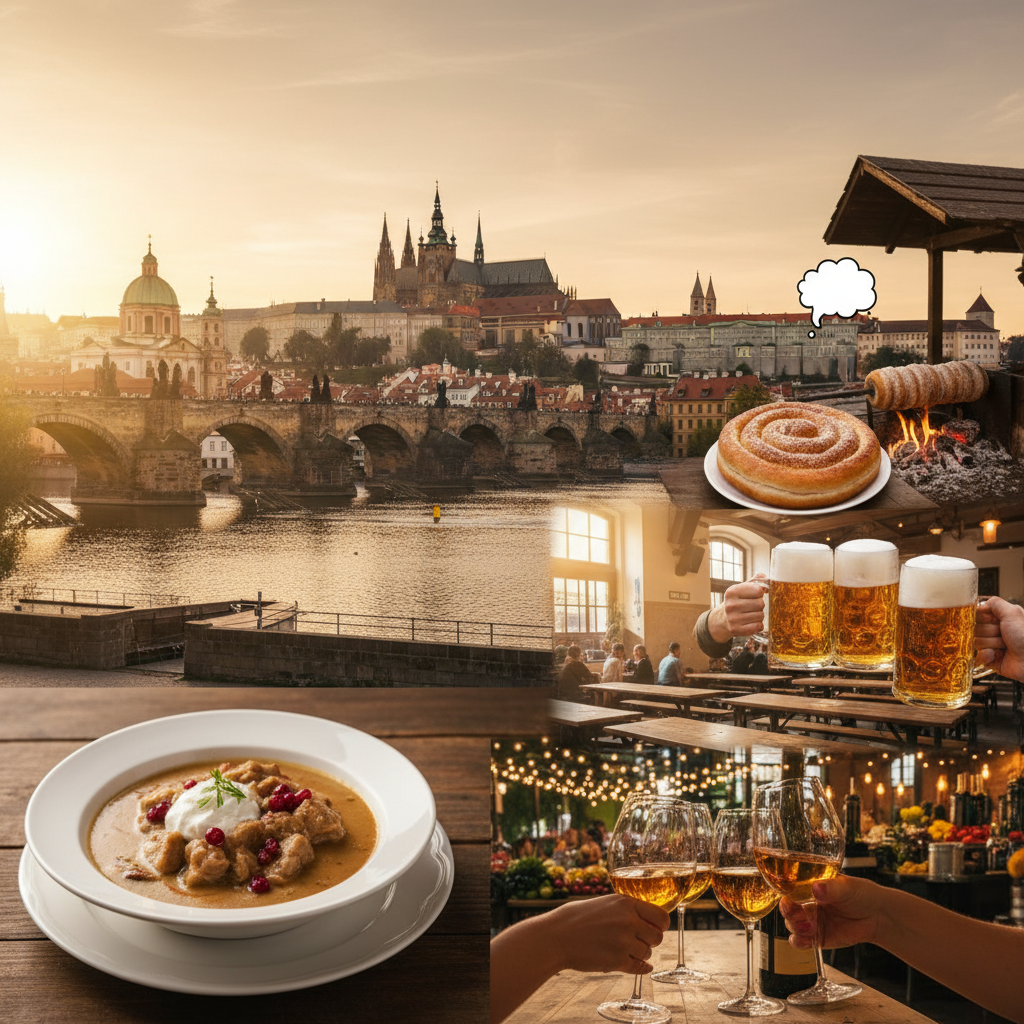
Prague Food Guide: 4 Days of Svíčková, Craft Beer & Czech Wine
Uncover Prague's culinary revolution on a 4-day food tour. From traditional svíčková to modern Vinohrady wine bars, savor the best of Czech cuisine.
- Duration: 4 Days
- Estimated Budget: $350–$600
- Best Time to Visit: April-May and September-October for pleasant weather and outdoor markets.
- Destination: Prague, Czech Republic
<p><em>Planning a trip to Prague? Read our <a href="/blog/prague-the-city-that-survived-everything">complete Prague travel guide</a> for everything you need to know — from Charles Bridge at dawn to the best svíčková in Malá Strana — before you go.</em></p>Prague's food scene, once known primarily for hearty pub fare, has quietly transformed into one of Central Europe's most dynamic culinary destinations. This guide dives deep into the tension between ancient Czech traditions, like the definitive svíčková and tank Pilsner, and the exciting new wave of craft beer, natural wine, and innovative street food that defines modern Prague.
The moment you step into the bustling atmosphere of Manifesto Market in Holešovice, you'll understand Prague's culinary evolution. This isn't your grandmother's Prague; it's a vibrant, open-air food hall where shipping containers have been ingeniously transformed into culinary outposts. Imagine the aroma of sizzling street food mingling with the clinking of craft beer glasses and the murmur of excited chatter. It’s a place where you can sample everything from modern Czech twists on classics to international flavors, all while soaking in a lively, communal vibe that feels distinctly contemporary. It’s a testament to how this city embraces innovation while honoring its gastronomic roots, making it a must-visit for any food enthusiast.
Should you try to navigate the labyrinthine world of Czech beer beyond the ubiquitous Pilsner Urquell? Here's the reality: absolutely, and it's a revelation. While the golden lager holds a cherished place, Prague's craft beer scene has exploded, offering a dizzying array of styles from hoppy IPAs to rich stouts, often brewed by passionate local artisans. You might wonder if these new-wave breweries can truly stand up to centuries of tradition, but a visit to a spot like Zlý Časy will quickly dispel any doubts. It's about discovering new favorites, appreciating the artistry of brewing, and experiencing a different facet of the city's liquid gold culture, all while enjoying a convivial atmosphere that’s uniquely Czech.
Food-focused travelers spend their evenings exploring the natural wine bars tucked away in the charming streets of Vinohrady. You'll find yourself sipping a crisp Moravian white, perhaps a Veltlínské zelené, in a cozy, intimate setting, far from the tourist throngs. This isn't just about drinking wine; it's about connecting with a burgeoning movement that champions small producers and sustainable practices. The rhythm of Prague for a culinary explorer means balancing hearty traditional meals with lighter, more sophisticated experiences. It's about discovering hidden gems, engaging with passionate sommeliers, and savoring the quiet revolution happening in the city's glass. You'll leave with a deeper appreciation for the country's viticultural heritage.
Old Town Delights: Chlebíčky, Svíčková, and Street Food Revelations
Start your culinary adventure with traditional Czech open-faced sandwiches, chlebíčky, at Lahůdky Zlatý Kříž.
This iconic deli has been serving these delightful bites for decades, offering a true taste of a classic Czech breakfast or snack. It's an authentic, quick, and delicious way to fuel your day.
Wander through the historic Old Town Square, taking in the Astronomical Clock and Týn Church.
While not a food activity, understanding the heart of Prague's history provides context for its evolving food scene. It's a beautiful, essential introduction to the city's charm.
Experience the definitive Czech dish, svíčková na smetaně, at Lokál Dlouhááá, paired with a fresh tank Pilsner.
Lokál Dlouhááá is the gold standard for traditional Czech cuisine, serving svíčková that has been slow-cooked to perfection. The tank Pilsner is an unparalleled beer experience.
Debunk the trdelník myth by seeking out a genuine Czech street food: párek v rohlíku (hot dog in a roll).
While trdelník is everywhere, it's not truly Czech. Discover the real, simple, and satisfying street food that locals enjoy, offering a glimpse into everyday Prague life.
Immerse yourself in Prague's vibrant street food scene at Manifesto Market (Holešovice location).
This innovative market transforms shipping containers into a dynamic culinary hub, showcasing diverse international and modern Czech dishes. It's a fantastic spot for a casual, lively dinner.
Leif's Tip: Upon arrival, purchase a 72-hour public transport ticket. Prague's tram and metro system is efficient and will save you time and money, especially when venturing to places like Manifesto Market or Lokál Dlouhááá, allowing you to focus on the food, not the logistics.
Between navigating the nuances of Czech restaurant etiquette, deciphering menus that often lack English translations, and knowing which seemingly traditional dishes are actually tourist traps, planning a truly authentic food journey through Prague can feel like a culinary minefield. You might find yourself wondering if that charming little place on the corner is a hidden gem or just another overpriced spot serving mediocre goulash. The sheer volume of choices, from historic pivnice to trendy new bistros, can be overwhelming, and the fear of missing out on a truly local experience is real. This is precisely where most travelers get stuck, sifting through endless reviews and second-guessing every choice, rather than savoring the anticipation of delicious discoveries.
Say you're strolling through the bustling streets near Náměstí Míru, your stomach rumbling, and you're craving something truly authentic but also modern and exciting. You're not sure if you should commit to a full sit-down meal or grab something on the go. You pull up Leif, and within seconds, it directs you to Eska, a pioneering restaurant in Karlín that reinterprets Czech cuisine with a contemporary flair, using local, seasonal ingredients. Leif highlights their famous fermented potato bread and explains why this spot is a game-changer for the city's food scene. Or perhaps you're looking for the perfect koláče for breakfast, and Leif points you to Pekárna Praktika, ensuring you start your day with a truly delicious, local pastry, saving you from aimlessly wandering or settling for a generic coffee shop.
You'll arrive in Prague knowing exactly where to find the crispiest smažený sýr, the freshest tank Pilsner, and the most intriguing Moravian natural wines. Instead of feeling overwhelmed by choices, you'll feel like a local, confidently stepping into a traditional Lahůdky for chlebíčky or a cozy Vinohrady wine bar. The difference is savoring every bite and sip, knowing you're experiencing the very best of Prague's dynamic food scene, from its ancient culinary traditions to its exciting modern innovations. Arriving with this culinary roadmap already done means your taste buds are in for an unforgettable adventure, allowing you to simply relax and indulge in the city's delicious offerings.
Best Time to Visit Prague, Czech Republic
Spring (April-May) and early Autumn (September-October) offer pleasant weather for walking between food spots and outdoor markets like Manifesto.
Avoid mid-summer (July-August) if you dislike crowds, as popular food establishments and markets can get very busy.
Late autumn and winter bring a cozy atmosphere perfect for hearty Czech dishes and warm pubs, though outdoor markets might be closed or limited.
Consider visiting during local food festivals, typically in spring or early autumn, for unique culinary experiences.
Weekdays are generally less crowded than weekends, especially for popular restaurants and markets, allowing for a more relaxed dining experience.
Getting Around Prague, Czech Republic
Prague's public transport (trams, metro, buses) is excellent and affordable; a 24-hour ticket is perfect for hopping between food neighborhoods like Vinohrady and Žižkov.
Walking is the best way to explore Old Town and Malá Strana, allowing you to discover hidden bakeries and street food vendors.
Use ride-sharing apps like Bolt or Uber for late-night returns from craft beer bars in neighborhoods like Nusle or Žižkov.
Validate your public transport ticket immediately upon boarding a tram or bus, or before entering the metro platform, to avoid hefty fines.
Consider a Prague Card if you plan on visiting many attractions in addition to your food tour, but for food alone, single tickets or short-term passes are usually more cost-effective.
What to Pack
- Comfortable walking shoes – you'll be doing a lot of walking between eateries and neighborhoods.
- A reusable water bottle to stay hydrated, especially when sampling various beers and wines.
- Layers of clothing, as Prague's weather can change quickly, particularly when moving between indoor and outdoor dining.
- An umbrella or light rain jacket, especially during spring and autumn.
- A small backpack or tote bag for carrying snacks, market finds, and souvenirs.
- A portable power bank for your phone – essential for navigating and snapping food photos.
- An open mind and an adventurous palate for trying new Czech flavors.
- A notebook or your phone's notes app to jot down your favorite food discoveries and recommendations.
Money-Saving Tips
- Embrace street food like chlebíčky and párek v rohlíku for delicious and budget-friendly lunches.
- Look for 'polední menu' (lunch menus) at restaurants, which often offer excellent value for multi-course meals during weekdays.
- Drink tap water (kohoutková voda) at restaurants instead of bottled water to save a few euros.
- Buy snacks and drinks from local supermarkets (Albert, Billa, Tesco Express) rather than convenience stores in tourist areas.
- Many craft beer bars and Lokál pubs offer better prices for beer than tourist-trap establishments in the Old Town Square.
- Consider staying in neighborhoods like Vinohrady or Žižkov for more affordable accommodation and authentic local food experiences.
Local Insights
- Don't be afraid to ask for recommendations from locals – Prague residents are often passionate about their food and beer.
- Tipping is customary but not mandatory; usually, rounding up to the nearest 10 CZK or adding 10% for good service is appreciated.
- Learn a few basic Czech phrases like 'Dobrý den' (Good day) and 'Děkuji' (Thank you) – it goes a long way.
- Don't be fooled by trdelník vendors; while tasty, it's not a traditional Czech pastry. Seek out real Czech koláče or větrník instead.
- Czech dining culture can be more relaxed; don't expect immediate service, especially in traditional pubs – enjoy the atmosphere.
- Always check the opening hours of restaurants and markets, as they can vary, especially on weekends and holidays.
Frequently Asked Questions
What's the one traditional Czech dish I absolutely must try?
Svíčková na smetaně is non-negotiable. It's a rich, slow-cooked beef sirloin in a creamy root vegetable sauce, served with bread dumplings, cranberry sauce, and a dollop of whipped cream. For the best experience, head to Lokál Dlouhááá or U Kroka; avoid places that rush the cooking process.
Is trdelník a traditional Czech pastry?
Despite its omnipresence, trdelník is not traditionally Czech. It's a Slovak/Hungarian pastry that became popular in Prague for tourists. For authentic Czech street food, seek out chlebíčky (open-faced sandwiches) or párek v rohlíku (hot dog in a roll).
Where can I find the best Czech craft beer?
Beyond the classic Pilsner Urquell, Prague has a fantastic craft beer scene. Zlý Časy in Nusle is widely considered the best craft beer bar, offering an extensive selection of local and international brews on tap. Pivní Rozmanitost in Vinohrady is also excellent.
What's special about beer from a Lokál pub?
Lokál pubs serve Pilsner Urquell directly from tanks, not kegs. This means the beer is unpasteurized, fresher, and has a smoother, richer taste. It's served at the perfect temperature and with the ideal head, making for a superior drinking experience.
Are there good options for street food beyond trdelník?
Absolutely! Manifesto Market is a fantastic place for diverse and high-quality street food, open seasonally. For traditional bites, try chlebíčky from Lahůdky Zlatý Kříž or a smažený sýr (fried cheese) sandwich from a street vendor.
Can I find good wine in Prague, or is it all about beer?
Czech wine, particularly from the Moravian region, is excellent and often overlooked. You can find fantastic natural wine bars like Veltlin in Vinohrady or Bokovka in Malá Strana, which specialize in Moravian wines. Don't miss the chance to try them!
What's the best neighborhood for a food-focused traveler to explore?
Vinohrady is arguably the best neighborhood for foodies. It boasts a high concentration of excellent restaurants, natural wine bars, craft beer spots, and charming cafes, offering a more local and diverse culinary experience away from the main tourist hubs.