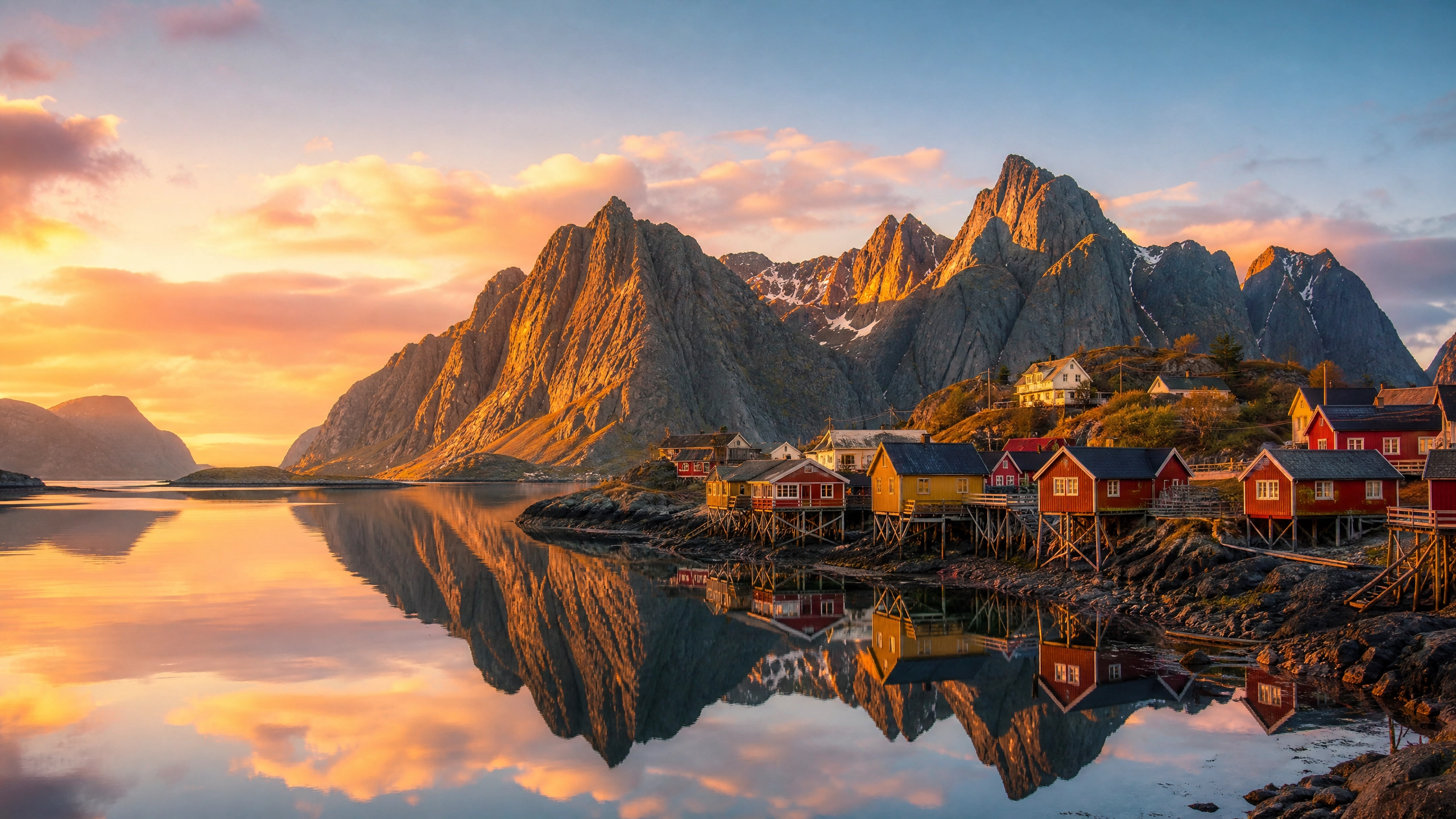
5-Day Lofoten Islands Arctic Adventure: Midnight Sun & Granite Peaks
Experience the 5-day Lofoten Arctic Adventure under the midnight sun. Hike Ryten, swim at Utakleiv, and stay in historic rorbuer fishing cabins.
- Duration: 5 Days
- Estimated Budget: $1,800–$3,200
- Best Time to Visit: June to July for the midnight sun and accessible hiking trails
- Destination: Lofoten Islands, Norway
The midnight sun completely upends the clock in the Lofoten Islands, turning a standard five-day road trip across granite spires and red-timber fishing villages into an endless stretch of golden-hour exploration. By swapping normal sleep cycles for 2 AM beach walks and midnight hikes up the Ryten ridge, you get raw, dramatic landscapes entirely to yourself.
Svinøya Rorbuer is where maritime history meets raw volcanic geography, anchoring the historic harbor of Svolvær with rows of mustard-yellow and red timber cabins perched on stilts above the freezing Barents Sea. Stepping onto these wooden docks introduces you to the lifeblood of the archipelago: massive wooden racks known as hjell, where arctic cod has been air-dried by wind and sun since the time of the Vikings. Walking past these towering frames fills the crisp air with a distinct, briny heritage that sets the tone for your entire journey. Beyond the harbor, jagged granite walls rise steeply straight out of the water, creating an immediate sense of scale that humbles every traveler who steps onto the dock. This northern port serves as the perfect launchpad for navigating the winding E10 highway, where every turn reveals deep fjords, hidden coves, and shifting light patterns that defy ordinary timekeeping.
Should you rent an all-wheel-drive vehicle right upon landing at Svolvær Airport, or rely on local buses? Here is the reality: public transit frequencies drop drastically outside the main towns, and relying on timetables will severely restrict your freedom to chase the shifting midnight illumination across remote peninsulas. Renting a capable car is non-negotiable if you want to slip away to isolated stretches of coastline at 2 AM without watching the clock. Furthermore, booking your rorbuer accommodations months in advance for peak summer is critical, because these heritage fishermen cabins fill up fast, leaving unprepared visitors stranded miles away from the best trailheads. As for navigation, the single-lane tunnels and narrow coastal bridges require steady nerves, but they lead you past untouched fishing hamlets that mass tour buses can never comfortably reach.
You will find yourself pausing along the coastal roadside more often than you expect, gripped by the surreal beauty of midnight light catching the jagged peaks of the Lofoten Wall. The daily rhythm here completely breaks away from convention; afternoons might be spent lingering over hot fish soup and fresh cinnamon buns in bustling maritime villages, while late evenings involve steep ascents over rocky ridges. Instead of sleeping when darkness falls, you trade standard bedtimes for silent beach strolls and quiet moments watching seabirds wheel across a sky painted in impossible shades of amber and rose. This unorthodox schedule transforms the natural landscape into a private playground, offering a deeply immersive arctic experience that feels entirely detached from the frantic pace of the modern world.
Cod Racks, Historic Quays & The Unending Light
Touch down at Svolvær Airport (SVJ) via a short hop from Bodø or Oslo, and immediately collect your all-wheel-drive rental car to master the dramatic curves of the E10 highway.
The E10 is not merely a transit route; it is the backbone of Lofoten, threading through towering granite walls right from the tarmac. Having a reliable AWD vehicle gives you absolute freedom to pull over whenever a sudden fjord vista demands your attention.
Drive straight to Svinøya Rorbuer in Svolvær to check into your historic fisherman’s cabin and stretch your legs along the working harborfront.
Svinøya anchors you right in Svolvær's maritime heritage, surrounded by iconic wooden drying racks where stockfish has cured in the Arctic air for centuries. It sets an immediate, authentic tone for your journey into island culture.
Take a short 15-minute drive south to Kabelvåg to explore the Lofoten Museum and historical fishing village exhibits.
Kabelvåg is the oldest trading post in Lofoten, offering profound context on how generations survived these harsh, nutrient-rich seas before modern infrastructure arrived. The restored 19th-century buildings provide a poignant look into the lives of seasonal fishermen.
Return to Svolvær for a relaxed evening stroll around the central harbor docks before settling down for your first authentic Arctic meal.
The harbor transforms under the low afternoon sun, casting a golden hue over fishing cutters and the majestic Svolværgeita peak looming overhead. It offers an effortless introduction to the relaxed, unhurried pace of island life.
Embark on a tranquil midnight harbor walk under the blazing, surreal glow of the midnight sun.
The midnight sun completely reorders your sense of time, turning night into a silent, golden-drenched extension of the afternoon. Walking the silent quays at 11 PM with the granite peaks glowing amber is a hypnotic, unforgettable Arctic initiation.
Leif's Tip: Do not fight your internal clock on the first night; embrace the midnight sun by leaning into a late schedule so you can experience the empty, glowing landscapes while everyone else is asleep.
Between coordinating ferry connections, decoding seasonal tunnel construction schedules, and figuring out which historic fishing settlements retain authentic charm versus those overrun by day-trippers, building a cohesive arctic itinerary can quickly become an exhausting logistical puzzle. The part of the region that catches independent drivers completely off guard is not the remote geography itself, but the hidden microclimates where a clear morning in one fjord can deteriorate into dense coastal fog just two miles down the road. Without local insight into how weather patterns wrap around the granite peaks, travelers often waste precious daylight hours sitting in traffic or missing prime lighting windows. Leif solves this exact friction by mapping out a seamless route that pairs your daily driving distance with accurate tide charts, weather contingency protocols, and carefully timed stops that keep you one step ahead of the crowds.
Weather is not an inconvenience to plan around in Lofoten; it is the reason a rigid itinerary fails here. When low cloud covers a ridge, Leif can reroute you from an exposed trailhead toward a sheltered museum, a working fishing harbor, or a short coastal walk where the light is still usable. When a clear evening opens after dinner, it can shift the next morning’s drive so you can take the long way along Austvågøya rather than spending that rare clear window indoors. The itinerary accounts for ferry times, grocery stops, fuel gaps between villages, and the distance that appears small on a map but becomes slow on a wet single-lane road. You keep the freedom to stop when the weather changes; the plan supplies the next sensible move instead of leaving you to rebuild the day from a phone screen in a parking lot.
Timing also changes what a five-day Lofoten trip feels like. Leif can build a route around the cabin you actually choose, whether that means waking beside a quiet cove near Kabelvåg, using Henningsvær for restaurants and galleries, or settling farther west for a slower village rhythm. It can separate the places that reward a 7 AM arrival from the places that work better after the day visitors leave, and it can reserve a weather buffer for the activity you care about most rather than pretending every day will be blue and calm. You receive food stops that are open in the season you are visiting, a practical shopping list for a rorbu kitchen, and alternatives for days when wind cancels a boat trip. The result is not a generic northern-Norway checklist; it is a trip that responds to your arrival time, comfort level, pace, and the actual conditions on the islands.
Best Time to Visit Lofoten Islands, Norway
Late May to mid-July provides the true Midnight Sun experience, where the sun never dips below the horizon and completely upends normal sleeping patterns.
June is often favored for clear, stable weather and vibrant green mountain slopes before the peak summer camper van rush.
July brings the warmest temperatures (though still crisp) and liveliest village atmospheres, but requires booking accommodations months in advance.
Late August marks the transition into the golden hour season and the return of true nighttime darkness, which occasionally hints at early northern lights.
Getting Around Lofoten Islands, Norway
Rent an all-wheel-drive vehicle immediately upon landing at Svolvær Airport (SVJ) or Leknes Airport to comfortably handle steep mountain passes and narrow coastal stretches.
Treat the E10 highway as a primary attraction rather than a mere transit route, allowing extra time for spontaneous pull-offs at dramatic viewpoints.
Expect single-lane tunnels with alternating traffic lights or narrow passing bays (møteplass); understand how to reverse safely to the nearest pull-out when yielding to oncoming traffic.
Verify ferry timetables and road construction updates if traveling to remote southern pockets like Reine or Å during peak summer maintenance windows.
What to Pack
- A windproof and waterproof GORE-TEX shell jacket and matching trousers to withstand sudden coastal rain squalls and sea spray.
- Sturdy, broken-in waterproof hiking boots with aggressive tread for navigating boggy sections, wet granite, and the stone stairs of Reinebringen.
- Thermal base layers (merino wool is ideal) for chilly midnight hikes and lingering hours on windy viewing decks.
- A high-quality sleeping mask to block out the unyielding 24-hour daylight during sleep hours.
- Swimwear and a quick-dry microfiber towel specifically designated for the midnight dip in the Arctic Ocean.
- Reef-safe sunscreen and polarized sunglasses to combat intense UV glare reflecting off granite and open water.
- A portable power bank capable of handling cold temperatures, which drain smartphone batteries rapidly during long photography sessions.
Money-Saving Tips
- Book authentic rorbuer (historic fishermen's cabins) well in advance for June and July to avoid inflated last-minute surge pricing.
- Stock up on basic groceries at regional Rema 1000 or Coop Extra supermarkets to offset the high cost of sit-down dining.
- Opt for a mix of casual local seafood kiosks like Anita's Sjømat and bakery stops instead of three restaurant meals a day.
- Travel with a companion to split steep car rental and fuel expenses, which represent a significant portion of an Arctic road trip budget.
Local Insights
- Embrace the 'midnight shift' by shifting your major hikes and coastal walks to between 10 PM and 3 AM when popular trails are completely empty.
- Respect private property when walking through historic fishing villages; many rorbuer are still active working spaces or private summer homes.
- Sample traditional stockfish (tørrfisk) directly from local producers, understanding its vital centuries-old economic and cultural role in northern Norway.
- Keep a respectful distance from local wildlife, including nesting sea eagles and grazing sheep that frequently wander freely onto the E10 roadway.
Frequently Asked Questions
Do I really need an all-wheel-drive rental car for Lofoten?
Yes, securing an all-wheel-drive vehicle is strongly recommended because the E10 highway features steep inclines, narrow coastal sections, and occasional gravel access roads leading to remote trailheads and beaches, ensuring reliable traction and confidence in all weather conditions.
What is the best way to experience the midnight sun without burning out?
Embrace a shifted daily schedule by resting during the afternoon hours when sunlight is harshest and tourist traffic peaks, then use the late evening and early morning window between 10 PM and 3 AM for hikes and coastal exploration when trails are entirely empty.
How difficult and dangerous are the famous Lofoten mountain hikes?
Trails like Ryten and Reinebringen involve steep, rugged terrain, uneven stone stairs, and exposed ridges that become extremely slick during rain; proper hiking boots, windproof layers, and strict attention to trail markers are essential for safety.
Is a midnight swim in the Arctic Ocean safe, and how cold is the water?
Arctic coastal waters hover around 8°C to 12°C in summer, making the swim bracing and brief, but completely safe if done from gradual sandy shores like Utakleiv; always keep warm dry layers and a hot flask waiting on the beach.
What is a realistic daily budget for a two-person trip to Lofoten?
A comfortable two-person budget typically requires $100 to $160 daily for an all-wheel-drive rental car, $70 to $120 per person for a mix of grocery provisions and local seafood dining, alongside $200 to $400 nightly for authentic rorbuer waterfront cabin accommodations.
Is five days enough time to explore the entire island chain?
Five days is enough to experience the highlights from Svolvær down to Reine and Nusfjord at an active pace, though you will have to prioritize specific hikes and coastal walks rather than trying to cover every single remote cove and village.
When is the best time of year to catch the midnight sun phenomenon?
The midnight sun is visible from roughly late May to mid-July, with June offering the most stable weather patterns, endless daylight hours, and vibrant alpine flora blooming across the granite slopes.