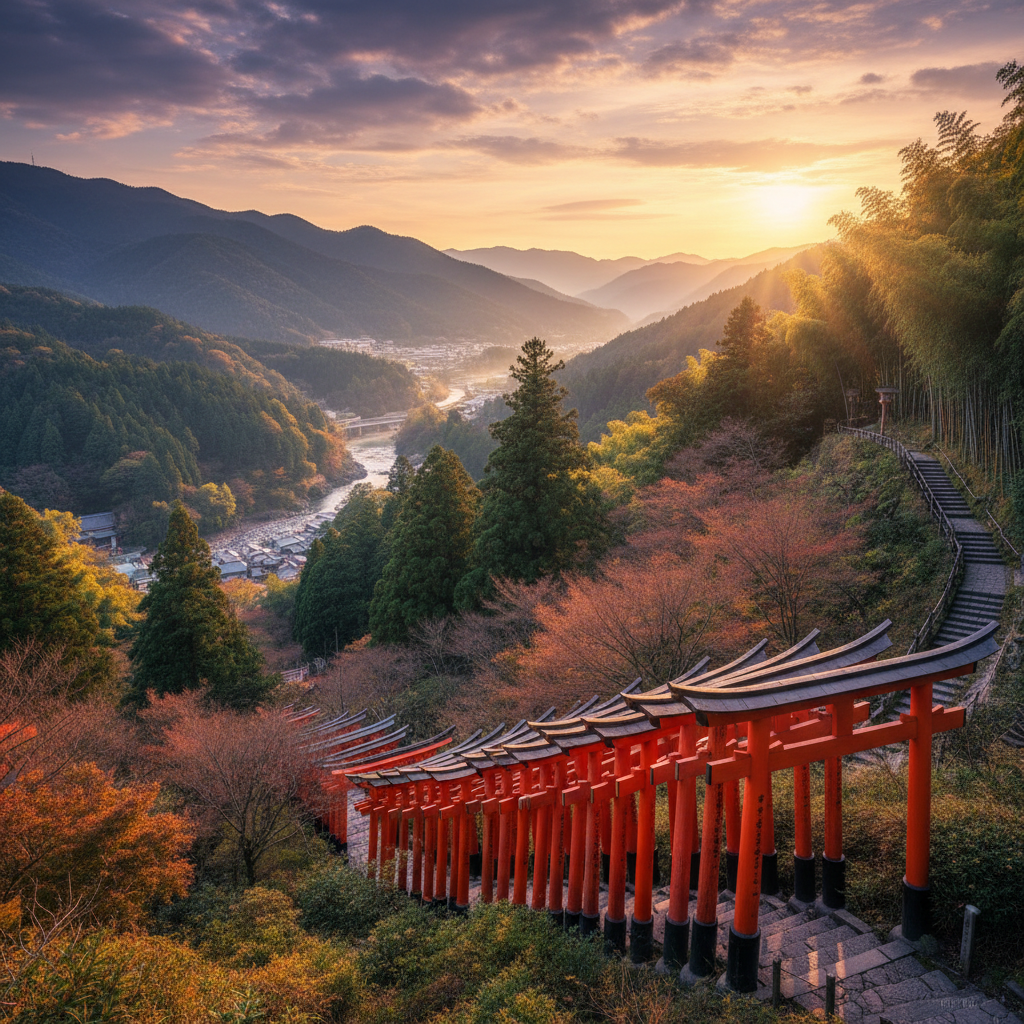
Kyoto Adventure & Hiking Guide: 5 Days of Mountain Trails & Hidden Gorges
Conquer Kyoto's mountain trails and discover hidden gorges with this 5-day adventure and hiking guide. Escape the crowds and explore Japan's wild side.
- Duration: 5 Days
- Estimated Budget: $750–$1,500
- Best Time to Visit: March-May (cherry blossoms, mild hiking weather) or October-November (fall foliage, best hiking season).
- Destination: Kyoto, Japan
Kyoto's true magic lies not in its crowded temples but in the wild, untamed mountains that cradle the city. This guide is for the adventurer who craves the crunch of forest paths underfoot, the thrill of a summit view, and the serene beauty of a hidden gorge, far from the well-trodden tourist circuit.
The serene village of Ohara, nestled in the northern mountains, rewards travelers who seek genuine tranquility and a connection to ancient traditions. Here, the air is crisp, carrying the scent of cedar and damp earth, a stark contrast to the city's urban hum. You can wander through the moss-covered gardens of Sanzen-in, a temple renowned for its exquisite beauty and quiet contemplation, or discover the unique crafts and produce at the Ohara Women's Market. It's a place where time seems to slow, inviting you to breathe deeply and immerse yourself in a landscape that has inspired poets and monks for centuries, offering a profound sense of peace often missed by those who stick to the city center.
Should you attempt the full ascent of Mount Inari, past the initial, crowded torii gates? Here's the reality: most visitors turn back after the first few hundred meters, missing the true magic of the mountain. Beyond the bustling lower shrines, the path transforms into a quiet, spiritual journey through dense forest, dotted with smaller, more intimate altars and stone fox guardians. The higher you climb, the more the crowds thin, replaced by a profound sense of solitude and breathtaking panoramic views that stretch all the way to Osaka Bay on a clear day. It's a rewarding challenge, transforming a popular tourist spot into a deeply personal adventure.
Adventure travelers spend their mornings catching the scenic Eizan Railway, watching the urban sprawl fade into lush, forested hills. You'll find yourself stepping off the train at Kurama, ready to embark on a hike through ancient cedar groves, crossing a mountain pass that leads to the charming village of Kibune. The rhythm of this journey means discovering hidden shrines tucked beneath towering trees, feeling the cool mist rise from the Kibune River, and anticipating a unique dining experience on platforms built directly over the rushing water. It's an active exploration that connects you directly with the natural and spiritual heart of the region, far from the typical sightseeing circuit.
Summiting Fushimi Inari: The Path Less Traveled
Arrive at Kyoto Station and take a short train ride to Fushimi Inari-taisha Shrine. Store your luggage in a locker at the station.
This allows you to get straight into the adventure without checking into your hotel first. Fushimi Inari is easily accessible from Kyoto Station.
Hike the full 4km round-trip to the summit of Mount Inari, passing through thousands of vermilion torii gates and numerous sub-shrines.
Most visitors only go to the first cluster of gates, so the upper trails are wonderfully uncrowded. You'll experience the true spiritual and physical challenge of this iconic site.
Descend from the summit and explore the charming streets around the base of Fushimi Inari, browsing local shops for unique souvenirs.
After your hike, it's nice to unwind and soak in the local atmosphere. You'll find traditional crafts, snacks, and a glimpse into daily life.
Travel to your hotel, check in, and take some time to relax and freshen up after your morning's adventure.
It's essential to settle in and recharge before your evening activities. A comfortable base is key for an adventure-filled trip.
Enjoy a traditional Kyoto dinner in the Pontocho alley, a narrow, atmospheric lane filled with restaurants overlooking the Kamo River.
Pontocho offers a quintessential Kyoto dining experience with a vibrant atmosphere. It's a perfect way to immerse yourself in the city's culinary scene.
Leif's Tip: Start your Fushimi Inari hike as early as possible to enjoy the lower gates with fewer crowds before they swell. By the time you reach the summit, you'll feel like you have the mountain almost to yourself, making the views and shrines even more special.
Kyoto has a labyrinth of ancient paths and mountain trails, and knowing which ones offer breathtaking views without the crowds, or which lead to a hidden temple rather than a dead end, is a genuine challenge. The difference between a memorable adventure and a frustrating detour often comes down to precise, local knowledge. You might wonder if that scenic bus route actually takes you to the trailhead, or if the 'easy' hike described online is truly suitable for your fitness level. Then there's the question of timing: when do the riverside dining platforms in Kibune open, or which season offers the best visibility for a summit view? These are the real friction points that can turn an exciting plan into an overwhelming task, and that's precisely where Leif steps in to smooth out every detail.
Say you're eager to experience the ancient Nakasendo Trail, but you're not sure how to get to the best-preserved section between Magome and Tsumago from Kyoto, or if you need to reserve accommodation in advance. Leif already planned for it. Your personalized itinerary will include precise train schedules, bus connections, and even recommendations for where to store your luggage while you hike, ensuring a seamless journey. Or perhaps you're standing at the base of Horai Rock in Arashiyama, wondering if you can rent climbing gear on site and if there are beginner-friendly routes. Leif will have already provided the contact details for the local climbing center, confirmed rental availability, and even suggested the best routes for a novice, empowering you to tackle new challenges with confidence.
You'll arrive in Kyoto knowing exactly which mountain path to take for an unforgettable sunrise, or where to find the most serene spot for a post-hike bento lunch. Instead of poring over endless maps and reviews, you'll be lacing up your boots, ready to explore the hidden waterfalls and ancient forests that most visitors never discover. The difference is feeling the cool mountain air on your face, the satisfying ache in your legs from a rewarding climb, and the profound peace of a secluded temple garden, all perfectly orchestrated. Arriving in Kyoto with every adventure, every trail, and every unique experience already mapped out means you can simply immerse yourself in the wild, untamed beauty that truly defines this extraordinary region, leaving the planning to Leif.
Best Time to Visit Kyoto, Japan
March-May: Cherry blossom season offers stunning views and mild hiking weather, but trails can be a bit busier.
October-November: Autumn foliage transforms the mountains into a riot of color, making this the absolute best season for hiking in Kyoto. The air is crisp and clear.
Avoid August: Extreme heat and humidity (often 35°C+) make strenuous hiking uncomfortable and potentially unsafe. Save the adventure for cooler months.
Early mornings: For popular trails like Fushimi Inari, starting early means cooler temperatures and fewer people, especially as you ascend to the summit.
Getting Around Kyoto, Japan
Eizan Railway: Your best friend for accessing Kurama and Kibune. Purchase a one-day pass if you plan multiple stops along the line to save money.
Local Buses: Essential for reaching Ohara Valley and other more remote areas. Google Maps is excellent for bus routes and schedules in Kyoto.
IC Cards (ICOCA, Suica, Pasmo): Pick up an IC card at any major train station for seamless travel on trains and buses across Japan. Just tap and go!
Walking: Embrace walking between nearby attractions. Kyoto is a very walkable city, and you'll discover hidden gems on foot.
Taxi: Use taxis sparingly for longer distances or late nights, as they can be quite expensive. Public transport is generally efficient and affordable.
What to Pack
- Comfortable Hiking Boots: Waterproof and broken-in are key for varied terrain and potential rain.
- Lightweight, Breathable Layers: Kyoto's weather can change quickly, so dress in layers you can easily add or remove.
- Rain Gear: A compact, waterproof jacket and pants are essential, as mountain weather is unpredictable.
- Small Backpack: For water, snacks, extra layers, and any souvenirs you pick up.
- Reusable Water Bottle: Stay hydrated on the trails and reduce plastic waste. Refill stations are available at some temples.
- Sunscreen and Hat: Even on cloudy days, sun exposure can be significant, especially at higher elevations.
- Insect Repellent: Particularly important during warmer months in wooded areas like Kurama and Kibune.
- Portable Charger: Keep your phone charged for navigation, photos, and emergencies.
Money-Saving Tips
- Pack your own snacks and water: Convenience stores near trailheads can be pricey. Stock up at supermarkets or combini before you head out.
- Utilize public transport passes: If you're doing multiple trips on the Eizan Railway or Kyoto City Bus, a day pass will almost certainly save you money.
- Eat local: Seek out smaller, family-run restaurants away from major tourist hubs for delicious and affordable meals. Look for ‘teishoku’ (set meals) at lunchtime.
- Consider accommodation outside the city center: Areas slightly further out but still on a train line can offer better value for hotels.
- Free activities: Many of the best hikes, like Fushimi Inari summit and the Kurama-Kibune trail, are completely free to enjoy.
Local Insights
- Respect sacred spaces: When visiting temples and shrines, dress modestly (shoulders and knees covered), remove your shoes when required, and refrain from loud conversations.
- Carry cash: While credit cards are accepted in many places, smaller shops, rural restaurants, and some temple entrances may only accept cash. ATMs are widely available.
- Learn a few Japanese phrases: Even simple greetings like ‘Konnichiwa’ (hello) and ‘Arigato gozaimasu’ (thank you very much) will be greatly appreciated by locals.
- Leave no trace: When hiking, always carry out everything you carry in. Japanese trails are meticulously clean, and maintaining this is a shared responsibility.
- Be mindful of noise: Japanese culture values quiet, especially in natural and sacred settings. Keep your voice down on trails and public transport.
Frequently Asked Questions
What's the best way to get to the starting points for these mountain hikes?
For Fushimi Inari, take the JR Nara Line to Inari Station. For Kurama and Kibune, use the Eizan Railway from Demachiyanagi Station. The Ohara Valley is best reached by Kyoto Bus from Kyoto Station or Kokusaikaikan Station. Each route is straightforward, but having the exact train or bus lines and transfer points pre-planned makes a huge difference.
Do I need special hiking gear for these trails?
While most trails are well-maintained, sturdy walking shoes with good grip are essential, especially for the Kurama-Kibune trail which can be uneven and occasionally slippery. Layers of clothing are also recommended as mountain weather can change quickly. You won't need technical climbing gear for the listed hikes, but proper footwear is non-negotiable for comfort and safety.
Are there places to eat and drink along the hiking routes?
Yes, but they are less frequent the further you venture from popular starting points. Fushimi Inari has vendors at the base and a few tea houses higher up. Kurama and Kibune villages have restaurants, particularly famous for riverside dining in Kibune during summer. For other trails like Ohara, it's wise to carry water and some snacks, as options can be limited to the villages at the beginning or end of your hike.
Is it safe to hike alone on these trails?
Generally, yes, these trails are well-marked and see enough foot traffic that solo hiking is safe. However, always inform someone of your plans, carry a fully charged phone, and be aware of your surroundings. Stick to marked paths. The Kurama-Kibune trail is particularly popular and well-trafficked, making it a comfortable solo option.
What's the best time of year for these adventure activities?
Spring (March-May) offers pleasant temperatures and cherry blossoms, while autumn (October-November) boasts spectacular fall foliage, making both seasons ideal for hiking. Summer (June-September) can be very hot and humid, though the kawadoko dining in Kibune is a unique summer experience. Winter (December-February) can bring snow, which is beautiful but makes some trails more challenging.
Can I combine multiple hikes in one day?
While ambitious, it's possible to combine a shorter hike like Fushimi Inari's summit with an afternoon activity, but the Kurama-Kibune trail is generally a half-day to full-day excursion on its own. Attempting to combine two major mountain hikes in one day would be rushed and exhausting. Focus on one or two key adventures per day to truly savor the experience.
Are these trails suitable for beginners or families with children?
Most of the listed hikes are moderate. Fushimi Inari's full summit is a steady climb but manageable for most fitness levels. The Kurama-Kibune trail has some uphill sections and uneven terrain but is popular with families. Ohara's trails are generally easier. For rock climbing at Horai Rock, beginner-friendly routes are available with instruction and equipment rental, making it accessible for novices.