Amboseli National Park: 4-Day Safari & Wildlife Adventure with Kilimanjaro Views
Experience a 4-day safari in Amboseli National Park, Kenya. Witness massive elephant herds, iconic Kilimanjaro backdrops, and rich Maasai culture on an unforgettable wildlife adventure.
- Duration: 4 Days
- Estimated Budget: $1,200–$4,000
- Best Time to Visit: June-October (dry season) for clearest Kilimanjaro views and excellent game viewing; January-February for lush landscapes after short rains.
- Destination: Amboseli National Park, Kenya
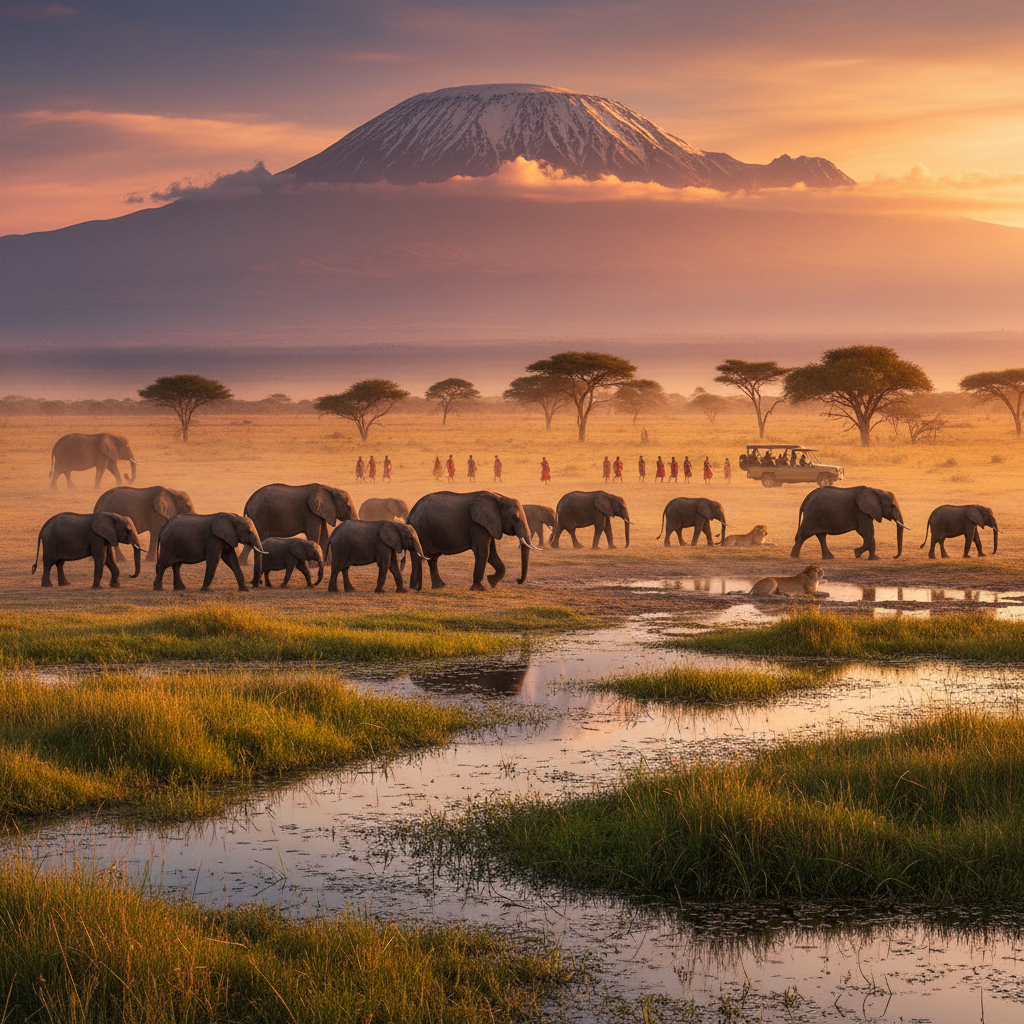
Nowhere else on Earth can you capture the iconic image of a herd of 50 elephants traversing dusty plains with the snow-capped peak of Mount Kilimanjaro towering behind them. This 4-day safari in Amboseli National Park is specifically designed to immerse you in this breathtaking spectacle, offering unparalleled elephant encounters and stunning photographic opportunities that define the African wilderness experience.
The moment you step into Amboseli's Observation Hill, a truly unparalleled vista unfolds before you. Below, the vast plains stretch out, dotted with acacia trees and crisscrossed by dusty tracks where wildlife roams freely. To the east, the shimmering waters of Lake Amboseli catch the morning light, often frequented by large flocks of flamingos and other waterbirds. This elevated vantage point offers a 360-degree panorama, making it an essential stop for understanding the park's layout and appreciating its unique ecosystem, especially with the dramatic backdrop that often emerges from the clouds. It's a place where the sheer scale of the African wilderness truly sinks in, setting the stage for the adventures to come.
Should you prioritize an early morning game drive over a leisurely breakfast? Here's the reality: absolutely. The first two hours after sunrise are not just magical for photography, but also when many animals are most active, and the air is crispest. This is especially true for catching the best views of the towering peak that defines the park's skyline, before the daily cloud cover rolls in. While a delicious breakfast awaits at your lodge, the opportunity to witness a pride of lions on the hunt or a herd of wildebeest grazing in the golden light, with the majestic mountain as a backdrop, is an experience that simply cannot be replicated later in the day. Embrace the early start; it's where the most unforgettable memories are made.
Early mornings in the park look like the soft rumble of your safari vehicle breaking the pre-dawn silence as you head out into the vast plains. You'll find yourself scanning the horizon, binoculars in hand, as the sun paints the sky in hues of orange and pink. The air is cool, carrying the scent of dust and wild sage. You might encounter a lone hyena returning to its den, or a family of giraffes silhouetted against the rising sun. Later, as the day warms, you'll track the movements of large herds near watering holes, observing their intricate social dynamics. Each moment is an active engagement with the wild, a constant discovery of the natural world in its most pristine state, often culminating in a spectacular sunset viewing with a refreshing drink in hand.
Kilimanjaro's Embrace: Elephants and Sundowners
Depart Nairobi for Amboseli National Park. Enjoy the scenic 4-hour drive, watching the landscape transform from city bustle to rural plains.
This journey sets the stage for your safari adventure, offering glimpses of Kenyan life outside the capital. It's a chance to relax and anticipate the wildlife to come.
Arrive at your chosen lodge within Amboseli National Park. Check in and settle into your room, taking in the initial views of the vast plains.
Your lodge will be your base for the next few days, offering comfort and a chance to unwind after your journey. Many camps offer immediate wildlife viewing opportunities from their grounds.
Enjoy a delicious lunch at your lodge, often served with views overlooking the plains or a waterhole.
Fuel up for your afternoon adventure with fresh, locally sourced ingredients. It's a chance to savor the flavors of Kenya in a stunning setting.
Embark on your first afternoon game drive, focusing on the park's famous swamp areas like Enkongo Narok and Longinye to find large elephant herds.
This is your introduction to Amboseli's iconic elephants, often seen wading through the lush swamps with Kilimanjaro as a dramatic backdrop. It's the quintessential Amboseli experience.
Head to Observation Hill for a breathtaking sundowner, watching the sunset paint the sky over the entire park and Kilimanjaro.
Observation Hill offers unparalleled panoramic views of Amboseli, making it the perfect spot to witness a spectacular African sunset. It's a moment of pure magic and reflection.
Leif's Tip: Upon arrival, take a few moments to simply sit and absorb the sounds and sights of the bush from your lodge. The anticipation of the safari is part of the adventure, and often the first animals you see are right outside your window. Don't forget your camera, and make sure your batteries are charged for that first game drive!
Between navigating the various park entry points, understanding the seasonal animal migration patterns, and discerning which local community visits are truly authentic versus purely performative, planning a safari to this particular Kenyan gem can feel like piecing together a complex puzzle. You’re not just booking flights and a hotel; you’re orchestrating an intricate dance with nature, ensuring you’re in the right place at the right time to witness those iconic scenes. The sheer volume of information, from vehicle types to guide experience, can be overwhelming, and making the wrong choices can mean missing out on those once-in-a-lifetime moments. That’s precisely where Leif steps in, transforming potential confusion into a seamless, unforgettable adventure tailored just for you.
That shot — a bull elephant wading through Enkongo Narok with Kilimanjaro filling the entire background — is the one that defines an Amboseli trip, and knowing exactly where to be at first light is the difference between getting it and missing it. Leif already knows that the area around Enkongo Narok is your prime spot for this, and your itinerary will reflect an early morning departure specifically targeting this location. Or perhaps you’re debating whether to spend more time tracking a cheetah on the open plains or focusing on the vibrant birdlife near the hippo pools. Leif's deep understanding of the park's geography and its wildlife movements means your daily game drives are optimized, ensuring you experience the best of both worlds without feeling rushed or missing out on key sightings. It’s about making those on-the-ground decisions effortless.
You'll arrive in the heart of the savannah knowing exactly which path your adventure will take, feeling a profound sense of anticipation rather than apprehension. Instead of fumbling with maps or second-guessing your choices, you'll be fully present, absorbing the vastness of the landscape and the raw beauty of its inhabitants. The difference is feeling the warm dust beneath your boots, hearing the distant roar of a lion, and watching a family of elephants pass within meters of your vehicle, all with the quiet confidence that every detail has been meticulously handled. This isn't just a trip; it's an immersion, a journey where every moment is designed to connect you deeply with the spirit of the wild. Start planning your extraordinary escape today and let the magic unfold.
Best Time to Visit Amboseli National Park, Kenya
June to October (dry season) for optimal wildlife viewing and clearest Kilimanjaro views, as clouds are less frequent and vegetation is sparser.
January to February offers another dry period with excellent game viewing, though it can be hotter.
Avoid April and May (long rainy season) as roads can become challenging and wildlife viewing more difficult due to dense vegetation.
Consider November and December (short rainy season) for lush green landscapes and migratory bird species, though Kilimanjaro views can be less consistent.
Getting Around Amboseli National Park, Kenya
Driving from Nairobi takes approximately 4 hours; depart early to avoid traffic and arrive at the park before midday.
For a quicker journey, charter a 45-minute flight from Wilson Airport in Nairobi directly to Amboseli.
Once in Amboseli, your safari lodge will arrange game drives with experienced local guides and 4x4 vehicles, which are essential for navigating the park.
Discuss airport transfers with your lodge in advance; many offer seamless pick-up and drop-off services.
What to Pack
- Lightweight, neutral-colored clothing (khakis, greens, browns) to blend in and avoid attracting insects.
- A wide-brimmed hat, sunglasses, and high SPF sunscreen to protect against the strong equatorial sun.
- Comfortable closed-toe shoes for game drives and any short walks, plus sandals for camp.
- Binoculars (8x42 or 10x42 recommended) for spotting distant wildlife and birds.
- A good camera with a telephoto lens (200-400mm) for capturing incredible wildlife shots.
- Dust protection for yourself (buff/neck gaiter) and your camera gear (zip-lock bags, lens cloths).
- Insect repellent, especially for evenings, to ward off mosquitoes.
- A small backpack for daily essentials like water, snacks, and camera equipment.
Money-Saving Tips
- Consider traveling during the shoulder seasons (November/early December or March) for potentially lower lodge rates while still enjoying good wildlife viewing.
- Opt for a mid-range lodge like Amboseli Serena Safari Lodge or Kibo Safari Camp, which offer excellent value and amenities without the luxury price tag.
- Book your safari package directly with a local Kenyan tour operator, as they often have better rates and local knowledge than international agencies.
- Bring USD cash for tips (guides, camp staff) to avoid ATM fees and ensure you can tip appropriately.
Local Insights
- Engage with your guide about the Amboseli Elephant Research Project; they often have fascinating stories about specific elephant families and individuals.
- Take advantage of early morning game drives (departing at 6 AM) for the best chance of clear Kilimanjaro views and active wildlife.
- When visiting a Maasai village, ensure it's arranged through your lodge for an authentic cultural exchange rather than a staged tourist performance.
- Always respect wildlife by maintaining a safe distance and never feeding animals; your guide will ensure ethical viewing practices.
- Don't underestimate the dust in Amboseli; keep camera lenses covered when not in use and consider wearing a bandana or buff.
Frequently Asked Questions
What is the best time of year to visit Amboseli National Park?
The dry season, from June to October, is generally considered the best time. Wildlife congregates around the permanent water sources, making them easier to spot, and the skies are usually clearer, offering better views of the iconic mountain.
How many days are recommended for an Amboseli safari?
Three to four days is ideal. This allows for ample game drives, a visit to a local community, and sufficient time to experience the park's diverse ecosystems and increase your chances of clear mountain views.
Are there 'Big Five' sightings in Amboseli?
While Amboseli is famous for its large elephant herds, you can also spot lions, leopards (though rare), buffalo, and rhinos (though very few and often elusive). It's more about the elephants and the stunning backdrop than guaranteed Big Five checks.
What should I pack for an Amboseli safari?
Light, neutral-colored clothing for game drives, a warm jacket for early mornings/evenings, a wide-brimmed hat, sunglasses, sunscreen, insect repellent, binoculars, a good camera with a zoom lens, and comfortable walking shoes.
Is it safe to visit a Maasai village?
Yes, visiting a Maasai village is generally safe and offers a rich cultural experience. It's best to arrange this through your lodge or a reputable tour operator to ensure an authentic and respectful interaction with the community.
What are the typical safari vehicle arrangements?
Most safaris in Amboseli use 4x4 safari vehicles (usually Land Cruisers or Land Rovers) with pop-up roofs for optimal game viewing and photography. Your group will typically have a dedicated driver-guide for the duration of your stay.
Can I see the snow on the distant peak year-round?
The snow cap on the distant peak is present year-round, but its visibility depends heavily on cloud cover, which is more prevalent during the rainy seasons and typically builds up during the day. Early mornings offer the best chance for clear views.