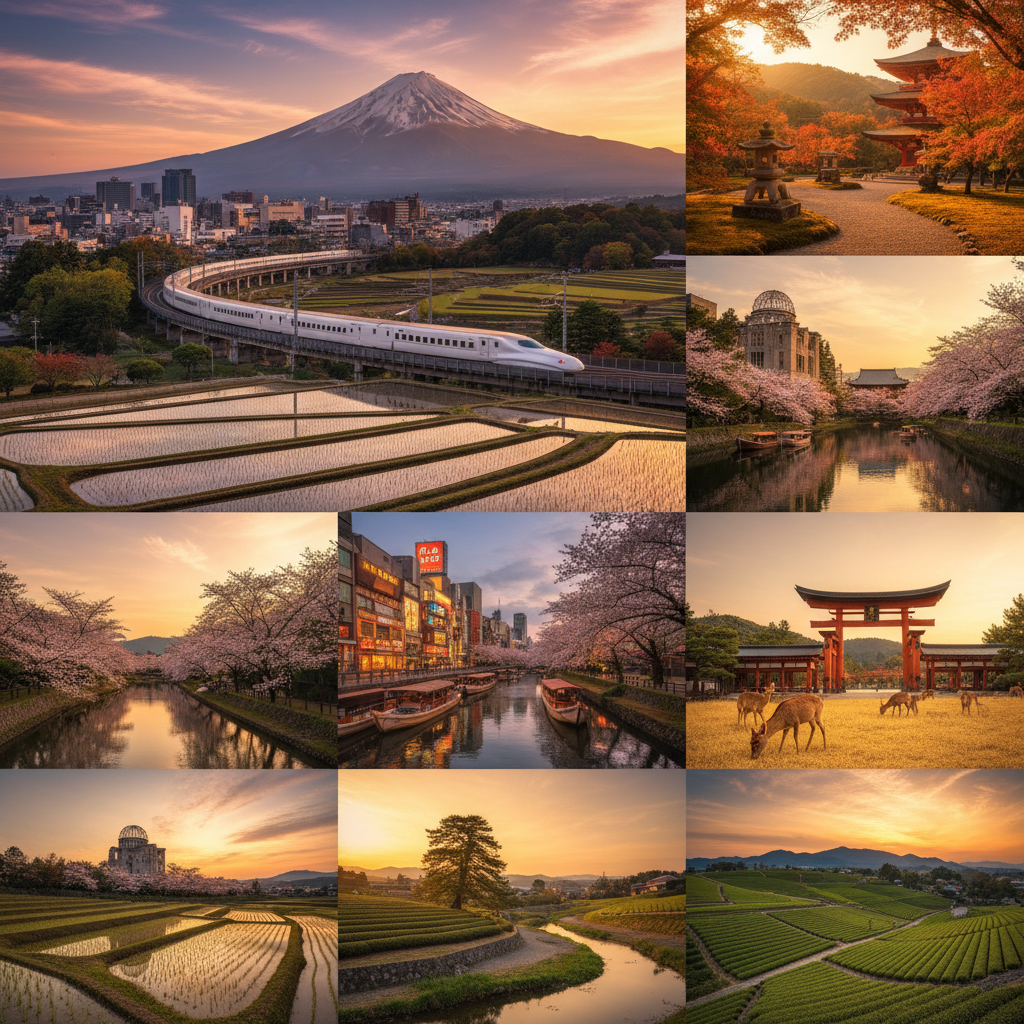
14-Day Japan Rail Pass Itinerary: Tokyo, Kyoto, Osaka & Hiroshima
Unlock Japan's magic with this 14-day rail pass itinerary. Explore Tokyo's neon, Kyoto's temples, Osaka's food, and Hiroshima's history by bullet train.
- Duration: 14 Days
- Estimated Budget: $3,850–$6,650
- Best Time to Visit: March-May for cherry blossoms and October-November for autumn foliage, both offering ideal weather.
- Destination: Japan
Japan is calling, and with a 14-day Japan Rail Pass, you're set for an unforgettable journey through its vibrant cities and serene countryside. This itinerary is your golden ticket to experiencing the best of Japan, from ancient traditions to futuristic marvels, all connected by the world-renowned Shinkansen.
Japan on a 14-day rail pass is the ultimate first-timer's dream, a meticulously crafted journey that unveils the country's iconic highlights with seamless efficiency. Imagine gliding through the landscape on the Shinkansen, whisking you from Tokyo's neon-lit energy to Kyoto's ancient serenity, then onward to Osaka's culinary delights and Hiroshima's poignant history. This itinerary isn't just about seeing sights; it's about experiencing the vibrant pulse of urban Japan alongside the tranquil beauty of its countryside, all connected by one of the world's most impressive rail networks. You'll witness the perfect blend of tradition and innovation, from bustling cityscapes to serene temple grounds, making every moment an unforgettable cultural immersion.
Beyond the well-trodden paths, this journey delves into unique cultural pockets that reveal Japan's multifaceted charm. Picture yourself wandering through the historic Yanaka district in Tokyo, a preserved slice of old Edo with its charming temples and traditional wooden houses, offering a stark contrast to the futuristic energy of Akihabara's electric town. Or perhaps you'll find yourself marveling at the ethereal beauty of teamLab Borderless, an immersive digital art museum that transports you to another dimension. Even the simple act of visiting Senso-ji Temple at dawn, before the crowds arrive, transforms a landmark into a deeply personal, spiritual experience, showcasing Japan's ability to surprise and delight at every turn.
And then there's the food, a cornerstone of any Japanese adventure. This itinerary ensures you'll savor everything from the profound simplicity of ramen at an Ichiran booth, where private dining pods make for a uniquely focused culinary experience, to the lively chaos of conveyor belt sushi at Genki Sushi, a delightful and affordable way to sample fresh seafood. Don't miss the opportunity to indulge in the freshest tuna at Tsukiji Outer Market for breakfast, a truly extraordinary start to your day, or to explore the vibrant street food scene in Dotonbori, where takoyaki and okonomiyaki are elevated to an art form. Each meal is an adventure, a deep dive into the country's rich gastronomic heritage.
Tokyo Arrival: Shinjuku Skyscrapers & Ramen Bliss
Arrive at Narita (NRT) or Haneda (HND) Airport, activate your JR Pass, and take the Narita Express or Keikyu Line into central Tokyo.
This is your first taste of Japan's incredible public transport system. Activating your JR Pass early ensures seamless travel for the rest of your trip.
Check into your hotel in Shinjuku and take some time to refresh after your flight.
Shinjuku is a fantastic base for exploring Tokyo, offering excellent transport links and a vibrant atmosphere right outside your door.
Ascend to the observation decks of the Tokyo Metropolitan Government Building for panoramic views of the city at dusk.
This iconic building offers breathtaking 360-degree views of Tokyo, and it's completely free, making it an unbeatable first activity.
Explore the neon-lit streets of Shinjuku, particularly the bustling area around Shinjuku Station and Kabukicho.
Experience the quintessential Tokyo energy with towering skyscrapers, flashing billboards, and a vibrant nightlife scene that truly comes alive after dark.
Dive into the labyrinthine Golden Gai, a tiny district of over 200 miniature bars, each with its own unique character.
Golden Gai offers an intimate, quirky glimpse into Tokyo's bar culture, perfect for a relaxed drink and mingling with locals and fellow travelers.
Leif's Tip: Before leaving the airport, pick up a Suica or Pasmo IC card from a vending machine or ticket counter. Load it with about 5,000 JPY – this will be your best friend for seamless subway and bus travel around Tokyo, saving you from fumbling with cash or buying individual tickets.
Navigating the intricate web of Japan's public transportation, especially with a 14-day rail pass covering multiple cities like Tokyo, Kyoto, and Osaka, can feel overwhelming. Deciphering the various train lines, understanding seat reservations for the Shinkansen, and optimizing your travel time between Hiroshima's poignant history and Nara's serene deer parks requires more than just a map; it demands an intimate knowledge of the system. Furthermore, distinguishing between tourist-heavy spots and truly authentic experiences, or finding those hidden local eateries in a bustling metropolis where English menus are rare, presents a significant challenge. Leif cuts through this complexity, providing you with a clear, optimized path that transforms potential logistical headaches into smooth, enjoyable transitions, ensuring you spend your precious time experiencing Japan, not planning it.
Shinjuku Station, often a daunting maze, transforms into an easily navigable hub with your Leif itinerary as your trusted guide. Instead, your Leif itinerary has already mapped out the most efficient route, including platform numbers and transfer points, allowing you to seamlessly navigate the bustling stations. Later, as you transition from the vibrant energy of Osaka to the tranquil temples of Kyoto, Leif anticipates your need for a reserved Shinkansen seat, guiding you on how and when to secure it, ensuring a stress-free journey. You won't waste a moment trying to locate a specific ramen shop in a crowded alley; Leif provides precise directions, even suggesting alternative local gems if your first choice is unexpectedly closed, keeping your culinary adventures on track.
The subtle scent of incense lingering in the air as you approach a quiet Kyoto temple, or the distant clang of a train bell echoing through the countryside, becomes a moment of pure immersion because every detail of your journey has been thoughtfully prepared. You arrive at each destination with a sense of calm anticipation, not the anxiety of the unknown. This preparation allows you to truly connect with the culture, whether it's understanding the significance of a shrine in Nara or appreciating the resilience of Hiroshima. You're not just seeing Japan; you're feeling its pulse, understanding its rhythm, and creating deeply personal memories that will resonate long after you've returned home. Let Leif guide you to your own unforgettable Japanese adventure.
Best Time to Visit Japan
Spring (March-May) for cherry blossoms, though expect larger crowds and higher prices for accommodations.
Autumn (October-November) offers comfortable temperatures and stunning fall foliage, particularly in areas like Hakone or Nikko.
Avoid Golden Week (late April to early May) and Obon (mid-August) due to domestic travel peaks, which means packed trains and fully booked hotels.
Early December can be a pleasant time to visit, with festive illuminations and fewer tourists than peak autumn, especially in urban centers.
Late January and February provide opportunities for winter landscapes, particularly in regions like Hokkaido, though some attractions might have reduced hours.
Getting Around Japan
Activate your Japan Rail Pass at a major JR station upon arrival, like Narita Airport Terminal 1 or Tokyo Station, to start your 14-day window.
Reserve your Shinkansen seats in advance, especially for popular routes or during busy travel periods, using the JR Pass at any JR ticket office.
Utilize local subway and bus networks in cities like Sapporo or Fukuoka with your IC card for efficient travel beyond JR lines.
Download offline maps for public transport routes; Google Maps is excellent for real-time directions and platform numbers.
Consider a small, wheeled suitcase that's easy to maneuver through train stations and on public transport, as larger luggage can be cumbersome.
What to Pack
- Comfortable walking shoes, as you'll be exploring countless temples, gardens, and city streets on foot.
- A portable power bank for your phone, essential for navigation, translation apps, and capturing photos throughout long days.
- A small, lightweight umbrella or rain jacket, as weather can be unpredictable, especially during the rainy season (June-July).
- Slip-on shoes for easy removal when entering temples, traditional restaurants, or some guesthouses.
- A universal travel adapter with multiple USB ports to charge all your devices simultaneously.
- Modest clothing for temple visits, ensuring shoulders and knees are covered as a sign of respect.
- A reusable water bottle; many train stations and parks have water fountains for refills.
- A small daypack for carrying essentials like snacks, guidebooks, and souvenirs while sightseeing.
Money-Saving Tips
- Look for 'teishoku' (set meals) at local eateries for lunch, which offer excellent value and a taste of authentic Japanese cuisine.
- Utilize convenience stores like 7-Eleven or FamilyMart for affordable breakfast items, snacks, and drinks, often featuring unique local treats.
- Explore free attractions such as public parks, many shrines and temples (some have small entrance fees, but many do not), and city observation decks.
- Consider purchasing a local city pass if you plan to visit many museums or attractions within a single city, like the Osaka Amazing Pass.
- Take advantage of supermarket discounts on prepared foods and bento boxes, especially in the evenings before closing time.
Local Insights
- Always carry a small plastic bag for trash, as public waste bins are scarce in many areas.
- Learn a few basic Japanese phrases like 'Arigato gozaimasu' (thank you) and 'Sumimasen' (excuse me/I'm sorry) – locals appreciate the effort.
- Be mindful of noise levels on public transport; speaking loudly on trains or buses is generally frowned upon.
- Tipping is not customary in Japan and can sometimes be seen as impolite; excellent service is expected as standard.
- When visiting someone's home or a traditional establishment, remember to remove your shoes at the entrance and often wear provided slippers.
Frequently Asked Questions
What's the best way to get around cities in Japan?
For city transit, an IC card like Suica or Pasmo is your best friend. Purchase one at the airport upon arrival and load it up. You can tap in and out of subways, local trains, and even buses with ease. Google Maps provides incredibly accurate public transit directions, making navigation effortless.
Do I need to book accommodation far in advance?
Yes, especially if you're traveling during peak seasons like cherry blossom (spring) or autumn foliage. Popular ryokans and unique stays like the Book and Bed Tokyo can fill up months ahead. For business hotels like the Dormy Inn chain, booking a few weeks out is usually sufficient.
What's the best way to experience a traditional Japanese inn?
For an authentic ryokan experience, consider a stay at Gion Hatanaka in Kyoto. It offers traditional tatami mat rooms, futon bedding, and often includes an exquisite multi-course kaiseki dinner. It's a splurge, but worth it for the cultural immersion.
Is it easy to find vegetarian or vegan food in Japan?
While traditional Japanese cuisine often features dashi (fish broth), vegetarian and vegan options are becoming more prevalent, especially in larger cities. Look for specialized restaurants, or use apps like HappyCow. Temple towns like Nara often have excellent shojin ryori (Buddhist vegetarian cuisine).
How much cash should I carry?
While credit cards are accepted in many places, Japan is still a cash-heavy society, especially for smaller shops, street food vendors, and some temples. It's wise to carry a few thousand yen daily. ATMs are readily available at convenience stores like 7-Eleven and FamilyMart.
What's a good budget for daily food expenses?
You can comfortably eat well in Japan on $40-80 per day. This allows for a mix of affordable options like convenience store meals, ramen shops, and street food, with the occasional splurge on a nicer restaurant. Lunch sets are often a great value.
Can I use my phone for navigation and communication?
Absolutely! Wi-Fi is widely available, and purchasing a local data SIM card or renting a pocket Wi-Fi device upon arrival is highly recommended. This ensures you have constant access to Google Maps, translation apps, and communication tools throughout your journey.