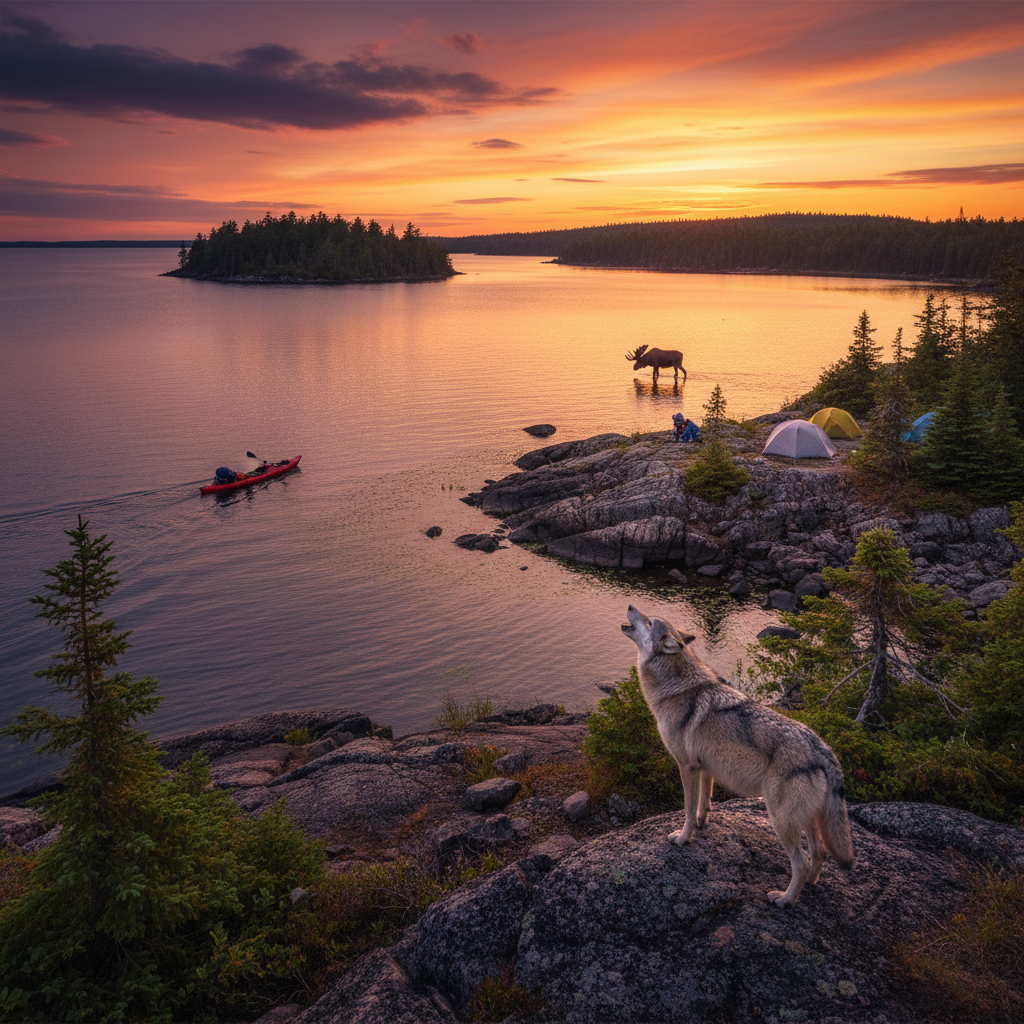
Isle Royale National Park: 4-Day Wilderness Escape for Backpackers & Kayakers
Unplug and reconnect with nature on a 4-day wilderness escape to Isle Royale National Park. Backpack, kayak Lake Superior, and witness the iconic wolf and moose ecosystem.
- Duration: 4 Days
- Estimated Budget: $400–$900
- Best Time to Visit: July-August (ferries run June-September only; park closes October-April)
- Destination: Isle Royale National Park, Michigan, USA
Escape to Isle Royale National Park, a true wilderness gem where the call of the wild is your only alarm clock. This remote archipelago, accessible only by ferry or seaplane, offers an unparalleled opportunity to immerse yourself in an untouched ecosystem, perfect for backpackers and kayakers seeking profound solitude and adventure. Here, moose roam freely, wolves howl under starry skies, and the crystal-clear waters of Lake Superior invite exploration.
Kayaking the pristine waters of Lake Superior around Isle Royale, you're instantly disconnected leaving behind roads, cars, and even cell service, to immerse yourself in a true wilderness escape. Hike the challenging Greenstone Ridge Trail, traversing the island's backbone and offering breathtaking panoramic views. This isn't your typical national park visit; it's an expedition into the wild heart of America, where moose roam freely, wolves howl under starry skies, and the only traffic jam you'll encounter is a beaver diligently building its dam. Prepare for an adventure that will challenge and rejuvenate you, a place where the rhythms of the natural world dictate your days.
This 4-day itinerary is crafted for the intrepid traveler seeking a deep dive into Isle Royale's unique ecosystem, focusing on its iconic wolf and moose populations, exhilarating backpacking, and serene kayaking near the historic Rock Harbor Lighthouse. You'll navigate trails through ancient boreal forests, paddle along hidden coves, and perhaps even witness the elusive wildlife that makes this island so famous. From the moment you step off the ferry, you'll feel the profound sense of remoteness and tranquility that defines Isle Royale, making every hike and paddle an unforgettable journey into the wild.
Isle Royale is more than just a destination; it's an experience that demands your full presence and rewards it tenfold. The absence of modern distractions allows for an incredible sense of clarity and connection to the environment. Whether you're marveling at the vibrant green of the forest, the endless blue of the sky, or the panoramic views from Mount Ojibway, you'll find yourself captivated. This guide will help you unlock the secrets of this remote paradise, ensuring you make the most of every moment in one of the lower 48's most extraordinary and least-visited national parks.
Ferry to Wilderness: Rock Harbor Welcome
Board the Isle Royale Queen IV ferry from Houghton, MI for a scenic journey across Lake Superior to Rock Harbor.
The ferry ride is an essential part of the Isle Royale experience, offering breathtaking views of Lake Superior and the anticipation of true wilderness. It's your first taste of the island's isolation and beauty.
Check in at the Rock Harbor Visitor Center for essential orientation, trail conditions, and to learn about recent wolf and moose activity.
This is your crucial first stop to get the lay of the land, understand current park conditions, and ensure a safe and informed wilderness adventure. The rangers are a wealth of knowledge.
Embark on the Scoville Point Trail, a 4.2-mile round trip hike that winds along the rocky Lake Superior shoreline.
This is the perfect introductory hike to Isle Royale, showcasing the island's rugged beauty, boreal forest, and stunning Lake Superior vistas. It's easily accessible from Rock Harbor and offers immediate immersion into the park's unique ecosystem.
Enjoy a leisurely dinner at the Rock Harbor Lodge Dining Room, the only full-service restaurant on the island.
After a day of travel and hiking, a hot meal with a view of Rock Harbor is a welcome luxury in this remote wilderness. It's a chance to relax and reflect on your first impressions of the island.
Experience a serene sunset kayak on Rock Harbor, paddling through the calm waters as the day fades.
Kayaking on Rock Harbor offers a unique perspective of the island's coastline and a chance to spot wildlife like loons and beavers in their natural habitat. The sunset colors reflecting on the water are simply magical.
Leif's Tip: Upon arrival at Rock Harbor, head straight to the Visitor Center before doing anything else. Not only will you get crucial park updates, but you can also confirm your lodging, arrange kayak rentals for the evening, and get the best intel on where moose have been seen recently. This proactive step sets the tone for a smooth and informed trip.
Most visitors to Isle Royale underestimate the logistical labyrinth required to truly experience its wild heart, often struggling with ferry schedules that dictate your entire trip, the strict backcountry permit system, and the sheer isolation of an island with no roads or resupply points. Planning a multi-day backpacking and kayaking adventure here isn't just about picking trails; it's about understanding water sources, knowing where to cache food, and preparing for sudden Lake Superior weather shifts that can strand you for days. Deciphering which campsites align with your paddling route, ensuring your gear is truly wilderness-ready, and even knowing how to properly store food to avoid attracting wildlife are all critical details that can turn an epic journey into a frustrating ordeal. Leif cuts through this complexity, ensuring every piece of your Isle Royale puzzle fits perfectly.
Rock Harbor, your entry point to this pristine wilderness, sets the stage for an unparalleled adventure meticulously planned by Leif. Leif has factored in the specific ferry arrival times, pre-booked your backcountry permits for the designated campsites along the Greenstone Ridge, and even provided a day-by-day packing list tailored for multi-day kayaking and hiking in this remote environment. Should you encounter unexpected high winds on Lake Superior near Tobin Harbor, threatening your kayaking plans, Leif has already outlined alternative hiking routes to hidden overlooks or sheltered coves, ensuring your adventure continues seamlessly and safely, without you needing to scramble for information or make last-minute, uninformed decisions in a place where connectivity is non-existent.
The crisp, pine-scented air fills your lungs as you paddle silently across a glassy cove, knowing that every detail of your wilderness escape has been meticulously handled. You're not just visiting Isle Royale; you're immersing yourself in its ancient rhythms, tracking moose prints along a secluded trail, or listening to the distant howl of a wolf under a canopy of stars, all without a single moment of logistical worry. This deep connection to nature, unburdened by planning stress, is the ultimate reward. You will leave Isle Royale transformed, with stories of true wilderness adventure that will last a lifetime.
Best Time to Visit Isle Royale National Park, Michigan, USA
July and August are ideal for the warmest weather and best chances of spotting wildlife, especially moose, as they are more active in the cooler parts of these months.
Late June offers lush greenery and fewer crowds, though Lake Superior's waters will be colder for kayaking and swimming.
Early September provides stunning fall foliage and a quieter park experience, but ferry schedules become more limited.
Avoid visiting outside of the June-September ferry season, as the park is essentially inaccessible and closed for the rest of the year.
Getting Around Isle Royale National Park, Michigan, USA
Book your ferry or seaplane well in advance, especially if traveling in peak season; they fill up quickly.
Consider the ferry from Copper Harbor for a shorter, more direct route to Rock Harbor, which is a great base for this itinerary.
If flying, Isle Royale Seaplanes offers a quick and scenic journey, but it's significantly more expensive; weigh the time savings against the cost.
Once on the island, your feet are your primary mode of transport. Embrace it; there are no cars here!
What to Pack
- Waterproof hiking boots (essential for varied terrain and potential wet trails)
- Layers of clothing (weather can change rapidly, even in summer)
- Rain gear (jacket and pants – Lake Superior weather is unpredictable)
- Headlamp or flashlight (no artificial light sources in many areas)
- Bear canister or Ursack (for food storage, though black bears are rare, other critters are not)
- High-quality binoculars (for wildlife viewing, especially wolves and moose)
- First-aid kit with blister treatment (you'll be doing a lot of walking)
- Bug spray with DEET (mosquitoes and black flies can be intense)
Money-Saving Tips
- Pack all your own food and snacks; the limited options at Rock Harbor Lodge are expensive.
- Bring a reusable water bottle and filter/purifier; you can refill from Lake Superior or inland lakes after treatment.
- Consider camping at Rock Harbor Campground ($5/night) instead of the lodge to save significantly on accommodation.
- If traveling with a group, split the cost of a private boat charter for activities like shipwreck diving to potentially reduce per-person expense.
Local Insights
- The 'wilderness' aspect is real: expect no cell service, limited electricity, and a true disconnect from the outside world. Prepare accordingly.
- Always check with the Rock Harbor Visitor Center upon arrival for the latest trail conditions, wildlife sightings, and any closures.
- Respect the wildlife; maintain a safe distance from moose and never approach or feed any animals.
- Lake Superior's waters are incredibly cold, even in summer. If you plan to swim or kayak, be prepared for frigid temperatures.
- Embrace the quiet. Isle Royale offers a rare opportunity for profound solitude and connection with nature; let the sounds of the wilderness be your soundtrack.
Frequently Asked Questions
How do I get to Isle Royale National Park?
Isle Royale is accessible only by ferry or seaplane. Ferries depart from Copper Harbor, MI (Rock Harbor Lodge ferry, 3.5 hours) or Houghton, MI (Isle Royale Queen IV, 6 hours). Seaplanes from Houghton offer a quicker, scenic option (35 minutes).
What kind of wildlife can I expect to see?
Isle Royale is famous for its wolf and moose populations. You'll also likely spot beavers, red foxes, snowshoe hares, and a wide variety of birds, including loons and ospreys. Keep an eye out for tracks and scat even if you don't see the animals directly.
Do I need to bring all my food and water?
For this wilderness escape, it's highly recommended to bring most of your food, especially if you plan on backpacking. Rock Harbor Lodge has a dining room and a small store for essentials, but choices are limited and prices are higher. Always carry a water filter or purification tablets.
What are the accommodations like on the island?
The main lodging is Rock Harbor Lodge, offering rustic but comfortable rooms. There are also designated campgrounds like Rock Harbor Campground and Windigo Campground, which are primarily tent sites. Backcountry camping is available with a permit.
Is cell service available on Isle Royale?
No, cell service is virtually non-existent on Isle Royale. This is part of its charm, allowing for a true digital detox. Be sure to inform loved ones of your itinerary before you depart.
What should I pack for a wilderness trip to Isle Royale?
Pack layers of clothing, sturdy hiking boots, rain gear, insect repellent (especially for mosquitoes and black flies), a first-aid kit, a headlamp, and a water bottle/filter. Don't forget binoculars for wildlife viewing and a camera!
Are there any permits required for hiking or camping?
Yes, all overnight stays in campgrounds or the backcountry require a permit, which can be obtained at the visitor centers upon arrival. Day hikers do not need a permit, but it's always wise to check in with rangers for trail conditions.