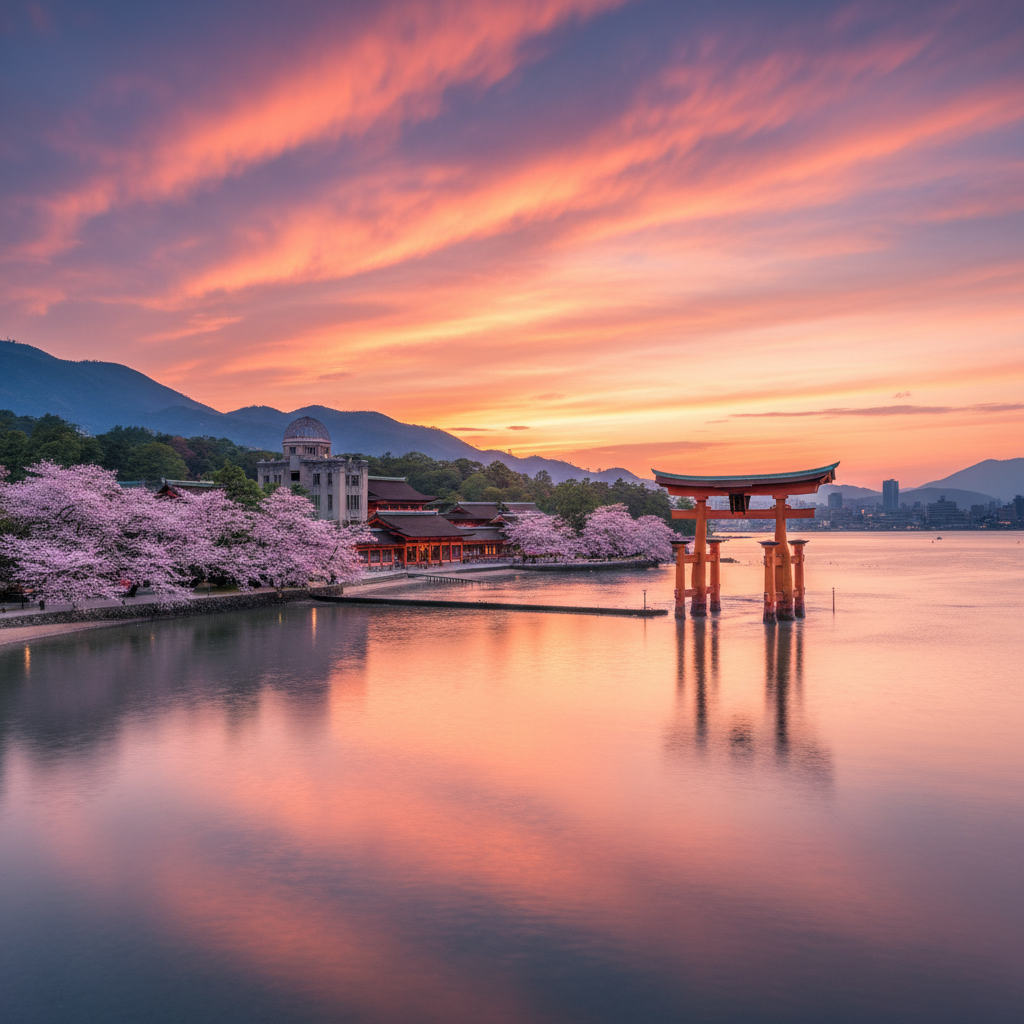
3-Day Hiroshima & Miyajima Cultural Journey: A Deep Dive into History & Serenity
Uncover the profound history and serene beauty of Hiroshima and Miyajima in this 3-day cultural itinerary. Experience iconic landmarks and local traditions.
- Duration: 3 Days
- Estimated Budget: $500–$900
- Best Time to Visit: March-May and October-November for pleasant weather and vibrant foliage.
- Destination: Hiroshima & Miyajima, Japan
Beyond the Peace Memorial Park and the iconic torii gate, Hiroshima and Miyajima offer a deeply moving and culturally rich experience, perfect for those seeking more than just sightseeing. This journey will connect you with Japan's resilient spirit and timel... Hiroshima and Miyajima offer a deeply moving and culturally rich experience, perfect for those seeking more than just sightseeing. This journey will connect you with Japan's resilient spirit and timeless traditions.
Wander through the iconic torii gate of Itsukushima Shrine, seemingly floating on the Seto Inland Sea, an unforgettable sight that encapsulates Japan's spiritual beauty. Beyond the solemn reflections at the Peace Memorial Park, you'll discover a city vibrant with life, where modern cafes blend seamlessly with historic tram lines. Imagine savoring a steaming plate of Hiroshima-style okonomiyaki, its layers of noodles, cabbage, and pork grilled to perfection, a true testament to the city's spirit. This isn't just a place to observe history; it's a place to feel it, to taste it, and to witness the enduring strength of its people. Prepare for an experience that will stir your soul and tantalize your taste buds.
Just a short ferry ride away, Miyajima Island beckons with its ethereal beauty, dominated by the iconic 'floating' torii gate of Itsukushima Shrine. As the tide rolls in, transforming the gate into a magical spectacle, you'll understand why this site is considered one of Japan's most scenic. But Miyajima is more than just a photo opportunity; it's a sanctuary where wild deer roam freely, ancient temples dot the hillsides, and the air is filled with the scent of salty sea and sweet momiji manju. Take the ropeway up Mount Misen for breathtaking panoramic views, or simply wander the charming streets, sampling freshly grilled oysters. This island offers a peaceful counterpoint to Hiroshima's urban energy, creating a perfectly balanced cultural immersion.
This 3-day itinerary is crafted for the traveler who seeks a deeper understanding of Japan, blending poignant historical reflection with serene natural exploration and authentic local flavors. You'll navigate these destinations with ease, whether arriving by Shinkansen for a day trip from Osaka or Kyoto, or settling in for a longer stay. We'll guide you to the best spots for local delicacies like the famed Hiroshima oysters, and ensure you experience the vibrant energy of the Hondori shopping street. This journey promises not just sightseeing, but a genuine connection to the heart and soul of Japan, leaving you with memories that resonate long after you've returned home.
A Somber Start and Island Serenity
Arrive at Hiroshima Station via Shinkansen from Osaka or Kyoto, check into your hotel, and drop off your luggage.
Starting your day by settling in ensures a smooth transition and allows you to explore Hiroshima without the burden of your bags. It sets a comfortable tone for your cultural immersion.
Visit the Hiroshima Peace Memorial Park, a sprawling green space dedicated to the victims of the atomic bombing.
This park serves as a powerful reminder of the devastating events of August 6, 1945, and a symbol of peace. It's a crucial first stop to understand Hiroshima's history and its message of hope.
Explore the Atomic Bomb Dome, the skeletal remains of the former Prefectural Industrial Promotion Hall, left standing as a stark memorial.
The Atomic Bomb Dome is a UNESCO World Heritage site and one of the few structures left near the hypocenter. It stands as a powerful and visible testament to the bombing's destruction.
Immerse yourself in the exhibits at the Peace Memorial Museum, detailing the events leading up to and following the atomic bombing.
This museum provides a comprehensive and deeply moving account of the bombing through artifacts, personal stories, and educational displays. It's essential for a full understanding of Hiroshima's history.
Take the ferry from Hiroshima Peace Park (Motoyasu Pier) directly to Miyajima Island, home of the iconic 'floating' torii gate.
Transitioning from the somber history of Hiroshima to the serene beauty of Miyajima offers a profound contrast. The ferry ride itself provides beautiful views of the Seto Inland Sea.
Leif's Tip: Start your day with a clear mind and an open heart for the Peace Memorial Park and Museum. It's an incredibly impactful experience, and giving yourself ample time and emotional space will make it more meaningful. Remember to check the tide times for Miyajima's torii gate – seeing it at both high and low tide offers two completely different, equally magical perspectives.
Navigating the intricate balance of poignant history and vibrant contemporary life in Hiroshima, while also seamlessly transitioning to the serene, spiritual beauty of Miyajima, presents unique planning challenges. You might wonder how to respectfully engage with the Peace Memorial Park's profound narrative without feeling overwhelmed, or how to truly immerse yourself in the local culinary scene beyond the well-known okonomiyaki, perhaps finding the best spot for anago meshi (conger eel over rice) on Miyajima. Deciphering the best ferry times to avoid crowds, understanding local etiquette at shrines, or even finding a quiet, authentic izakaya tucked away from the main tourist paths requires more than just a quick search. Leif addresses these specific friction points, ensuring your cultural exploration is both deep and effortless, guiding you past generic tourist traps to genuine, enriching encounters.
Peace Memorial Museum might unexpectedly be closed due to a national holiday, but Leif has you covered. If an unexpected rain shower begins, Leif doesn't just tell you to find shelter; it proactively suggests a pivot to the Hiroshima Museum of Art, conveniently located and offering a rich collection of European and Japanese works, complete with estimated travel time and current exhibition details. This dynamic adaptation ensures your cultural journey remains fluid and enjoyable, allowing you to embrace the unexpected without losing precious exploration time or feeling adrift in an unfamiliar city.
The subtle aroma of fresh sea air and roasting oysters on Miyajima, combined with the gentle chime of temple bells, fills you with a sense of profound peace, knowing every detail of your day has been thoughtfully considered. You arrive at each location not just as a visitor, but as an informed explorer, ready to absorb the stories, traditions, and flavors that make this region so special. There's no frantic checking of maps or desperate searching for the next authentic meal; instead, you move with a calm confidence, fully present in each moment, whether you're marveling at the intricate carvings of a centuries-old shrine or engaging with a local artisan. This is your journey, optimized for discovery and designed to leave you with a deep, personal connection to the heart of Japan.
Best Time to Visit Hiroshima & Miyajima, Japan
Spring (March-May): Cherry blossom season is stunning, especially around Peace Memorial Park, but expect larger crowds and higher prices.
Autumn (October-November): Crisp weather and vibrant fall foliage on Miyajima make this an ideal time for comfortable exploration and photography.
Early Summer (June): Before the peak humidity and typhoon season, you can enjoy pleasant temperatures, though occasional rain showers are possible.
Avoid August 6th: While a significant historical date, the Peace Memorial Ceremony draws massive crowds, making it difficult to experience the museum and park intimately.
Getting Around Hiroshima & Miyajima, Japan
Utilize the Hiroshima Streetcar (tram): It's an efficient and scenic way to navigate the city, connecting major sights like the Peace Memorial Park and Hiroshima Station.
Purchase a Hiroshima Tourist Pass: If you plan on using public transport extensively, this pass can save you money on trams, buses, and the ferry to Miyajima.
Walk: Many of Hiroshima's central attractions, particularly around the Peace Memorial Park, are easily walkable, allowing you to discover hidden gems.
Ferry to Miyajima: The JR ferry to Miyajima Island is covered by the Japan Rail Pass, making it a convenient and cost-effective option if you have one.
Shinkansen from Osaka/Kyoto: Book your Shinkansen tickets in advance, especially during peak seasons, to ensure seat availability for your day trip.
What to Pack
- Comfortable walking shoes: You'll be doing a lot of walking, especially on Miyajima and around the Peace Memorial Park.
- Light layers: Temperatures can vary, so having options to add or remove clothing will keep you comfortable.
- Small backpack: Ideal for carrying water, snacks, and any souvenirs you pick up.
- Portable power bank: Essential for keeping your phone charged for navigation, photos, and translations.
- Rain jacket or compact umbrella: Japanese weather can be unpredictable, even outside of rainy season.
- Camera with extra battery: You'll want to capture the beauty of Miyajima and the poignant sights of Hiroshima.
- Reusable water bottle: Stay hydrated and reduce plastic waste.
- Pocket Wi-Fi or local SIM card: Staying connected makes navigation and looking up information much easier.
Money-Saving Tips
- Eat Hiroshima-style okonomiyaki at local spots: Seek out smaller, less touristy restaurants for delicious and affordable meals.
- Utilize convenience stores (konbini): FamilyMart, 7-Eleven, and Lawson offer great value for breakfast, snacks, and drinks.
- Consider a JR Pass: If you're traveling extensively in Japan, a Japan Rail Pass can cover your Shinkansen trips and the JR ferry to Miyajima.
- Walk or use the streetcar: Avoid taxis unless absolutely necessary, as they can be quite expensive.
- Look for lunch specials (teishoku): Many restaurants offer set lunch menus that are more budget-friendly than dinner options.
Local Insights
- Show respect at the Peace Memorial Park: Maintain a quiet demeanor and dress modestly as a sign of respect for the victims.
- Learn a few basic Japanese phrases: 'Arigato gozaimasu' (thank you), 'Sumimasen' (excuse me/sorry), and 'Konnichiwa' (hello) go a long way.
- Carry cash: While credit cards are accepted in many places, smaller shops, street vendors, and some restaurants may be cash-only.
- Take off your shoes: When entering temples, traditional restaurants, or some guesthouses, you'll be expected to remove your shoes. Look for shoe lockers or racks.
- Don't forget to try momiji manju: These maple leaf-shaped cakes are a local specialty on Miyajima and make for a delicious souvenir.
Frequently Asked Questions
What is the best way to get to Hiroshima and Miyajima?
The most efficient way to reach Hiroshima is by Shinkansen (bullet train) from major cities like Tokyo, Kyoto, or Osaka. From Hiroshima Station, you can easily access the Peace Memorial Park area by tram or bus. To get to Miyajima Island, take the JR Sanyo Line to Miyajimaguchi Station, then a short ferry ride (covered by the JR Pass if you have one).
How much time should I allocate for the Peace Memorial Park and Museum?
To truly absorb the history and exhibits without rushing, I recommend dedicating at least 3-4 hours to the Peace Memorial Park, Atomic Bomb Dome, and especially the Peace Memorial Museum. It's a profound experience that deserves your full attention.
When is the best time to see the 'floating' torii gate at Itsukushima Shrine?
The torii gate appears to 'float' at high tide. Check the tide schedule online before your visit to Miyajima. Aim to arrive about an hour before peak high tide to witness the full effect, and then stay for an hour or two as the tide begins to recede for different perspectives. Low tide allows you to walk right up to the gate's base.
What local foods should I definitely try in Hiroshima and Miyajima?
In Hiroshima, you absolutely must try Hiroshima-style okonomiyaki – it's different from Osaka's version with layers of noodles! On Miyajima, fresh oysters are a must-try, often grilled or fried. Don't leave without sampling momiji manju, a maple-leaf shaped cake with various fillings, a sweet specialty of the island.
Is Miyajima Island suitable for a day trip, or should I stay overnight?
Miyajima can certainly be enjoyed as a day trip from Hiroshima, especially if you start early. However, staying overnight allows you to experience the island's serene atmosphere after the day-trippers leave, enjoy the illuminated shrine, and potentially catch both high and low tides more easily. It's a magical experience if your itinerary allows.
Are there any specific etiquette tips for visiting the Peace Memorial Park?
Yes, approach the Peace Memorial Park and Museum with respect and solemnity. Dress modestly, speak in hushed tones, and avoid loud conversations or boisterous behavior. Photography is generally allowed, but be mindful and respectful, especially within the museum. It's a place for reflection and remembrance.
Can I climb Mount Misen on Miyajima, or is the ropeway better?
You can absolutely hike Mount Misen, with several trails varying in difficulty. The hike offers beautiful views and a sense of accomplishment, taking 1.5-2 hours one way. However, the ropeway is a fantastic option for those short on time or preferring an easier ascent, offering stunning panoramic views during the ride. You can also take the ropeway up and hike down.