Great Smoky Mountains Road Trip: The Complete 5-Day Family Guide
The definitive 5-day Great Smoky Mountains road trip — Gatlinburg, Clingmans Dome, Cades Cove wildlife loop, Laurel Falls, Dollywood, and the best cabin rentals in the Smokies. Real logistics, real tips.
- Duration: 5 Days
- Estimated Budget: $2,500–$4,000
- Best Time to Visit: October for peak fall foliage — the Smokies' color display is extraordinary. April–May for wildflowers and peak waterfalls. Summer is busiest — arrive before 9 AM. Avoid Cades Cove on weekends (4+ hour waits).
- Destination: Great Smoky Mountains, Tennessee
The Great Smoky Mountains National Park is the most visited national park in America — more than 12 million people come every year, drawn by the ancient mountains, the extraordinary biodiversity, and the fact that it's the only major national park with no entrance fee. For families, it's one of the most accessible and rewarding outdoor destinations in the country: black bears are commonly seen along the roads, the waterfalls are easy to reach, the Cades Cove wildlife loop is a safari-style experience unlike anything else in the East, and the mountain towns of Gatlinburg and Pigeon Forge provide the full spectrum of American roadside entertainment. Five days gives you enough time to see the park's greatest highlights and still have time for Dollywood.
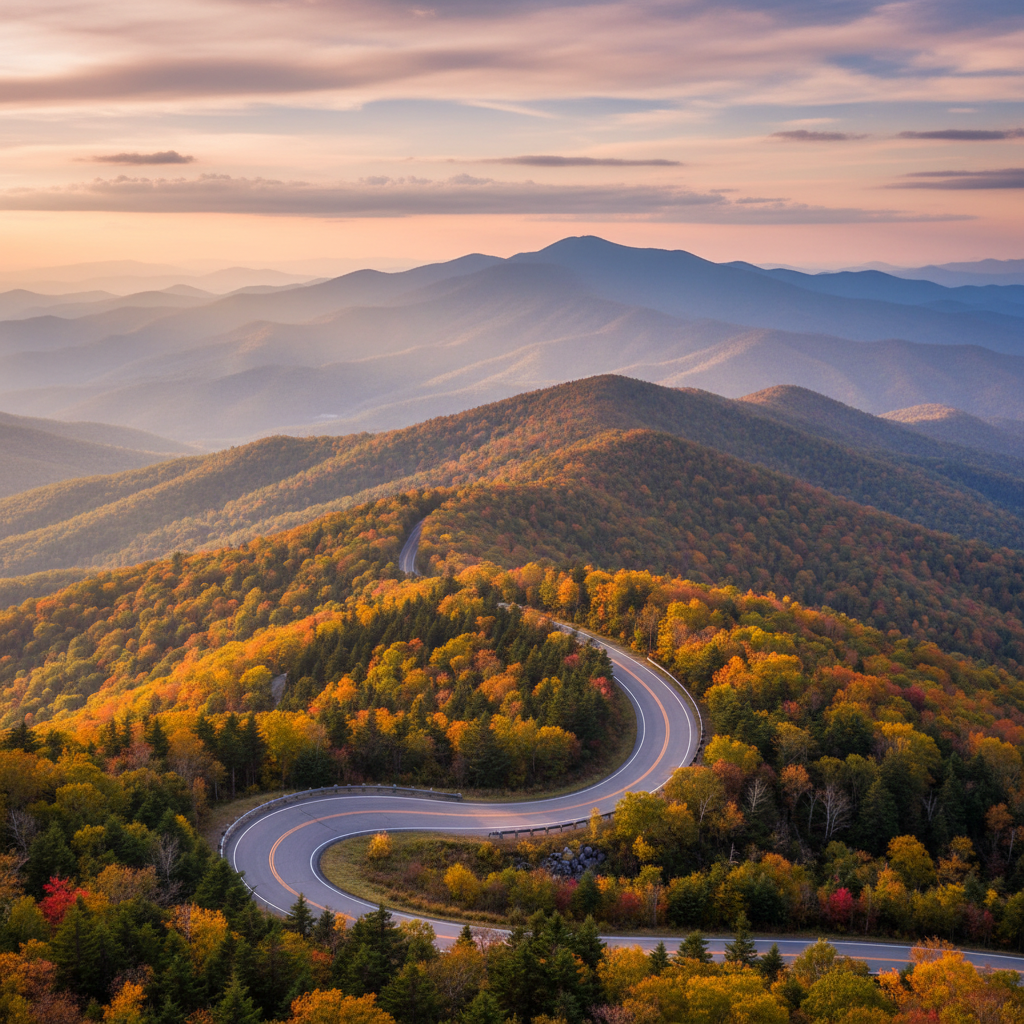
The Great Smoky Mountains offer an incredible array of experiences, from historic Cades Cove to the heights of Clingmans Dome. These are ancient mountains, among the oldest on earth, worn smooth by 300 million years of erosion into rounded ridges that glow blue-gray in the morning mist. The park protects 800 square miles of old-growth Appalachian forest — the most biodiverse temperate forest in the world, with more tree species than all of northern Europe combined. In spring, wildflowers carpet the forest floor. In October, the fall foliage rivals New England. In summer, fireflies put on a light show that draws visitors from around the world.
A Smokies road trip is really two experiences in one: the national park itself (free to enter, with 800 miles of hiking trails, dozens of waterfalls, and the best wildlife viewing in the eastern US) and the surrounding Appalachian culture (the iconic Parkway leading to stunning overlooks, the Cherokee heritage of the Qualla Boundary, the craft distilleries and cideries of the Blue Ridge). Seven days lets you experience both — the wilderness and the culture — without feeling rushed.
The Smokies reward the visitor who gets up early and goes slowly. The best wildlife sightings happen at dawn along the Foothills Parkway. The best waterfall experiences happen before 9 a.m. when the parking lots are empty. The best mountain views happen in the first hour after sunrise when the mist is still in the valleys. This itinerary is built around that rhythm — early starts, unhurried afternoons, and evenings in the mountain towns that have been welcoming visitors to these hills for generations.
Clingmans Dome & the Rooftop of the Smokies
Drive to Clingmans Dome — the highest point in the Great Smoky Mountains at 6,643 feet. Arrive at sunrise for the most dramatic views.
Clingmans Dome is the third highest peak east of the Mississippi River. On clear mornings, you can see 100 miles in every direction — the layered blue ridges of the Appalachians stretching to the horizon. The 'smoky' haze that gives the mountains their name is actually naturally occurring hydrocarbon emissions from the trees — visible as a blue-gray mist in the valleys.
Hike Alum Cave Trail — the most rewarding day hike in the Smokies, with unique geological formations and mountain views.
Alum Cave Trail passes through old-growth forest, crosses Arch Rock (a natural tunnel carved by water), and reaches Alum Cave Bluffs — a massive overhanging cliff with views across the mountain ridges. The full trail to Mount LeConte (11 miles round trip) is one of the best hikes in the eastern US.
Lunch at The Peddler Steakhouse in Gatlinburg — the most iconic restaurant in the Smokies.
The Peddler has been serving steaks in Gatlinburg since 1976, built over a rushing mountain stream with a salad bar that's been called the best in America. The atmosphere — wood beams, fireplace, mountain stream visible through the floor — is exactly what a Smokies dinner should feel like.
Cades Cove Loop Road — an 11-mile one-way loop through a historic valley with the best wildlife viewing in the park.
Cades Cove is the most visited area in the most visited national park in America — and for good reason. The open valley is surrounded by mountains, dotted with 19th-century homesteads and grist mills, and home to the largest white-tailed deer population in the park. Black bears are regularly spotted here, especially in spring and fall.
Laurel Falls — the most visited waterfall in the Smokies, a 2.6-mile round trip paved trail.
Laurel Falls is a two-tiered 80-foot waterfall set in old-growth forest — the most beautiful and accessible waterfall in the park. The paved trail makes it accessible for all ages and fitness levels. The falls are most dramatic in spring when snowmelt swells the creek.
Dinner at The Peddler Steakhouse — the iconic Gatlinburg institution built over a mountain stream.
The Peddler is the quintessential Smokies dining experience — a wood-paneled steakhouse built over a rushing mountain creek, with a legendary salad bar and hand-cut steaks. After a day of hiking, this is exactly the dinner you want.
Leif's Tip: The Great Smoky Mountains is the most visited national park in America — and it's free to enter. The crowds are real, especially in summer and during fall foliage (mid-October). The secret to avoiding them: start every hike before 8 a.m. and visit Cades Cove on a Wednesday or Thursday. The park is genuinely magical when you're not fighting for a parking spot.
Navigating the winding mountain roads and figuring out the best times to visit popular spots like Newfound Gap or the Roaring Fork Motor Nature Trail can be a logistical puzzle, especially when you're trying to avoid peak crowds and make the most of limited daylight. Deciding which of the hundreds of trails offers the best views for your fitness level, or where to find those hidden waterfalls without getting lost, often requires hours of cross-referencing maps and reviews. Then there's the challenge of blending the park's natural beauty with the unique charm of towns like Gatlinburg or Pigeon Forge, ensuring you experience both without feeling rushed or overwhelmed. This is where Leif steps in, streamlining all these complex decisions into a seamless, personalized journey.
Smokies, with their endless possibilities for adventure and relaxation, demand a travel plan that's both comprehensive and flexible. Instead of fumbling with guidebooks or endlessly scrolling through forums on your phone, Leif presents you with a clear, concise recommendation, complete with estimated drive times, a brief description of the atmosphere at each option, and even suggestions for nearby points of interest you might otherwise miss. It's like having a seasoned local whispering the best next move directly into your ear, allowing you to spontaneously adapt your day while still feeling completely confident in your choices.
The crisp, cool air, carrying the scent of pine and damp earth, fills your lungs as you crest another scenic overlook, knowing precisely what lies ahead and why this particular vantage point is special. There’s a profound sense of calm that comes from exploring the ancient Appalachian landscape with a perfectly tailored plan, free from the nagging worry of missing out or making a wrong turn. You’re not just seeing the Smokies; you’re experiencing them deeply, from the quiet solitude of a forest trail to the vibrant energy of a mountain town, all orchestrated to your preferences. Let Leif craft your perfect Smoky Mountain adventure, so you can focus on the awe-inspiring beauty around every bend.
Best Time to Visit Great Smoky Mountains, Tennessee
Mid-October: peak fall foliage (October 15–25), most spectacular but most crowded
Late April–May: wildflowers, spring green, manageable crowds, perfect temperatures
September: summer crowds gone, comfortable temperatures (60–75°F), excellent hiking conditions
Avoid Memorial Day, 4th of July, and peak fall foliage week — the most crowded days of the year
Getting Around Great Smoky Mountains, Tennessee
A car is essential — the park has no public transportation and major attractions are spread across 800 square miles
The Gatlinburg Trolley ($2/day) connects downtown Gatlinburg to the Sugarlands Visitor Center and several trailheads
Parking at popular trailheads (Laurel Falls, Alum Cave, Chimney Tops) fills by 9 a.m. on summer weekends — arrive early or use the park's shuttle service
The Newfound Gap Road (US-441) is the main cross-park highway — it connects Gatlinburg to Cherokee, NC and is the most scenic drive in the park
What to Pack
- Layers for all weather — mountain temperatures can drop 20°F from valley to summit
- Rain jacket — the Smokies receive 55–85 inches of rain per year, the most of any national park
- Sturdy hiking boots with ankle support — trails are rocky and can be wet
- Bear spray for backcountry hiking
- Binoculars for wildlife viewing in Cades Cove
- Sunscreen and insect repellent — mosquitoes and gnats are active June–August
- Trekking poles for steep trails like Alum Cave and Chimney Tops
Money-Saving Tips
- The park is free to enter — no entrance fee, ever
- Pack your own lunch for hikes — there are no restaurants inside the park
- Gatlinburg has dozens of pancake restaurants competing for business — prices are very reasonable
- Cabin rentals in the Gatlinburg area often cost less per night than hotels and include full kitchens — good for families of 4+
Local Insights
- The 'smoke' in Great Smoky Mountains is real — it's naturally occurring hydrocarbon emissions from the trees, visible as a blue-gray mist. It's most dramatic in the morning and after rain.
- Cades Cove is best on Wednesday and Thursday mornings — the road is closed to cars Tuesday and Wednesday mornings for cyclists, and weekends are extremely crowded
- The Cherokee Nation's Qualla Boundary (adjacent to the park's southern entrance) has excellent museums and cultural experiences — the Museum of the Cherokee Indian is one of the best Native American museums in the South
- Asheville, NC (1 hour east) is one of the best food and arts cities in the South — worth a day trip or overnight from the Smokies
- The Roaring Fork Motor Nature Trail is the most scenic drive in the park after Clingmans Dome Road — a 5.5-mile one-way loop through old-growth forest with historic cabins and a waterfall
Frequently Asked Questions
Is the Great Smoky Mountains National Park free to enter?
Yes — Great Smoky Mountains is one of the only major national parks with no entrance fee. This is the primary reason it's the most visited national park in America (12+ million visitors per year). There is no fee to drive through the park, hike the trails, or visit the historic sites.
When is the best time to visit the Smokies?
Mid-October for fall foliage (peak color is usually October 15–25) — the most spectacular time to visit but also the most crowded. Late April–May for wildflowers and spring green. September is excellent — summer crowds have thinned, temperatures are perfect, and the park is at its most peaceful. Avoid Memorial Day weekend, 4th of July, and the week of peak fall foliage — these are the most crowded days of the year.
What are the best hikes in the Smokies for families?
Laurel Falls (2.6 miles round trip, paved) is perfect for all ages. Alum Cave Trail to the bluffs (4.6 miles round trip, moderate) is the best day hike in the park. Clingmans Dome observation tower (1 mile round trip, steep paved path) is accessible for most fitness levels. Avoid the Appalachian Trail sections in the park with young children — they're strenuous and remote.
Where should you stay — Gatlinburg or Pigeon Forge?
Gatlinburg is the better base for park access — it's directly adjacent to the park entrance and has a more authentic mountain town character. Pigeon Forge (home of Dollywood) is more commercial and further from the park but has more hotel options and lower prices. For a first visit, stay in Gatlinburg. For families with Dollywood on the itinerary, Pigeon Forge makes logistical sense.
Can you see black bears in the Smokies?
Yes — the park has approximately 1,500 black bears, one of the highest densities in the eastern US. Cades Cove and Roaring Fork Motor Nature Trail are the best places to spot them. Bears are most active in spring (April–June) and fall (September–November). Maintain 50 yards distance at all times — never approach or feed bears. Bear sightings are common but not guaranteed.
What is the firefly event and how do you get tickets?
Every June, synchronous fireflies in the Smokies put on a light show where thousands of fireflies flash in unison — one of only a few places in the world where this occurs. The NPS runs a shuttle system (lottery-based, $1–$2/vehicle) to the Elkmont Campground viewing area during the 2-week event. Lottery applications open in April — apply as soon as the window opens, as demand far exceeds supply.