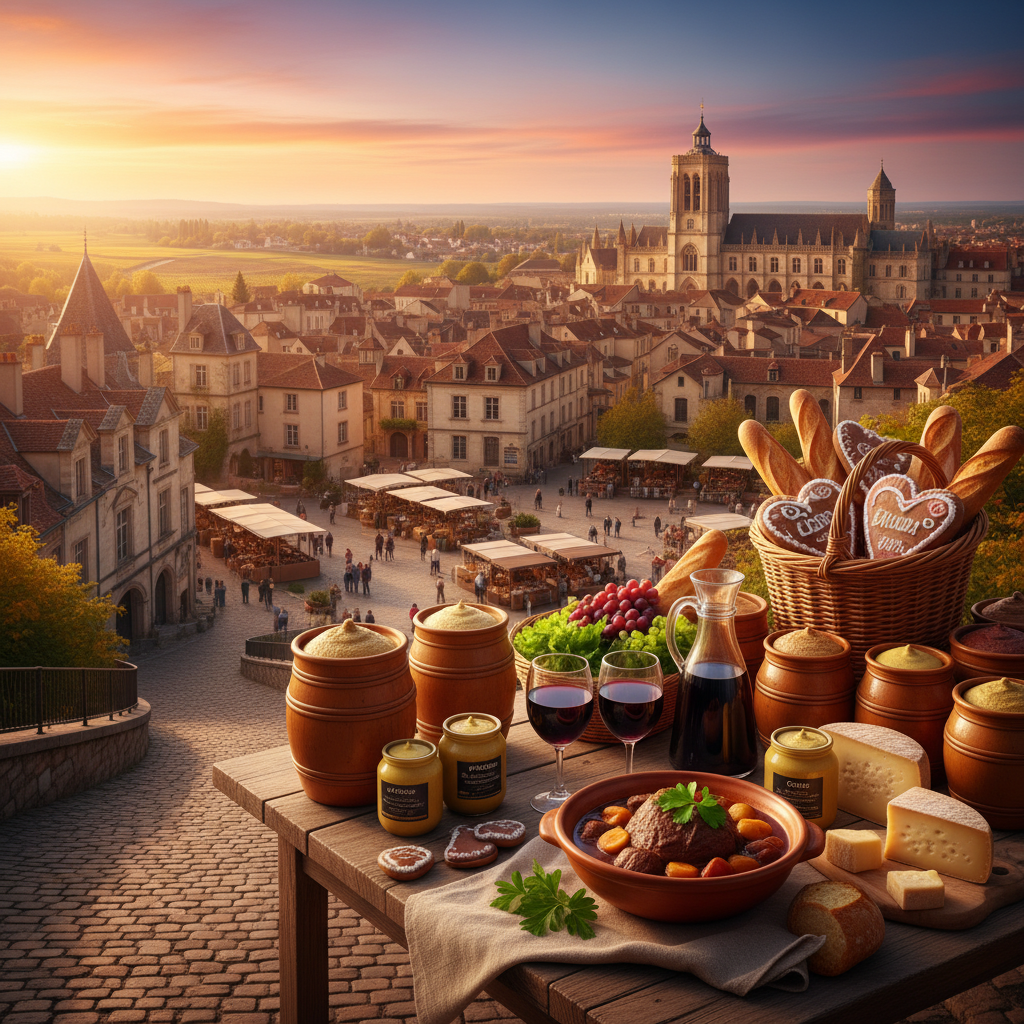
Dijon for Foodies: A 3-Day Culinary & Wine Lover's Guide to Burgundy's Capital
Indulge in Dijon's culinary delights on this 3-day food and wine lover's journey. Explore mustard, Burgundy wines, and classic French cuisine in France's gastronomic heart.
- Duration: 3 Days
- Estimated Budget: $800–$1,500
- Best Time to Visit: May-June and September-October for pleasant weather and harvest festivals.
- Destination: Dijon, France
Dijon is calling all food and wine lovers! This historic city, nestled in the heart of Burgundy, is a true gastronomic paradise where world-renowned mustard, exquisite wines, and hearty French classics like boeuf bourguignon come together in a symphony of flavors. Now is the perfect time to savor its rich culinary heritage and charming medieval streets.
Dijon, the historic capital of Burgundy, is a culinary wonderland, especially for those who adore robust flavors and exceptional wines. Forget everything you thought you knew about mustard; here, it's an art form, from potent whole-grain varieties to delicate infusions. But Dijon's gastronomic heart beats far beyond its famous condiment. Imagine savoring a slow-cooked Boeuf Bourguignon, its rich, wine-infused sauce clinging to tender beef, paired perfectly with a glass of Pinot Noir from a nearby Grand Cru vineyard. This city is a feast for the senses, where every cobblestone street leads to a new culinary discovery, from bustling markets overflowing with local produce to Michelin-starred establishments pushing the boundaries of traditional Burgundian fare. It's a place where food isn't just sustenance; it's a celebration of heritage, terroir, and passion.,Beyond the savory, Dijon offers a sweet symphony, particularly with its iconic pain d'épices, or gingerbread. This isn't your average holiday treat; Dijon's gingerbread is a centuries-old tradition, often made with rye flour, honey, and a secret blend of spices, resulting in a dense, aromatic, and deeply satisfying confection. Picture yourself wandering through the charming streets, the scent of warm spices wafting from a boulangerie, enticing you to sample a slice with a cup of strong coffee. And then, there's the wine. Oh, the wine! Dijon sits at the doorstep of the Côte de Nuits and Côte de Beaune, home to some of the world's most revered vineyards. This trip isn't just about tasting; it's about understanding the nuances of Burgundy's terroirs, from crisp Chardonnays to elegant Pinot Noirs, guided by experts who live and breathe the region's viticultural legacy.,This 3-day itinerary is crafted for the discerning food and wine lover, someone who wants to delve deep into the authentic flavors of Burgundy. We'll bypass the tourist traps and guide you to the hidden gems: the family-run mustard mills, the artisanal cheesemongers, and the intimate wine cellars where stories are as rich as the vintages. You'll explore the Ducal Palace and its rich history, discover the subtle art of wine pairing, and indulge in multi-course meals that showcase the best of Burgundian cuisine. Prepare to awaken your palate, expand your culinary knowledge, and leave Dijon with a profound appreciation for a region where food and wine are not just commodities, but a way of life, steeped in tradition and bursting with flavor. <p class="leif-blog-link"><strong>Planning a wine trip?</strong> Read our deep dive: <a href="/blog/wine-destinations-where-the-wine-is-not-the-point-its-the-key">The Wine Destinations Where the Wine Is Not the Point. It's the Key.</a> — covering the Burgundy wine region and five other destinations where wine is the key to the culture.</p>
Mustard, Markets, and Medieval Charm: A Delicious Dijon Welcome
Check into your hotel and take a moment to refresh. Settle in before diving into the culinary delights of Dijon.
Starting your trip with a smooth check-in sets a relaxed tone for your gastronomic adventure. It allows you to unpack and mentally prepare for the delicious experiences ahead.
Embark on the 'Parcours de la Chouette' (Owl's Trail), a self-guided walking tour marked by 22 owl plaques embedded in the pavement, leading you through Dijon's historic center.
This engaging trail is the perfect introduction to Dijon's rich history and stunning architecture, allowing you to discover hidden gems at your own pace. It's a fantastic way to orient yourself and build an appetite for later.
Visit the Maille Boutique on Rue de la Liberté, the historic flagship store for Dijon's most famous mustard producer.
This isn't just a shop; it's an experience. You'll find an incredible array of gourmet mustards, including many exclusive flavors, and witness the art of fresh mustard served from the tap. It's essential for any food lover in Dijon.
Enjoy an aperitif at La Comédie, a charming wine bar known for its excellent selection of local Burgundy wines and convivial atmosphere.
Savoring a glass of regional wine is the ideal way to unwind after exploring and truly immerse yourself in the local culture. It's a perfect prelude to a fantastic dinner.
Indulge in a traditional Burgundian dinner at Chez Léon, renowned for its authentic regional cuisine.
This is your chance to taste classic dishes like Boeuf Bourguignon and Escargots de Bourgogne prepared to perfection. It's a quintessential Dijon dining experience that foodies dream of.
Leif's Tip: Upon arrival, head straight to the Dijon Tourist Office. They have excellent free maps, brochures, and can answer any questions you might have. They also offer a 'Dijon City Pass' which can be great value if you plan on visiting multiple museums and attractions, but for a food and wine focus, you might only need the free Owl's Trail map.
Navigating the labyrinthine world of Burgundian wine producers and authentic mustard experiences in Dijon can be genuinely challenging, even for seasoned travelers. How do you discern a truly traditional moutarderie from a tourist-focused shop, or identify a family-run domaine offering intimate tastings versus a large commercial operation? Finding the perfect restaurant for classic boeuf bourguignon that isn't just serving a watered-down version, or locating the best artisan bakeries for pain d'épices, requires insider knowledge that isn't readily available in standard guidebooks. Language barriers can complicate reservations and understanding local nuances, while simply knowing the best times to visit specific markets or vineyards to avoid crowds and ensure availability adds another layer of complexity. This is precisely where Leif steps in, cutting through the noise to curate your ideal, authentic Dijon experience.
Parcours de la Chouette offers more than just historical sights; it also guides you to Dijon's hidden culinary gems. Instead of aimlessly wandering or relying on outdated recommendations, you'll have specific directions to Les Halles, highlighting the best cheese vendors for Époisses and Cîteaux, and even suggesting a particular stall known for its regional charcuterie. Leif anticipates your desire for an authentic mustard-making demonstration and has pre-selected a small, traditional workshop that offers English-speaking tours, complete with tasting notes on various strengths and flavors. When it's time for lunch, Leif guides you to a charming bistro tucked away on a side street, renowned for its perfectly executed Coq au Vin, ensuring you bypass the crowded main squares and dine like a local.
The rich aroma of gingerbread and the subtle scent of aged wine barrels greet you as you step out each morning, a constant reminder of Dijon's culinary heart. Knowing that every reservation is confirmed, every tasting arranged, and every route optimized, you feel a profound sense of ease and anticipation. There's no stress about missing a hidden gem or settling for a mediocre meal; instead, you're fully present, savoring each bite of a perfectly paired dish and every sip of a nuanced Burgundy vintage. This preparation allows you to connect deeply with the city's gastronomic soul, leaving you free to absorb the history, the flavors, and the genuine warmth of the region. Let Leif transform your Dijon food and wine journey from a mere trip into an unforgettable epicurean adventure.
Best Time to Visit Dijon, France
Late Spring (May-June): The vineyards are vibrant, the weather is pleasantly warm, and outdoor markets are in full swing. Ideal for wine tasting and al fresco dining.
Early Autumn (September-October): Harvest season! This is a magical time to visit the vineyards, with fewer crowds than summer and beautiful fall foliage. Perfect for food and wine festivals.
Avoid mid-July to mid-August if you prefer fewer tourists, as this is peak French holiday season and some smaller shops might close.
Weekdays are generally better for visiting popular attractions and restaurants, as weekends can be busier, especially during peak seasons.
Getting Around Dijon, France
Dijon's city center is very walkable, so plan to explore most attractions on foot. Wear comfortable shoes!
Utilize the Divia public transport system (trams and buses) for longer distances or if your accommodation is outside the immediate historic center. Tickets can be purchased at vending machines or on the bus.
Consider renting a car for a day trip into the Burgundy vineyards. This offers the most flexibility for visiting smaller, more remote wineries. Book in advance, especially during harvest season.
If arriving by TGV (high-speed train), Dijon Ville station is centrally located and well-connected to the city center by tram and bus.
What to Pack
- Comfortable walking shoes: You'll be doing a lot of walking on cobblestone streets.
- Layers of clothing: Even in warmer months, evenings can be cool. A light jacket or cardigan is essential.
- A reusable shopping bag: Perfect for carrying market finds like mustard, cheese, and gingerbread.
- A nice outfit: For evenings out at Dijon's excellent restaurants and wine bars.
- Portable charger: To keep your phone ready for all those food and vineyard photos.
- An umbrella or light rain jacket: Burgundy weather can be unpredictable, even in summer.
- Wine bottle protectors: If you plan on bringing back some precious Burgundy wines.
- A small backpack or day bag: For daily essentials and keeping your hands free.
Money-Saving Tips
- Opt for the 'Menu du Jour' or 'Formule' at lunch: Many restaurants offer excellent value set menus that include an appetizer, main, and sometimes dessert, often for less than 20 euros.
- Visit the local markets (Les Halles): Buy fresh produce, cheese, and charcuterie for a delicious and affordable picnic lunch.
- Take advantage of free walking tours: Look for self-guided options or free tours that operate on a tip-only basis to learn about the city's history without breaking the bank.
- Choose accommodation slightly outside the immediate hyper-center: You can often find better deals within a short walk or tram ride to the main attractions.
- Purchase a Dijon City Pass: If you plan on visiting several museums and attractions, this pass can offer significant savings on entry fees and public transport.
Local Insights
- Embrace the 'Apéro' culture: Before dinner, enjoy a drink and some small bites (like gougères or local charcuterie) at a café. It's a lovely way to unwind and experience local life.
- Don't be afraid to ask for recommendations: Shopkeepers, restaurant staff, and even locals are usually happy to share their favorite spots for food, wine, or hidden gems.
- Learn a few basic French phrases: 'Bonjour' (hello), 'Merci' (thank you), 'S'il vous plaît' (please), and 'Au revoir' (goodbye) go a long way in showing respect and enhancing your interactions.
- Explore beyond the main shopping streets: Wander down smaller side streets to discover charming boutiques, artisan shops, and local eateries.
- Take your time with meals: Dining in France, especially in Burgundy, is an experience to be savored. Don't rush your courses; enjoy the conversation and the flavors.
Frequently Asked Questions
What is the best way to get around Dijon for a food and wine trip?
Dijon's city center is very walkable, perfect for exploring its culinary delights on foot. For vineyard tours and excursions outside the city, I highly recommend booking a private driver or joining a small group tour that includes transportation. This allows you to fully enjoy the wine tastings without worrying about driving.
Are reservations necessary for restaurants, especially for dinner?
Absolutely! For popular and highly-rated restaurants in Dijon, especially on weekends or during peak season, reservations are essential, often several days or even weeks in advance. For more casual lunch spots, you might be able to walk in, but it's always safer to call ahead.
What's the difference between Dijon mustard and other mustards?
Dijon mustard is traditionally made with brown or black mustard seeds, white wine (or verjuice, a sour grape juice), and salt, giving it a distinctive sharp, tangy, and slightly spicy flavor. Unlike some other mustards, it often omits vinegar, resulting in a smoother, more refined taste that's a hallmark of Burgundian cuisine.
Can I visit vineyards and do wine tastings without a pre-booked tour?
While some larger estates might accommodate walk-ins, it's generally best to book vineyard visits and tastings in advance, especially for smaller, family-run domains. Many require appointments to ensure a personalized experience and to manage their capacity. A pre-booked tour often includes transportation and expert guidance, enhancing your experience.
What are some essential food souvenirs to bring back from Dijon?
Beyond various types of Dijon mustard (look for Moutarde Fallot for artisanal quality), you must bring back pain d'épices (gingerbread), crème de cassis (blackcurrant liqueur), and perhaps some local cheeses like Époisses or Cîteaux. For wine, a bottle of regional Pinot Noir or Chardonnay from a small producer is a perfect memento.
Is Dijon suitable for vegetarians or those with dietary restrictions?
While traditional Burgundian cuisine is meat-heavy, Dijon's culinary scene is evolving. Many restaurants now offer vegetarian options, and with advance notice, can often accommodate other dietary restrictions. However, for a truly immersive food and wine experience, it helps to be open to trying local specialties. Always inform the restaurant when booking.
What's the best time of year to visit Dijon for a food and wine trip?
Spring (April-May) and Autumn (September-October) are ideal. Spring offers pleasant weather and blooming vineyards, while autumn coincides with the grape harvest (vendanges) and vibrant fall foliage, creating a magical atmosphere for wine lovers. Summers can be warm and busy, and winters are quieter but still offer cozy culinary experiences.