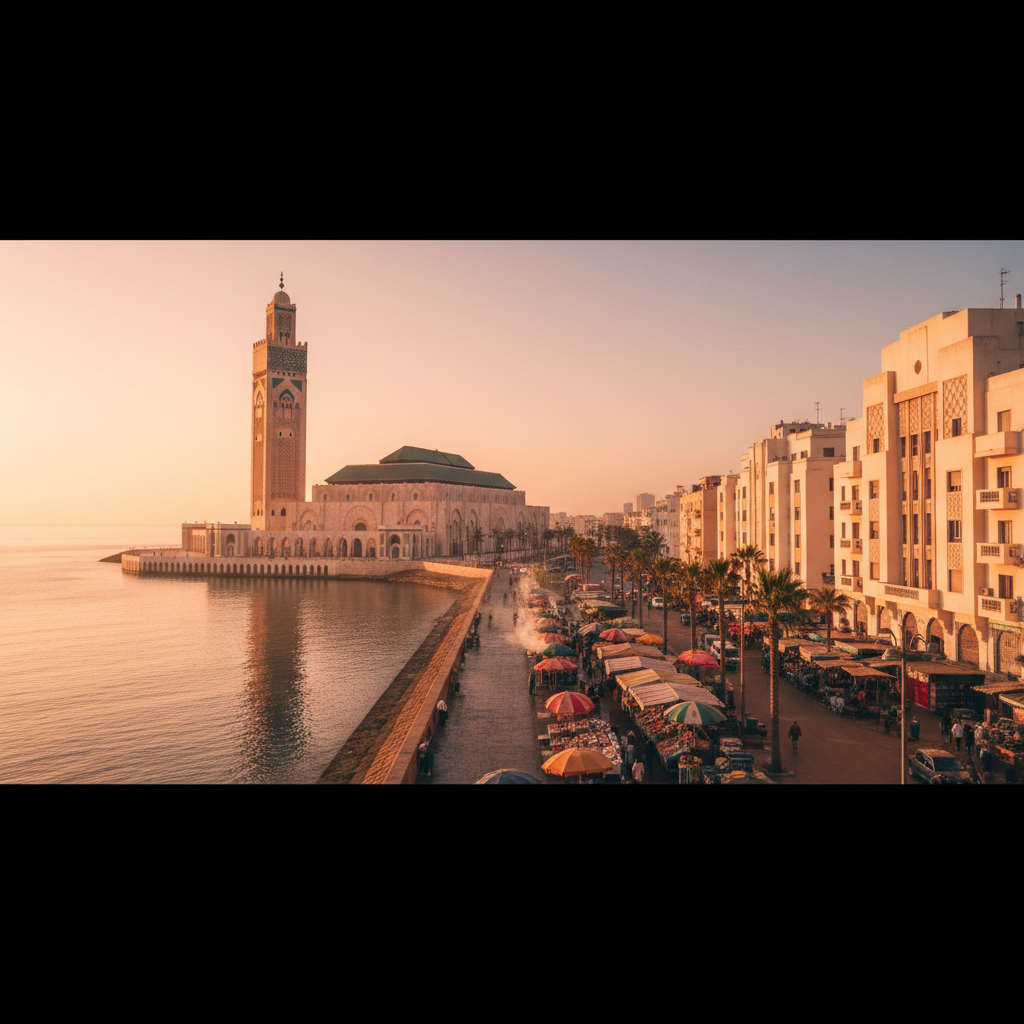
Casablanca City Guide: 3 Days of Art Deco, Corniche Seafood & Moroccan Coffee
Uncover Casablanca's hidden gems in 3 days: explore the Hassan II Mosque, stunning Art Deco architecture, fresh Corniche seafood, and vibrant coffee culture.
- Duration: 3 Days
- Estimated Budget: $350–$700
- Best Time to Visit: March-May and September-November for pleasant temperatures and fewer crowds.
- Destination: Casablanca, Morocco
<p><em>Planning a trip to Morocco? Read our <a href="/blog/marrakech-the-city-that-rewires-your-senses">complete Marrakech travel guide</a> for everything you need to know before you go — the medina, food, hammams, day trips, and practical tips.</em></p> Casablanca, often overlooked, is Morocco's vibrant commercial heart, offering a unique blend of French colonial elegance and Moroccan tradition. This guide is your key to discovering its iconic Hassan II Mosque, impressive Art Deco buildings, and a thriving culinary scene, proving there's much more to this city than just a stopover.
The moment you step into the Grand Post Office on Place Mohammed V, you're immediately transported to a bygone era of French elegance. This isn't just a functional building; it's a testament to the city's rich architectural heritage, with its grand facade and intricate details hinting at the treasures that await around every corner. Stroll along the adjacent boulevards, and you'll discover a city that proudly showcases its unique blend of European influence and North African charm, a place where every building tells a story of a vibrant past and a dynamic present. It’s a city that rewards those who look beyond the surface, revealing a cosmopolitan heart that beats with an energy all its own.
Is it easy to navigate the city's diverse districts without feeling lost? Absolutely. While Casablanca is a sprawling metropolis, its key areas for visitors are surprisingly accessible and well-connected. Public transport, including the modern tramway, offers an efficient way to traverse the city, linking major attractions and neighborhoods. Taxis are plentiful and affordable, making it simple to hop from a historic site to a bustling market or a tranquil seaside promenade. With a little planning, you'll find that exploring the city's distinct zones, from its colonial-era avenues to its vibrant local quarters, is a straightforward and enjoyable experience, allowing you to soak in its unique atmosphere without stress.
Travelers exploring this dynamic city spend their mornings soaking in the grandeur of its monumental religious sites, followed by leisurely afternoons discovering hidden architectural gems. You'll find yourself sipping strong, aromatic coffee in a bustling square, observing the daily rhythm of local life, before indulging in fresh, ocean-caught delicacies as the sun dips below the horizon. The rhythm of Casablanca means balancing awe-inspiring cultural experiences with relaxed moments of culinary delight and urban exploration. Evenings often involve a stroll along the waterfront, taking in the sea breeze and the city lights, providing a perfect end to a day filled with discovery and authentic encounters.
Coastal Grandeur & Art Deco Charms
Embark on a guided tour of the magnificent Hassan II Mosque, a breathtaking architectural marvel built on the Atlantic Ocean.
This is the third-largest mosque in the world and the only one in Morocco open to non-Muslims, offering an unparalleled glimpse into Islamic art and architecture. Its sheer scale and intricate details are truly awe-inspiring.
Stroll along the Corniche, Casablanca's vibrant seafront promenade, enjoying the ocean breeze and modern city views.
The Corniche offers a refreshing contrast to the historical sites, showcasing Casablanca's contemporary lifestyle and providing stunning views of the Atlantic. It's a great way to experience the city's coastal energy.
Indulge in a fresh seafood lunch at La Sqala, nestled within a historic Portuguese fortress.
La Sqala offers not only exquisite, fresh Moroccan seafood but also a unique dining experience within a beautifully preserved historical setting. It's a culinary journey combined with a taste of history.
Discover Casablanca's rich Art Deco heritage with a self-guided walking tour, focusing on Boulevard Mohammed V and Place Mohammed V.
Casablanca boasts one of the finest collections of Art Deco architecture outside of Miami, a stunning legacy of its French Protectorate era. This walk reveals the city's elegant, often overlooked, architectural beauty.
Experience Moroccan coffee culture at Café de France, a historic institution on Place Mohammed V.
This iconic cafe is a true Casablanca landmark, offering a glimpse into the city's daily rhythm and its blend of French and Moroccan coffee traditions. It's the perfect spot to unwind and observe local life.
Leif's Tip: Casablanca is a city of contrasts, so embrace both its modern energy and its historical charm. Don't be afraid to wander off the main boulevards during your Art Deco walk; some of the most beautiful buildings are tucked away on side streets. Always carry small denominations of Moroccan Dirham for small purchases and tips.
Between navigating the labyrinthine alleys of the Old Medina, deciphering the subtle nuances of Moroccan street food, and understanding the best times to visit the city's iconic landmarks, planning a trip to this dynamic Moroccan hub can feel like a daunting task. You might wonder which neighborhoods offer the most authentic experiences versus those that cater purely to tourists, or how to efficiently link a visit to a grand architectural marvel with a serene moment by the sea without losing precious time. This is precisely where many travelers get bogged down, trying to piece together disparate information from various sources, often leading to a less-than-optimal itinerary. Without insider knowledge, it's easy to miss out on the city's true character, getting caught in tourist traps or simply not knowing where to find those genuinely local moments that make a trip unforgettable. Leif steps in to smooth out these complexities, ensuring your journey is seamless and rich with discovery.
Say you've just arrived at your hotel near the central train station, feeling a bit disoriented after your flight, and you're wondering where to grab an authentic, quick bite before embarking on your afternoon explorations. You pull out Leif, and within moments, it suggests a charming, unassuming eatery just a few blocks away, known for its delicious local pastries and strong, traditional coffee. Leif doesn't just point you to a restaurant; it tells you exactly what to order – perhaps a "msemen" with honey or a "baghrir" – and even gives you a few key phrases in Arabic to help you order like a local. This isn't about generic recommendations; it's about providing real-time, actionable insights that transform a simple meal into a cultural immersion, ensuring you experience the city not just as a visitor, but as someone who truly understands its pulse.
You'll arrive in this bustling port city knowing exactly where to find the most aromatic spices, the most intricate leather goods, and the most captivating street art, all without the stress of endless research. Instead of feeling overwhelmed by the sheer scale of the city, you'll move with confidence, guided by recommendations that feel tailor-made for your interests. The difference is feeling the cool Atlantic breeze on your face as you savor a perfectly grilled sardine at a hidden gem along the waterfront, a place you'd never find on a generic travel blog. Arriving in Casablanca with Leif means every turn reveals a new delight, every meal is an adventure, and every moment is spent soaking in the vibrant energy of a city that truly comes alive when you know where to look. Get ready to experience the magic of Morocco's economic heart, effortlessly and authentically.
Best Time to Visit Casablanca, Morocco
Spring (April-May) and Fall (September-October) offer pleasant temperatures and fewer crowds, ideal for exploring.
Summers (June-August) can be hot, especially in the afternoon, but the coastal breeze along the Corniche provides some relief.
Winters (November-March) are mild with occasional rain, but still comfortable for sightseeing.
Avoid visiting during Ramadan if you plan to eat out during the day, as many restaurants close until sunset.
For the best light at the Hassan II Mosque, aim for a morning visit around 9 AM.
Getting Around Casablanca, Morocco
Taxis are plentiful and affordable; always insist on the meter (compteur) or agree on a price beforehand to avoid overpaying.
The tramway is a modern and efficient way to navigate the city, connecting many key attractions like the Central Market and Habous Quarter.
For airport transfers, consider the Al Bidaoui train, which runs regularly between Mohammed V International Airport (CMN) and Casa Port station.
Walking is the best way to experience the Art Deco district and the medina, but be prepared for uneven sidewalks.
Ride-sharing apps like Careem are available and can offer a convenient alternative to traditional taxis.
What to Pack
- Lightweight, breathable clothing suitable for warm weather, especially during the day.
- A light jacket or shawl for cooler evenings, particularly along the coast or in air-conditioned spaces.
- Comfortable walking shoes are essential for exploring the medina and Art Deco streets.
- Modest attire (shoulders and knees covered) is recommended, especially when visiting religious sites like the Hassan II Mosque.
- Sunscreen, sunglasses, and a hat to protect against the strong Moroccan sun.
- A small backpack or cross-body bag for daily essentials and to keep valuables secure.
- A portable power bank for your phone, as you'll be using it for navigation and photos.
- An adapter for European-style two-pin plugs (Type C/E).
Money-Saving Tips
- Embrace street food! Harira soup, msemen, and brochettes offer delicious and incredibly affordable meal options.
- Haggle politely in the souks of the medina; it's expected and can save you a significant amount on purchases.
- Opt for local cafes for your coffee and tea; a 'café cassé' is a fraction of the price of a touristy spot.
- Utilize the tramway for longer distances instead of taxis to save on transportation costs.
- Consider buying a local SIM card upon arrival for affordable data and calls, rather than relying on international roaming.
Local Insights
- Always greet people with 'Salam Alaikum' (peace be upon you) and 'Shukran' (thank you) — a little Arabic goes a long way.
- Be prepared for a slower pace of service in restaurants and cafes; it's part of the Moroccan experience.
- When offered mint tea, it's polite to accept; it's a gesture of hospitality.
- Friday is a holy day in Morocco, and some shops and businesses may have reduced hours or be closed, especially in the mornings.
- Photography of people, especially women, should always be done with permission to show respect.
Frequently Asked Questions
What's the best way to get from Mohammed V International Airport (CMN) to the city center?
The most convenient way is by train. The Al Bidaoui train service runs directly from the airport to Casa Port and Casa Voyageurs stations in the city center, taking about 30-40 minutes. Taxis are also available but confirm the price before starting your journey, as they can be more expensive.
Is Casablanca safe for tourists?
Casablanca is generally safe for tourists, especially in the main tourist areas. Like any large city, it's wise to be aware of your surroundings, particularly in crowded places like markets, and to take standard precautions against petty theft. Avoid walking alone in poorly lit areas at night, and be respectful of local customs.
Do I need to speak Arabic or French to get around?
While Arabic is the official language and French is widely spoken due to historical ties, many people in tourist-facing roles will have some English. Learning a few basic phrases in French or Arabic (like 'hello,' 'thank you,' 'how much?') can greatly enhance your experience and is always appreciated by locals.
What's the dress code for women in Casablanca?
Casablanca is a modern city, but it's still advisable for women to dress modestly, especially when visiting religious sites. Covering shoulders and knees is recommended. Loose-fitting clothing is generally more comfortable in the climate. There's no requirement to wear a headscarf unless entering a mosque.
Can I use my credit card everywhere, or should I carry cash?
Major hotels, larger restaurants, and upscale shops will accept credit cards. However, for smaller cafes, street food vendors, local markets, and taxis, cash (Moroccan Dirham) is essential. It's always a good idea to carry a mix of both and have smaller denominations for convenience.
What's the best time of year to visit Casablanca?
The best times to visit are spring (April-May) and autumn (September-October) when the weather is pleasantly mild and sunny, ideal for exploring. Summers can be hot, and winters are mild but can have more rainfall. These shoulder seasons offer comfortable temperatures for sightseeing.
Are there any specific cultural etiquette tips I should know?
Always ask permission before taking photos of people. Bargaining is expected in souks and markets, but do so respectfully. When offered mint tea, it's polite to accept. Use your right hand when eating or passing things, as the left hand is considered unclean in Islamic culture.