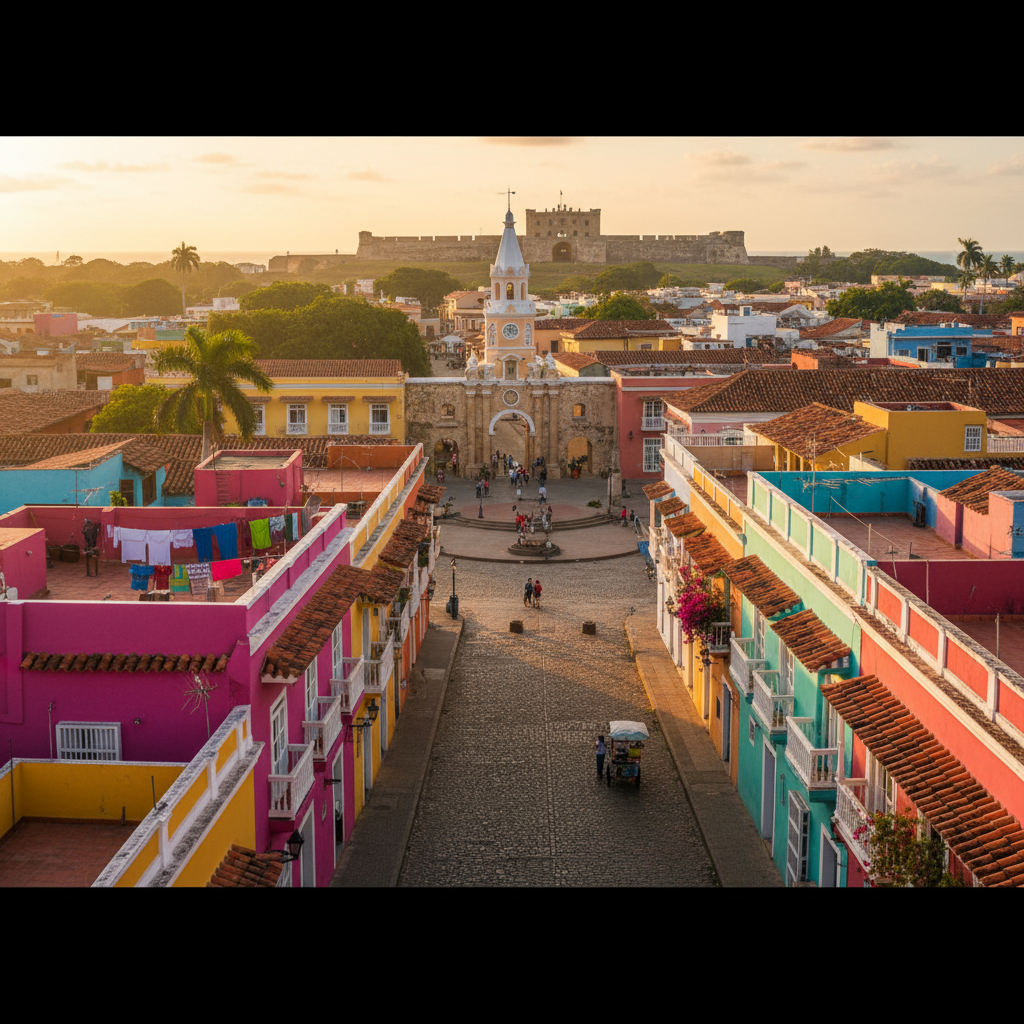
Cartagena on a Budget: 4-Day Guide to Colombia's Caribbean Coast for $35/Day
Experience the vibrant heart of Cartagena on a shoestring budget. This 4-day guide uncovers street food, free cultural gems, and local beaches for just $35/day.
- Duration: 4 Days
- Estimated Budget: $144–$160
- Best Time to Visit: December–April (dry season, 28-32°C, low humidity). Avoid October–November (rainiest months).
- Destination: Cartagena, Colombia
Can you truly experience Cartagena's vibrant culture and stunning Caribbean charm without breaking the bank? Absolutely. This guide proves that the real magic of Cartagena isn't found in overpriced tours or luxury hotels, but in its bustling street life, authentic neighborhoods, and free historical treasures, all for just $35 a day.
The moment you step into the vibrant Mercado de Bazurto, a symphony of sounds, smells, and colors envelops you. This isn't the Cartagena of glossy postcards; it's the raw, beating heart of the city, where locals haggle over mountains of fresh produce, exotic fruits you've never seen before, and the day's catch from the Caribbean Sea. For the budget traveler, this bustling market is a culinary adventure, offering an authentic glimpse into daily life and the chance to savor incredible flavors without the tourist markup. It's a place where every sense is engaged, and every corner holds a new discovery, far removed from the more curated experiences of the historic center.
How do you truly experience the authentic pulse of Cartagena without falling into common tourist traps? Here's the reality: many visitors flock to the same few spots, missing out on the vibrant local culture that thrives just beyond the main squares. The key is to embrace public transport, seek out local eateries, and prioritize experiences that connect you with the city's living history and its people, rather than just its monuments. By venturing into neighborhoods like Getsemaní and utilizing local buses, you unlock a Cartagena that is both more affordable and infinitely more rewarding, allowing you to stretch your dollars further while diving deeper into its soul.
You'll find yourself lingering over long lunches at a 'corrientazo' spot more than you expect, savoring a hearty, home-cooked meal for just a few dollars. The rhythm of Cartagena for budget travelers means mornings spent exploring the intricate tunnels of an ancient fortress, followed by an afternoon relaxing on a local beach, far from the crowds. Evenings often involve joining locals in a lively plaza, enjoying spontaneous street performances and delicious, inexpensive street food. It's a journey filled with genuine interactions, unexpected discoveries, and the constant hum of a city that truly comes alive when you embrace its everyday charm.
Getsemaní's Street Art and Local Flavors
Arrive at Rafael Núñez International Airport (CTG) and take a taxi to your accommodation in Getsemaní.
Starting your adventure in Getsemaní immediately immerses you in the vibrant, authentic heart of Cartagena. It's close to the airport and offers a true local experience from the moment you land.
Explore Plaza de la Trinidad, the bustling social hub of Getsemaní, where locals gather and street life thrives.
This plaza is the pulse of the neighborhood, offering a glimpse into daily Cartagena life, from domino games to impromptu music. It's a fantastic spot to people-watch and soak in the atmosphere.
Embark on a self-guided street art circuit through Getsemaní, discovering incredible murals and graffiti art.
Getsemaní is renowned for its vibrant and politically charged street art, telling stories of Colombian culture and history. It's a free, open-air gallery that offers a unique artistic perspective of the city.
Walk along the historic City Walls (Las Murallas), offering panoramic views of the Caribbean Sea and the city.
These ancient fortifications are a UNESCO World Heritage site and provide a fantastic perspective of Cartagena's colonial architecture and coastline. It's a completely free activity with stunning vistas.
Experience the lively evening atmosphere at Plaza de la Trinidad, often featuring spontaneous cumbia dancing and street performers.
The plaza truly comes alive at night, transforming into an open-air community gathering with music, dance, and delicious street food. It's an authentic and free cultural experience you won't find in tourist traps.
Leif's Tip: Upon arrival, purchase a local SIM card with data (Tigo or Claro are good options) for easy navigation and communication. It's invaluable for finding street art spots and local eateries, and will save you from relying on spotty Wi-Fi.
The part of Cartagena that catches travelers off guard is often the sheer volume of choices, especially when you're trying to stick to a tight budget. It’s not just about finding cheap food, but finding delicious, authentic, and safe cheap food. It’s about navigating public transport in a city where Spanish is the primary language, and knowing which local bus routes will get you to that stunning, free viewpoint without getting lost. It’s about distinguishing between genuine cultural experiences and tourist traps designed to extract maximum dollars. This intricate dance between saving money and truly experiencing the city can feel overwhelming before you even arrive, leaving many to default to overpriced, generic options. That's precisely the challenge Leif is built to solve for you.
When you're standing in the bustling heart of Getsemaní, wondering where to find the best egg arepa that won't break your daily budget, Leif has already mapped it out. Imagine you've just finished exploring the impressive Castillo de San Felipe de Barajas, and you're ready for lunch. Instead of aimlessly wandering, you pull up your Leif itinerary, and it directs you to a specific, highly-rated 'corrientazo' spot just a few blocks away, complete with a price estimate and a quick note about what to order. Or perhaps you want to experience the vibrant street art, but aren't sure which alleys are best. Leif provides a self-guided walking tour, highlighting the must-see murals and even suggesting a refreshing agua de panela stand along the way. Leif puts the power of local knowledge directly into your hands, making every decision effortless.
Instead of arriving in Cartagena with a stack of guidebooks and a vague plan, you'll arrive with a meticulously crafted itinerary that feels like it was written by a local friend. The difference is feeling completely confident as you hop on a local bus to Playa Blanca, knowing you're getting the authentic experience at the best price. It’s the satisfaction of finding that hidden gem of a ceviche stand, or watching a spontaneous cumbia dance in Plaza de la Trinidad, all while staying comfortably within your $35 daily budget. Arriving in Cartagena with Leif already means you're not just visiting; you're immersing yourself, experiencing the city's vibrant rhythm and rich culture without a single moment of budget anxiety or planning stress. Your adventure starts the moment you land, fully prepared and ready to explore.
Best Time to Visit Cartagena, Colombia
December to April offers the driest weather and lower humidity, making it the most comfortable time to explore Cartagena's streets.
Expect temperatures between 28-32°C year-round, so even in the 'dry season,' it's always warm.
Avoid October and November if possible, as these are the rainiest months and can impact your outdoor plans.
Visiting during the dry season means more pleasant walks and less chance of your budget beach day being rained out.
While it's peak season, the comfortable weather is worth navigating slightly larger crowds, especially for budget travelers who spend more time outdoors.
Getting Around Cartagena, Colombia
Always agree on taxi fares before getting in, especially from the airport, to avoid being overcharged.
Utilize local buses (Transcaribe) for longer distances like to Bocagrande or the Mercado de Bazurto; they are incredibly cheap and efficient.
For the Playa Blanca trip, take the local bus from Mercado de Bazurto to Barú and then a short mototaxi ride; it's the cheapest way to get there.
Walking is your best friend for exploring Getsemaní and the Walled City; wear comfortable shoes and stay hydrated.
Consider the 'colectivo' shared taxis for some routes; they're cheaper than private taxis but follow set routes.
What to Pack
- Lightweight, breathable clothing (cotton or linen are ideal) to combat the constant heat and humidity.
- A wide-brimmed hat and sunglasses are essential for sun protection, especially when walking the city walls or on the beach.
- High-SPF sunscreen; the Caribbean sun is intense, and you'll be spending a lot of time outdoors.
- Comfortable walking shoes for exploring the cobblestone streets of Getsemaní and the Walled City.
- A reusable water bottle to refill frequently and stay hydrated without constantly buying bottled water.
- A small, lightweight backpack for day trips to carry essentials like water, snacks, and a towel.
- Swimsuit and a quick-drying towel for beach days at Playa Blanca or Bocagrande.
- Insect repellent, especially for evenings in Getsemaní or if you're sensitive to mosquito bites.
Money-Saving Tips
- Embrace street food! Arepas, empanadas, and fresh fruit from vendors are delicious and incredibly cheap.
- Look for 'Corrientazo' at local restaurants for lunch; it's a full meal (soup, main, drink) for a fraction of the price of dinner.
- Bargain at Las Bóvedas and other markets; vendors expect it, and you can get better deals.
- Skip the expensive boat tours to the Rosario Islands and opt for the local bus and mototaxi to Playa Blanca for a beautiful beach experience at a fraction of the cost.
- Buy your drinks (water, juice) from local convenience stores or supermarkets rather than tourist-trap restaurants.
- Take advantage of free activities like walking the city walls, exploring street art, and enjoying the atmosphere of Plaza de la Trinidad.
- Consider staying in a hostel dorm; it's the best way to keep accommodation costs down and meet other travelers.
- Limit alcohol consumption; drinks, especially in tourist areas, can quickly eat into your daily budget.
Local Insights
- Learn a few basic Spanish phrases; even a 'hola' and 'gracias' can go a long way with locals and street vendors.
- Cartagena is hot and humid year-round; pace yourself, drink plenty of water, and seek shade during the hottest parts of the day.
- The Plaza de la Trinidad in Getsemaní truly comes alive in the evenings with street performers, food vendors, and spontaneous cumbia dancing; it's a must-experience.
- Don't be afraid to try the local street food; it's generally safe, incredibly flavorful, and a huge part of the Cartagena experience.
- Be aware of your surroundings, especially at night, and keep an eye on your belongings in crowded areas.
- The Mercado de Bazurto is an authentic, vibrant, and chaotic experience; it's not for everyone, but it offers a true glimpse into local life and the best food prices.
- Engage with the 'palenqueras' (Afro-Colombian women in colorful dresses selling fruit); they are iconic, but always ask before taking their photo and consider buying something small.
- Tipping is appreciated but not strictly mandatory; a small tip for good service at local restaurants or for street performers is a nice gesture.
Frequently Asked Questions
Is Cartagena safe for budget travelers?
Yes, Cartagena is generally safe, especially in tourist areas like Getsemaní and the Walled City. Like any major city, exercise common sense: avoid walking alone late at night in unlit areas, don't display valuables, and be aware of your surroundings. Stick to reputable transportation. Getsemaní, while lively, is a working-class neighborhood and feels very authentic.
How much should I budget for food per day?
With careful planning, you can easily eat well on $8-12 USD per day. Focus on 'corrientazos' (set lunches) for $2.50-3.75, street food like empanadas and patacones for $1-2, and local ceviche spots. Avoid touristy restaurants in the Walled City, which can be significantly more expensive. Drinking tap water is generally not recommended; buy bottled water.
What's the best way to get around Cartagena on a budget?
Local buses (TransCaribe) are your best friend for getting around efficiently and cheaply. A single ride costs around COP$2,700 (less than $1 USD). Taxis are also affordable for shorter distances, but always agree on the price before getting in. For airport transfers, use official airport taxis with fixed rates (around COP$15,000-20,000 to Getsemaní).
Can I use USD in Cartagena?
While some tourist-oriented businesses might accept USD, it's always best to use Colombian Pesos (COP). Exchange rates offered by vendors are usually unfavorable. Use ATMs to withdraw pesos, but be mindful of transaction fees and inform your bank of your travel plans. Many smaller street vendors and local eateries only accept cash.
Are there free activities in Cartagena?
Absolutely! Many of Cartagena's best experiences are free. You can walk the entire length of the historic city walls, explore the vibrant street art of Getsemaní, soak in the atmosphere of Plaza de la Trinidad, or simply wander through the charming streets of the Walled City. Local beaches like Bocagrande are also free to access.
Is it worth visiting Playa Blanca, or should I splurge on the Rosario Islands?
For budget travelers, Playa Blanca is an excellent alternative to the more expensive Rosario Islands tours. It offers similar white sands and clear Caribbean waters at a fraction of the cost. The journey there via local bus and mototaxi is an adventure in itself and provides a more authentic local experience. You'll save significant money while still enjoying a stunning beach day.
What's the best way to handle the heat and humidity?
Cartagena is hot and humid year-round. Stay hydrated by drinking plenty of water (agua de panela is a local, refreshing option). Plan outdoor activities for early mornings and late afternoons, and seek shade during the midday sun. Light, breathable clothing, a wide-brimmed hat, and sunscreen are essential. Many hostels offer air-conditioned dorms or common areas for respite.