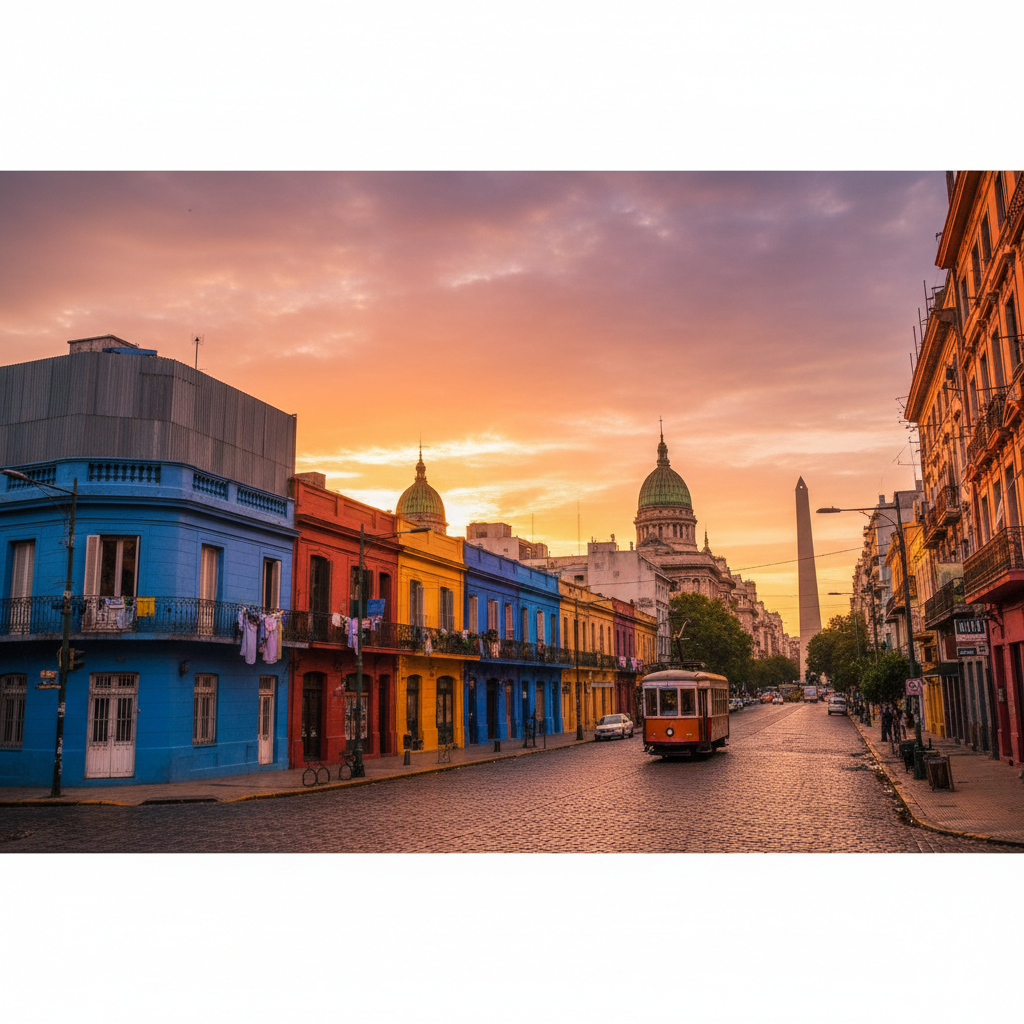
Buenos Aires on a Budget: Your 4-Day Blue Dollar Adventure
Unlock Buenos Aires for just $30/day! This 4-day guide leverages the 'blue dollar' rate for an authentic, affordable adventure in Argentina's vibrant capital.
- Duration: 4 Days
- Estimated Budget: $76–$148
- Best Time to Visit: March–May and September–November (autumn and spring, 15-22°C).
- Destination: Buenos Aires, Argentina
<p><em>Planning a trip to Buenos Aires or Argentina? Read our <a href="/blog/buenos-aires-argentina-complete-travel-guide">complete Buenos Aires travel guide</a> for everything you need to know before you go — neighborhoods, food, tango, football, and the practical details that make the difference.</em></p> Can you truly experience Buenos Aires on a shoestring budget? Absolutely, and not just survive, but thrive. Thanks to Argentina's unique 'blue dollar' exchange rate, your $30 USD daily budget transforms into a surprisingly generous sum, opening up a world of authentic experiences far beyond the typical tourist traps.
The moment you step into the bustling Mercado de San Telmo, the aroma of freshly baked medialunas and strong espresso immediately envelops you, signaling the start of a truly authentic Buenos Aires day. This isn't just a market; it's a living, breathing testament to the city's culinary soul, where locals gather for their morning coffee and a quick bite. You'll find vendors hawking everything from antique siphons to handcrafted leather goods, all at prices that feel like a steal when you're leveraging the blue dollar. It's an experience that grounds you in the city's vibrant daily life, far from the polished tourist facades, and sets the tone for an affordable, immersive adventure.
Is navigating the local currency and exchange rates in Buenos Aires a headache for budget travelers? Here's the reality: it's incredibly straightforward once you know the ropes, and it's your golden ticket to stretching every dollar. Forget the official bank rates; the 'blue dollar' market is where your money gains significant purchasing power, transforming a modest budget into a comfortable one. Knowing where to exchange your USD safely and efficiently is key, and with a little insider knowledge, you'll find yourself dining out, exploring museums, and even catching a local show without breaking the bank. It's a system that truly empowers the budget-conscious explorer.
Budget travelers spend their mornings exploring the sprawling green spaces of Bosques de Palermo, where the scent of blooming roses and the distant sound of a weekend asado fill the air. You'll find yourself picnicking by the lake, admiring street art in Palermo Soho, or perhaps catching a free outdoor milonga if the timing is right. Afternoons often involve delving into the rich history of the Microcentro, wandering through its grand avenues and soaking in the architectural splendor. Evenings are for savoring inexpensive, delicious empanadas or a hearty choripán from a street vendor, followed by a stroll down Avenida Corrientes, soaking in the city's vibrant nightlife without spending a fortune on cover charges or expensive drinks.
San Telmo's Bohemian Charm and Hidden Tunnels
Immerse yourself in the bustling Feria de San Telmo, a vibrant street market (Sunday only) or explore the daily antiques market on Defensa Street.
This market is a treasure trove of unique finds, from vintage leather goods to antique silverwork, offering a true taste of Buenos Aires' bohemian spirit. It's a fantastic place to observe local life and find one-of-a-kind souvenirs without breaking the bank.
Head into the Mercado de San Telmo, a historic indoor market, for a budget-friendly lunch and to soak in the local atmosphere.
This market is a sensory delight, filled with food stalls, antique vendors, and local artisans. It's the perfect spot to grab delicious and incredibly affordable empanadas and medialunas, fueling up for your day of exploration.
Descend into El Zanjón de Granados, an archaeological site revealing a network of underground tunnels beneath a colonial mansion.
This is one of Buenos Aires' most fascinating hidden gems, offering a unique glimpse into the city's ancient past and its intricate water systems. It's a captivating historical experience that most tourists miss.
Relax and people-watch in Parque Lezama, a beautiful park known for its historical significance and local gatherings.
This tranquil park is a fantastic spot to unwind, observe locals playing chess or football, and soak in the city's relaxed pace. It's also rumored to be the site of Buenos Aires' founding.
Wander through the cobblestone streets of San Telmo, admiring the colonial architecture and street art, and browsing the independent shops.
San Telmo's charm lies in its preserved colonial buildings, vibrant street art, and unique boutiques. It's a neighborhood that truly feels like stepping back in time, offering endless photo opportunities.
Leif's Tip: Before you do anything else, make sure to exchange your USD for Argentine Pesos at the blue dollar rate. Ask your hostel for a trusted 'cueva' in the Microcentro. This single step will make your $30/day budget genuinely achievable and unlock incredible value for your money.
Buenos Aires has a sprawling, complex public transport system, and knowing which bus to take from a hidden gem in Villa Crespo to a Sunday market in Mataderos can feel like deciphering an ancient map. Then there's the challenge of finding those truly local, budget-friendly parrillas where a full meal won't decimate your daily allowance, distinguishing them from the tourist traps. Or perhaps you're wondering how to maximize your 'blue dollar' exchange without feeling like you're taking a risk, or which neighborhoods offer the best free cultural experiences beyond the usual suspects. These are the real friction points that can turn an exciting budget adventure into a logistical headache, and that's precisely where Leif steps in.
Say you're enjoying a leisurely brunch in Villa Crespo, soaking in the local atmosphere, and you suddenly remember it's Sunday – the perfect day for the Feria de Mataderos. You pull up Leif, and within seconds, you have clear, step-by-step instructions on how to get there using local buses, complete with the exact SUBE card fare. Leif doesn't just tell you to go; it tells you which specific stall at Mataderos has the most authentic locro stew for under $5 USD, and even suggests the best time to arrive to catch the gaucho horse shows. You're not just following an itinerary; you're experiencing Buenos Aires through the eyes of a local, making spontaneous, informed decisions that feel effortless and truly enrich your journey.
You'll arrive in Buenos Aires knowing exactly how to navigate its vibrant streets, where to find the most delicious and affordable empanadas, and how to stretch your budget further than you ever thought possible. Instead of worrying about currency exchange or getting lost on public transport, you'll be confidently exploring hidden markets, savoring world-class art, and immersing yourself in the city's unique rhythm. The difference is feeling completely at ease, like a seasoned traveler who's been here a dozen times, ready to embrace every authentic moment Buenos Aires has to offer. Get ready to discover a side of the city that most tourists only dream of, all within your budget.
Best Time to Visit Buenos Aires, Argentina
March to May (Autumn): Pleasant temperatures (15-22°C) and beautiful fall foliage, perfect for walking around.
September to November (Spring): Mild weather (15-22°C) with jacaranda trees blooming, making the city vibrant.
Avoid January and February: These are the peak summer months, often reaching 35°C+ with high humidity, and many locals leave the city, so some businesses might have reduced hours.
Weekends are best for markets: Plan your itinerary to catch the Feria de San Telmo (Sunday) and Feria de Mataderos (Sunday) for the most authentic experiences.
Consider national holidays: While some attractions might close, you can experience local celebrations and parades.
Getting Around Buenos Aires, Argentina
Get a SUBE card immediately: This rechargeable card is essential for using the subte (subway) and colectivos (buses). You can buy and load it at subte stations or kiosks.
Utilize the subte: Buenos Aires' subway system is efficient, cheap, and covers most major tourist areas. It's the fastest way to get around.
Buses (colectivos) are extensive: They reach every corner of the city, but can be slower due to traffic. Use Google Maps or the 'Como Llego' app to navigate routes.
Walk everywhere possible: Many neighborhoods like Palermo, San Telmo, and Microcentro are best explored on foot, saving you money and letting you discover hidden gems.
Avoid taxis unless absolutely necessary: They are more expensive than public transport. If you must, use a radio taxi or an app like Cabify for safety and fair pricing.
What to Pack
- Comfortable walking shoes: You'll be doing a lot of walking on cobbled streets and wide avenues.
- Layered clothing: Temperatures can fluctuate throughout the day, especially in spring and autumn.
- A small backpack or cross-body bag: For daily essentials, keeping your belongings secure in crowded areas.
- Reusable water bottle: Stay hydrated, especially during warmer months. Many cafes will refill it for you.
- Power bank: Keep your phone charged for navigation and photos.
- Adapter for Type I outlets: Argentina uses three-pronged flat pins.
- Basic Spanish phrasebook or app: While many people speak English, knowing some Spanish will enhance your experience and help with bargaining.
- Sunscreen and a hat: Even in cooler months, the sun can be strong.
Money-Saving Tips
- Exchange money at the blue dollar rate: This is paramount for budget travel in Buenos Aires. Ask your hostel for a trusted 'cueva' in Microcentro to get the best unofficial rate.
- Eat like a local: Opt for 'menú del día' (daily specials) at local 'bodegones' (traditional restaurants) or 'parrillas' for affordable, hearty meals.
- Cook some meals: If your hostel has a kitchen, buying groceries from local supermarkets and cooking can significantly cut down food costs.
- Take advantage of free activities: Many parks, walking tours (tip-based), and street art explorations are completely free.
- Limit alcohol consumption: Alcoholic drinks, especially imported ones, can quickly inflate your daily budget. Enjoy local wines or beers sparingly.
Local Insights
- Embrace the 'merienda' culture: Around 5-6 PM, locals enjoy a small snack (merienda) like coffee and medialunas. It's a cheap and authentic experience.
- Learn some basic Spanish phrases: Even a few words like 'hola,' 'gracias,' 'por favor,' and 'cuánto cuesta' will go a long way and be appreciated by locals.
- Be aware of your surroundings: Like any big city, petty theft can occur. Keep your valuables secure and be mindful in crowded areas, especially on public transport.
- Dinner is late: Argentines typically eat dinner very late, often starting around 9 PM or 10 PM. Plan your meals accordingly.
- Tipping is customary but not mandatory: For good service at restaurants, a 10% tip is appreciated, but you can round up or leave a smaller amount if on a tight budget. For cafes, a few pesos is fine.
Frequently Asked Questions
How do I get around Buenos Aires efficiently on a budget?
The SUBE card is essential. Purchase one at any subte (subway) station or kiosk, load it with pesos, and use it for all subte and bus rides. Public transport is incredibly affordable, making it easy to cover long distances without relying on taxis.
What's the best way to handle money and the 'blue dollar' exchange?
Bring crisp, new USD $100 bills. Upon arrival, ask your hostel or a trusted local for directions to a reputable 'cueva' (informal exchange house) in the Microcentro. Exchange enough for a few days at a time to take advantage of the significantly better 'blue dollar' rate, which makes your budget go much further.
Are there free activities to enjoy in Buenos Aires?
Absolutely! Many of the city's best attractions are free: wandering through San Telmo's antique market, exploring Plaza de Mayo, strolling through Bosques de Palermo, and admiring street art in Palermo Soho. Keep an eye out for free cultural events and outdoor milongas (tango dancing) in parks.
Can I eat well on a $30 USD/day budget?
Yes, Buenos Aires is a food lover's paradise, even on a budget. Focus on local eateries, 'parrillas' (steakhouses) outside major tourist areas, and street food. Empanadas, choripanes, pizza al molde, and 'menú del día' (daily specials) at local restaurants offer incredible value and authentic flavors.
Is it safe to walk around Buenos Aires as a budget traveler?
Buenos Aires is generally safe, but like any large city, exercise caution. Stick to well-lit, populated areas, especially at night. Be aware of your surroundings, keep valuables out of sight, and avoid carrying large amounts of cash. San Telmo, Palermo, and Recoleta are generally safe for walking.
What's a good way to experience local culture without spending much?
Attend a free milonga in a park, explore the Feria de Mataderos (on Sundays) for an authentic gaucho experience, or simply spend time in local cafés observing daily life. Visiting neighborhood markets and engaging with vendors also provides a rich cultural immersion without a high cost.
What should I pack for a budget trip to Buenos Aires?
Pack comfortable walking shoes, layers for varying temperatures, and a small daypack. Don't forget a universal adapter and a reusable water bottle. For the 'blue dollar' exchange, ensure you have crisp, unmarked USD $100 bills, as smaller denominations or worn bills may get a lower rate.