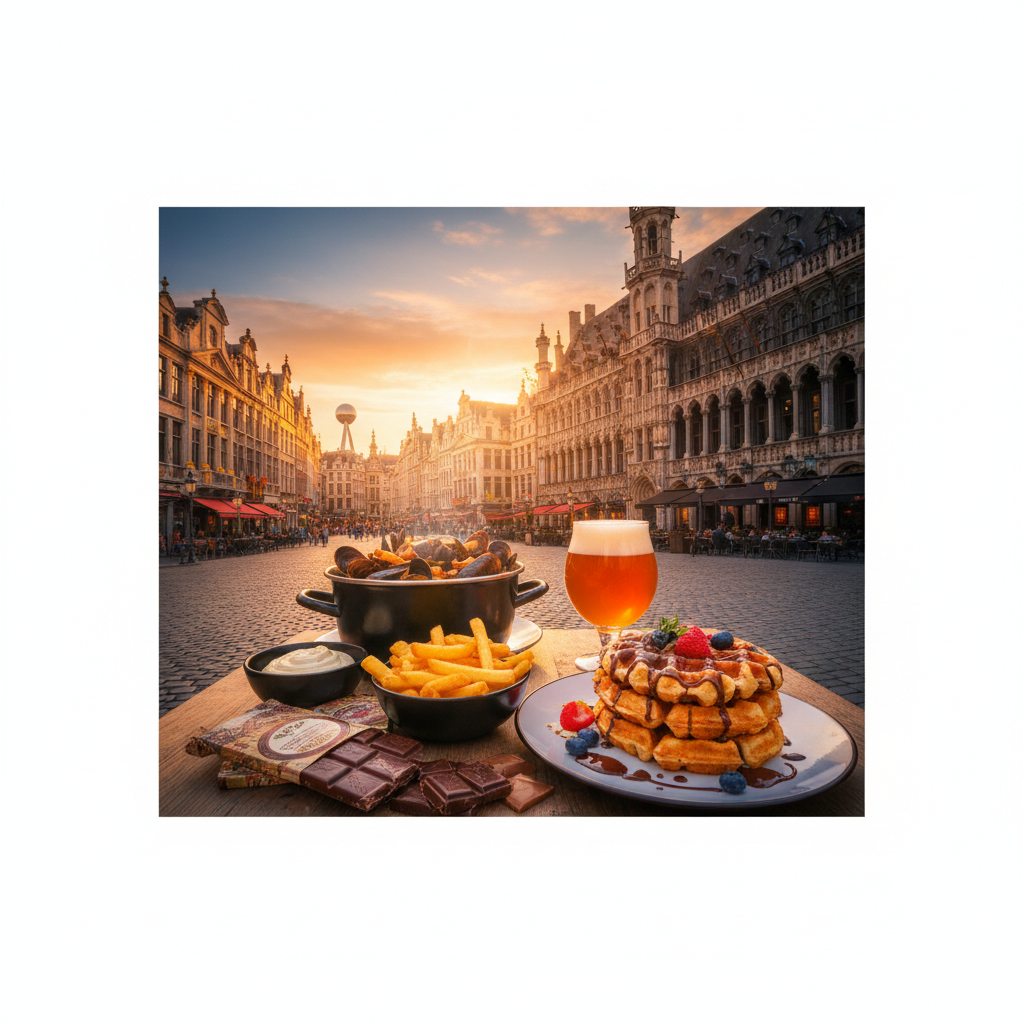
Brussels Food Guide: 3-Day Culinary Journey for the Discerning Palate
Uncover Brussels' underrated food scene on a 3-day culinary adventure. Savor moules-frites, authentic waffles, craft beer, and world-class chocolate beyond the tourist traps.
- Duration: 3 Days
- Estimated Budget: $350–$650
- Best Time to Visit: September-April for mussels; May-September for pleasant weather and outdoor markets.
- Destination: Brussels, Belgium
Brussels is one of the most underrated food cities in Europe, a place where culinary traditions run deep and innovation thrives beyond the typical tourist paths. This guide will take you on a delicious journey through the city's best moules-frites, authentic Belgian waffles, world-class chocolate, and an astonishing array of craft beers, venturing into vibrant neighborhoods like the Matonge African quarter and the upscale Châtelain market.
The bustling streets around Rue des Bouchers, while often crowded, hold a secret for the discerning palate: some of the city's most iconic seafood establishments. Here, the aroma of steamed shellfish mingles with the lively chatter of diners, creating an atmosphere that is uniquely Bruxellois. It's a place where history is served on a plate, where generations have perfected the art of preparing the region's signature dish, ensuring each bite is a testament to timeless culinary tradition. Beyond the obvious, these historic eateries offer a glimpse into the heart of local dining culture, a vibrant tableau of flavors and traditions that define the city's gastronomic soul.
Is navigating the sheer variety of Belgian beer styles overwhelming for a first-time visitor? Absolutely not, if you know where to look. The reality is, while the country boasts an incredible diversity, understanding the core categories and knowing which establishments specialize in them makes all the difference. Instead of randomly sampling, focusing on a few key types—like the spontaneously fermented sours or the robust Trappist ales—at a dedicated tasting room or a brewery with a long history, transforms a potentially confusing experience into a deeply rewarding exploration of liquid artistry. It's about guided discovery, not just consumption.
Food-focused travelers spend their afternoons delving into the intricate world of artisanal sweets, seeking out master confectioners whose creations are edible works of art. You'll find yourself comparing the delicate snap of a pure cocoa butter shell to the rich, lingering finish of a ganache, discovering the subtle nuances that elevate these treats beyond mere candy. This pursuit often leads to elegant boutiques where each piece is handcrafted, and the passion for chocolate is palpable. It's an immersive journey into the heart of a national obsession, where every tasting is a lesson in flavor and tradition.
Waffles, Mussels, and the Sour Beer Revolution
Start your culinary adventure with a quintessential Brussels waffle at Maison Dandoy, a historic tea room renowned for its traditional gaufres de Bruxelles.
This is where you'll taste the true Brussels waffle: rectangular, light, and crispy, a world away from the overly sweet tourist versions. It's an essential introduction to real Belgian waffle culture.
Head to Chez Léon, an iconic Brussels institution, for a classic moules-frites lunch in the heart of the city.
Chez Léon has been serving mussels since 1893 and, despite its fame, consistently delivers on quality and tradition. It's the perfect place to experience Belgium's national dish.
Embark on a fascinating tour of Cantillon Brewery, the world's most important brewery for spontaneously fermented sour beers.
This is a pilgrimage for any beer lover, offering a rare glimpse into traditional lambic brewing methods that date back centuries. You'll taste unique, complex beers unlike anything else.
Enjoy an aperitif at Moeder Lambic Fontainas, widely considered the best craft beer bar in Belgium, boasting an impressive selection of taps and bottles.
With over 50 taps, this bar is a mecca for discovering the incredible diversity of Belgian beer, from Trappist ales to obscure local brews. The knowledgeable staff can guide you through the extensive menu.
Savor a casual dinner at a local friterie, Fritland, for the ultimate Belgian street food experience: perfectly double-fried frites.
Belgian frites are an art form, fried in beef fat for unparalleled crispiness and flavor. Fritland is central and consistently excellent, a must-try for any food enthusiast.
Leif's Tip: Pace yourself today! While the food is incredible, it's also rich. Drink plenty of water between meals, especially with the beer, and don't be afraid to share portions, especially the frites, to save room for everything else.
Brussels has a delightful, yet sometimes confusing, culinary landscape. Between deciphering the subtle differences in waffle styles, navigating the hundreds of distinct beer varieties, and knowing which friterie truly serves the best double-fried perfection, it’s easy to feel overwhelmed. Add to that the challenge of finding authentic, local eateries that aren't just catering to the tourist crowds—especially when you want to explore vibrant areas like the African quarter for Congolese delicacies or the weekly market in Ixelles for artisanal cheeses. The seasonal availability of mussels, the best time to visit a specific brewery, or even just understanding the local etiquette around enjoying a meal can trip up even the most seasoned traveler. This is precisely where Leif steps in, transforming potential culinary confusion into a seamless, delicious adventure.
When you're standing on a bustling street corner, perhaps near the magnificent stock exchange building, and you're wondering which direction to turn for a truly authentic lunch that isn't just another tourist trap, Leif has your back. Say you want to experience the rich, complex flavors of a traditional Senegalese thiéboudienne in Matonge, but you're unsure which restaurant offers the most genuine experience, or how to get there efficiently. Leif will guide you, not just with directions, but with specific recommendations that have been vetted for quality and authenticity. You land in the city, pull up Leif, and within seconds you know exactly where to go for that specific craft beer you've been dreaming of, or the precise chocolate shop that will fulfill your sweet cravings, complete with opening hours and insider tips.
The difference is tangible: you'll arrive in Brussels with a sense of calm confidence, knowing that every meal, every snack, and every drink is an intentional, delicious choice. Instead of endlessly scrolling through reviews or wandering aimlessly, you'll be savoring a perfect cone of frites from a legendary spot, or discovering a new favorite sour beer at a renowned bar. You'll explore the elegant boutiques of the Grand Sablon for exquisite pralines, or delve into the vibrant atmosphere of a local market, all with the assurance that you're experiencing the city's true culinary heart. Arriving in Brussels with your personalized food itinerary already done means your only task is to eat, drink, and enjoy every single bite.
Best Time to Visit Brussels, Belgium
September to April is ideal for moules-frites, as mussels are in peak season and at their freshest.
Spring (April-May) and early autumn (September-October) offer pleasant weather for exploring on foot and enjoying outdoor markets without the summer crowds.
Avoid July and August if you prefer fewer tourists and don't mind missing peak mussel season.
Consider visiting during a specific food festival, like the Brussels Beer Weekend in September, for an even deeper dive into the local culinary scene.
Weekdays are generally less crowded at popular food spots and markets compared to weekends.
Getting Around Brussels, Belgium
Brussels' city center is very walkable, especially for navigating between food spots and attractions around the Grand Place and Ixelles.
The STIB public transport system (trams, buses, metro) is efficient and covers the entire city. A 'Jump' card is great for multiple rides.
For venturing to Matonge or Ixelles, trams and buses are your best bet. Google Maps is excellent for real-time public transport directions.
Taxis and ride-sharing apps are available but can be expensive. Save them for late-night returns or when carrying lots of shopping.
Consider renting a Villo! bike for shorter distances, especially for exploring neighborhoods like Ixelles and Châtelain on a pleasant day.
What to Pack
- Comfortable walking shoes are essential for exploring markets, neighborhoods, and standing in lines for frites.
- A reusable shopping bag for market finds and chocolate purchases – you'll accumulate delicious souvenirs!
- Layers of clothing, as Brussels weather can be unpredictable, even in the shoulder seasons.
- An umbrella or light rain jacket; sudden showers are not uncommon.
- A portable power bank for your phone, especially if you're using it for navigation and snapping food photos.
- A small notebook and pen to jot down your favorite food discoveries and recommendations.
- An open mind and an empty stomach – you're here to eat!
Money-Saving Tips
- Look for 'plat du jour' (dish of the day) specials at restaurants for a more affordable lunch option.
- Embrace street food! Frites from a friterie and a Liège waffle from a street cart are delicious and budget-friendly meals.
- Buy chocolate from Leonidas for everyday indulgence; it's genuinely good and much cheaper than the high-end chocolatiers.
- Take advantage of free samples at markets like Châtelain, but be polite and don't overdo it.
- Instead of eating out for every meal, consider picking up artisan cheeses, bread, and charcuterie from a market for a picnic lunch.
Local Insights
- Always order your frites with mayonnaise – it's the Belgian way! Don't ask for ketchup unless you want to be marked as a tourist.
- When trying mussels, remember that 'marinière' is the classic preparation, but don't be afraid to try 'crème' for a richer experience.
- Don't confuse a Brussels waffle with a Liège waffle; they are distinct and both deserve your attention.
- Belgians take their beer seriously. Don't be afraid to ask for recommendations at a good beer bar like Moeder Lambic.
- Many smaller shops and restaurants, especially in Matonge, may prefer cash, so it's always good to have some euros on hand.
Frequently Asked Questions
When is the best time to visit Brussels for food?
For the freshest mussels, aim for September to April. However, Brussels' culinary scene is vibrant year-round, with indoor markets, cozy restaurants, and chocolate shops always welcoming visitors. Beer festivals often occur in spring and autumn.
What's the difference between a Brussels waffle and a Liège waffle?
A Brussels waffle is rectangular, light, and crispy, often served plain or with simple toppings. A Liège waffle is round, dense, chewy, and has caramelized pearl sugar baked into it. Don't confuse either with the heavily topped 'Belgian waffles' sold to tourists.
Can I find vegetarian or vegan options easily?
While traditional Belgian cuisine is meat and seafood-heavy, Brussels is a cosmopolitan city. You'll find a growing number of restaurants offering excellent vegetarian and vegan dishes, particularly in diverse neighborhoods like Ixelles and around the city center.
Is it customary to tip in Brussels restaurants and bars?
Service charges are usually included in the bill, so tipping isn't mandatory. However, rounding up the bill or leaving a few extra euros for excellent service is always appreciated, especially in more upscale establishments.
How do I get around to different food neighborhoods?
Brussels has an excellent public transport system (metro, tram, bus). Many food-focused neighborhoods like Ixelles and Matonge are easily accessible, and walking between areas like the Grand Place and Sablon is also very pleasant.
Are there any food tours worth taking?
Yes, several specialized food tours focus on chocolate, beer, or a general culinary overview. These can be a great way to gain local insights and discover hidden gems, especially if you're short on time or prefer a guided experience.
What's the best way to enjoy Belgian fries?
Always order them from a proper friterie, double-fried in beef fat. They should be served in a paper cone with a small plastic fork. The essential accompaniment is mayonnaise, not ketchup. Don't be afraid to try other sauces like Andalouse or Samouraï.