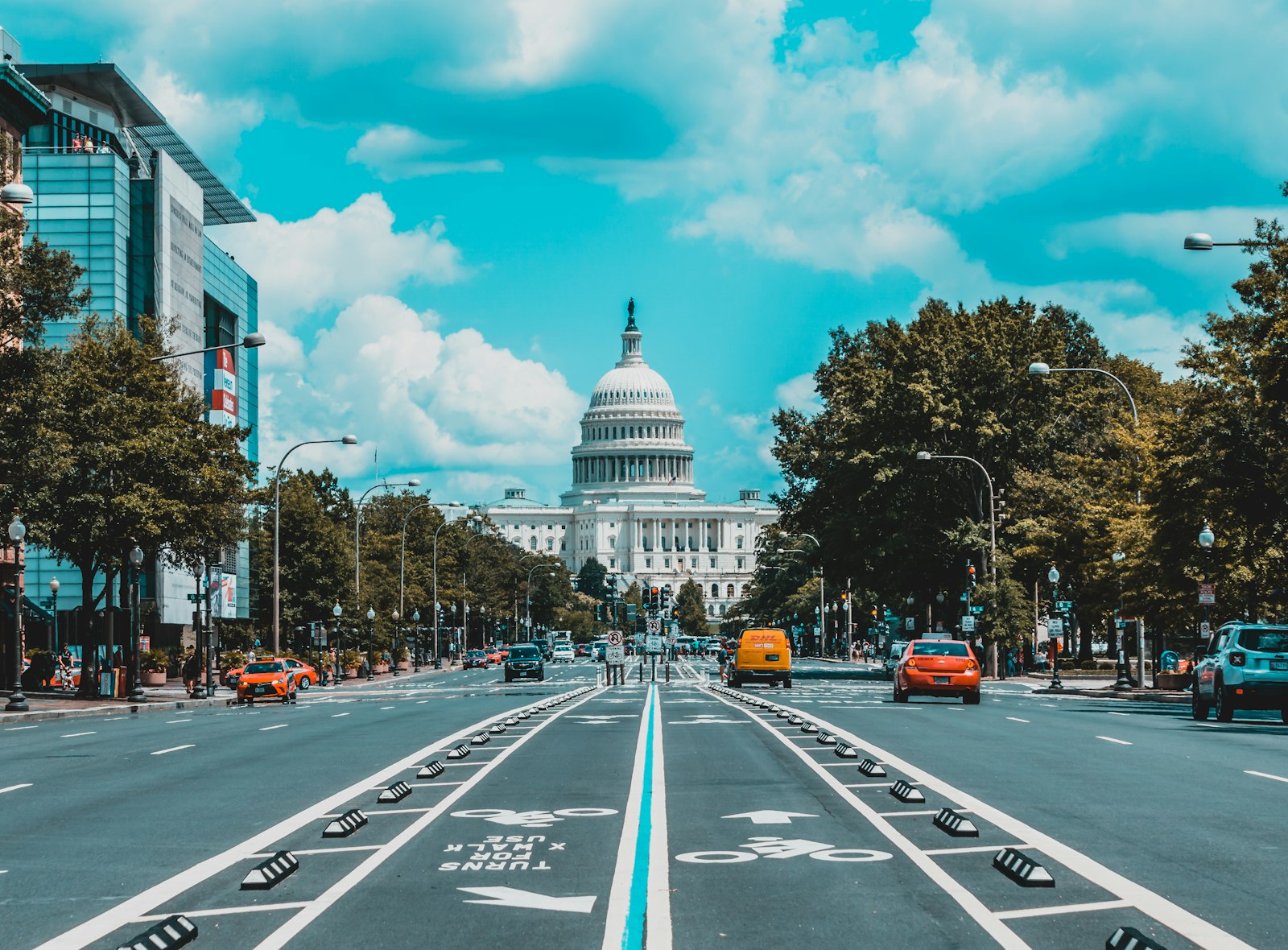
The City Behind the Marble: What Washington, D.C. Looks Like When You Actually Explore It
Destination: Washington, D.C., USA
Category: Destination Guides
Every great city has a myth it lives inside of. New York is ambition. Paris is romance. Los Angeles is reinvention. Washington, D.C. has a myth too — and it is the one that keeps most people from ever really seeing it.
The myth is this: D.C. is a company town. A place of marble monuments and bureaucratic corridors, of men in suits carrying briefcases and tourists in matching family t-shirts shuffling between the Lincoln Memorial and the Air and Space Museum. A city that exists to be visited, not experienced. A city that belongs to the government and, by extension, to no one in particular.
That myth is wrong. It has always been wrong. And the longer you spend in Washington, the more you understand that the city has been quietly, stubbornly building something extraordinary right underneath the nose of the federal apparatus that supposedly defines it.
What D.C. actually is — once you step off the Mall and into its neighborhoods — is one of the most culturally alive, gastronomically serious, historically layered, and architecturally stunning cities in the United States. It is a city where a James Beard Award-winning chef operates out of a converted row house in Shaw. Where the most important collection of African American history and culture in the world sits in a building that looks like it was carved from a bronze crown. Where you can spend an entire afternoon in a world-class museum, eat some of the best Ethiopian food outside of Addis Ababa, and end the night at a jazz club that has been running since 1965 — all within a two-mile radius.
And every single Smithsonian museum is free. Every one.
This is the city that most people miss. This guide is for the ones who want to find it.
The Free Museums Are Not the Consolation Prize — They Are the Main Event
Let's address the Smithsonian situation directly, because it is genuinely one of the most remarkable things about any major city on earth. The Smithsonian Institution operates nineteen museums and galleries in Washington, D.C., and every single one of them charges no admission. Not a suggested donation. Not a timed entry fee. Free. Permanently, structurally, by congressional mandate, free.
The National Museum of Natural History houses the Hope Diamond — a 45.52-carat blue diamond that has passed through the hands of French royalty, Indian maharajas, and American socialites before ending up in a case on the National Mall, where you can stand three feet from it and stare at it for as long as you want. The National Air and Space Museum contains the actual Wright Brothers Flyer, the actual Apollo 11 command module, and Charles Lindbergh's actual Spirit of St. Louis. Not replicas. The originals.
But the museum that stops people cold — the one that travel writers and first-time visitors and seasoned D.C. residents all agree is among the most powerful museum experiences in the world — is the National Museum of African American History and Culture. Opened in 2016 after decades of advocacy, the NMAAHC is housed in a building designed by David Adjaye that draws its form from Yoruba crowns and the ironwork of enslaved craftsmen in the American South. It is simultaneously a history museum, a cultural institution, and an act of architectural reckoning. Plan three to four hours minimum. Bring tissues. Come early — timed entry passes are required and go fast.
The National Gallery of Art, technically a separate institution from the Smithsonian but equally free, holds one of the finest collections of European and American art in the Western Hemisphere. The East Building, designed by I.M. Pei, is a masterwork of angular geometry that houses the modern collection; the West Building holds the old masters, including the only Leonardo da Vinci painting on public display in the Americas.
The Neighborhoods: Where D.C. Actually Lives
The Mall is the face of Washington. The neighborhoods are its soul.
Shaw and U Street Corridor
Shaw is the neighborhood that produced Duke Ellington. The U Street Corridor — once called "Black Broadway" — was the cultural heart of African American Washington for the first half of the twentieth century, home to jazz clubs, theaters, and a vibrant intellectual life that flourished in defiance of the segregation that defined the rest of the city. The Lincoln Theatre opened here in 1922. Ben's Chili Bowl, the half-smoke institution that has fed everyone from Barack Obama to Bono, has been on U Street since 1958.
Today, Shaw and U Street are among the most dynamic dining and nightlife corridors in the city. Compass Rose serves street food from forty countries in a converted row house with a courtyard. Dabney celebrates the mid-Atlantic with a wood-burning hearth and a menu that changes with what's growing within a day's drive. The jazz at Bohemian Caverns and the late-night scene at Pearl Street Warehouse draw a crowd that is nothing like the tourist Washington most people imagine.
Adams Morgan
Adams Morgan is where D.C. gets loud. Eighteenth Street NW is the main artery — a dense strip of bars, restaurants, and music venues that has been the city's unofficial party district since the 1970s. But Adams Morgan is more than its nightlife. The neighborhood has one of the most genuinely diverse restaurant scenes in the city, with Ethiopian, Salvadoran, Eritrean, and West African restaurants operating alongside newer American spots. Mintwood Place is a neighborhood anchor that has been turning out serious French-American food for years. The Sunday brunch scene here is a contact sport.
Georgetown
Georgetown predates the federal city by decades. It was a thriving tobacco port before Washington existed, and its Federal-style row houses and cobblestone streets have survived two centuries of the city growing up around them. M Street and Wisconsin Avenue are the commercial spine — dense with shops, restaurants, and the kind of foot traffic that makes Georgetown feel more like a European neighborhood than an American one. The C&O Canal towpath, which runs along the back of Georgetown, is one of the great urban walks in the country: a flat, tree-lined path that stretches 184 miles to Cumberland, Maryland, and on a weekend morning feels like the whole city has come out to breathe.
Capitol Hill
East Capitol Street and the blocks surrounding Eastern Market constitute one of the most livable, walkable, genuinely neighborhoody parts of Washington. Eastern Market itself — a nineteenth-century public market that survived a devastating fire in 2007 and was rebuilt by the community — operates every day of the week, with farmers, butchers, fishmongers, and artisans filling the covered hall and the outdoor weekend flea market. The residential streets of Capitol Hill, lined with Victorian row houses and front porches, feel like a different city entirely from the marble grandeur of the Hill itself, which is visible from nearly every corner.
The Wharf
The Southwest Waterfront was reimagined in a $2.5 billion development completed in 2017, and the result is one of the best waterfront districts in the country. The Wharf stretches along the Washington Channel with restaurants, live music venues, a concert hall, and a working fish market that has operated continuously since 1805 — making it the oldest continuously operating open-air fish market in the United States. On a summer evening, with the water lit up and the boats rocking in their slips, it is one of the most pleasant places in the city.
The Food Scene: Seriously, Stop Sleeping on This City
Washington, D.C. has more Michelin-starred restaurants than any American city outside New York and Chicago. It has more Ethiopian restaurants per capita than any city outside of Addis Ababa. It has a food truck scene that has been nationally recognized, a farmers' market culture that is among the most robust in the country, and a generation of chefs who trained in the best kitchens in the world and chose to open here.
José Andrés, the Spanish-American chef who pioneered molecular gastronomy in the United States and founded World Central Kitchen, built his empire in Washington. Minibar, his tasting menu restaurant on Penn Quarter, holds two Michelin stars. Jaleo, his tapas flagship, has been a D.C. institution since 1993. Zaytinya, his Mediterranean mezze restaurant, is one of the most consistently excellent restaurants in the city.
The Ethiopian food deserves its own paragraph. The concentration of Ethiopian restaurants in the Adams Morgan, Columbia Heights, and Shaw neighborhoods is extraordinary. Dukem on U Street is the institution — a sprawling, always-packed restaurant that has been feeding the Ethiopian diaspora and curious visitors since 1997. Chercher, Ethiopic, and Zenebech are all worth seeking out. The injera — the spongy, slightly sour flatbread that serves as both plate and utensil — is made in-house at the best spots, and the combination of berbere-spiced stews, lentils, and vegetables eaten communally from a shared platter is one of the great eating experiences in any American city.
For the food-obsessed visitor, our 4-Day Washington DC Food & Culture Deep Dive guide maps out the city's best culinary neighborhoods with specific restaurant recommendations, market visits, and the kind of insider routing that keeps you eating well from morning to midnight.
The Monuments at Night: The Version Nobody Talks About
Every guidebook tells you to see the monuments. Very few tell you the right way to do it.
The Lincoln Memorial at 2 AM on a weeknight, when the tourists are gone and the Reflecting Pool is still and the city is quiet, is one of the most affecting experiences in American travel. The Memorial is open twenty-four hours a day, every day of the year. The National Park Service rangers who staff it overnight are among the most knowledgeable and passionate in the service. Lincoln himself — the seated figure by Daniel Chester French, nineteen feet tall and carved from twenty-eight interlocking pieces of Georgia marble — looks different in the dark. More human. More tired. More like someone who understood the weight of what he was carrying.
The Vietnam Veterans Memorial at night is something else entirely. Maya Lin's design — a V-shaped gash in the earth, polished black granite reflecting the faces of visitors back at themselves alongside the names of the 58,318 Americans who died — was controversial when it was unveiled in 1982. Today it is considered one of the most powerful works of public art in the world. At night, with the names lit by small lights embedded in the path, people leave things: flowers, photographs, dog tags, letters, cans of beer, baseball caps. The offerings accumulate. The Park Service collects and archives them all.
The Jefferson Memorial, across the Tidal Basin from the Mall, is best seen in late March or early April when the Japanese cherry trees that ring the basin are in bloom. The National Cherry Blossom Festival draws more than a million visitors annually, and the peak bloom window — typically two weeks in late March — turns the Tidal Basin into one of the most photographed places in the country. Book accommodation months in advance if you are coming for the blossoms.
Getting Around: The City That Actually Works
Washington has one of the cleanest, most efficient subway systems in the United States. The Metro — designed by Harry Weese and opened in 1976 — is architecturally distinctive: the stations are vaulted, coffered concrete caverns that feel more like cathedrals than transit hubs. The system covers all the major tourist areas and most of the neighborhoods worth visiting, and a SmarTrip card (available at any station) makes it easy to use.
The city is also extraordinarily walkable. The Mall is two miles from the Capitol to the Lincoln Memorial — a walk that passes through some of the most significant public space in the country. Georgetown, Dupont Circle, Adams Morgan, and U Street are all connected by a pleasant walk along Connecticut Avenue and the cross streets. Capital Bikeshare, the city's bike-share system, has over 700 stations and is one of the best ways to cover the distances between neighborhoods.
Driving in D.C. is not recommended. The street grid — Pierre Charles L'Enfant's original diagonal avenues overlaid on a rectangular grid, with traffic circles at the intersections — is genuinely confusing, parking is expensive, and the Metro goes everywhere you need to go.
Day Trips: The Region Is Extraordinary
Washington sits at the center of one of the most historically and naturally rich regions in the country. Within two hours, you can be in the Blue Ridge Mountains, on the Chesapeake Bay, at the site of the Civil War's bloodiest battles, or walking the streets of one of the oldest colonial cities in America.
Shenandoah National Park is 75 miles from downtown D.C. Skyline Drive — the 105-mile ridge road that runs the length of the park — is one of the great American drives, with overlooks every few miles and the Appalachian Trail crossing it repeatedly. The Shenandoah National Park 3-Day Scenic Drive & Hiking Guide covers the best overlooks, the waterfall hikes, and the logistics of doing the park from a D.C. base.
Annapolis, Maryland is 30 miles east — a colonial-era state capital on the Chesapeake Bay with the highest concentration of eighteenth-century architecture in the country, the United States Naval Academy, and the best crab houses on the East Coast. The Annapolis 3-Day Sailing & Crab Feast Escape is the definitive guide to doing it right.
Baltimore is 40 miles north — a city that has been unfairly maligned and is, in reality, one of the most interesting mid-Atlantic cities to spend a weekend in. The Inner Harbor, Fells Point, the Baltimore Museum of Art (free admission, one of the finest collections of Matisse in the world), and the crab cake situation alone justify the trip. The 3-Day Baltimore Couples & Food Trip guide covers it comprehensively.
Harpers Ferry, West Virginia is 65 miles west — the site of John Brown's 1859 raid on the federal arsenal, a pivotal event in the chain of events that led to the Civil War. The town sits at the confluence of the Shenandoah and Potomac rivers, surrounded by mountains, and is one of the most historically charged and visually dramatic spots in the mid-Atlantic. The Romantic Harpers Ferry Getaway guide makes the case for a two-day stay.
Practical Intelligence: What the Guidebooks Get Wrong
The crowds are manageable if you time it right. The Mall is busiest on weekends from April through October, and during spring break (mid-March through mid-April). Weekday mornings in the off-season — November through February, excluding the holiday period — are when the city belongs to you. The monuments are open 24 hours; the museums open at 10 AM. Get to the NMAAHC when the doors open.
The weather is genuinely unpleasant in summer. Washington was built on a swamp — literally, on reclaimed land from the Potomac and Anacostia rivers — and the humidity from June through August is oppressive. The cherry blossoms in late March and the fall foliage in October are the two peak seasons for a reason. If you must come in summer, the free museums are air-conditioned and the evening hours are more bearable than the afternoon.
Free parking exists, but you have to know where to find it. East Potomac Park, on the peninsula south of the Mall, has free parking on weekends. The National Mall itself has some metered parking along Ohio Drive SW. But the Metro is genuinely faster and less stressful than driving.
The Capitol is free to tour, but requires advance planning. Tours of the Capitol building are free but must be booked through your congressional representative's office or through the Capitol Visitor Center website. The dome restoration completed in 2016 means the building is in the best condition it has been in decades. The view from the Capitol steps — down the Mall toward the Lincoln Memorial — is one of the great urban vistas in the world.
Tipping culture applies everywhere. D.C. is an expensive city. Budget $150–$250 per person per day for mid-range travel (accommodation, food, transport, activities). The museums are free, which helps significantly. The restaurant scene skews expensive at the top end, but the Ethiopian restaurants, the food trucks on L'Enfant Plaza, and the Eastern Market vendors offer excellent value.
The Washington Most People Miss: A Final Argument
There is a version of Washington, D.C. that most visitors experience: the Mall, the monuments, the museums, the selfie at the Lincoln Memorial, the obligatory photo in front of the White House fence. That version is real and worth doing. The monuments are genuinely moving. The Smithsonian collections are genuinely world-class.
But there is another Washington — the one that residents live in, that the city's extraordinary immigrant communities have built, that the chefs and musicians and artists and writers have claimed as their own. It is the Washington of the U Street jazz clubs and the Adams Morgan injera houses and the Georgetown waterfront at dusk and the Tidal Basin cherry blossoms at 6 AM before the crowds arrive. It is the Washington of Eastern Market on a Saturday morning, when the farmers and the fishmongers and the flower vendors are all set up and the neighborhood is out in force and the city feels, for a moment, like a village.
That Washington is available to anyone who is willing to look past the marble. The marble is magnificent. But the city behind it is the one worth knowing.
Plan Your Washington D.C. Trip with Ask Leif
Whether you are bringing the family, traveling solo, or planning a long weekend with your partner, Ask Leif has built detailed, day-by-day itineraries for every kind of D.C. visit:
- Washington D.C. Family Vacation: 5-Day Itinerary with Kids — The Smithsonian, the monuments, the National Zoo, and the neighborhoods that make D.C. worth bringing children to.
- Solo Traveler's DC: 4-Day Deep Dive into U Street, Eastern Market & Smithsonian Gems — The version of D.C. that rewards the independent traveler who is willing to go off the tourist circuit.
- 4-Day Washington DC Food & Culture Deep Dive — Michelin stars, Ethiopian feasts, farmers' markets, and the culinary neighborhoods that make D.C. one of the best food cities in America.
Or let Leif build you a completely personalized itinerary — your dates, your travel style, your budget — in sixty seconds.