Every Other City Puts Nature on the Edge. Vancouver Didn't.
Destination: Vancouver
Category: Destination
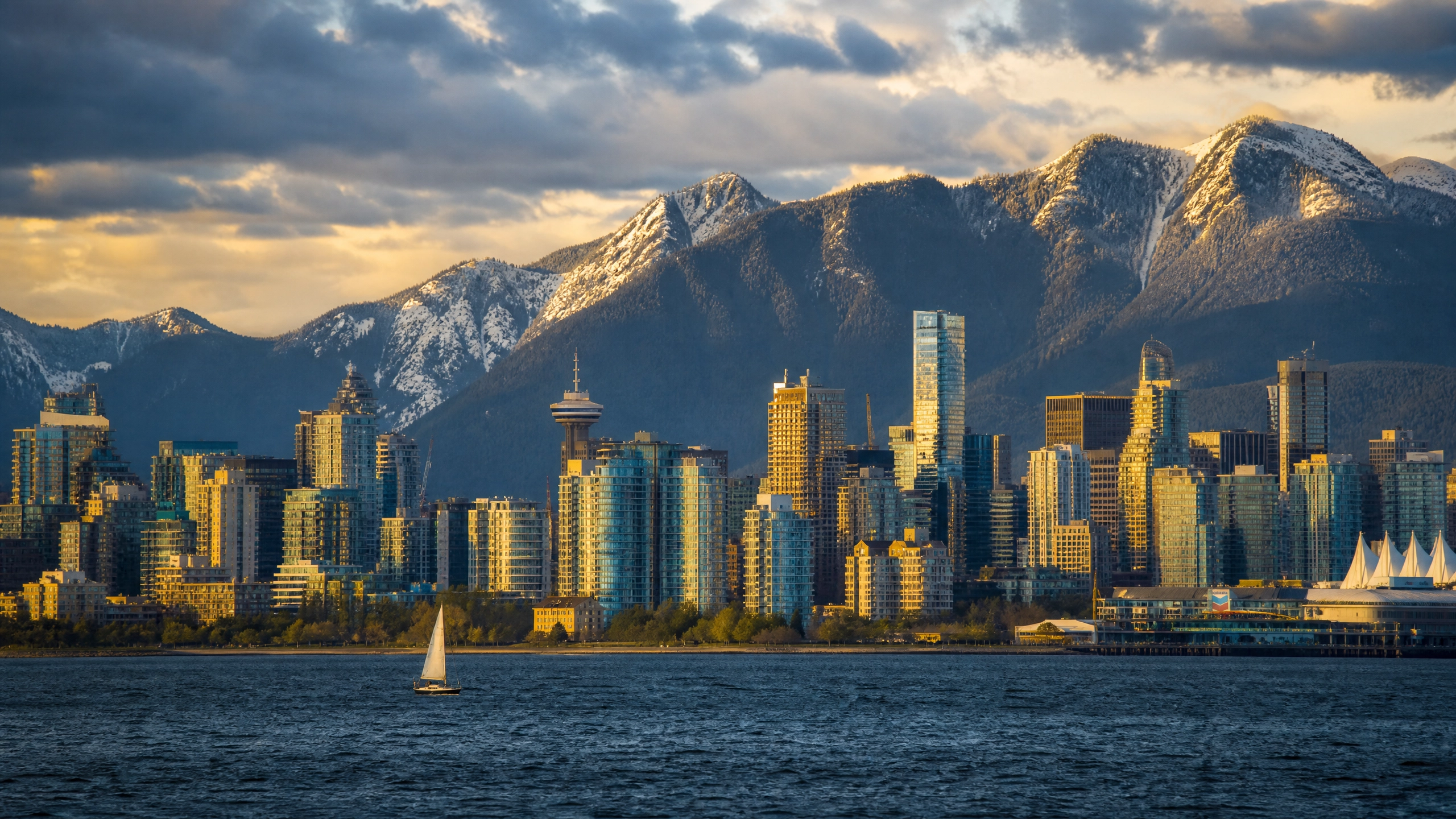
There is a moment that happens to almost every first-time visitor to Vancouver, usually on the second or third day, when they are standing somewhere ordinary — waiting for a coffee, crossing a street, walking out of a grocery store — and they look up and the mountains are right there. Not in the distance. Not on the horizon. Right there, close enough that you can see the individual ridgelines, the dark bands of forest, the snow that lingers on the peaks even in summer. And for a moment the city and the wilderness seem to be occupying the same space, which is because they are.
This is not a metaphor. The North Shore Mountains begin where the city ends, and in Vancouver, that boundary is not a gradual fade from suburb to exurb to countryside. It is a hard line. You can drive from downtown to the trailhead of the Grouse Grind — a 2.9-kilometre trail that climbs 853 metres through dense rainforest, which locals call "Mother Nature's Stairmaster" and do before work on weekday mornings — in under 30 minutes. You can ski at Cypress Mountain in the morning and be swimming at Kitsilano Beach in the afternoon. Not because Vancouver is trying to sell you a lifestyle. Because that is simply the geography, and the people who live here have organized their entire lives around it.
Every other major city on earth puts nature on the edge. A national park two hours away. A mountain range visible on a clear day. A coastline accessible by train. Vancouver put the city in the middle of it. And understanding that single fact changes everything about how you travel there.
The Misread City
Vancouver has a reputation problem. It is one of the most beautiful cities in the world by any objective measure — the glass towers reflecting the mountains, the seawall curving around the peninsula, the ocean light in the evening — and yet it also has a well-documented reputation among visitors for feeling somehow empty. Beautiful but hollow. Gorgeous but without soul.
This criticism is real and it is worth taking seriously, because it is also almost entirely the product of where people spend their time. Most visitors stay downtown, walk the seawall, visit Granville Island, take a gondola up Grouse Mountain, and leave. They have seen the postcard version of Vancouver. They have not seen Vancouver.
The soul of this city is not downtown. It is east of Main Street, in neighborhoods that don't appear in the top five Google results for "things to do in Vancouver." It is in Strathcona, Vancouver's oldest residential neighborhood, where the streets still carry the memory of the successive waves of immigrants who built the city after the Hastings Lumber Mill opened in 1865. It is on Commercial Drive, where the Saturday morning Trout Lake Farmers Market spills out under the trees and the walk south toward Broadway passes Ethiopian restaurants, Portuguese bakeries, independent bookstores, and DownLow Chicken Shack at 905 Commercial Drive — Nashville-style hot chicken that locals will tell you, without hesitation, is the best fried chicken in the city. It is in the West End, where the art deco apartment buildings from the 1950s sit under enormous trees and the neighborhood, as one longtime resident put it, is "vibing 24/7."
The city doesn't perform for you. It waits. And the visitors who leave thinking Vancouver is beautiful but empty are the ones who never made it past the seawall.
The Geography Is the Personality
To understand Vancouver, you have to understand what it means to live in a city where the wilderness is not a day trip but a daily presence. This shapes things you would not expect it to shape.
It shapes the food culture. Pacific Northwest cuisine is not a marketing term here — it is a literal description of what the ocean and the mountains and the temperate rainforest produce. Wild salmon from the Fraser River. Dungeness crab from the Strait of Georgia. Chanterelles from the forests of Vancouver Island. The proximity to the source is not incidental; it is the entire point. When you eat at a restaurant in Vancouver that sources locally, "locally" means something different than it does in most cities. It means the salmon was swimming in a river you can see from the highway.
It shapes the daily rhythm. Locals here do things before work that people in other cities do on vacation. The Grouse Grind on a Tuesday morning. A kayak in Deep Cove before the water gets busy. A run along the seawall at 6 AM with the mountains turning pink in the early light. This is not aspirational Instagram content. This is Tuesday.
It shapes the relationship with rain. Vancouver is famously wet — the city receives roughly 1,150 millimetres of precipitation per year, most of it between October and March — and the local relationship with rain is one of the most misunderstood things about the city. Visitors bring umbrellas. Locals don't. Not because locals are performing toughness, but because the rain here is not the cold, punishing rain of London or New York. It is a soft, constant drizzle that you eventually stop noticing, the way you stop noticing the sound of traffic in a city you've lived in for years. The locals go outside anyway. They hike in it. They run in it. They sit at outdoor café tables under heaters and drink their coffee in it. The rain is not an obstacle. It is the texture of the place.
Richmond: The Food City Within the City
No conversation about Vancouver's food culture is complete without Richmond, and yet Richmond appears in almost no mainstream travel coverage of Vancouver. This is a significant omission.
Richmond is a separate city immediately south of Vancouver, connected by SkyTrain in about 25 minutes from downtown. Its population is roughly 60 percent of Asian descent, primarily Chinese and Chinese-Canadian, and it contains what many food writers and chefs consider the most authentic and diverse Chinese food scene outside of mainland China. This is not hyperbole. It is the considered opinion of people who have eaten their way through Hong Kong, Chengdu, and Shanghai.
The Aberdeen Centre food court is the place to start. Not because it is the only option — Richmond has hundreds of restaurants across every regional Chinese cuisine — but because it concentrates an extraordinary range in one accessible space. The specific stalls worth knowing: John 316 for Malaysian food, Mambo for Hong Kong-style dishes, Wo Fung for their Wind Sand Wings, and Parker Place next door for the steamed buns at Yummy Bao. These are not tourist-facing operations. They are the places where Richmond residents eat lunch.
The broader Richmond restaurant scene covers Cantonese dim sum, Sichuan hot pot, Shanghainese soup dumplings, Taiwanese beef noodle soup, Northern Chinese lamb dishes, and Vietnamese and Filipino food that reflects the full complexity of the city's immigrant history. A single afternoon in Richmond eating your way through the food courts and restaurants along Alexandra Road — known locally as the "Golden Village" — is one of the most genuinely transportive food experiences available in North America. Most visitors to Vancouver never make it there.
Deep Cove: The Day That Rewrites the Trip
Deep Cove sits at the end of Indian Arm, a fjord that extends north from Burrard Inlet, and it is one of those places that locals guard with the mild possessiveness of people who know they have something good and are not entirely sure they want to share it. The drive from downtown takes about 35 minutes. The experience is worth significantly more than that.
The sequence that locals recommend, and that has been refined by years of repetition into something close to a ritual: arrive early, before 9 AM if possible, and hike Quarry Rock. The trail is 45 minutes each way, classified as easy, and ends at a granite outcropping with a view down Indian Arm that stops most people mid-sentence. The water below is the deep, still blue of a fjord. The mountains on either side are close enough to feel like walls. On a clear morning, with the mist still sitting on the water, it is one of the most quietly spectacular views in British Columbia.
After the hike, walk to Honey Doughnuts & Goodies at 4373 Gallant Avenue. This is not a suggestion. The donuts here are a specific kind of local institution — honey-glazed, made fresh, the kind of thing that people drive 45 minutes for and consider the drive worthwhile. Then, if the afternoon allows, rent a kayak from Deep Cove Canoe and Kayak and paddle out into the inlet. The water is calm, the scenery is continuous, and the experience of being on the water with the mountains rising on both sides is the kind of thing that makes people reconsider their plans to leave.
The Seawall Secret
The Seawall is Vancouver's most famous feature — a 28-kilometre path that runs along the waterfront from Coal Harbour around Stanley Park, south along English Bay, and eventually to the False Creek neighborhoods — and it appears in every travel guide ever written about the city. What those guides don't tell you is that the most interesting section of the seawall is the one that tourists almost never reach.
The section of False Creek that runs from Science World westward toward Burrard Bridge, then south through Granville Island and continuing to Leg in Boot Square, is the part of the seawall that belongs to locals. The views here are water-level views of the city — the glass towers reflected in the creek, the small boats at anchor, the mountains visible in the gaps between buildings — and they are different in character from the more dramatic ocean views on the English Bay side. They are intimate rather than grand. The Convivial Café at Leg in Boot Square, a small industrial-feeling space at the end of a working boat yard, is the kind of place you find by accident and then tell people about for years.
Eating Well in Vancouver: The Specific Addresses
Vancouver's restaurant scene is one of the strongest in North America, and its particular strength — the thing that distinguishes it from Toronto or New York or Los Angeles — is the depth of its Asian food culture combined with the quality of its Pacific Northwest ingredients. These two things produce a cuisine that is genuinely its own.
Anh and Chi on Main Street is a Vietnamese restaurant that holds a Michelin Bib Gourmand and serves food that is simultaneously faithful to Vietnamese tradition and shaped by the specific ingredients available in British Columbia. The Gỏi bắp chuối cua lột — a salad of chopped softshell crab piled on banana blossom — is the dish that food writers keep coming back to. It is cool and textured and unlike anything you will find at a Vietnamese restaurant in any other city.
St. Lawrence at 269 Powell Street in Gastown is one of the more surprising restaurants in Vancouver: a Michelin-starred Québécois and French restaurant that brings the cooking of eastern Canada — tourtière, poutine elevated beyond recognition, dishes built around duck and game and maple — to a city that is about as far from Quebec as you can get while remaining in Canada. It is expensive and reservations are genuinely difficult to secure, but the combination of Québécois culinary tradition with Pacific Northwest ingredients produces something that has no equivalent anywhere else.
For those willing to make the SkyTrain journey to Port Moody, Sing Lobster at 3009 Murray Street operates Thursday through Sunday and serves lobster rolls made with lobsters imported from Nova Scotia by a retired fisherman whose children still work the boats. It is the kind of operation that exists because someone loved a thing and decided to bring it to the other side of the country, and the rolls are exactly as good as that origin story suggests.
The East Side: Where the City Lives
The distinction between Vancouver's West Side and East Side is one of the organizing facts of the city's social geography, and understanding it changes how you navigate the place. The West Side — Kitsilano, Point Grey, Dunbar — is wealthy, beautiful, and somewhat quiet. The East Side — Commercial Drive, Mount Pleasant, Main Street, Strathcona — is where the city's creative and immigrant communities have historically concentrated, and where the density of interesting restaurants, bars, bookstores, and music venues is highest.
The walk down Main Street from 33rd Avenue to 2nd Avenue is one of the best urban walks in Canada. The street changes character every few blocks — from the antique shops and coffee roasters of the upper section to the restaurants and bars of the lower section, where the Mount Pleasant neighborhood's industrial past is still visible in the brick buildings and wide loading-dock doors that have been converted into restaurant fronts. The concentration of independent businesses here is the product of rents that, while no longer cheap, remained accessible long enough for a genuine neighborhood culture to develop.
Strathcona, immediately east of downtown, is Vancouver's oldest residential neighborhood and its most historically layered. The streets here were built by the working-class immigrants who arrived after the Hastings Lumber Mill opened in 1865 — Chinese, Japanese, Italian, Jewish, Ukrainian — and the neighborhood has retained a density and texture that the glass-tower developments of downtown have erased. The Strathcona Community Garden, one of the oldest community gardens in Canada, has been operating since 1985. The weekend market at the corner of Prior and Hawks is small and local and nothing like Granville Island.
The North Shore: The Other Half of the City
Most visitors treat the North Shore — the municipalities of North Vancouver and West Vancouver, separated from downtown by Burrard Inlet — as a day trip destination. Locals treat it as a second city, and the distinction matters.
The SeaBus from Waterfront Station to Lonsdale Quay takes 12 minutes and costs the same as a regular transit fare. Lonsdale Quay Market is a working public market — not a tourist market, but a place where North Shore residents buy their groceries, eat lunch, and sit by the water watching the container ships move through the inlet. The Polygon Gallery, a short walk from the quay, is one of the best contemporary photography galleries in Canada and charges no admission. These two things together — the market and the gallery — make for a morning that costs almost nothing and feels entirely local.
The Capilano River Hatchery, a short drive or bus ride from Lonsdale, is one of the most genuinely surprising experiences available near Vancouver. The hatchery releases millions of salmon into the Capilano River each year, and in the fall — typically September through November — the returning salmon fill the river in numbers that are difficult to comprehend until you are standing at the edge of the water watching them. The hatchery is free. The crowds are minimal. The experience of watching a salmon run in a river that is minutes from a major city is the kind of thing that makes you reconsider what "urban" means.
The Cleveland Dam, a short walk from the hatchery, sits above the Capilano Reservoir and offers a view that has appeared in enough films and television productions that it carries a faint sense of recognition even on a first visit. The dam itself is unremarkable. The view from the top — the reservoir stretching back into the mountains, the forest on both sides, the city invisible below — is not.
When to Go: The Honest Seasonal Guide
Summer (June–August) is when Vancouver is most itself — the mountains clear, the beaches warm enough to use, the seawall crowded with cyclists and runners and families, the outdoor patios full until 10 PM in the long Pacific light. This is also when Vancouver is most expensive and most crowded. Hotel rates peak in July and August. Granville Island becomes genuinely difficult to navigate on weekends. The Grouse Grind has queues.
Spring (March–May) is the local's season. The cherry blossoms along the streets of the West End and Kitsilano typically peak in late March and early April — Vancouver has more cherry trees than almost any city outside Japan, and the bloom is spectacular enough that it draws visitors specifically for it. The rain continues but begins to ease. The mountains are still snowcapped. The restaurants are full of locals rather than tourists.
Fall (September–November) is arguably the best time to visit if you are willing to accept the rain that begins in earnest in October. The summer crowds have gone. The light in September is golden and long. The salmon are running in the Capilano River. The mushroom season begins in the forests of the North Shore, and the restaurants that source locally start featuring chanterelles and porcini in ways that are specific to this moment of the year. The city feels most like itself in fall — the outdoor culture continues, the rain is accepted rather than resisted, and the mountains, when they emerge from the clouds, are more dramatic for the contrast.
Winter (December–February) is the season that most travel writing ignores and that locals consider underrated. The ski hills on the North Shore — Cypress Mountain, Grouse Mountain, Mount Seymour — open in December and offer skiing within 30 minutes of downtown. The city itself is mild by Canadian standards; snow in downtown Vancouver is rare enough to be newsworthy. The restaurant scene is at its most active, with no outdoor competition for attention. The mountains, when they are visible between storms, are white to the treeline and close enough to feel like a wall.
The Practical Details That Matter
Currency: Canadian dollars. The exchange rate from USD has historically been favorable for American visitors, making Vancouver somewhat more affordable than its reputation suggests.
Getting to the airport: The Canada Line SkyTrain runs directly from Vancouver International Airport to downtown in 26 minutes for CAD $9.45. There is no reason to take a taxi unless you have an extraordinary amount of luggage.
Getting around: Vancouver's SkyTrain system is clean, reliable, and covers the key areas well. The Compass Card (a reloadable transit card) is the most efficient way to pay. Single fares can also be purchased at station machines.
The rain: October through March is wet. This is not a reason not to go — the city functions normally in the rain, and the mountains are often more dramatic under clouds than in clear sunshine — but pack layers and waterproof footwear rather than an umbrella, which is what locals do.
Where to stay: For first-time visitors, the West End offers the best combination of walkability, proximity to Stanley Park and English Bay, and access to the seawall. For visitors more interested in the East Side food and bar scene, Mount Pleasant or Main Street put you closer to the neighborhoods that matter most. Downtown proper is convenient but characterless.
The Grouse Grind: The trail is open from approximately May to November, depending on snowpack. The gondola down costs $15. Bring water. The locals who pass you on the way up are not showing off. They are just faster.
Day trip to Whistler: The Sea-to-Sky Highway between Vancouver and Whistler is 120 kilometres of one of the most spectacular drives in North America — the highway runs along Howe Sound, past granite cliffs and waterfalls, with the ocean on one side and the mountains on the other. Whistler itself is worth a full day in any season.
Tipping: Standard Canadian tipping culture applies — 15–20 percent at restaurants, 10–15 percent at cafés if you feel inclined. The tip prompts on card readers in Vancouver have become aggressive in recent years; 18 percent is a reasonable default.
The Downtown Eastside: The intersection of Main and Hastings, and the surrounding blocks, is the center of Vancouver's most visible homelessness and drug use crisis — a situation that is complex, longstanding, and not unique to Vancouver among Pacific Coast cities. Visitors should be aware that this area exists, treat the people there with basic dignity, and not use its existence as a reason to avoid the East Side neighborhoods more broadly. Strathcona, Commercial Drive, and Main Street are all safe, vibrant, and worth visiting. They are simply in the same general direction as an area that has significant social challenges.
Plan Your Vancouver Trip with Leif
Whether you're planning a couples escape into the mountains, a solo adventure through the East Side food scene, or a budget-conscious trip that makes the most of Vancouver's free and low-cost experiences, Leif builds a personalized itinerary around exactly how you want to travel.
- Vancouver 4-Day Couples Guide — Mountains & Ocean Adventure
- Vancouver 5-Day Solo Travel Guide — Outdoor Adventures & City Exploration
- Vancouver on a Dime — 4-Day Budget-Friendly Adventure
Vancouver rewards a specific kind of traveler: one who is willing to leave the seawall, take the SkyTrain to Richmond, walk down Commercial Drive on a Saturday morning, and accept that the city's best qualities are not immediately visible from the lobby of a downtown hotel.
The wilderness that interrupts this city — that pushes into it from the north, that surrounds it on three sides, that is visible from the grocery store and accessible before your morning coffee cools — is not a backdrop. It is a participant. It shapes the food, the rhythm, the culture, and the psychology of the people who live here. And the neighborhoods that carry the city's actual soul — the ones east of Main Street, the ones that don't appear in the top five Google results — are the product of that same geography: a city that was built by people who came from somewhere else and stayed because of what surrounded them.
Most visitors see the beautiful shell. The travelers who come back are the ones who found what was inside it.