Sydney Has a Secret. The Opera House Isn't It.
Destination: Sydney, Australia
Category: destination-guide
The Harbour: Start Here, But Don't Stay Here
The harbour is the organizing principle of Sydney — the thing that gives the city its shape, its personality, and its most spectacular views. Circular Quay is the hub, the ferry terminal from which you can reach almost every corner of the harbour by water, and the place where the Opera House and the Harbour Bridge frame each other across the water in a composition so perfect it looks staged.
Take the Manly Ferry. Not a harbour cruise, not a tourist boat — the regular public ferry that has been running between Circular Quay and Manly Beach since 1855. It costs the same as a bus ride, takes 30 minutes, and passes so close to the Opera House and under the shadow of the Harbour Bridge that you will spend the entire journey with your phone out. Manly itself is a beach suburb with a completely different energy from the city — a pedestrian mall, a surf beach on the ocean side, a calm harbour beach on the other, and a high street full of cafés and surf shops. Walk the Manly to Spit Bridge coastal track if you have the legs for it — 10 kilometres of harbour-side bush walking with views that most visitors to Sydney never see.
The Harbour Bridge is worth climbing. BridgeClimb Sydney takes you up the outer arch of the bridge to the summit, 134 metres above the water, with a 360-degree view of the city, the harbour, and the Pacific Ocean beyond. It is not cheap — around AUD $300 — but the view from the top is unlike anything else in the city. If you want the view without the price tag, walk across the bridge on the pedestrian walkway (free) and stop at the midpoint, where the view is nearly as good.
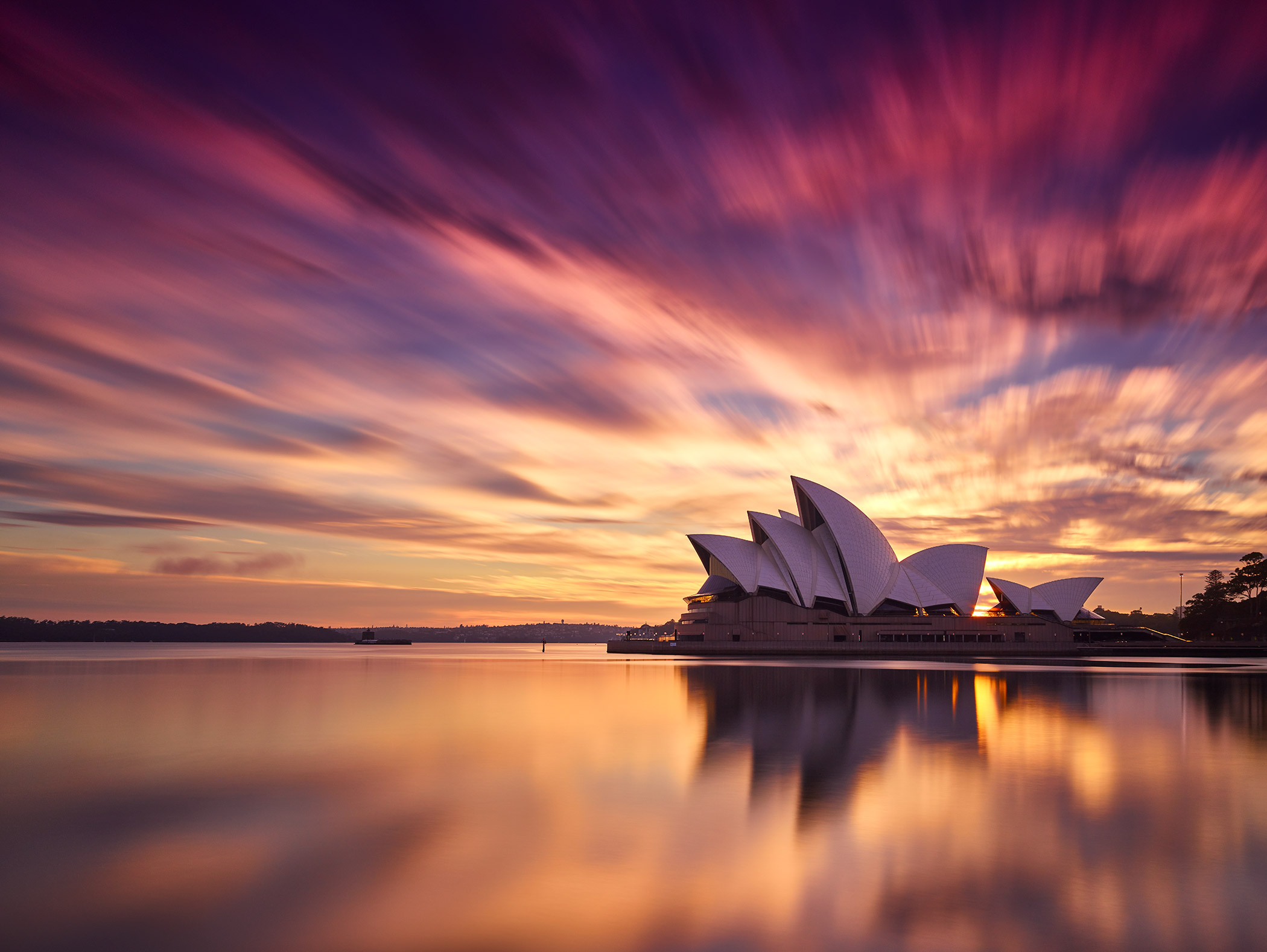
The Opera House is worth going inside. The exterior — Jørn Utzon's sail-shaped shells of white concrete, designed in 1957 and completed in 1973 after one of the most contentious construction projects in architectural history — is so famous that the interior comes as a surprise. The main concert hall seats 2,679 people and has acoustics that are considered among the finest in the world. The Joan Sutherland Theatre hosts opera and ballet. Even if you are not attending a performance, the guided architecture tour is one of the best in the city — it tells the story of how the building was designed, how it nearly wasn't built, and how Utzon resigned in 1966 and never returned to see it completed.
Bondi: The Beach That Earned Its Reputation
Bondi is 8 kilometres from the CBD, accessible by bus or a 25-minute train ride to Bondi Junction and then a bus, and it is exactly as good as everyone says it is. The beach is a crescent of white sand 1 kilometre long, backed by a strip of cafés and restaurants and the famous Bondi Icebergs swimming club, whose outdoor pool sits at the southern end of the beach with the Pacific Ocean crashing over its walls. The waves are real — this is a surfing beach, not a swimming pool — and the surf school at the northern end of the beach will have you standing on a board within two hours if you are willing to fall off it a dozen times first.
But the Bondi to Coogee Coastal Walk is the reason to come. Six kilometres of clifftop walking along the sandstone coast, passing through Tamarama (the locals call it "Glamarama," and the people-watching is extraordinary), Bronte, Clovelly, and Gordons Bay before arriving at Coogee Beach. The path hugs the cliff edge, passing tidal rock pools carved into the sandstone, Aboriginal engravings, and views of the Pacific that stretch to the horizon. Walk it from Bondi to Coogee — the light is better in the afternoon, and you end at Coogee with a beer at the Coogee Bay Hotel as a reward. Allow two to three hours if you stop at the beaches along the way, which you should.
The Bondi Farmers Market runs every Saturday morning in the grounds of Bondi Beach Public School — local produce, artisan bread, fresh flowers, and the kind of breakfast food that makes you wonder why you ever eat anywhere else. The Bondi Pavilion, the heritage-listed building at the northern end of the beach, has been recently renovated and now houses a gallery, a theatre, and a rooftop bar with views over the beach that are worth the price of a drink.
The Neighborhoods: Where Sydney Actually Lives
The Sydney that most visitors see — the Rocks, Darling Harbour, the CBD — is the Sydney that was built for visitors. The Sydney that Sydneysiders actually live in is somewhere else entirely.
Surry Hills is the closest thing Sydney has to a neighborhood that feels like a great European city — dense, walkable, full of converted terrace houses and warehouses that now contain some of the best restaurants and bars in the country. Crown Street is the main artery, but the best places are on the side streets: wine bars with no signage, coffee roasters that take their work with religious seriousness, restaurants that change their menu daily based on what came in from the market. Time Out ranked Sydney fifth in the world for culture in 2025, and Surry Hills is a significant part of the reason why.
Newtown is Sydney's inner-west bohemian heartland — a long, dense strip of King Street lined with vintage clothing shops, independent bookstores, Thai restaurants, vegan cafés, and live music venues. It is LGBTQIA+ friendly, politically engaged, and resolutely un-touristy. The Newtown Hotel has been hosting live music since 1938. Gould's Book Arcade is a labyrinthine secondhand bookshop that occupies an entire building and has not been organized in any discernible way since it opened. The coffee at Campos, which started in Newtown before expanding across Australia, is still the best in the neighborhood.
Glebe is Newtown's quieter neighbor — a suburb of Victorian terraces and leafy streets that runs down to the water at Blackwattle Bay. The Saturday Glebe Markets are one of Sydney's best — vintage clothing, handmade jewelry, street food, and the kind of atmosphere that feels genuinely local rather than curated for Instagram. The Glebe foreshore walk along Blackwattle Bay gives you views of the Anzac Bridge, one of the longest cable-stayed bridges in the world, with the city skyline behind it.
Paddington is where Sydney keeps its galleries, its fashion boutiques, and its Saturday market — the Paddington Markets, held in the grounds of Paddington Uniting Church since 1973, are the original Sydney market and still the best for handmade and independent design. The terrace houses here are some of the most beautiful in the city, painted in heritage colors with wrought-iron lacework that catches the afternoon light.
The Blue Mountains: The Day Trip That Becomes the Trip
The Blue Mountains are 90 minutes from Sydney by train, and they are one of the most spectacular natural environments in Australia. The name comes from the blue haze that hangs over the valleys — a result of the fine eucalyptus oil droplets released by the millions of gum trees that cover the escarpment. The haze is real. The mountains are real. And the scale of them — the cliffs dropping 600 metres into the Jamison Valley, the rainforest below, the silence — is genuinely humbling in a way that is rare this close to a major city.
Katoomba is the main town and the base for most visitors. Echo Point, a 10-minute walk from the train station, gives you the view of the Three Sisters — three sandstone pillars rising from the valley floor, each named for a figure in an Aboriginal Dreamtime story — that appears on every Blue Mountains postcard. The view is real and it is extraordinary, but the Three Sisters are the beginning, not the end.
Scenic World, a five-minute drive from Echo Point, operates the Scenic Railway — the steepest passenger railway in the world, descending at a 52-degree angle into the rainforest below the escarpment. At the bottom, a 2.4-kilometre boardwalk winds through ancient Jurassic rainforest, past 200-million-year-old fossils and tree ferns that have not changed since the dinosaurs. The Scenic Skyway cable car crosses the valley 270 metres above the forest floor, with a glass floor section that is either thrilling or terrifying depending on your relationship with heights.
For walkers, the Prince Henry Cliff Walk runs 7 kilometres along the escarpment edge from Echo Point to Scenic World, with continuous views over the valley. The Grand Canyon Track (confusingly, nothing like the American Grand Canyon) descends into the valley through a narrow slot canyon with waterfalls and fern-draped walls. The Wentworth Falls track leads to one of the most dramatic waterfall views in the mountains.
Stay overnight in Katoomba if you can. The Carrington Hotel, a Victorian grand hotel that has been operating since 1883, is one of the great heritage hotels of Australia. The mountains at dawn, before the day-trippers arrive, with the mist in the valleys and the kookaburras calling from the gum trees, is a different experience entirely from the midday crowds at Echo Point.
Our 5-Day Sydney Itinerary: The Ultimate First-Timer's Guide builds the Blue Mountains into a complete Sydney week, and our Sydney on a Shoestring: A 4-Day Budget Travel Guide covers how to do the mountains and the city without spending a fortune.
The Food: Why Sydney Is Having a Moment
Sydney's food scene has been quietly building toward something extraordinary for the past decade, and it has arrived. The city sits at the intersection of Pacific Rim influences — Japanese, Chinese, Korean, Vietnamese, Thai, and the indigenous Australian ingredients that chefs are finally beginning to use seriously — and a produce culture that benefits from some of the best seafood, meat, and fruit in the world.
The Sydney Fish Market at Pyrmont is the second-largest fish market in the world by variety, and it is open to the public. Arrive early on a weekend morning and eat oysters with a glass of white wine while watching the fishing boats unload. The market café serves the freshest seafood breakfast in the city for a fraction of what you would pay at a restaurant.
The restaurant scene in Surry Hills and Darlinghurst is where the serious eating happens. Porteno, the Argentine wood-fire restaurant on Cleveland Street, has been roasting whole animals over open fire since 2010 and shows no signs of slowing down. Nomad, on Foster Street, does modern Middle Eastern food with Australian produce that is consistently among the best meals in the city. Ester, in Chippendale, is the kind of restaurant that makes you understand why Sydney is ranked in the global top tier — wood-fired, seasonal, and obsessively sourced.
For something more casual, the Bourke Street Bakery has been making the best sausage rolls and tarts in Sydney since 2004, with multiple locations now but the original in Surry Hills still the best. The Grounds of Alexandria, in an old industrial precinct in Alexandria, is a sprawling café complex with a garden, a farm, and a bakery that is worth the 20-minute Uber from the city even if the wait for a table on weekends is real.
Coffee in Sydney is not a beverage — it is a religion. The flat white was invented here (or in Melbourne, depending on who you ask, and the argument is ongoing and passionate). Specialty coffee culture is so embedded in the city that a bad cup of coffee is genuinely difficult to find. Single O in Surry Hills, Artificer in Surry Hills, and Paramount Coffee Project in Surry Hills (yes, Surry Hills is the center of the coffee universe) are the places that coffee people talk about.
For a full guide to the Sydney food experience, our Sydney Food & Culture: A 4-Day Culinary Journey Through Hidden Gems covers the neighborhoods, the markets, and the restaurants in the depth they deserve.
Beyond the City: What Sydney's Surrounds Offer
The Northern Beaches stretch north from Manly for 30 kilometres — a string of surf beaches (Freshwater, Curl Curl, Dee Why, Narrabeen, Mona Vale, Newport, Avalon, Palm Beach) that feel nothing like the city, connected by a coastal road that is one of the great drives in New South Wales. Palm Beach, at the northern end, is where the Australian soap opera Home and Away has been filmed since 1988, which means nothing to most international visitors but everything to a significant portion of the English-speaking world. More importantly, it is one of the most beautiful beaches in Australia — a long white strip with the Pacific on one side and the calm waters of Pittwater on the other, with the Barrenjoey Lighthouse at the northern tip and the Ku-ring-gai Chase National Park stretching away to the west.
Whale watching season runs from May to November, when humpback whales migrate north along the coast. The headlands at Bondi, Manly, and Palm Beach are free viewing spots, but a whale watching cruise from Circular Quay puts you in the water alongside animals that can reach 16 metres in length. Over 20,000 humpbacks make the migration each year — the population has recovered dramatically since the end of commercial whaling, and sightings are now almost guaranteed during peak season.
Taronga Zoo, accessible by ferry from Circular Quay, is one of the best zoos in the world — not because of its collection (though the collection is extraordinary, including koalas, wombats, Tasmanian devils, and platypuses) but because of its setting. The zoo is built on a hillside above the harbour, and the views from the upper levels — over the harbour, the bridge, and the Opera House — are among the best in Sydney. The ferry ride there is itself worth the trip.
For travelers who want to extend beyond Sydney, our guides to Melbourne for Couples: 5-Day Culture, Coffee & Coastal Escape, Cairns Family Adventure: 5-Day Great Barrier Reef & Rainforest Guide, and 7-Day Tasmania Road Trip & Adventure cover the rest of Australia's most compelling destinations.
When to Go and How Long to Stay
Sydney is a year-round destination, but the seasons matter. Summer (December through February) is hot, humid, and crowded — beach weather, but also the season when the city is at its most expensive and the Blue Mountains are at their most visited. The New Year's Eve fireworks over the harbour are the most spectacular in the world, watched by over a million people from the foreshore, and if you are in Sydney for December 31st, you will understand why Sydney considers itself the first major city to welcome the new year.
Autumn (March through May) is arguably the best time to visit — warm enough for beaches, cool enough for walking, and the city is less crowded than summer. The Vivid Sydney festival runs from late May to mid-June, transforming the harbour foreshore into a light and music installation that draws over 3 million visitors. The Opera House sails are projected with moving images. The Harbour Bridge is illuminated. The city stays up late in a way it normally doesn't.
Winter (June through August) is mild by most standards — daytime temperatures in the mid-teens Celsius — and the city empties of tourists. This is when Sydney belongs to Sydneysiders, and when the restaurants and bars are at their most local and relaxed. It is also peak whale watching season.
A minimum of five days is needed to do Sydney any justice. Seven to ten days is better, allowing for a day in the Blue Mountains, a day on the Northern Beaches, and enough time in the city to find the places that are not in the guidebooks.
The Practical Details
Getting there: Sydney Kingsford Smith Airport is 8 kilometres from the CBD, connected by the Airport Link train (about 13 minutes to Central Station, AUD $19.60). Taxis and rideshares are available but significantly more expensive. The train is the right choice.
Getting around: Sydney's public transport system — trains, buses, and ferries — is comprehensive and uses the Opal card, a reloadable transit card available at the airport and at convenience stores. The ferry network is the most enjoyable way to move around the harbour. The light rail connects the CBD to Surry Hills, Newtown, and the inner west. Cycling is increasingly viable with a growing network of protected lanes.
Where to stay: The CBD and the Rocks put you closest to the harbour and the major attractions but at the highest prices. Surry Hills and Darlinghurst offer better value and better access to the food and nightlife scenes. Bondi is the right choice if beaches are your priority. Newtown is for travelers who want to feel like a local.
Currency and costs: Australia uses the Australian dollar (AUD). Sydney is not a cheap city — expect to pay AUD $5–6 for a coffee, AUD $25–35 for a main course at a mid-range restaurant, and AUD $200–400 per night for a decent hotel. The beaches, the coastal walks, the markets, and the ferry rides are free or close to it, which helps.
Tipping: Not expected in Australia. Service is included in the price. Rounding up the bill at a restaurant is appreciated but not obligatory.
What Sydney Does to You
Sydney is one of those cities that operates on multiple registers simultaneously. On the surface, it is the postcard — the harbour, the bridge, the Opera House, the beaches. Below that, it is a city of extraordinary food and wine and coffee, of neighborhoods that have their own distinct personalities, of a cultural life that punches well above its weight for a city of 5 million people. Below that, it is a city built on the edge of a continent that is genuinely wild — where the bush starts at the city limits and the ocean is never more than 30 minutes away and the wildlife is unlike anything in the northern hemisphere.
What Sydney does, if you give it enough time, is recalibrate your sense of what a city can be. It is a city where you can surf before work and eat a world-class meal for dinner and watch humpback whales from a headland on the weekend. It is a city where the light — that particular southern hemisphere light, clear and bright and slightly golden even in winter — makes everything look better than it has any right to. It is a city that ranked fifth in the world for culture in 2025 and would have ranked higher if it were more interested in being ranked.
The Opera House is worth seeing. The harbour is worth crossing. Bondi is worth the bus ride. But the secret Sydney — the one that keeps people coming back, the one that makes expats who leave spend the rest of their lives trying to explain what they miss — is the city that reveals itself slowly, over coffee in Surry Hills and fish and chips on the Manly ferry and a morning walk along the Bondi to Coogee cliffs when the light is right and the Pacific is doing what the Pacific does.
That Sydney is waiting. Build your itinerary with Ask Leif and find it.