Salt Lake City Is the Most Interesting City in America. Nobody Talks About It.
Destination: Salt Lake City, Utah
Category: destination-guide
Salt Lake City Is the Most Interesting City in America. Nobody Talks About It.
By the AskLeif Team
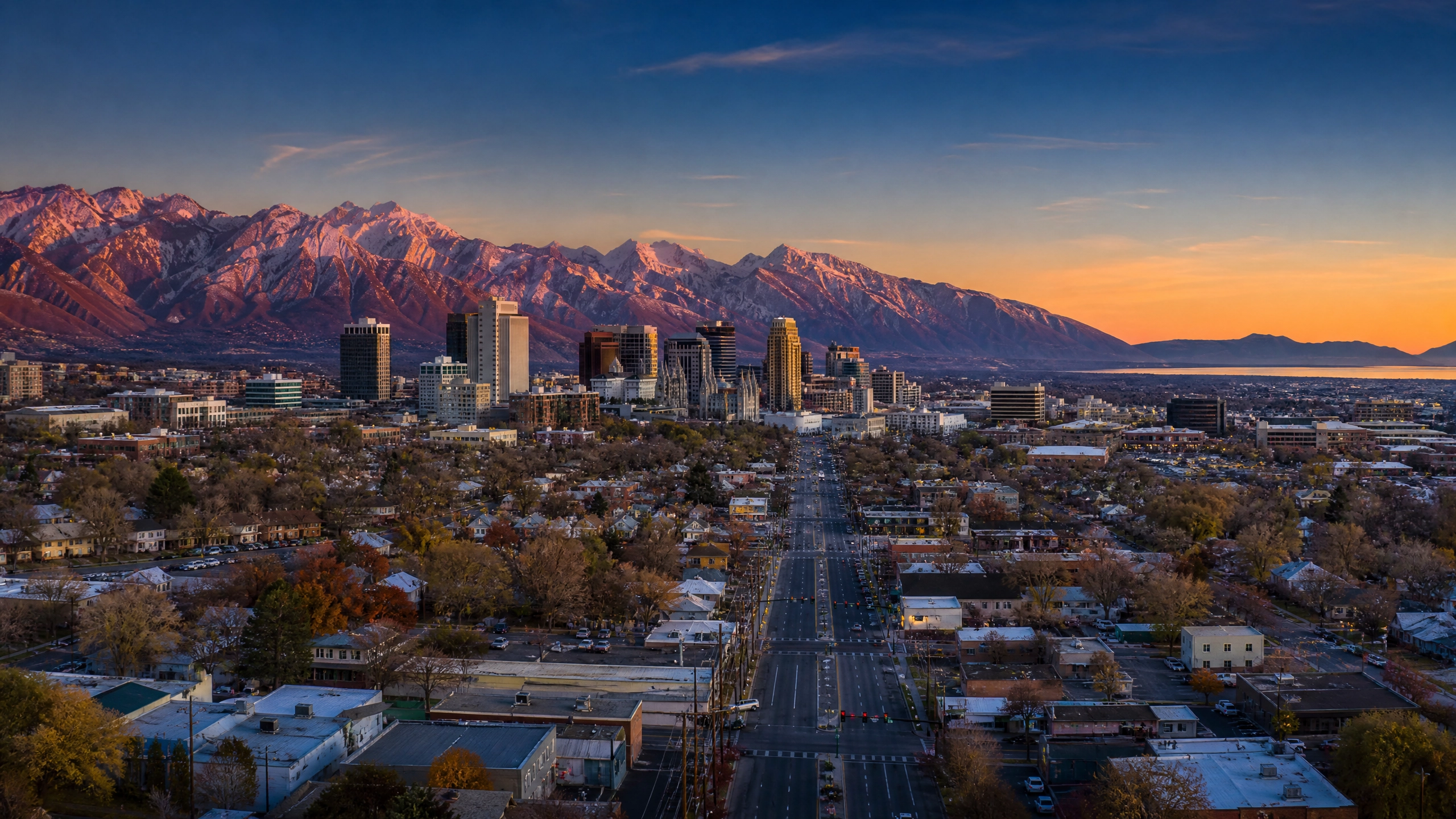
The grid that Brigham Young laid out in 1847 is still the grid that Salt Lake City runs on. He designed it on a scale that was, by the standards of the 19th century, almost incomprehensible — streets wide enough for a wagon team to turn around without backing up, blocks large enough to contain an orchard and a house and a barn, a city plan built on the assumption that the people who lived here would need room to grow and room to breathe and room to build something that would last. The streets are still 132 feet wide. The blocks are still 660 feet on a side. You can feel the scale of the original intention every time you walk downtown and realize that the sidewalk is wider than the street in most American cities.
That grid is the foundation of everything interesting about Salt Lake City — and the tension between what that grid was built to contain and what has grown up inside it is the engine of everything that makes the city worth understanding. The Church of Jesus Christ of Latter-day Saints built this city. It owns the land under Temple Square, the tallest building in the state, the most visited tourist attraction in Utah. It shaped the culture, the politics, the architecture, the calendar. And inside that framework — sometimes in deliberate counterpoint to it, sometimes in genuine coexistence with it — a city has grown up that has one of the most serious outdoor recreation cultures in the world, a craft beer scene that exists in productive tension with the dominant religion's prohibition on alcohol, a food culture that is genuinely surprising, and a set of neighborhoods that feel nothing like what most people expect when they think of Salt Lake City.
The result is a city that is simultaneously more conservative and more interesting than any other city its size in America. You can visit Salt Lake City and see only the temple and the ski resorts and leave thinking you understand it. Or you can stay long enough to find the Granary District, the 9th & 9th neighborhood, the Bonneville Shoreline Trail, Red Iguana, Gilgal Sculpture Garden, and the Great Salt Lake at sunset — and leave understanding that you were in one of the most genuinely distinctive cities in the country.
This is the version of Salt Lake City that nobody writes about. It is also the version that is worth the trip.
The Tension That Makes Salt Lake City Interesting
Every city has a dominant culture and a counterculture. What makes Salt Lake City unusual is that the tension between them is so visible, so specific, and so productive.
The LDS Church is not a background presence in Salt Lake City. It is a foreground presence — in the architecture, in the politics, in the way the city is laid out, in the fact that roughly half the population of the metro area is active members. Temple Square is in the center of the city. The Church Office Building — the administrative headquarters of a global institution with 17 million members — is a block away. The Church's influence on Utah's liquor laws, on the city's Sunday culture, on the political landscape, is direct and ongoing.
And inside that framework, Salt Lake City has built a craft beer scene that is, by some measures, the most interesting in the country. Not the largest — Portland and Denver have more breweries. But the most interesting, because it exists in deliberate tension with the dominant culture. Bewilder Brewing released a beer called "Deseret IPA" — named after the LDS term for the state of Utah — and pulled it from shelves after a trademark complaint from the Church. Fisher Brewing occupies the original 1884 Fisher Brewing building in the Granary District, a brewery that operated until 1967 and has been revived in the same space, with the same name, making beer in a city where the dominant religion doesn't drink. The craft beer scene in Salt Lake City is not just a food trend. It is a statement about what kind of city this is and what kind of city it is becoming.
The 9th & 9th neighborhood — the intersection of 900 East and 900 South, which gives the neighborhood its name — is the physical embodiment of this tension. It is the most walkable, most independent, most deliberately non-corporate neighborhood in Salt Lake City: coffee shops that have been in the same location for 20 years, bookstores, yoga studios, restaurants that don't take reservations, bars that are full on Sunday afternoons. It is the neighborhood that Salt Lake City built for the people who live here and want to live here on their own terms. It is almost never mentioned in travel content about the city.
Temple Square and What It Actually Is
Temple Square is the most visited tourist attraction in Utah, and most visitors experience it as a religious site — which it is — without understanding what else it is.
The Salt Lake Temple is currently undergoing a major seismic retrofit and renovation, which means the temple itself is not visible in the way it has been for 150 years — it is wrapped in scaffolding, being prepared for the next century. This is, paradoxically, a good time to visit Temple Square, because the construction has prompted the Church to open new visitor experiences and interpretive spaces that explain the history and theology of the site in ways that are accessible to non-members.
What Temple Square actually is, beyond the religious significance, is one of the most ambitious urban planning projects in American history. Brigham Young didn't just build a temple. He built a city around a temple, on a scale and with an intention that was unprecedented in the American West. The Temple Block — the 10-acre square at the center of the city — was designed to be the literal and symbolic center of a civilization. The Tabernacle, with its famous organ and its remarkable acoustic engineering (you can hear a pin drop from 170 feet away), was built in 1867 with no nails — only wooden pegs and rawhide — by craftsmen who had never built anything like it before.
A visitor who approaches Temple Square with curiosity rather than either reverence or skepticism will find something genuinely extraordinary: a place where a 19th-century religious community built, from nothing, in the middle of a desert, one of the most ambitious architectural and urban projects in American history. The faith that produced it is not required to appreciate what it produced.
The Great Salt Lake: A Body of Water That Is Disappearing
The Great Salt Lake has lost 73% of its water. It has lost 60% of its surface area. It is, by the measurements of the scientists who study it, in crisis — a crisis driven by upstream water diversions, by agriculture, by the demands of a growing city, and by a changing climate that is reducing the snowpack that feeds it.
You can see this from the causeway that connects Antelope Island to the mainland. The lake that was once a vast inland sea — the remnant of Lake Bonneville, the prehistoric lake that covered most of Utah 15,000 years ago and whose ancient shoreline is still visible on the mountains above Salt Lake City as a faint horizontal line — has receded to the point where the exposed lakebed is visible for miles. The white crust on the exposed bed is not salt. It is arsenic, lead, and other heavy metals that were deposited in the lake sediment over centuries and are now being exposed and blown as dust over the city.
This is not a reason not to visit. It is a reason to visit now, while the lake is still there, and to understand what you are seeing. The sunset over the Great Salt Lake is one of the most extraordinary natural spectacles in the American West — the high salinity of the water turns it pink and orange in a way that no other body of water does, and the brine shrimp that live in the lake feed millions of migratory birds that stop here on the Pacific Flyway. Antelope Island, 30 minutes from downtown, has 700 free-roaming bison — the largest publicly owned bison herd in the country — and the drive across the causeway at sunset, with the pink water on both sides and the mountains behind the city, is the kind of thing that stays with you.
The Great Salt Lake is also the reason that Salt Lake City is the most important environmental story in the American West right now. What happens to this lake — whether the city and the state can find the political will to restore it — will determine whether Salt Lake City is habitable in 50 years. That is not hyperbole. It is what the scientists say. And visiting the lake, understanding what it is and what it is losing, is the most important thing a traveler can do to understand the city it sits next to.
The Wasatch Front and the Trails That Start at the Stoplight
Salt Lake City is the only major American city where you can walk from your hotel to a mountain trailhead. Not drive — walk.
The Bonneville Shoreline Trail runs along the ancient shoreline of Lake Bonneville, the prehistoric lake that left the Great Salt Lake as its remnant. The trail is 17.5 miles long, running along the base of the Wasatch Mountains, and the nearest trailhead to downtown Salt Lake City is 1.1 miles from the city center — a 20-minute walk from most hotels in the downtown core. You can leave your hotel in the morning, walk to the trailhead, and be on a mountain trail above the city within 30 minutes of checking out of your room.
This is not a metaphor. It is a description of the city's geography. The Wasatch Mountains rise directly behind Salt Lake City — not behind the suburbs, not behind a 45-minute drive, but behind the city itself. The canyons that cut into the mountains — Big Cottonwood, Little Cottonwood, Millcreek — are 20 to 30 minutes from downtown by car, and the skiing at Alta and Snowbird, at the top of Little Cottonwood Canyon, is among the best in North America. The Greatest Snow on Earth is not a marketing slogan. It is a meteorological fact: the combination of the Great Salt Lake's moisture and the Wasatch's elevation produces a dry, light powder that skiers travel from around the world to experience.
In summer, the same canyons offer hiking that ranges from accessible to technical, with trails that climb to 11,000 feet and look out over the Salt Lake Valley and the lake beyond it. The Bells Canyon Trail in Little Cottonwood is the best moderate hike in the city — a 5-mile round trip to a waterfall that feels, in the middle of the canyon, like you are a thousand miles from any city. You are 20 miles from downtown Salt Lake City.
The Granary District and Fisher Brewing
The Granary District is the neighborhood that Salt Lake City built for itself when it wasn't looking. It sits south of downtown, in the blocks around 800 South and 900 West — a former industrial corridor of grain elevators, warehouses, and rail yards that has been converted, over the last decade, into the most interesting neighborhood in the city.
Fisher Brewing is the anchor. The original Fisher Brewing Company operated in Salt Lake City from 1884 to 1967 — a remarkable run for a brewery in a city where the dominant religion prohibits alcohol. The building survived. In 2017, a new generation of brewers revived the name and the space, opening a brewery and taproom in the original building that is, by any measure, one of the best brewery experiences in the American West. The beer is excellent — the lagers in particular, which are brewed with the precision and patience that lagers require. The taproom is beautiful in the way that old industrial buildings converted with care are beautiful: exposed brick, high ceilings, the original equipment visible behind glass. The patio faces the mountains.
The Granary District around Fisher has developed into a corridor of studios, galleries, and restaurants that feel nothing like the rest of Salt Lake City. It is the neighborhood where the artists and the chefs and the people who are building the city's cultural infrastructure have concentrated. The food hall at the Granary is the best place in Salt Lake City to eat lunch — a collection of independent vendors in a converted warehouse, with a rotating selection that reflects the city's actual diversity rather than its tourist-facing identity.
9th & 9th: The Neighborhood Salt Lake City Built for Itself
The intersection of 900 East and 900 South is, by the standards of Salt Lake City's grid, unremarkable — just another corner in the vast, regular matrix that Brigham Young laid out. But the neighborhood that has grown up around it is the most interesting in the city, and the one that most accurately reflects what Salt Lake City is becoming.
The coffee shops at 9th & 9th are the kind of coffee shops that a neighborhood builds when it wants to be taken seriously: serious about the coffee, serious about the space, serious about the community they're building. Publik Coffee Roasters, which has its flagship at 9th & 9th, is the best coffee in Salt Lake City and one of the better coffee operations in the Mountain West — they roast their own beans, they take the sourcing seriously, and the shop is the kind of place where you can spend two hours working and nobody will make you feel unwelcome.
The restaurants at 9th & 9th are the restaurants of a neighborhood that has figured out what it wants to eat. Pago is the anchor — a farm-to-table restaurant that has been operating since 2009 and that sources from Utah farms with the specificity and commitment that the term "farm-to-table" is supposed to imply but rarely does. The menu changes with the seasons. The wine list is serious. The room is small and warm and feels like the kind of restaurant that a neighborhood builds for itself rather than for visitors.
Red Iguana is not in the 9th & 9th neighborhood — it's on West Temple, near the freeway, in a location that has nothing to recommend it except the food. But it belongs in any honest account of Salt Lake City's food culture because it is the most important restaurant in the city: a Mexican restaurant that has been operated by the Cardenas family since 1985, that makes seven different moles from scratch, and that has a line out the door at 11 AM on a Tuesday. The mole negro is the one to order. The wait is worth it. The margaritas are made with fresh lime juice. This is the restaurant that Salt Lake City's food community goes to when they want to remember why they live here.
Gilgal Sculpture Garden: The Secret That Salt Lake City Keeps
There is a garden in the 9th & 9th neighborhood that is not in any guidebook, that is not on any tourist map, and that is one of the most extraordinary things in Salt Lake City. Gilgal Sculpture Garden is a half-acre park that was created by Thomas Battersby Child Jr., a mason and LDS bishop, between 1945 and 1963. Child spent 18 years carving 12 sculptures and 70 engraved stones, placing them in a garden behind his house, and then donating the property to the city.
The sculptures are strange and specific and deeply personal — a sphinx with the face of Joseph Smith, the founder of the LDS Church; a self-portrait of Child emerging from a stone; biblical scenes rendered in the style of a man who was a skilled mason but not a trained sculptor. The garden is free. It is open during daylight hours. It is two blocks from the 9th & 9th intersection, and almost no one who visits Salt Lake City knows it exists.
Gilgal is the most Salt Lake City thing in Salt Lake City: a private act of faith and creativity, made in stone, given to the public, sitting quietly in a residential neighborhood while the tourists go to Temple Square. It is the kind of place that a city produces when it has been building something for 175 years and the layers have had time to accumulate.
When to Go
Salt Lake City has four distinct seasons, and three of them are excellent for travel.
Spring (April and May) is the best time to visit if you want to hike without snow and see the city at its most alive — the mountains are still white above the valley, the temperatures are in the 60s and 70s, and the outdoor culture that defines the city is fully operational. Fall (September and October) is the other great season — the aspens in the canyons turn gold in late September, the temperatures are perfect, and the crowds from the ski season haven't arrived yet.
Winter is the season for skiing, and the skiing is extraordinary. Alta and Snowbird are 45 minutes from downtown, and the powder days — when the overnight snowfall is measured in feet rather than inches — are the reason that serious skiers plan their winters around Salt Lake City. The city itself in winter is cold but functional, and the contrast between the snowy mountains and the valley below is visually spectacular.
Summer (June through August) is the one season to approach with caution. The valley can reach 100°F in July and August, and the combination of heat and the Great Salt Lake's dust creates air quality issues that can be significant. The mountains are cool and beautiful in summer, but the city itself is best experienced in the shoulder seasons.
Planning Your Salt Lake City Trip
Here is how I would build four days in Salt Lake City, and I would build them the same way every time.
Start at Temple Square on the morning of day one — not because it's the most interesting thing in the city, but because understanding it is the key to understanding everything else. Spend two hours. Read the interpretive materials. Walk the grounds. Then walk north to the Utah State Capitol, which sits on a hill above the city and offers the best view of the grid that Brigham Young laid out — the streets running perfectly north-south and east-west, the mountains rising directly behind the city, the Great Salt Lake visible on clear days to the northwest. Lunch at the Granary District food hall. Afternoon at Fisher Brewing.
Day two: the 9th & 9th neighborhood in the morning — coffee at Publik, then Gilgal Sculpture Garden, then the neighborhood shops. Lunch at Pago if you can get a reservation, or at one of the smaller restaurants on 9th & 9th if you can't. Afternoon on the Bonneville Shoreline Trail — take the trailhead near the University of Utah, which is the closest to downtown, and walk as far as you want. Dinner at Red Iguana. Get there before 11 AM or expect to wait.
Day three: Antelope Island. Leave early. Drive the causeway at sunrise if you can — the light on the lake in the early morning is extraordinary. Spend the morning on the island, which has 28,000 acres of wilderness and 700 bison and the kind of silence that is increasingly rare within 30 minutes of a major American city. Come back to the city in the afternoon and spend it in the Granary District.
Day four: a canyon day. Big Cottonwood Canyon for hiking in summer and fall, Little Cottonwood for skiing in winter. The drive up either canyon is worth doing even if you don't hike or ski — the scale of the Wasatch is something that needs to be experienced from inside it, not just from the valley below.
AskLeif's Salt Lake City guides can help you build this out in detail. The Salt Lake City Adventure & Romance Guide covers the outdoor side of the city with day-by-day structure. The Salt Lake City Solo Travel Guide is built for independent travelers who want to move through the city at their own pace. The Salt Lake City Couples Guide covers the romantic side — the canyon hikes, the Fisher Brewing taproom, the restaurants that require reservations.
The Honest Version
Salt Lake City will surprise you. This is not a marketing promise — it is a description of what happens to almost everyone who visits with open expectations. The city that most people imagine — conservative, religious, dry, a gateway to the ski resorts — is real. It exists. But it is not the whole story, and it is not the most interesting part of the story.
The most interesting part is the tension. The tension between the grid that Brigham Young laid out and the city that has grown up inside it. The tension between the dominant religion and the craft beer scene. The tension between the Great Salt Lake — which is disappearing — and the city that depends on it and is only beginning to reckon with what its loss would mean. The tension between the conservative political culture and the progressive urban neighborhoods. These tensions are not resolved. They are active and ongoing and productive, and they are the reason that Salt Lake City is, right now, one of the most genuinely interesting cities in America.
The city is also, by any measure, beautiful. The mountains are always there, rising directly behind the skyline, snow-capped for most of the year. The grid is extraordinary — wide and regular and built on a scale that gives the city a spaciousness that most American cities have lost. The light in the valley, in the late afternoon, when the sun is behind the Oquirrh Mountains to the west and the Wasatch is lit from the east, is the kind of light that painters have always sought and that Salt Lake City produces every clear day.
Nobody talks about Salt Lake City. That is the city's best-kept secret, and it is the reason to go.