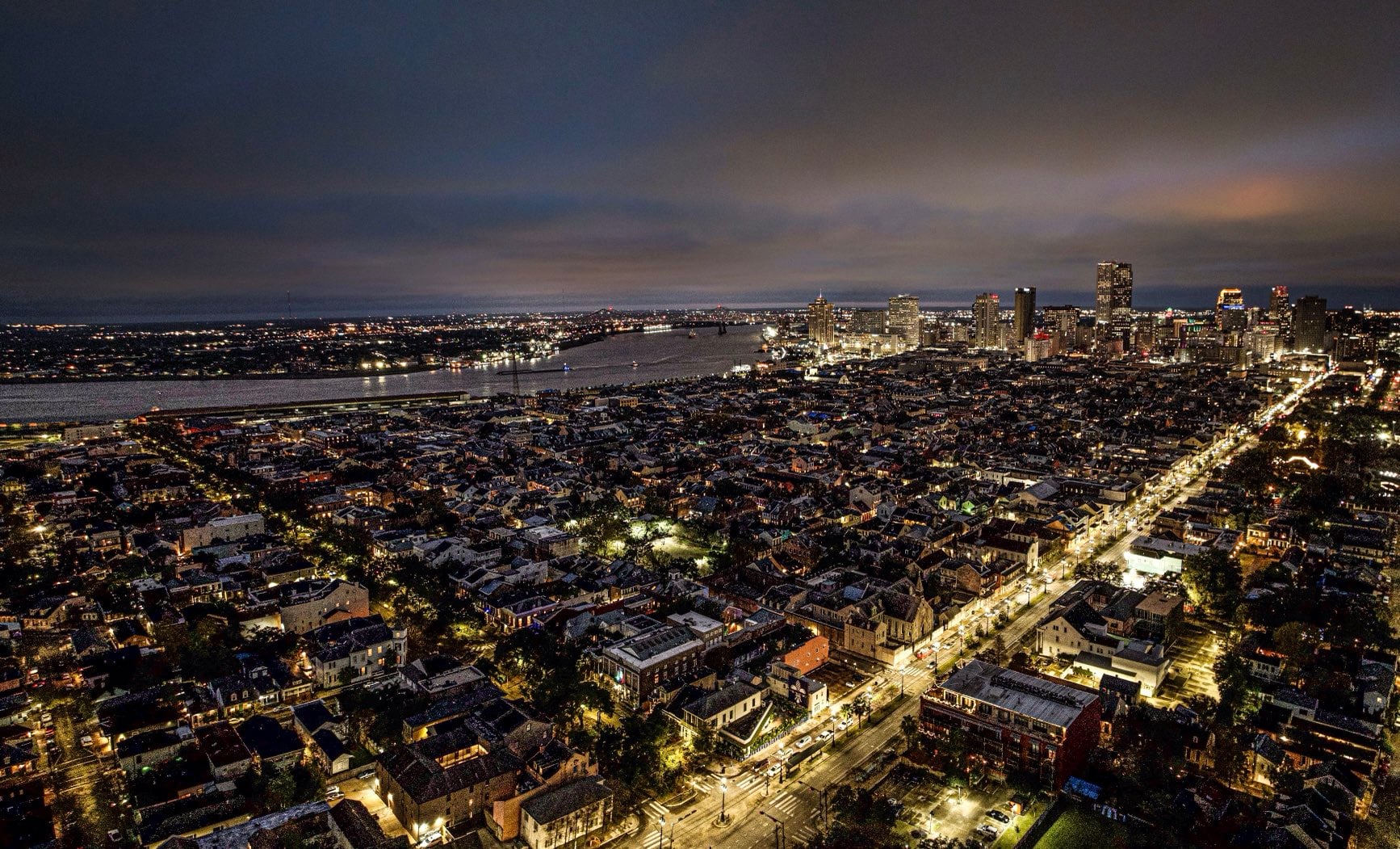
New Orleans Doesn't Let You Leave the Same Person Who Arrived
Destination: New Orleans, Louisiana
Category: Destination Guides
Every American city has a story it tells about itself. New York tells you it's the center of everything. Los Angeles tells you the future is already here. Nashville tells you it's reinventing itself. New Orleans doesn't tell you anything. It just opens the door, hands you a drink, and lets you figure it out.
New Orleans is the only American city that has successfully resisted becoming like everywhere else. It has its own food, its own music, its own relationship with time, its own rules about when it's acceptable to start drinking. It was built by the French, shaped by the Spanish, defined by the enslaved Africans who created its culture, and refined by every wave of immigrants who arrived and never quite wanted to leave. The result is something that cannot be explained and cannot be replicated — a city that operates on its own frequency, at its own tempo, by its own logic.
The rest of America has been trying to understand New Orleans for three hundred years. It hasn't managed it yet. That's not a failure of understanding. That's the point.
New Orleans will get under your skin in ways you won't fully process until you're back home, sitting in your kitchen, thinking about a bowl of gumbo you ate at a table with strangers and wondering when you can go back. This is what the city does. It doesn't seduce you slowly. It absorbs you.
The Geography of a City That Shouldn't Exist
Before you can understand New Orleans, you have to understand where it is. The city sits in a bowl — literally below sea level in most neighborhoods — surrounded by Lake Pontchartrain to the north, the Mississippi River curving around the south, and the vast, flat, waterlogged landscape of the Louisiana delta in every other direction. It is, by any rational assessment, a terrible place to build a city. The French built it anyway, in 1718, because the location was strategically perfect for controlling the mouth of the Mississippi and therefore the entire interior of the continent.
The city has been flooded, burned, and devastated by hurricanes more times than most cities survive once. It keeps coming back. Not because it has to, but because the people who live here have decided that this particular place, with its particular character, is worth the risk. That decision — made collectively, continuously, by generation after generation — is part of what makes New Orleans feel different from everywhere else. The city is not taken for granted. It is chosen.
The Mississippi River is the reason for everything. The river brought the trade that made New Orleans wealthy, the enslaved people who built its culture, the immigrants who layered their traditions onto what was already there, and the floods that periodically reminded the city of its own fragility. Standing on the levee and watching the river move — brown and enormous and indifferent — is one of the essential New Orleans experiences. The river is not decorative. It is the city's reason for being.
The French Quarter: The City's Ancient, Improbable Heart
The French Quarter — Vieux Carré, the old square — is where New Orleans began, and it is where most visitors spend most of their time, for reasons that are entirely justified. The Quarter is one of the most architecturally intact historic neighborhoods in the United States: block after block of Spanish Colonial buildings (the "French" Quarter was mostly built by the Spanish after fires destroyed the original French structures), with their wrought-iron balconies, interior courtyards, and pastel-painted facades. It looks like nowhere else in America because it is nowhere else in America.
Bourbon Street is the part of the Quarter that everyone knows and that locals mostly avoid. It is loud, crowded, sticky with spilled drinks, and lined with bars playing cover bands. It is also, in its own way, a genuine cultural artifact — a street that has been devoted to excess and entertainment for two centuries, that has hosted jazz musicians and voodoo practitioners and Mardi Gras revelers and every other variety of human seeking permission to be something other than their ordinary self. Go once, late at night, and understand what it is. Then spend the rest of your time in the rest of the Quarter.The real French Quarter is the streets that run parallel to Bourbon. Royal Street is where the antique dealers and art galleries are, where the architecture is at its most beautiful, where the street musicians set up in the afternoons and play for tips and for the love of it. Chartres Street has the best restaurants. Decatur Street runs along the river and connects the Quarter to the French Market — a covered market that has been operating on this site since 1791, selling everything from produce to pralines to tourist tchotchkes, and that is worth walking through for the architecture alone.
Jackson Square is the center of the Quarter's public life — a formal plaza in front of St. Louis Cathedral, flanked by the Pontalba Buildings (the oldest apartment buildings in the United States), and perpetually occupied by artists, fortune tellers, street performers, and the kind of people who have nowhere better to be and are entirely at peace with that. The cathedral itself — white and triple-spired, built in 1794 — is the most photographed building in New Orleans and one of the most beautiful in the country. Go inside. The interior is quieter than the square outside, and the light through the stained glass in the late afternoon is extraordinary. Café Du Monde is the French Quarter institution that has been serving café au lait and beignets since 1862, twenty-four hours a day, seven days a week, through hurricanes and floods and everything else the city has thrown at it. The beignets — squares of fried dough buried under a snowfall of powdered sugar — are not the best thing you will eat in New Orleans, but they are the most essential. Eat them at an outdoor table, watch the square, wear a dark shirt (the powdered sugar goes everywhere), and understand that you are participating in something that has been happening here for over a century and a half.The Music: The Thing That Makes Everything Else Make Sense
New Orleans invented jazz. This is not a marketing claim. It is a historical fact, and understanding it changes how you hear the city. Jazz emerged here in the late nineteenth and early twentieth centuries from the collision of African rhythms, European harmonics, blues, ragtime, and the specific social conditions of a city where free Black musicians had more space to create than anywhere else in the American South. Louis Armstrong was born here. Jelly Roll Morton was born here. The music that became the soundtrack of the twentieth century was born here, in the streets and the dance halls and the second-line parades of New Orleans.
The music is still here. Not as a museum piece — as a living tradition. On any given night in New Orleans, you can hear traditional jazz at Preservation Hall (a tiny, deliberately un-air-conditioned room in the French Quarter where the music has been played continuously since 1961), brass band music at a second-line parade in the Tremé, blues at a dive bar in the Marigny, Cajun and zydeco at Tipitina's in Uptown, and experimental jazz at any of a dozen small venues that don't appear in any guidebook.
Frenchmen Street in the Faubourg Marigny — a ten-minute walk from the French Quarter — is where the city's music scene actually lives. On weekend nights, the street becomes an open-air music festival: every bar has a live band, the music spills out into the street, and the crowd moves from venue to venue following whatever sounds most alive. The Spotted Cat Music Club, d.b.a., and The Maison are the anchors, but the best thing you can do is walk the street slowly and stop wherever something pulls you in.The second line is the other essential musical experience. Second lines are neighborhood parades — organized by social aid and pleasure clubs, a tradition that dates to the nineteenth century — that move through the streets of New Orleans on Sunday afternoons from roughly September through May. A brass band leads, the club members follow in their finery, and the "second line" — everyone else — follows behind, dancing. The dancing is not choreographed. It is improvised, joyful, and deeply rooted in the African American tradition that created it. Finding a second line and joining it is one of the most alive experiences available in any American city.
The Food: The Real Reason People Come Back
New Orleans has the most distinctive regional cuisine in the United States, and it is not close. The food here is the product of the same collision of cultures that produced the music — French technique, West African ingredients and cooking methods, Spanish seasoning, Native American knowledge of local plants, and the specific genius of the Creole and Cajun cooks who synthesized all of it into something entirely their own.
Gumbo is the dish that defines the city, and it is worth understanding before you eat it. Gumbo is a stew built on a roux — flour and fat cooked together until it reaches a dark, nutty, almost chocolatey color — thickened with okra or filé powder (ground sassafras leaves, a technique borrowed from the Choctaw), and filled with whatever the cook has: chicken and andouille sausage, seafood, or both. Every family in New Orleans has a gumbo recipe, and every family believes theirs is the correct one. The differences between them are real and significant and worth arguing about. Étouffée — crawfish or shrimp smothered in a buttery, spiced sauce and served over rice — is the dish that converts people who think they don't like seafood. Red beans and rice, traditionally served on Mondays (because Monday was laundry day and you needed something that could cook all day unattended), is the city's weekday staple and one of the most satisfying things you can eat anywhere. Jambalaya — rice cooked with meat and vegetables in a single pot, the Creole cousin of paella — is the dish that makes you understand how much flavor can come from the right combination of the right ingredients.The po'boy is the city's sandwich: French bread (the local variety has a crust that shatters and a crumb that's impossibly light) filled with fried shrimp, oysters, roast beef, or whatever else you want, dressed with lettuce, tomato, pickles, and mayonnaise. Domilise's in Uptown and Parkway Bakery and Tavern in Mid-City are the reference points for roast beef po'boys; the gravy-soaked beef, the bread, the debris (the bits of meat that fall into the drippings) — it is not a refined dish, and it is one of the best things you will eat in your life.
Oysters are the city's great luxury that costs almost nothing. The Gulf oysters served raw at Drago's (charbroiled, with garlic butter and parmesan) or at the raw bar at Casamento's (a tile-covered restaurant in Uptown that has been serving oysters since 1919) are among the best in the world. Order a dozen. Order two dozen. You are in the right place. Brennan's in the French Quarter invented Bananas Foster in 1951 — bananas sautéed in butter, brown sugar, cinnamon, and banana liqueur, flambéed tableside with rum, and served over vanilla ice cream. It is theatrical and delicious and worth doing once. The restaurant itself is one of the great New Orleans dining rooms: high ceilings, pink tablecloths, the kind of service that makes you feel like you've been transported to a different era.For the full picture of what New Orleans food actually is — the neighborhood restaurants, the lunch counters, the places that don't have websites — the best guide is to walk into any establishment that has been there for more than twenty years and order whatever the person next to you is having.
The Garden District: Where the Money Moved
After the Louisiana Purchase in 1803, American merchants began arriving in New Orleans in large numbers. The Creole residents of the French Quarter — who had been there for generations and had their own culture, their own language, their own social codes — were not particularly interested in integrating with the newcomers. The Americans, for their part, were not particularly interested in living under Creole rules. So they built their own neighborhood, upriver from the French Quarter, on land that had been sugar plantations.
The result is the Garden District — a neighborhood of enormous Greek Revival and Italianate mansions, set back from the street behind iron fences and surrounded by gardens that take the neighborhood's name seriously. The houses here are some of the most beautiful domestic architecture in the United States: wide verandas, elaborate millwork, live oak trees that have been growing for two centuries and now form a canopy over the streets that filters the light into something green and cathedral-like.
Magazine Street runs through the Garden District and continues for miles in both directions, lined with boutiques, antique shops, restaurants, and the kind of neighborhood businesses that make a street feel alive rather than commercial. Commander's Palace — the grande dame of New Orleans restaurants, in a Victorian mansion at the corner of Washington and Coliseum — has been serving the city's best turtle soup and bread pudding soufflé since 1893. The Saturday jazz brunch is one of the great New Orleans rituals: three courses, live jazz, and the understanding that you are not going anywhere for the next two hours.The Garden District's Lafayette Cemetery No. 1 is one of the city's above-ground cemeteries — the high water table makes underground burial impractical, so New Orleans buries its dead in elaborate above-ground tombs that have become one of the city's most distinctive visual signatures. The cemetery is free to enter, genuinely beautiful, and not at all morbid — it is a neighborhood park where people walk their dogs and eat lunch on the benches, surrounded by two centuries of New Orleans history.
Tremé: The Oldest Black Neighborhood in America
The Tremé — the neighborhood just north of the French Quarter — is the oldest African American neighborhood in the United States, and it is the place where New Orleans culture was actually created. The free Black community that lived here before the Civil War — the gens de couleur libres, free people of color who occupied a unique social position in the city's racial hierarchy — were the musicians, the craftsmen, the intellectuals who built the cultural infrastructure that the rest of the city built on top of.
Congo Square — now part of Louis Armstrong Park — is where enslaved Africans were permitted to gather on Sundays to play music, dance, and maintain cultural connections that were suppressed everywhere else in the American South. The music that was played in Congo Square is the direct ancestor of jazz, blues, and every other American musical form that came after it. Standing in the square and understanding what happened here — what was preserved here, against enormous odds — is one of the most significant experiences available in any American city.The Tremé today is a neighborhood in transition, gentrifying in ways that are complicated and contested. But the culture is still here: the social aid and pleasure clubs, the brass bands, the Mardi Gras Indians (the Black masking tradition in which elaborate, hand-sewn suits of feathers and beading are worn in the streets on Mardi Gras day), the neighborhood bars where the music is played because it needs to be played, not because tourists are watching.
Mardi Gras: The City at Its Most Itself
Mardi Gras is not a single day. It is a season — beginning on Epiphany (January 6th) and building through weeks of parades, balls, and parties to the climax on Fat Tuesday, the day before Ash Wednesday. The parades are the public face of it: enormous floats pulled through the streets by tractors, riders throwing beads and cups and stuffed animals and doubloons to the crowds below. The krewes — the private organizations that organize the parades — range from the ancient and exclusive (Rex, Comus, Proteus) to the irreverent and inclusive (the Krewe of Muses, which throws decorated shoes; the Krewe du Vieux, which is deliberately transgressive).
But the real Mardi Gras is not on the parade route. It is in the neighborhoods, in the second lines, in the Mardi Gras Indian gatherings, in the house parties and the neighborhood bars and the streets of the Tremé on Fat Tuesday morning. The city gives itself permission to be completely itself for two weeks, and what it is — joyful, excessive, communal, deeply rooted in traditions that most of its participants don't fully understand but feel in their bones — is something you cannot experience anywhere else.
If you are not in New Orleans for Mardi Gras, the city is still worth visiting. But if you have the opportunity to be here for it, rearrange your life to make it happen.
Plan Your New Orleans Trip with Ask Leif
New Orleans rewards the traveler who goes deep rather than wide. The city has enough to fill weeks, and the best experiences are the ones you find by wandering rather than planning. But a good itinerary gives you the structure to wander intelligently — to know which neighborhoods to explore, which restaurants to prioritize, which music venues to find on which nights.
For the full New Orleans experience — jazz, food, history, and the neighborhoods that make the city what it is — the 5-Day New Orleans Jazz & Food Culture Itinerary is the essential starting point. It covers the French Quarter, the Tremé, the Garden District, Frenchmen Street, and the food culture that makes this city unlike anywhere else in America.
Food is the reason many people come to New Orleans, and it deserves its own deep dive. The 4-Day New Orleans Foodie Guide is a culinary itinerary built around the city's best restaurants, markets, and street food — from the gumbo at Dooky Chase's to the oysters at Casamento's to the beignets at Café Du Monde.
Traveling with family? The 4-Day New Orleans Family Vacation Guide maps out a trip that keeps kids engaged — the Audubon Zoo, the Aquarium of the Americas, the streetcar rides, the beignets, and the neighborhoods where the city's energy is infectious rather than overwhelming.
For travelers who want to get beyond the tourist circuit and into the city's outdoor and natural landscape, the 4-Day New Orleans Outdoor Adventure Guide covers the bayous, the swamp tours, the levee cycling, and the wild, waterlogged landscape that surrounds the city and shapes everything about it.
Solo travelers and those on a tight budget will find everything they need in the 4-Day New Orleans Solo Travel Guide and the 4-Day New Orleans Budget Guide — both of which prove that the city's best experiences (the music, the food, the neighborhoods) are available at every price point.
And for couples who want the full romantic New Orleans experience — the candlelit restaurants, the rooftop bars, the late-night jazz, the Garden District at dusk — the 7-Day New Orleans Couples Guide is the most complete itinerary we've built for the city.
The Last Thing
New Orleans is the only American city that has a genuine philosophy about how to live. That philosophy — which can be summarized, imprecisely, as: eat well, play music, be present, let the city move through you rather than trying to move through it — is not something you can learn from a guidebook. You learn it by being here, by letting the city set the pace, by accepting that the best thing that will happen to you today is probably not the thing you planned.
Tennessee Williams, who lived here for years and set some of his most important work here, said that New Orleans was the place where he found "the kind of freedom I had always needed." He was talking about the city's tolerance for difference, its comfort with complexity, its refusal to reduce human experience to something manageable and neat. That freedom is still here. It is the thing the city offers that nowhere else can.
You will leave New Orleans different from how you arrived. You will be louder, more willing to talk to strangers, more interested in what's on the plate in front of you, more likely to stop and listen when you hear music coming from a doorway. You will have opinions about gumbo. You will find yourself, months later, humming something you heard on Frenchmen Street at two in the morning.
That's what the city does. It doesn't let you leave the same person who arrived.
Ready to start planning? Let Leif build your New Orleans itinerary — personalized to your travel style, your budget, your dates, and the things that actually matter to you. No two itineraries are ever the same. Create My New Orleans Itinerary →