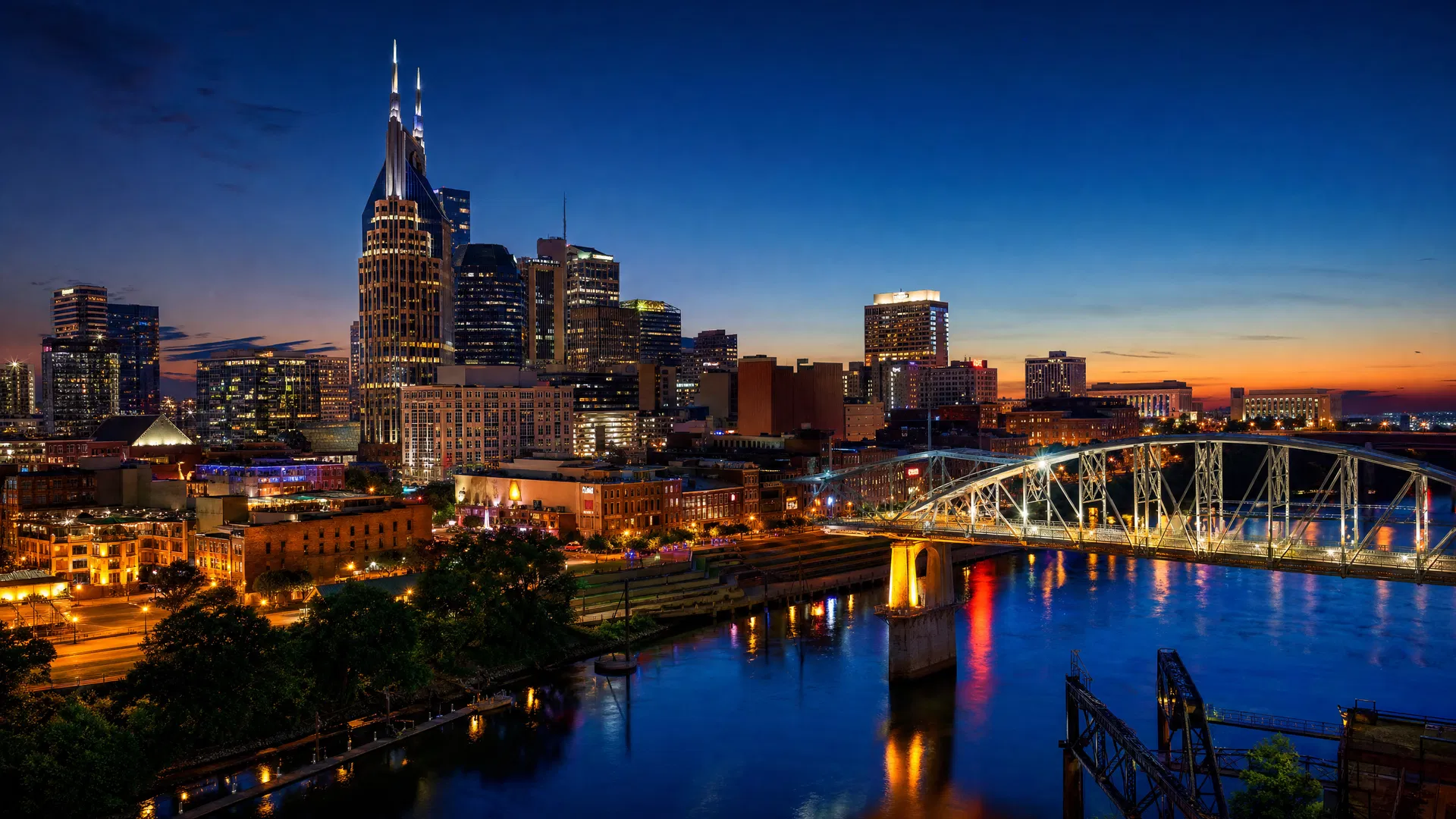
Nashville Isn't What You Think It Is. That's the Whole Point.
Destination: Nashville, Tennessee
Category: Destination Guides
Nashville Isn't What You Think It Is. That's the Whole Point.
You've heard the pitch. Bachelorette parties. Cowboy boots. Honky tonks on Broadway with cover bands playing "Friends in Low Places" at 2 PM on a Tuesday. Neon signs. Pedal taverns. A city that has discovered its own marketability and leaned into it with the full force of American commercial enthusiasm.
All of that is true. And none of it is the real story.
The real story of Nashville is about a city that has been making music — serious, world-changing, culturally foundational music — for over a century, and that has somehow managed to remain a place where that music still gets made, still gets discovered, still gets argued about in bars and studios and living rooms by people who care about it the way other people care about their religion. The real story is about a city that has absorbed wave after wave of newcomers — country stars, rock musicians, songwriters, tech workers, chefs, artists — and metabolized them into something that is distinctly, stubbornly, defiantly Nashville.
The real story is that behind the bachelorette party, there is a city. And the city is extraordinary.
The Music That Made America
To understand Nashville, you have to understand what happened here in the 1950s and 1960s, and why it still matters.
The Nashville Sound — developed by producers Chet Atkins and Owen Bradley at the old RCA Studio B on Music Row — was a deliberate, calculated, and ultimately revolutionary response to the rise of rock and roll. Where early country music had been raw and regional, the Nashville Sound was polished and national: lush string arrangements, background vocals, production values that could compete with anything coming out of New York or Los Angeles. It made country music a mainstream American genre. It made Nashville the third-largest music industry city in the world, behind only New York and LA.
RCA Studio B on Music Row is still there, and it is one of the most important rooms in the history of American music. Elvis Presley recorded here. Dolly Parton recorded here. Willie Nelson, Roy Orbison, Waylon Jennings, Eddy Arnold — the list of artists who made their most important recordings in this building reads like a syllabus for American music history. You can tour it. You should tour it. Stand in the room where Elvis recorded "Are You Lonesome Tonight" and try to feel unmoved.
Music Row itself — the cluster of recording studios, publishing houses, and management companies centered on 16th and 17th Avenues South — is still a working music industry district, though it has been shrinking as development pressure converts studios into condominiums. The Country Music Hall of Fame and Museum nearby is one of the best music museums in the world: not a nostalgia trip but a serious, rigorously curated examination of how country music has shaped American culture, told through instruments, costumes, recordings, and stories that are genuinely moving.
The Ryman Auditorium — the "Mother Church of Country Music" — is the building that made Nashville what it is. Built in 1892 as a tabernacle for religious revivals, it became the home of the Grand Ole Opry from 1943 to 1974, the venue where Hank Williams, Patsy Cline, Johnny Cash, and Loretta Lynn performed for radio audiences that numbered in the millions. The acoustics are extraordinary — the building was designed for the human voice, and it shows. Catch a show here if you can. Any show. The room itself is the experience.
Broadway and Beyond: The Honky Tonk Ecosystem
Lower Broadway is the thing people mean when they say "Nashville" — the strip of honky tonk bars running from the Cumberland River toward the Ryman, each one stacked three or four stories high, each one featuring live music from noon until 3 AM, each one serving cold beer and hot chicken to crowds that range from genuine country music fans to people who have never heard a Hank Williams song in their lives.
It is, depending on your perspective, either the most fun street in America or a carefully managed simulation of fun. The answer is probably both, and the key is knowing how to navigate it.
The Tootsie's Orchid Lounge is the original — a bar that has been operating since 1960, that backed up to the Ryman stage door, that was the place where Opry performers would slip out between sets for a drink. The walls are covered in photographs and memorabilia that represent a genuine archive of country music history. The music is still good. The beer is still cold. The crowd is still a mix of tourists and locals who have been coming here for decades.
Robert's Western World is where the serious music fans go — a bar that has maintained a commitment to traditional country music (honky tonk, western swing, rockabilly) when every other venue on the strip has drifted toward pop-country and Top 40. The house band, BR549 (now Brazilbilly), plays the kind of music that would have been at home on the Opry stage in 1955. The fried bologna sandwich is not ironic.
But Broadway is only the beginning. The real Nashville music scene exists in the neighborhoods, in the clubs that don't make the tourist maps, in the venues where the next generation of country, Americana, and roots music is being made right now.
East Nashville: Where the City Actually Lives
Cross the Cumberland River from downtown and you enter a different Nashville — one that has been the city's most creative neighborhood for the past two decades and shows no signs of stopping.
East Nashville is where the songwriters live. The chefs. The visual artists. The musicians who play the Ryman on Saturday night and spend Sunday morning at a farmers market. It is a neighborhood that has gentrified significantly since the early 2000s but has retained enough of its original character — the shotgun houses, the dive bars, the community gardens — to feel like a real place rather than a lifestyle product.
The Five Points intersection is the neighborhood's social center: a cluster of restaurants, bars, and coffee shops that draws a crowd that is genuinely diverse in the way that only a neighborhood that has been through several waves of change can be. Mas Tacos Por Favor is a lunch counter that has been serving the best tacos in Nashville since before East Nashville was fashionable. The 5 Spot is a music venue that books the kind of acts you'll be telling people about in five years. Pharmacy Burger Parlor has a beer garden that is one of the great outdoor drinking spots in the American South.
The Shelby Bottoms Greenway runs along the Cumberland River through East Nashville, offering miles of walking and cycling paths that connect the neighborhood to downtown and to the wild, wooded stretches of the river that feel genuinely removed from the city. On a clear morning, with the skyline visible across the water and the herons standing in the shallows, it is one of the most beautiful urban landscapes in the South.
Hot Chicken: A Theology
Nashville hot chicken is not a food. It is a philosophy, a test of character, and a form of civic identity. It was invented, according to the most credible account, by Thornton Prince in the 1930s as an act of revenge — he made the chicken so spicy that his unfaithful girlfriend would suffer for her sins. She loved it. He opened a restaurant. The rest is history.
Prince's Hot Chicken Shack, still operated by the Prince family on Dickerson Pike, is the original and the standard. The chicken arrives on white bread with pickle slices — the bread is there to absorb the grease, the pickles to cut the heat. The heat levels range from plain to mild to medium to hot to extra hot to "XXX," and the XXX is not a marketing gimmick. People have cried at Prince's. People have left without finishing their food. People have driven back the next day and ordered it again.
Hattie B's is the version that made Nashville hot chicken a national phenomenon — a small chain that opened in 2012 and has since expanded to cities across the country, bringing the tradition to people who will never make it to Dickerson Pike. The chicken is excellent. The sides — pimento mac and cheese, black-eyed pea salad, banana pudding — are as important as the main event.
Bolton's Spicy Chicken & Fish is the locals' choice: a no-frills counter-service spot in East Nashville that has been serving hot chicken since 1986 and has never once cared about being discovered. The fish is as good as the chicken. The prices are a reminder of what Nashville used to cost.
The debate about which hot chicken is best is one of the city's great ongoing conversations, conducted with the seriousness of a theological dispute and the passion of a sports rivalry. Participate in it. Form opinions. Defend them.
The Gulch and Midtown: New Nashville
The Gulch is what happens when a former industrial wasteland becomes the most desirable neighborhood in a rapidly growing city. What was once a rail yard and warehouse district is now a dense cluster of restaurants, bars, boutiques, and residential towers that represents Nashville's aspirational present — the city it is becoming as it absorbs the tech workers and remote workers and lifestyle migrants who have been arriving in significant numbers since the mid-2010s.
The 12 South neighborhood nearby is the version of this that has been most successfully integrated into the city's existing fabric — a walkable commercial strip of independent restaurants, coffee shops, and boutiques that feels like a neighborhood rather than a development. Imogene + Willie is a denim brand that has become a Nashville institution, its jeans made to order in the back of the shop. Frothy Monkey is the coffee shop that anchors the neighborhood's morning routine. The Sevier Park farmers market on Saturday mornings draws a crowd that represents the city's new demographics with a completeness that no other single event can match.
Midtown — the stretch of West End Avenue between Vanderbilt University and the Gulch — is where Nashville's restaurant scene has concentrated its most ambitious cooking. The city has become, somewhat to its own surprise, a serious food city: not just hot chicken and meat-and-three, but restaurants doing genuinely sophisticated work with Southern ingredients and global techniques. The Catbird Seat (when it's open) is the most acclaimed; Chauhan Ale & Masala House, run by Top Chef alum Maneet Chauhan, is the most fun; Henrietta Red is the oyster bar that made Nashville realize it had an oyster bar problem (in the best possible sense).
Outdoor Nashville: The Cumberland Plateau and Beyond
Nashville sits at the edge of the Cumberland Plateau, and within an hour of downtown there is outdoor landscape that would be the defining feature of a less musically famous city.
Radnor Lake State Natural Area is 10 minutes from downtown — a 1,000-acre wildlife sanctuary with trails around a glacial lake that feels completely removed from the city surrounding it. Great blue herons, white-tailed deer, and the occasional beaver are regular sightings. The trails are genuinely beautiful and genuinely free.
Percy Warner Park and Edwin Warner Park together form one of the largest urban park systems in the United States — 3,000 acres of forest, meadow, and creek valley with miles of hiking and equestrian trails. The Mossy Ridge Trail is the most rewarding: a 4.5-mile loop through old-growth forest with views of the Nashville skyline that remind you how close the wilderness is.
Fall Creek Falls State Park, 90 minutes east of Nashville, contains the highest waterfall east of the Rocky Mountains — a 256-foot plunge into a pool that is genuinely spectacular. The park also has swimming holes, suspension bridges, and camping that makes it a worthy overnight destination.
Mammoth Cave National Park in Kentucky is three hours north and is the longest known cave system in the world — 400 miles of mapped passages, with tours ranging from easy walking routes to serious spelunking. The cave maintains a constant 54°F year-round, making it a genuine relief in the Nashville summer.
Your Ask Leif Nashville Guides
Nashville rewards the traveler who comes with a plan — not because the city is difficult to navigate, but because it is so dense with options that without some structure, you can spend a week on Broadway and miss everything that makes the city worth visiting. The Ask Leif team has built guides for every kind of Nashville trip:
The Nashville in 7 Days: Live Music, Hot Chicken, and the Soul of the American South is the comprehensive guide for travelers who want to go deep — seven days that move through every neighborhood, every music venue, every food tradition, and every day trip that makes Nashville one of America's great cities.
For those who want to explore beyond the city limits, the 4-Day Nashville Outdoor Adventure: Hiking, Caves & Waterfalls covers the Cumberland Plateau, Fall Creek Falls, and the natural landscape that most Nashville visitors never see.
The Nashville 5-Day Food, Cocktails & Live Music Deep Dive is for the traveler whose Nashville is defined by what they eat and what they hear — a guide that moves through the city's food scene and music venues with the seriousness both deserve.
The Nashville Bachelorette Party: 4-Day Honky Tonk & Hot Chicken Crawl is the guide for the trip that Nashville has become famous for — but done right, with genuine music, genuine food, and genuine experiences rather than the Instagram-optimized version.
Families will find exactly what they need in the Nashville Family Vacation: 4-Day Kids' Guide to Music City Fun — a guide that takes children's energy and attention spans seriously while ensuring that the adults don't feel like they've traded their vacation for a theme park visit.
Solo travelers will discover that Nashville is one of the great American cities for traveling alone — the music venues, the bar culture, and the city's natural sociability make it easy to meet people — with the Nashville Solo Travel Guide: 4 Days of Honky Tonks, Music Row & East Nashville.
And for the traveler on a budget, the Nashville on a Budget: 4-Day Guide to Free Music & Cheap Eats demonstrates that the city's best experiences — the honky tonks, the music history, the parks, the hot chicken — are accessible at almost any price point.
The Songwriting City
One thing that distinguishes Nashville from every other music city in the world is the primacy it gives to the songwriter. In Nashville, the songwriter is the artist. The performer is, in a sense, the delivery mechanism.
This is why Nashville has a tradition — unique in American music — of the writer's round: a format in which three or four songwriters sit in a circle on a small stage, each playing their own songs in turn, each explaining the story behind the song before they play it. The Bluebird Cafe in Green Hills is where this tradition is practiced at its highest level: a 90-seat listening room where the audience is expected to be silent, where the artists are often the people who wrote the hits you know by heart, and where the intimacy of the format creates something that is closer to a conversation than a performance.
Taylor Swift was discovered at the Bluebird. Garth Brooks was discovered at the Bluebird. The room has been the launching pad for more careers than any other venue in Nashville, and it remains, despite its fame, a place where the music is still the point.
Get tickets in advance. They sell out weeks ahead. It is worth the planning.
Before You Go: What Nobody Tells You
Nashville is not cheap anymore. The city's rapid growth has driven up prices significantly over the past decade. Budget for accommodation costs that rival major coastal cities, especially on weekends and during major events (CMA Fest in June, the NFL Draft when it comes to town, college football weekends).
The weather is genuinely variable. Nashville sits at a meteorological crossroads where cold air from the north meets warm air from the Gulf, producing weather that can change dramatically within a single day. Pack layers in spring and fall. The summers are hot and humid in a way that feels personal.
Uber and Lyft are essential. The city's public transit is limited, and the distances between neighborhoods — East Nashville, the Gulch, Music Row, 12 South — are too far to walk comfortably. Budget for ride-sharing, or rent a car if you're planning day trips.
The music is everywhere, not just on Broadway. The best live music in Nashville happens in small venues, listening rooms, and bars that don't advertise. Ask locals where they're going. Follow the Nashville Scene's music listings. Wander into places that look interesting. The city rewards curiosity.
Come hungry. Nashville's food scene has expanded so rapidly and so ambitiously that it is genuinely difficult to eat badly here if you're paying attention. The meat-and-three tradition (a protein and three sides, served cafeteria-style at lunch) is the city's most democratic food institution — Arnold's Country Kitchen on 8th Avenue is the standard-bearer — and it is as important to understanding Nashville as any honky tonk.
The City That Keeps Making Music
There is a moment that happens to almost every visitor to Nashville, usually on the second or third day, when the city stops being a destination and starts being a place. It happens at different times for different people — maybe at the Ryman during a show that turns out to be better than you expected, maybe at a writer's round at the Bluebird when a songwriter explains the story behind a song you've heard a hundred times and suddenly understand for the first time, maybe at a hot chicken counter at midnight when the heat is making your eyes water and the person next to you is laughing and the jukebox is playing something old and perfect.
In that moment, Nashville stops being the city you've seen in the bachelorette party photos and becomes something else: a city that has been making music for a hundred years and plans to make it for a hundred more, that has survived every wave of commercialization and come out the other side still recognizably itself, that contains within its honky tonks and recording studios and songwriting circles and East Nashville bars a living tradition that is as vital and as American as anything this country has produced.
The bachelorette parties are real. The pedal taverns are real. The neon signs are real.
But so is the music. And the music is what you'll remember.
Ready to plan your Nashville trip? Create your personalized Nashville itinerary with Ask Leif — built by travelers, for travelers.