1,200 Islands. You'll See Three. Here's How to Choose the Right Ones.
Destination: Maldives
Category: destination-guide
There is a version of the Maldives that exists in the collective imagination — overwater bungalows, impossibly blue water, two people alone on a sandbar with champagne — and then there is the actual Maldives, which is stranger, more democratic, more logistically complex, and ultimately more interesting than the brochure suggests. The gap between those two versions is where most travel writing about this place fails, and it is where this guide begins.
The Maldives is an archipelago of 1,200 coral islands scattered across 90,000 square kilometers of the Indian Ocean, southwest of India and Sri Lanka. Twenty-six natural atolls. A population of around 500,000 people, most of them concentrated on the capital island of Malé, which is one of the most densely populated places on earth — a city of 200,000 people on an island two kilometers long. The country sits entirely within two meters of sea level, making it the lowest-lying nation on earth and the one most immediately threatened by rising seas. The Maldivian government has been buying land in Australia and Sri Lanka as a contingency. This is not a footnote. It is the central fact of the place.
None of this appears in the resort brochures. The brochures show the water, which is real and genuinely that color, and the bungalows, which are real and genuinely that beautiful, and the fish, which are real and genuinely that abundant. The brochures are not lying. They are simply showing you one version of a place that contains many.
This guide will show you more of them.
Understanding the Maldives Before You Book
The single most important thing to understand about the Maldives is that it is not one destination. It is a collection of destinations organized by atoll, and the experience you have depends almost entirely on which atoll you choose, which island within that atoll, and what kind of accommodation you select. Getting this decision right before you book is the difference between the trip of your life and an expensive disappointment.
The three types of Maldivian islands:
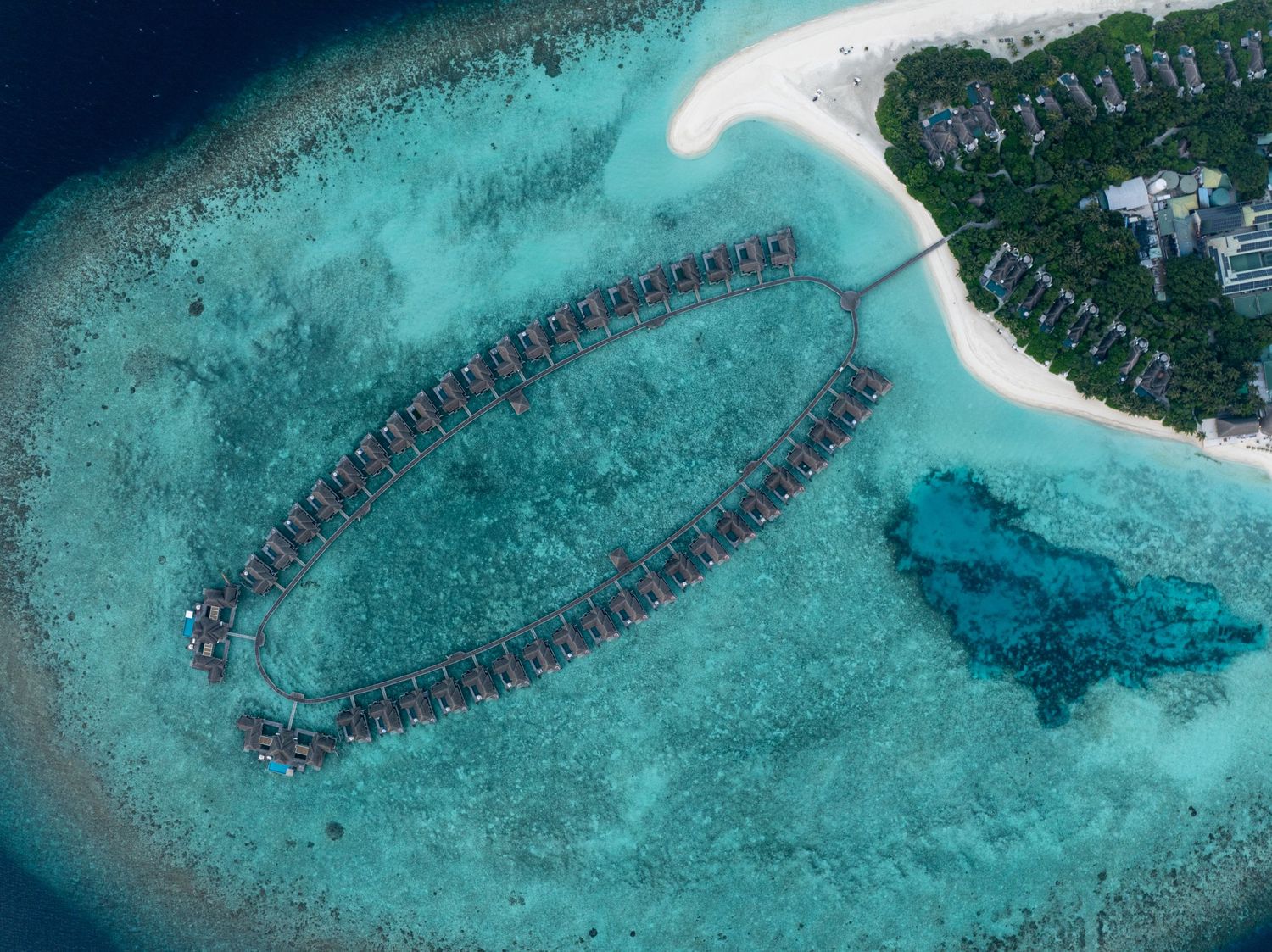
Resort islands are private — one island, one resort, no local population. These are the overwater bungalow islands of the brochures. They range from the merely expensive to the genuinely stratospheric (the most expensive resorts charge $5,000–$15,000 per night), and they offer a level of service and physical beauty that is hard to argue with. Alcohol is served. The beaches are immaculate. The house reef is usually excellent for snorkeling and diving. You will not leave the island unless you take an excursion. This is either the point or the problem, depending on who you are.
Local islands are inhabited by Maldivian communities and have been open to independent tourism since 2009, when the government lifted the restriction that previously required tourists to stay on resort islands. This change transformed the Maldives for budget and mid-range travelers. Guesthouses on local islands offer the same turquoise water and white sand at a fraction of the resort price, with the added dimension of actual Maldivian culture, local food, and the experience of being somewhere rather than merely consuming it. Alcohol is not available on local islands (the Maldives is a Muslim country), but most guesthouses can arrange day trips to nearby resort sandbar islands where it is.
Liveaboard boats are the choice for serious divers — floating accommodations that move between dive sites across multiple atolls over 7–14 days, accessing reefs that day-trip boats cannot reach. If diving is the primary reason you are going to the Maldives, a liveaboard is the correct answer.
The Atolls: A Practical Geography
The Maldives is divided into 26 natural atolls, which the government has reorganized into 20 administrative atolls for practical purposes. For travelers, the relevant distinction is proximity to Malé (and therefore transfer cost and time) and the specific character of each atoll's reefs, marine life, and local islands.
North Malé Atoll is the most accessible — it surrounds the capital and contains the airport island of Hulhulé. The resorts here are 20–45 minutes by speedboat from the airport, which keeps transfer costs reasonable. The diving is good but not exceptional by Maldivian standards. This is where many first-time visitors end up, and it is a perfectly fine choice, though not the most interesting one.
South Malé Atoll is slightly further but offers better diving, particularly around the Vadhoo Channel, which is famous for bioluminescent plankton — the "sea of stars" phenomenon where the breaking waves glow blue at night. This is real, not a photographic trick, and it is one of the most extraordinary natural phenomena you will encounter anywhere.
Ari Atoll (North and South) is where the serious marine life begins. Whale sharks are present year-round in South Ari, concentrated around a protected zone near Dhigurah island — this is one of the most reliable places on earth to snorkel with whale sharks, and it is accessible from local island guesthouses rather than only from resorts. Manta rays are abundant throughout Ari Atoll. The diving here is consistently ranked among the best in the Indian Ocean.
Baa Atoll is a UNESCO Biosphere Reserve and the location of Hanifaru Bay, where manta rays aggregate in numbers that are almost impossible to describe — during the southwest monsoon (June–November), hundreds of mantas feed simultaneously in the bay in a vortex feeding behavior that has no parallel anywhere in the world. Access to Hanifaru Bay is restricted and managed, but it is accessible from local island guesthouses on Dharavandhoo, which is one of the best-value bases in the entire Maldives.
Laamu Atoll and Addu Atoll are in the far south, requiring a domestic flight from Malé. They are less visited, more remote, and offer a different character — more authentic local culture, less tourist infrastructure, and diving that is genuinely world-class precisely because fewer people make the journey. Addu Atoll, the southernmost, has the only naturally connected chain of islands in the Maldives, linked by a causeway, and a British wartime history that left behind a WWII shipwreck that is now one of the most interesting dive sites in the country.
The Water: What Nobody Adequately Prepares You For
The color of the water in the Maldives is not a photographic enhancement. It is a function of the coral atoll structure — the shallow lagoons inside the atolls are so clear and so shallow that the white sand bottom reflects the sunlight back through the water column, producing a turquoise that has no equivalent in any other ocean environment. The deep water outside the atoll walls is a different blue entirely — a deep cobalt that shifts to indigo at depth. The boundary between the two, where the lagoon floor drops away into the open ocean, is called the channel, and it is where the marine life concentrates.
The marine biodiversity of the Maldives is extraordinary. The coral reefs here survived the 1998 bleaching event that destroyed 90% of the shallow corals across the Indian Ocean, and while subsequent bleaching events have caused damage, the deep reefs and channel walls remain among the healthiest in the world. The fish life is dense in a way that feels almost prehistoric — schools of yellowfin tuna, Napoleon wrasse the size of small cars, reef sharks patrolling the channel walls, eagle rays gliding in formation, and the occasional hammerhead in the deeper channels of the outer atolls.
Snorkeling from the beach of a local island guesthouse in Ari Atoll will put you in the water with blacktip reef sharks within minutes. This is not a special excursion. It is Tuesday morning before breakfast.
How to Do the Maldives Without Spending $3,000 a Night
The perception that the Maldives is exclusively for the ultra-wealthy is one of the most persistent myths in travel, and it has been false since 2009. The local island guesthouse economy has created a genuine mid-range option that delivers the essential Maldivian experience — the water, the reefs, the marine life, the sunsets — at a price point that is comparable to a mid-range beach holiday in Southeast Asia.
The mechanics: fly into Velana International Airport in Malé, take a speedboat transfer to a local island (typically $20–$60 each way depending on distance), and stay in a guesthouse that charges $80–$200 per night for a room with air conditioning, a beach, and a house reef. Meals at local restaurants cost $8–$20. Day trips to sandbar islands, snorkeling excursions, and whale shark tours are $30–$80 per person. A week in the Maldives on a local island, including flights from most Asian cities, can be done for under $2,000 per person. From Europe or North America, add the cost of the long-haul flight.
The tradeoffs are real: no alcohol on the island itself (though most guesthouses can arrange trips to nearby resort sandbar islands where it is available), less polished service than a resort, and a more authentic but less curated experience. For many travelers, these are not tradeoffs at all. They are the point.
The best local island bases by atoll:
Maafushi (North Malé Atoll) is the most developed local island for tourism — the most guesthouses, the most excursion operators, the most infrastructure. It is the easiest introduction to local island travel and the best choice for first-timers who want to ease in. The diving is not exceptional by Maldivian standards but is perfectly good.
Dhigurah (South Ari Atoll) is the base for whale shark encounters in the protected zone. A long, narrow island with a beautiful beach, a handful of excellent guesthouses, and the best whale shark snorkeling in the world accessible by a 10-minute boat ride. This is the single best-value destination in the Maldives for marine life.
Dharavandhoo (Baa Atoll) is the gateway to Hanifaru Bay and the manta ray aggregations. Smaller and quieter than Maafushi, with fewer tourists and a more genuine local character. The guesthouses here are excellent and the manta ray season (June–November) is one of the great wildlife experiences on earth.
Fuvahmulah (its own atoll, technically) is for advanced divers only — a single island with no lagoon, surrounded by deep open ocean, where tiger sharks, thresher sharks, and oceanic manta rays are encountered at a frequency that is almost unbelievable. The currents are strong and the diving is challenging, but the reward is a marine life density that has no equivalent in the Indian Ocean.
For a comprehensive guide to planning the full luxury experience — the overwater villas, the private transfer seaplanes, the resort dining — the Maldives Luxury Honeymoon: 7-Day Overwater Villa & Sunset Cruise Itinerary guide is the most detailed resource we have built for this. And for couples who want the romance without the resort price tag, the Maldives for Couples: 7-Day Overwater Villa & Snorkeling Paradise Itinerary guide covers the mid-range couples experience in full.
The Overwater Bungalow: Is It Worth It?
Yes. But with conditions.
The overwater bungalow is the defining image of the Maldives, and the experience of sleeping in one — the glass floor panel revealing the reef below, the private deck with steps directly into the lagoon, the sound of the water at night, the sunrise from a position that is technically over the Indian Ocean — is genuinely extraordinary and not replicable anywhere else on earth at the same quality level. If you can afford it and the experience matters to you, do it.
The conditions: not all overwater bungalows are created equal. The most important variable is the house reef — the quality of the coral and marine life directly accessible from your bungalow. Some resorts have exceptional house reefs where you can snorkel from your deck and encounter reef sharks, rays, and dense fish life within meters of your steps. Others have degraded or distant reefs where the snorkeling is mediocre and the marine life is accessed only by boat excursion. Research the house reef quality before booking. The second variable is the orientation of the bungalow — east-facing bungalows get sunrise over the water, west-facing get sunset. Both are spectacular. Know which you are booking.
The resorts that consistently deliver on the promise: Gili Lankanfushi (North Malé Atoll, exceptional house reef, no shoes policy, the most relaxed luxury in the Maldives), Soneva Fushi (Baa Atoll, the original eco-luxury resort, extraordinary food, access to Hanifaru Bay), Four Seasons Landaa Giraavaru (Baa Atoll, the best dive program in the Maldives, manta ray conservation center), and Kandolhu Island (Ari Atoll, small and intimate, 30 villas, exceptional house reef, whale shark access).
When to Go: The Monsoon Question
The Maldives has two seasons defined by the monsoon: the northeast monsoon (dry season, November to April) and the southwest monsoon (wet season, May to October). The dry season is the peak season — calmer seas, clearer water, better visibility for diving and snorkeling, and the best weather for beach time. The wet season brings more rain, stronger winds, and occasionally rough seas, but it also brings the manta ray aggregations at Hanifaru Bay, the whale shark concentrations in Ari Atoll, and significantly lower prices at both resorts and guesthouses.
The honest answer is that the Maldives is worth visiting in any month, and the "wet season" is not the monsoon deluge that the name implies — it is more accurately described as a season of passing showers and occasional squalls, with plenty of sunshine between. The diving visibility is actually better in the wet season in some atolls because the plankton blooms that attract the mantas and whale sharks also create the conditions for exceptional pelagic diving.
The worst time to visit is during the transition months of April–May and October–November, when the weather is most unpredictable. The best value is June–August: wet season prices, manta ray season, and the whale shark window in Ari Atoll all coincide.
The Maldivian Culture That the Resorts Don't Show You
The Maldives has been inhabited for at least 2,500 years, with a culture that is distinct from its South Asian neighbors and shaped by its position at the crossroads of Indian Ocean trade routes. The Maldivians are a seafaring people — the dhoni, the traditional wooden boat with its distinctive curved bow, is the national symbol and still the primary mode of inter-island transport. The language, Dhivehi, is related to Sinhala but has absorbed Arabic, Portuguese, and English vocabulary across centuries of contact. The religion is Sunni Islam, practiced with a gentleness and hospitality that is characteristic of island cultures.
The capital Malé is worth a day of exploration that most resort visitors skip entirely. The Friday Mosque (Hukuru Miskiy), built in 1658 from coral stone, is one of the oldest and most beautiful buildings in the Indian Ocean. The National Museum, housed in a former sultan's palace, contains artifacts from the pre-Islamic period including the Buddha statues that the Taliban-influenced extremists destroyed in 2012 — the empty pedestals are a sobering reminder of what was lost. The fish market on the waterfront, where the morning's catch is auctioned in a chaos of yellowfin tuna and reef fish, is one of the most vivid scenes in the country.
The local islands offer a different kind of cultural access — the chance to eat Maldivian food (mas huni, the breakfast of shredded smoked tuna with coconut and onion, is one of the great breakfasts of the world), to watch the evening bodu beru drumming performances that have roots in East African musical traditions brought by enslaved people centuries ago, and to understand that the Maldives is not only a backdrop for honeymoon photographs but a living culture with a history, a literature, and a future that is genuinely uncertain.
Practical Maldives: The Details That Matter
Getting there: Velana International Airport in Malé receives direct flights from major hubs including Dubai, Singapore, Kuala Lumpur, Colombo, and Delhi. From Europe, connections through Dubai or Doha are the most common. From North America, the routing is typically through the Middle East or Singapore.
Getting to your island: From Malé, transfers are by speedboat (20 minutes to 2 hours depending on atoll), seaplane (15–45 minutes, spectacular, expensive at $300–$600 per person each way, and only operates in daylight), or domestic flight to a regional airport followed by a speedboat. Budget travelers on local islands will almost always use speedboats. Resort guests on distant atolls will often use seaplanes, and the seaplane transfer is itself an experience worth having at least once — the view of the atolls from low altitude, the coral formations visible through the water, the landing on the lagoon.
Visa: On arrival for most nationalities, 30 days, free.
Currency: Maldivian Rufiyaa (MVR), but US dollars are accepted everywhere in tourist contexts. Resorts price everything in dollars. Local island guesthouses and restaurants accept both.
Connectivity: Good 4G coverage on inhabited islands and most resort islands. Underwater, your phone will not work, which is either a problem or the point.
Health: No vaccinations required. The water on resort islands is desalinated and safe to drink. On local islands, drink bottled water. Sun protection is critical — the equatorial sun is more intense than most visitors expect, and the reflection off the water amplifies it. Reef-safe sunscreen only; the coral reefs do not need your oxybenzone.
Diving certification: If you are not already certified, the Maldives is an excellent place to get your PADI Open Water certification — the conditions are ideal for beginners, the visibility is exceptional, and the marine life makes every training dive memorable. Most resorts and many local island dive centers offer certification courses.
For those planning the budget-conscious version of this trip — local islands, guesthouse stays, and the full marine life experience without the resort price tag — the Maldives on a Budget: 5-Day Local Island Hopping & Snorkeling Adventure guide maps the entire experience with specific recommendations and cost breakdowns.
The Thing About the Maldives
There is a moment that happens to almost everyone who goes to the Maldives, usually on the second or third day, when the logistics have been sorted and the jetlag has cleared and you are floating in water that is 29 degrees and so clear you can see your own shadow on the sand six meters below, and a blacktip reef shark passes underneath you with the complete indifference of a creature that has been doing this for 450 million years, and you think: I did not know it was possible for a place to be this.
That moment is real. It is not manufactured by the resort marketing departments or the travel photographers. It is a function of the place itself — the specific combination of warm, clear, shallow water, extraordinary marine biodiversity, and a sky that seems larger here than anywhere else on earth because there is nothing to interrupt it in any direction.
The Maldives will not be here forever in its current form. The sea level projections are unambiguous. The coral bleaching events are becoming more frequent. The government is building a new artificial island, Hulhumalé, to house the population when the inhabited islands become untenable. This is not a reason to avoid going. It is a reason to go now, to go thoughtfully, to choose operators who support reef conservation and local communities, and to carry the memory of what a healthy coral reef looks like into whatever conversations about climate you have for the rest of your life.
Go for the water. Stay for the sharks. Come back for the mantas.
The Indian Ocean is waiting, and it is still, for now, the most beautiful place on earth.