Lima Ate the World and Nobody Noticed
Destination: Lima, Peru
Category: Destination Guides
Lima Ate the World and Nobody Noticed
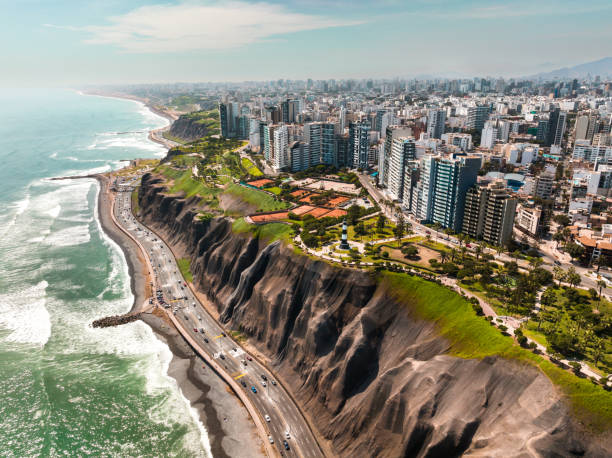
There is a city on the Pacific coast of South America that has quietly become one of the greatest food destinations on earth. It sits beneath a perpetual grey sky — a phenomenon locals call la garúa, the coastal fog that rolls in off the Humboldt Current and never quite leaves — and it sprawls across ochre cliffs above a cold, churning ocean. It is not a city that announces itself with postcard-perfect weather or a single iconic landmark. It is a city that earns you, slowly, through its food, its history, its impossible contradictions, and the particular warmth of people who have learned to build extraordinary things in difficult conditions.
Lima is Peru's capital, home to eleven million people, and it has been the gastronomic capital of the Americas for over a decade. Four of the world's fifty best restaurants are here. The street food is as sophisticated as the fine dining. The ceviche alone — the raw fish cured in lime juice with ají amarillo and red onion — is worth the flight. But to reduce Lima to its food is to miss the point, the same way you'd miss the point of New York by only talking about the pizza. The food is the entry point. What's behind it is the story.
The City That Shouldn't Exist
Lima was founded by Francisco Pizarro in 1535, on the banks of the Rímac River, on land that had been inhabited for thousands of years before the Spanish arrived. The Inca called it Limaq, after the oracle that once held court here. The Spanish built their colonial city on top of it — the grand Plaza Mayor, the Cathedral, the Archbishop's Palace, the Baroque churches that still stand in the historic center — and then proceeded to make Lima the most important city in Spanish South America for three centuries.
What the Spanish built in Lima is genuinely extraordinary. The Historic Centre, a UNESCO World Heritage Site, is one of the best-preserved colonial urban cores in the hemisphere. The Plaza Mayor is the heart of it: the Government Palace on one side, the Cathedral on another, the Archbishop's Palace with its carved wooden balconies on a third. The Cathedral holds the remains of Pizarro himself, though historians have debated for years whether the bones in the glass case are actually his. The Monastery of San Francisco nearby contains a library of 25,000 colonial-era books and, beneath it, a network of catacombs holding the bones of 25,000 people — an extraordinary and slightly unsettling reminder of how many centuries of history are literally underfoot in this city.
But Lima is not a museum. It is a living, breathing, chaotic megacity that has absorbed wave after wave of migration — from the Andes, from Asia, from Africa, from Europe — and turned all of it into something that is entirely its own. The Japanese community that arrived in the late 19th century gave Lima Nikkei cuisine, a fusion of Japanese technique and Peruvian ingredients that produced dishes like tiradito (sashimi-style raw fish in ají amarillo sauce) that you cannot find anywhere else on earth. The Chinese community — the chifas — gave Lima a Chinese-Peruvian fusion tradition so embedded in the culture that chifa restaurants outnumber any other type of restaurant in the city. The African heritage of enslaved people brought to Peru by the Spanish gave Lima its music, its cajón drum, its marinera dance, and a culinary tradition that runs through the city's soul.
Miraflores: The Clifftop Neighborhood That Faces the Pacific
Most visitors to Lima base themselves in Miraflores, the upscale residential and commercial district that sits on the cliffs above the Pacific. It is safe, walkable, full of restaurants and hotels, and it has the Malecón — the clifftop promenade that runs for several kilometers above the ocean, with paragliders launching off the cliffs in the afternoon and the Pacific stretching to the horizon below.
The Malecón is where Lima reveals its most cinematic side. The cliffs drop 80 meters to the water. The ocean is cold and grey-green, pounded by surf. Paragliders drift silently overhead. At Parque del Amor, the mosaic-tiled park inspired by Gaudí, couples sit on benches facing the sea. At sunset, when the fog occasionally breaks and the sky turns orange over the water, the Malecón is one of the most beautiful urban walks in South America.
Miraflores is also where you'll find Larcomar, the shopping mall built into the cliff face — an architectural curiosity that manages to be both completely absurd and genuinely impressive — and Huaca Pucllana, the pre-Inca adobe pyramid that sits in the middle of a residential neighborhood like a time traveler who forgot to go home. The huaca dates to around 400 AD, built by the Lima culture long before the Inca arrived, and it has been partially excavated and opened to visitors. There is a restaurant at its base where you can eat ceviche while looking at a 1,600-year-old pyramid. This is Lima in a single image.
For the food that made Lima famous, Miraflores is your starting point. Central, the restaurant run by Virgilio Martínez that has held the #1 spot on Latin America's 50 Best Restaurants list multiple times, is here. Its tasting menu is organized by altitude — dishes inspired by ingredients from different elevations of Peru, from the deep ocean to the high Andes — and it is one of the most conceptually coherent and delicious meals you can eat anywhere on earth. Reservations are essential and should be made months in advance.
If Central is the summit, the rest of Miraflores is the mountain. Maido, Mitsuharu Tsumura's Nikkei restaurant, serves the Japanese-Peruvian fusion that Lima invented and the world has been trying to replicate ever since. La Mar, Gastón Acurio's cevichería, is the best introduction to Peruvian seafood for first-timers — loud, crowded, joyful, with a menu that covers every form of ceviche, tiradito, and leche de tigre imaginable. Arrive early; the wait can be long and they don't take reservations.
Barranco: Where Lima's Soul Lives
If Miraflores is Lima's polished face, Barranco is its heart. The bohemian district just south of Miraflores is where Lima's artists, musicians, writers, and intellectuals have always gathered. It is a neighborhood of painted houses, bougainvillea-draped walls, art galleries, and bars where the pisco sours are strong and the conversation goes late.
The Puente de los Suspiros — the Bridge of Sighs — is Barranco's most famous landmark, a wooden footbridge over a ravine that leads down to the ocean. The legend says that if you hold your breath crossing the bridge and make a wish, it will come true. The reality is that the bridge is beautiful, the ravine below it is lush and green, and the walk down to the sea is one of the most pleasant in the city.
Barranco's Avenida Grau and the streets around it are lined with galleries and studios. The MATE museum — the Museo Mario Testino, dedicated to the work of Lima-born fashion photographer Mario Testino — is here, in a beautifully restored colonial mansion. The Museo de Arte Contemporáneo (MAC Lima) is nearby, with a collection that traces Peruvian and Latin American contemporary art from the 1950s to the present.
But Barranco is best experienced at night. The neighborhood's bars and restaurants come alive after dark in a way that feels genuinely local rather than tourist-facing. Isolina, the taberna run by chef José del Castillo, serves the kind of traditional Peruvian home cooking — lomo saltado, aji de gallina, causa limeña — that you'd eat at a Peruvian grandmother's table, executed with the precision of a serious kitchen. The pisco sour at Ayahuasca, the bar built inside a converted Republican-era mansion, is the best version of Peru's national cocktail you will drink in Lima.
The music in Barranco on a weekend night is worth staying up for. Salsa, cumbia, chicha, and música criolla — the Afro-Peruvian guitar and cajón tradition that is Lima's own — spill out of bars and onto the streets. Lima's music scene is one of the least-known great music scenes in the world, and Barranco is where it lives.
The Food: A Deeper Education
Lima's culinary revolution did not happen by accident. It was built, deliberately and methodically, by a generation of Peruvian chefs — led by Gastón Acurio — who decided in the 1990s that Peru's extraordinary biodiversity and culinary heritage deserved to be taken seriously on the world stage. Peru has 90 of the world's 117 climate zones, more than 3,000 varieties of potato, 650 native species of fruit, and a coastline that produces some of the finest seafood on earth. The chefs took all of this and built a cuisine that is now studied in culinary schools from Tokyo to Paris.
Ceviche is the foundation. The Peruvian version — raw fish (typically corvina or sole) cured in leche de tigre, the citrus-based marinade of lime juice, ají amarillo, garlic, ginger, and red onion — is nothing like the cooked-fish versions found elsewhere in Latin America. It is bright, acidic, spicy, and finished in minutes. The leche de tigre left in the bowl is considered a hangover cure and an aphrodisiac; you will drink it. The best ceviche in Lima is not necessarily at the famous restaurants — the cevicherías in the Surquillo market and the working-class neighborhoods of La Victoria serve versions that are arguably better and cost a fraction of the price.
Lomo saltado is the dish that tells the story of Lima's Chinese-Peruvian fusion in a single plate: strips of beef stir-fried with tomatoes, onions, ají amarillo, and soy sauce, served with rice and French fries. It is a dish that could only exist in Lima, where a Chinese wok technique met a Peruvian pantry and produced something that is neither Chinese nor Peruvian but entirely its own thing.
Aji de gallina — shredded chicken in a creamy sauce of ají amarillo, bread, walnuts, and Parmesan — is Lima's great comfort food, the dish that every Limeño has eaten since childhood and that every visitor should eat at least once. Causa limeña — cold mashed yellow potato layered with avocado, tuna or chicken, and lime — is the cold appetizer that demonstrates what Peruvian cooks can do with a potato. Anticuchos — beef heart skewers marinated in ají panca and grilled over charcoal — are the street food of Lima's Afro-Peruvian tradition, sold from carts in the evening by women called anticucheras who have been perfecting their recipe for generations.
The Mercado de Surquillo is the best place to understand Lima's ingredients. The market is two buildings: one for produce (the 3,000 varieties of potato, the ají peppers in every color, the purple corn, the lucuma and chirimoya fruits), one for fish and meat (the corvina and sole for ceviche, the octopus, the conchas negras black clams from the north). Walk through both before you eat anything else in Lima and you will understand the cuisine in a way no restaurant can teach you.
The Larco Museum: The Most Beautiful Museum in South America
Before you leave Lima, you need to spend a morning at the Museo Larco in the Pueblo Libre district. The museum is housed in an 18th-century viceregal mansion built over a pre-Columbian pyramid, surrounded by gardens of bougainvillea and jasmine, and it contains the finest collection of pre-Columbian art in the world — 45,000 pieces spanning 4,000 years of Andean civilization, from the Chavín culture to the Inca.
The permanent collection is organized chronologically and covers the full sweep of Andean history: the Moche ceramics with their extraordinary portrait vessels (realistic faces modeled in clay with an expressiveness that rivals Renaissance portraiture), the Chimú gold and silver work, the Nazca polychrome textiles, the Wari tapestries, and the Inca objects that represent the civilization the Spanish destroyed. The museum's storage gallery — a long room where thousands of additional pieces are displayed on open shelves — is one of the most extraordinary rooms in any museum anywhere: you walk through it slowly, surrounded by ceramics and textiles and metalwork, and the sheer density of human creativity across four millennia is almost overwhelming.
The museum also contains the famous erotic pottery gallery — a collection of Moche ceramics depicting sexual acts with a frankness and variety that shocked the Spanish and has fascinated anthropologists ever since. The Moche used erotic imagery in ritual contexts, and the collection is presented with scholarly seriousness rather than prurience. It is, by any measure, one of the most unusual museum rooms in the world.
The museum's café, in the garden, serves excellent ceviche and pisco sours. Eating lunch in the garden of the Larco Museum, surrounded by pre-Columbian sculpture and flowering trees, is one of Lima's most civilized experiences.
Lima After Dark: Pisco, Music, and the Long Peruvian Night
Lima does not go to sleep early. The city's nightlife reflects its culinary ambition — the same energy and creativity that goes into the food goes into the bars, the music venues, and the late-night culture that keeps the city alive until 4 AM on weekends.
The pisco sour is Peru's national cocktail and the correct way to begin any evening in Lima. Made from pisco (a grape brandy produced in Peru and Chile, with the two countries maintaining a passionate dispute about which version is authentic), lime juice, simple syrup, egg white, and Angostura bitters, it is simultaneously refreshing and potent. The best version in Lima is a matter of fierce local debate. The bar at the Hotel Maury in the historic center claims to have invented it. The bar at Ayahuasca in Barranco makes the most theatrical version. The Huaringas Bar in Miraflores makes the most consistent version. The correct answer is to try all three.
Música criolla — the Afro-Peruvian guitar and cajón tradition — is Lima's own music, born in the working-class neighborhoods of La Victoria and Rímac from the fusion of Spanish guitar, African rhythm, and indigenous melody. The cajón, the wooden box drum that is now used in flamenco and jazz worldwide, was invented in Lima by enslaved Africans who used packing crates as percussion instruments. The best place to hear música criolla performed live is at a peña — a traditional music venue — and the best peñas are in Barranco and the historic center. La Candelaria in Barranco is the most famous, with performances on weekend nights that go until the early hours.
The Circuito Mágico del Agua in Parque de la Reserva is a more unexpected evening option: a park of illuminated fountains, including the Fuente Mágica, which holds the Guinness World Record for the largest fountain complex in the world. The light shows after dark are genuinely spectacular and entirely free — a reminder that Lima's pleasures are not all expensive.
San Isidro: Lima's Financial District and Its Hidden Huaca
San Isidro, Lima's financial and diplomatic district, sits between Miraflores and the historic center. It is where the embassies are, where the luxury hotels cluster, and where Lima's business elite lives and works. It is not, at first glance, a neighborhood for tourists. But San Isidro contains Huaca Huallamarca, another pre-Inca pyramid — this one from the Lima culture, dating to around 200 AD — that sits in the middle of a residential block surrounded by apartment buildings. The contrast between the ancient adobe structure and the modern city around it is one of Lima's defining images.
San Isidro also contains the Bosque El Olivar, an olive grove planted by the Spanish in the 16th century that has somehow survived in the middle of the city. Walking through it on a Sunday morning, when the fog is low and the light is soft, is one of Lima's quieter pleasures.
Day Trips: The Sacred Valley Begins Here
Lima is the gateway to Peru, and the day-trip and multi-day excursion options from the city are extraordinary. The most obvious is Machu Picchu — a flight to Cusco, then the train to Aguas Calientes — but that is a minimum two-day trip and deserves its own planning.
Within day-trip range, the Pachacamac archaeological complex, 30 kilometers south of Lima, is one of the most important pre-Columbian sites on the Pacific coast. The complex was a major pilgrimage center for multiple civilizations — the Lima culture, the Wari, the Inca — over more than a thousand years, and the ruins spread across a vast desert landscape above the sea. The Inca Temple of the Sun and the Temple of Pachacamac are the highlights, and the site museum contains the extraordinary wooden idol of Pachacamac, the creator deity, that was the object of pilgrimage for centuries.
The Ballestas Islands, reachable by boat from the port of Paracas (four hours south of Lima), are sometimes called the "poor man's Galápagos" — a description that undersells them. The islands are home to Humboldt penguins, sea lions, Peruvian boobies, and thousands of other seabirds, and the boat trip out to them passes the mysterious Candelabra, a geoglyph carved into the cliff face of the Paracas Peninsula that predates the Nazca Lines and whose purpose remains unknown.
Practical Lima: What You Need to Know
When to go: Lima's weather is counterintuitive. The summer (December through April) is warm and sunny, with temperatures reaching 28°C (82°F). The winter (June through October) is cool, grey, and foggy — la garúa at its most persistent — with temperatures rarely dropping below 12°C (54°F). Most visitors prefer summer, but the fog of winter has its own beauty, and the city is less crowded.
Getting around: Miraflores, Barranco, and San Isidro are all walkable between each other. The historic center is best reached by taxi or the Metropolitano bus rapid transit system. Uber and its local equivalent InDriver are reliable and inexpensive. Avoid the informal combis minibuses unless you know the routes.
Safety: Lima has a reputation for crime that is partly deserved and partly exaggerated. Miraflores and Barranco are as safe as any major city neighborhood. The historic center requires normal urban awareness. Avoid displaying expensive jewelry or electronics, use ATMs inside banks or hotels, and take taxis from apps rather than hailing them on the street.
Language: Spanish is the language of Lima. English is spoken in tourist areas and upscale restaurants but not reliably elsewhere. A few words of Spanish go a long way and are received with genuine warmth.
Currency: The Peruvian sol (PEN). Credit cards are accepted at most restaurants and hotels in Miraflores and Barranco. Cash is essential for markets, street food, and smaller establishments.
Altitude: Lima sits at sea level, so there is no altitude adjustment needed. If you are continuing to Cusco (3,400m / 11,200ft), plan for acclimatization days.
The Guides That Will Build Your Lima Itinerary
The Ask Leif library has five Lima guides covering every type of traveler and every budget:
For couples who want to combine the food scene with Lima's most romantic neighborhoods, the Romantic Lima Getaway: A 3-Day Couples Itinerary for Foodies & Explorers covers Miraflores, Barranco, the Malecón at sunset, and the restaurants that make Lima the best food city in the Americas.
If the culinary depth of Lima is your primary reason for visiting, the Lima Foodie's Dream: 4-Day Culinary Journey Through Peru's Capital and the Lima's Culinary & Cultural Delights: A 3-Day Gastronomic Journey build itineraries around the markets, the cevicherías, the fine dining, and the street food that no other city on earth can match.
Traveling with children? The Lima Family Adventure: 4-Day Itinerary for Kids & Parents navigates the huacas, the Larco Museum, the Larcomar, and the food that even picky eaters will love.
And for the traveler who wants to experience everything Lima offers without breaking the bank, the Lima on a Budget: 4-Day Cheap Eats & Free Sights Guide proves that the best of Lima — the markets, the ceviche, the colonial center, the Malecón — costs almost nothing.
Why Lima Now
The world discovered Lima's food scene a decade ago. The world has not yet fully discovered Lima itself. The city still feels, to most international travelers, like a layover before Cusco — a place you pass through on the way to Machu Picchu. This is the great misunderstanding of South American travel, and it is slowly being corrected.
Lima is a city of eleven million people that has survived conquest, earthquake, revolution, and economic collapse and emerged with its culture intact and its cuisine elevated to an art form. It is a city where a 1,600-year-old pyramid sits in the middle of a residential neighborhood and nobody thinks this is unusual. It is a city where the fog rolls in every morning off the Pacific and the chefs go to the market anyway, because the corvina is fresh and the ají amarillo is perfect and there is a city to feed.
The garúa will be there when you arrive. The ceviche will be waiting. Lima will earn you, slowly, the way it earns everyone who gives it the time it deserves.
Go. Stay longer than you planned. Eat everything.