Hong Kong Doesn't Care What You Think of It — and That's Exactly Why You'll Fall in Love
Destination: Hong Kong
Category: Destination Guides
Hong Kong Doesn't Care What You Think of It — and That's Exactly Why You'll Fall in Love
Nobody warns you about the feeling.
They warn you about the crowds, the humidity, the cost of a hotel room the size of a generous closet. They warn you about the pace — that particular brand of kinetic, shoulder-to-shoulder urgency that makes Manhattan feel like a Sunday afternoon in the countryside. They warn you that the food is incredible, that the skyline is jaw-dropping, that the MTR is the finest metro system on earth.
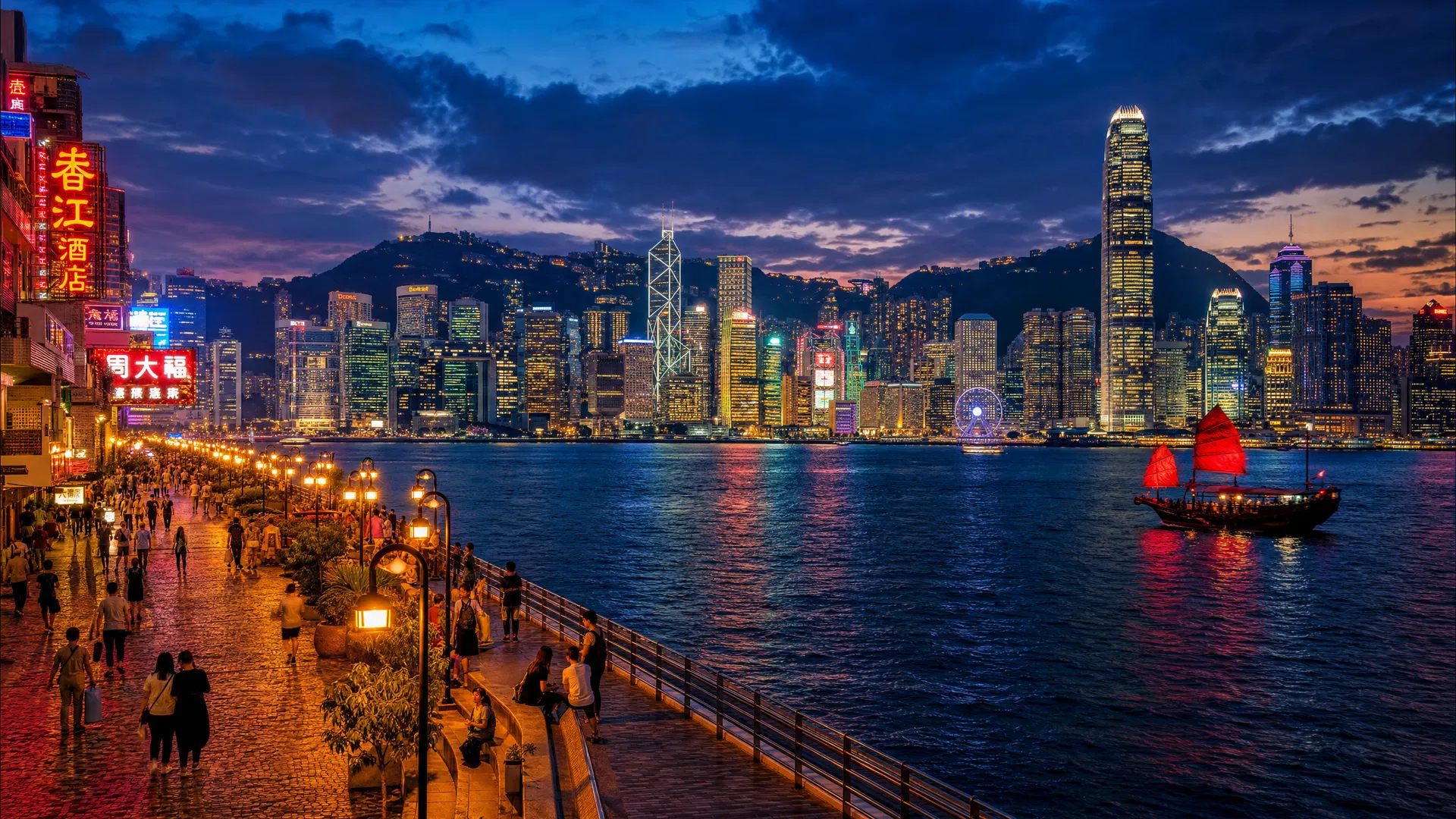
What nobody warns you about is the feeling that hits you somewhere around day two, when you're standing on the Tsim Sha Tsui waterfront at 8:05 PM watching the Symphony of Lights laser show bounce off the towers of Hong Kong Island, and you realize with complete certainty that this city has not been performing for you. It has not been trying to impress you. It has simply been itself — relentlessly, unapologetically, magnificently itself — and you have had the extraordinary privilege of witnessing it.
Hong Kong does not need your approval. It has been here for centuries, a trading post turned colonial outpost turned global financial capital turned something that defies every category you try to put it in. It is simultaneously the most Chinese city outside of mainland China and the most international city in Asia. It is a place where you can eat a bowl of wonton noodles that has been made the same way for sixty years in a restaurant with plastic stools and fluorescent lighting, then walk three minutes and sit in a Michelin-starred dining room with a wine list that would make a Parisian sommelier weep. It is a city that contains multitudes so vast and so contradictory that the only honest response is to stop trying to understand it and simply let it happen to you.
This is that guide. Not a checklist. Not a highlights reel. A genuine attempt to explain what Hong Kong actually is — and why, once you go, you will spend the rest of your life trying to get back.
The City That Refuses to Be One Thing
Hong Kong is technically one city, but it is really four distinct worlds stacked on top of each other, separated by water, altitude, and about a century of accumulated character.
Hong Kong Island is the one you've seen in every film. The skyline. The Peak. Central's glass towers and the Mid-Levels escalator — the longest outdoor covered escalator system in the world, a 800-metre moving walkway that carries office workers uphill in the morning and sends them back down in the evening, passing through a neighbourhood that has quietly become one of the best places to eat and drink in the entire city. The Island is where the money lives, where the banks are headquartered, where the colonial history is most visible in the street names and the architecture of the former Government House.
Kowloon is where Hong Kong's soul lives. Nathan Road, the so-called "Golden Mile," runs north from the harbour through Tsim Sha Tsui, Jordan, Yau Ma Tei, and Mong Kok — a continuous strip of neon, noise, and humanity that is simultaneously overwhelming and completely addictive. The Temple Street Night Market. The jade market. The Ladies' Market. The best dim sum restaurants in the city, operating out of rooms that seat three hundred people and have been full every morning since before you were born. Kowloon is louder, denser, cheaper, and more honest than the Island. It is where you go when you want to feel like you are actually in Hong Kong rather than watching it from a glass tower.
The New Territories stretch north toward the mainland border and contain something that most visitors never discover: countryside. Real countryside. Hiking trails through ancient walled villages, wetlands full of migratory birds, fishing villages that have barely changed in a hundred years. The Sai Kung peninsula alone could occupy a week. The Pat Sin Leng mountain range offers trails with views that would be famous if they were in Switzerland. The New Territories are Hong Kong's secret — the part of the city that the city itself seems to have forgotten to tell anyone about.
The Outlying Islands complete the picture. Lantau, the largest, is home to the airport, Disneyland, and the Tian Tan Buddha — a 34-metre bronze statue that sits on a hillside above the Ngong Ping plateau and looks out over the South China Sea with an expression of absolute serenity that feels, in context, almost pointed. But Lantau also has Tai O, a fishing village built on stilts over tidal channels, where old women sell dried seafood from boats and pink dolphins occasionally surface in the harbour. Lamma Island has no cars, excellent seafood restaurants, and a population of artists and expats who discovered it decades ago and have never left. Cheung Chau has a bun festival every May that involves towers of pink steamed buns and young men in traditional costume climbing them at speed, which is exactly as wonderful as it sounds.
Getting Around: The MTR Is Not Optional, It Is a Religion
The Mass Transit Railway is the finest public transit system in the world. This is not a subjective opinion. It is a fact that has been confirmed by every urban planning organisation that has ever studied it, and by every traveller who has ever used it after spending a week in a city with a lesser metro.
The MTR runs on time. Not "usually on time" or "on time by local standards" — on time, every time, to the minute. It is clean. It is air-conditioned to a temperature that will make you want to live in it during July and August. It connects every major attraction, neighbourhood, and transport hub in the city. The Airport Express runs from Hong Kong International Airport to Central in 24 minutes, with in-town check-in available at Hong Kong and Kowloon stations — you can drop your bags and get your boarding pass the morning of your flight, then spend the day exploring the city unburdened.
Get an Octopus card the moment you arrive. It is a contactless payment card that works on the MTR, buses, trams, ferries, and in most convenience stores, supermarkets, and fast food restaurants. It is the single most useful object you will carry in Hong Kong.
The Star Ferry deserves its own paragraph. The green-and-white double-decker ferries that cross Victoria Harbour between Tsim Sha Tsui and Central have been running since 1888, and the crossing — seven minutes, a few Hong Kong dollars, one of the great short journeys of the world — offers a view of the Hong Kong Island skyline that no photograph has ever adequately captured. Take it at dusk. Take it again at night. Take it in the morning when the harbour is quiet and the towers are catching the first light. Take it as many times as you can, because it is one of those rare travel experiences that gets better every time rather than diminishing through repetition.
The trams on Hong Kong Island are another institution. The double-decker trams that run along the northern shore of the Island from Kennedy Town to Shau Kei Wan are the slowest way to travel in Hong Kong and, paradoxically, one of the best. Sit on the upper deck at the front. Watch the city scroll past at walking pace. Pay the HK$3 flat fare when you exit. This is how Hong Kong used to move, and it still moves this way, right alongside the MTR and the taxis and the Uber drivers, because Hong Kong does not discard things that work.
The Food: A Civilisation Built Around Eating
There is a phrase in Cantonese — sik fan — that literally means "eat rice" but functions as a general greeting, a check-in, a way of asking how someone is doing. The implication is that if you have eaten, you are well. If you have not eaten, something has gone wrong. This is not a metaphor. This is a philosophy.
Hong Kong has more restaurants per capita than almost any city on earth. It has more Michelin stars per square kilometre than Paris. It has a food culture so deep and so specific that it has its own vocabulary, its own rituals, its own hierarchy of establishments that locals navigate with the confidence of people who have been eating seriously since childhood — because they have.
Dim sum is the obvious starting point, and it is obvious because it is genuinely one of the great culinary experiences available to a human being. The ritual of yum cha — "drink tea" — involves arriving at a restaurant in the morning or at lunch, ordering pot after pot of tea, and selecting small dishes from carts or order sheets: har gow (steamed shrimp dumplings with translucent wrappers so thin you can see the filling), siu mai (open-topped pork and shrimp dumplings), char siu bao (barbecue pork buns, either steamed or baked), cheung fun (rice noodle rolls filled with shrimp or beef or char siu), turnip cake, egg tarts, mango pudding. The best dim sum in Hong Kong is not in the hotel restaurants. It is in the old-school yum cha palaces in Kowloon — places like Tim Ho Wan (the cheapest Michelin-starred restaurant in the world, or it was when it earned its star), or the enormous multi-floor establishments in Jordan and Yau Ma Tei where the carts are pushed by women who have been doing this for forty years and will not wait for you to make up your mind.
Wonton noodles are a separate religion. The ideal bowl contains thin egg noodles with a particular springy texture that comes from working the dough with a bamboo pole — a technique that is dying out but still practised by the best shops — in a clear pork and shrimp broth, topped with wontons whose filling is almost entirely fresh shrimp. The broth should be clean and sweet. The noodles should have bite. The wontons should be plump and delicate. There are shops in Hong Kong that have been making this bowl the same way for sixty years, and the queue outside them at 7 AM is not a tourist queue. It is the neighbourhood, eating breakfast the way they always have.
Roast meats occupy a category of their own. The siu mei shops — the ones with the lacquered ducks and slabs of char siu and whole roasted pigs hanging in the window — are everywhere, and the quality is consistently extraordinary. Char siu, the Cantonese barbecue pork, is one of the most technically demanding preparations in Chinese cuisine: the pork must be marinated, roasted, glazed, and rested in a precise sequence that produces meat that is simultaneously caramelised on the outside and impossibly tender within. The best char siu in Hong Kong is better than any char siu anywhere else in the world. This is not a controversial statement among people who have eaten it.
Cha chaan teng — the Hong Kong-style café — is where the city's colonial history and Chinese culture fused into something entirely new. These are the local diners, the places where office workers eat breakfast and students do homework and elderly men read newspapers over milk tea. The menus are enormous and eclectic: congee, toast with butter and condensed milk, instant noodles with luncheon meat, French toast fried in egg batter and served with butter and syrup, pineapple buns (no pineapple involved — the name refers to the scored sugar crust on top), Hong Kong-style milk tea made with a blend of black teas strained through a cloth filter that gives it a particular silky texture. The cha chaan teng is not a tourist attraction. It is a living institution, and eating in one is the closest thing to understanding daily Hong Kong life that a visitor can access.
For those who want to eat at the highest level, Hong Kong's fine dining scene is genuinely world-class. The restaurants in the Four Seasons, the Mandarin Oriental, and the Upper House offer cooking that competes with the best in London, New York, and Tokyo. Amber at the Landmark Mandarin Oriental, Lung King Heen (the first Chinese restaurant in the world to receive three Michelin stars), and Caprice are the names that matter. But the honest truth is that you can eat as well — and arguably better — at a HK$80 bowl of noodles in Sham Shui Po as you can at a HK$2,000 tasting menu in Central. Hong Kong is one of the rare cities where this is genuinely true.
The Neighbourhoods: Where to Actually Spend Your Time
Central and Sheung Wan form the commercial and historical heart of Hong Kong Island. The colonial architecture of the former Legislative Council building, the HSBC headquarters designed by Norman Foster, the Bank of China tower designed by I.M. Pei — these are the buildings that define the skyline from the water. Sheung Wan, just west of Central, is older and quieter, with dried seafood shops and antique dealers and the Man Mo Temple, one of the oldest temples in Hong Kong, where the air is permanently thick with incense smoke and the brass censers are always burning.
Wan Chai and Causeway Bay are where the city's energy concentrates on the Island. Wan Chai has the best wet market on the Island, a neighbourhood of old shophouses that is slowly being gentrified but still has the bones of what it was, and the Hong Kong Arts Centre. Causeway Bay is shopping — Times Square, the Japanese department stores, the small streets behind the main drag where independent retailers and restaurants operate in a density that makes browsing feel like an archaeological dig.
Mong Kok is the densest neighbourhood in one of the densest cities on earth. The population density of Mong Kok is approximately 130,000 people per square kilometre. Standing on the corner of Nathan Road and Argyle Street at 9 PM on a Saturday, surrounded by neon signs in every direction, the smell of roasting chestnuts and stinky tofu mixing in the air, the crowd moving around you like a river around a stone — this is one of the great urban experiences available to a traveller. It is not comfortable. It is not relaxing. It is absolutely, completely alive.
Sham Shui Po is the neighbourhood that food writers and chefs visit when they want to eat like a local. It is working-class, unglamorous, and home to some of the best cheap food in Hong Kong: clay pot rice shops, congee restaurants, roast meat stalls, and the street food vendors along Kweilin Street and Apliu Street. The electronics market on Apliu Street is also worth a visit — it is where the city's surplus technology ends up, in a sprawl of stalls selling everything from vintage cameras to components for building your own circuit boards.
Tai Hang is the neighbourhood that Hong Kong locals go to when they want to feel like they've escaped Hong Kong. A quiet grid of streets in the hills above Causeway Bay, Tai Hang has independent coffee shops, small restaurants, and a village-like atmosphere that is genuinely surprising given its location. The Fire Dragon Dance during the Mid-Autumn Festival — a tradition that dates back to the 1880s, when the neighbourhood burned incense to ward off a plague — is one of the most extraordinary things you can witness in Hong Kong if your timing is right.
Victoria Peak: Go, But Go Correctly
The Peak is the most visited attraction in Hong Kong, which means it is also the most mismanaged visit in Hong Kong. Here is how to do it correctly.
Do not take the Peak Tram during peak hours (roughly 10 AM to 6 PM on weekends and public holidays). The queue can exceed two hours. Instead, take bus 15 from Central Bus Terminus, which winds up the hillside through the residential streets of the Mid-Levels and deposits you at the Peak Tower for a fraction of the price and none of the wait.
Do not go to the Sky Terrace 428 observation deck at the top of the Peak Tower. It costs money, it is crowded, and the view from the free viewing area immediately outside the tower is essentially identical. The best view of the harbour is from Lugard Road, a flat path that circles the Peak and offers unobstructed panoramas of both sides of the island. Walk it at dusk. The city below you will be transitioning from afternoon gold to evening neon, and the harbour will be catching the last of the light, and you will understand, perhaps for the first time, what people mean when they say Hong Kong is beautiful.
If you are visiting in clear weather, the hike from the Peak down to Aberdeen via the Wilson Trail is one of the finest urban hikes in the world: a descent through secondary forest with views of the harbour, the outlying islands, and the South China Sea, ending at a fishing village that still has a working typhoon shelter full of traditional wooden boats.
The Markets: Where Hong Kong's Character Lives
Temple Street Night Market in Yau Ma Tei is the quintessential Hong Kong night market experience. It runs from roughly 6 PM to midnight, and it sells everything: cheap electronics, jade jewellery, counterfeit watches, Cantonese opera singers performing for small crowds in the middle of the street, fortune tellers who will read your palm or your face or the lines of your hand for a few dollars, and some of the best street food in the city — claypot rice, grilled seafood, stinky tofu, and the particular Hong Kong-style curry fish balls that are simultaneously terrible and completely addictive.
Jade Market in Yau Ma Tei operates in the morning, under a flyover, in a collection of canvas-covered stalls that sell jade in every form: raw stones, carved pendants, bangles, rings, and the kind of elaborate carved pieces that take months to produce. You do not need to know anything about jade to enjoy the Jade Market. You just need to enjoy the spectacle of it — the dealers examining stones with jewellers' loupes, the negotiations conducted in rapid Cantonese, the sheer variety of green.
Cat Street (officially Upper Lascar Row) in Sheung Wan is the antiques market, a collection of shops and stalls selling everything from genuine Qing dynasty ceramics to Cultural Revolution-era propaganda posters to vintage Hong Kong film memorabilia. The line between antique and reproduction is not always clear, and the dealers know this and price accordingly. But the browsing is excellent, and occasionally you find something genuinely extraordinary.
Hiking: The Secret Hong Kong
This is the thing that surprises people most: Hong Kong has more than 260 kilometres of marked hiking trails, and some of them are genuinely world-class.
The MacLehose Trail runs 100 kilometres across the New Territories from Sai Kung in the east to Tuen Mun in the west, through country parks, over mountain ridges, and along coastlines that look nothing like what most people imagine when they think of Hong Kong. The trail is divided into ten stages, and even completing one or two stages gives you access to a version of Hong Kong that most visitors never see.
The Dragon's Back trail on the southeastern tip of Hong Kong Island is the most accessible of the serious hikes — a two-hour walk along a ridge with views of the South China Sea on one side and the city on the other, ending at Shek O beach, where you can swim and eat seafood and feel like you have escaped to a different country entirely.
The Lantau Trail circles Lantau Island for 70 kilometres, passing through the Ngong Ping plateau, over the twin peaks of Lantau Peak and Sunset Peak, and through the remote coastline of the island's southern shore. The section between Mui Wo and Tung Chung, via Lantau Peak, is one of the finest day hikes in Asia.
Practical Matters: What You Actually Need to Know
When to go: October to December is the sweet spot. The humidity drops, the skies clear, and the temperature settles into a range (18–25°C) that is genuinely comfortable for walking. January and February are cooler and occasionally cold by Hong Kong standards, but still pleasant. March to May brings haze and increasing humidity. June to September is typhoon season — hot, humid, occasionally disrupted by storms, but also when the city is at its most vivid and the beaches are actually usable.
Where to stay: The Peninsula Hotel in Tsim Sha Tsui is the most famous hotel in Hong Kong and one of the great hotels of the world — a 1928 building with a fleet of Rolls-Royces, a lobby that has been the meeting point of Hong Kong society for nearly a century, and a rooftop bar with a view of the harbour that justifies the price of a drink. For something more contemporary, the Upper House on Hong Kong Island is the finest modern hotel in the city. For budget travellers, the guesthouses in Chungking Mansions — the enormous mixed-use tower in Tsim Sha Tsui that contains hundreds of small hotels, restaurants, currency exchange booths, and businesses from across South Asia and Africa — offer the most interesting accommodation experience in Hong Kong, if not the most comfortable.
Money: Hong Kong uses the Hong Kong Dollar (HKD), pegged to the USD at approximately 7.8:1. The city is expensive by Asian standards but not by global city standards. A good meal at a local restaurant costs HK$80–150. A taxi across the harbour costs HK$30–50. A hotel room in a decent mid-range property costs HK$800–1,500. The MTR is extraordinarily cheap for what it offers.
Language: Cantonese is the primary language, but English is widely spoken — Hong Kong was a British colony until 1997, and English remains an official language. In tourist areas, restaurants, and hotels, you will have no difficulty communicating in English. In local markets and older neighbourhoods, a few words of Cantonese (and a willingness to point) will take you far.
The Itineraries: Where to Begin
The guides in our Hong Kong library cover the full range of ways to experience the city — from a focused 3-day first visit to Hong Kong that hits the essential experiences without overwhelming you, to a 5-day deep dive that gets into the neighbourhoods, the hiking trails, and the food culture that most visitors miss entirely.
If you are travelling with family, the Hong Kong family itinerary balances the city's big-ticket attractions — the Peak, the Big Buddha, Disneyland — with the kind of neighbourhood wandering and market visits that make children feel like they are actually experiencing a place rather than being processed through it.
For those who want to combine Hong Kong with the rest of the region, the guides covering Hong Kong and Macau and Hong Kong as a gateway to Southeast Asia offer frameworks for building a broader trip around the city.
The Question Everyone Asks
Is Hong Kong still worth visiting?
This question has been asked more frequently since 2019, and it deserves a direct answer: yes. Unambiguously, completely, yes.
The political changes of recent years are real, and they have changed aspects of the city's public life. But they have not changed the food. They have not changed the harbour view. They have not changed the MTR, the Star Ferry, the night markets, the hiking trails, the dim sum restaurants, or the particular quality of light on Victoria Harbour at dusk. They have not changed the fact that Hong Kong is one of the most extraordinary concentrations of human energy, culinary excellence, architectural ambition, and sheer urban vitality that exists anywhere on earth.
The people who tell you Hong Kong is over have not been recently. The people who have been recently — who have eaten wonton noodles at 7 AM in a shop in Sham Shui Po, who have hiked the Dragon's Back and swum at Shek O, who have stood on the Tsim Sha Tsui waterfront at 8 PM and watched the light show — those people are already planning their return.
Hong Kong does not need your approval. But if you give it your time — really give it, not just the highlights reel but the early mornings and the back streets and the ferry rides and the markets — it will give you something back that is very difficult to name and impossible to forget.
Go. And when you're ready to build the itinerary that does it justice, Ask Leif is where you start.