Fish Tacos at Sunset, 150 Breweries, and a City That Doesn't Need Your Approval: The San Diego Guide
Destination: San Diego, California, USA
Category: destination
There is a moment that happens to almost every first-time visitor to San Diego. You arrive expecting a smaller, quieter version of Los Angeles — same beach vibes, same palm trees, same general California aesthetic, just with less traffic and fewer celebrities. And then, somewhere around the second day, usually while eating a fish taco at a picnic table overlooking the Pacific with a local craft IPA sweating in your hand and the temperature sitting at a perfect 72 degrees, you realize you've been thinking about this city completely wrong.
San Diego doesn't compete with Los Angeles. It doesn't try to. It has its own identity — quieter, more confident, less performative — and that identity is built on things that no other American city can replicate: the most biodiverse coastline in the continental United States, a craft beer culture so deeply embedded in the city's DNA that there are more breweries per capita here than almost anywhere on earth, a food scene shaped by 7,000 farms within city limits and a border with Mexico that has been producing the world's greatest fish tacos for decades, and a collection of neighborhoods so distinct from one another that you could spend a week here and feel like you've visited five different cities.
This is the guide for people who want to understand San Diego rather than just check it off a list. It's for the traveler who wants to know why North Park is better than the Gaslamp Quarter for a Saturday night, why La Jolla Cove at low tide is one of the most extraordinary wildlife experiences in America, why the fish taco debate is more serious than most political arguments in this city, and why — if you're honest with yourself — you're going to start looking at real estate listings on the flight home.
The City That Doesn't Need to Try
San Diego's great secret is that it has always been exactly what it is. While Los Angeles spent decades manufacturing its identity and San Francisco built an entire mythology around its counterculture, San Diego simply existed — a Navy town with perfect weather, a border city with extraordinary food, a place where the outdoor lifestyle wasn't a trend but a baseline assumption of daily life.
The result is a city that feels genuinely relaxed in a way that most American cities only pretend to be. The pace is slower. The people are friendlier. The traffic, while real, doesn't carry the existential weight it does 120 miles up the I-5. And the weather — 266 sunny days per year, an average year-round temperature of 70.5°F, marine layer that burns off by 10 AM most mornings — creates a quality of light and air that makes everything look slightly better than it does anywhere else.
This isn't an accident. San Diego's geography — a series of mesas and canyons dropping toward the Pacific, with Mission Bay to the north and the Coronado peninsula curving around San Diego Bay to the south — means that almost every neighborhood has some relationship with water. You are never more than 20 minutes from a beach. You are never more than 30 minutes from a canyon trail. The city is built around the assumption that you will spend time outside, and it has arranged itself accordingly.
The Neighborhoods: Where San Diego Actually Lives
Most travel guides send you to the Gaslamp Quarter. The Gaslamp is fine — it's the historic heart of downtown, with Victorian-era architecture, a dense concentration of restaurants and bars, and the kind of energy that comes from thousands of people all deciding to go out in the same 16-block area simultaneously. But it's also the most tourist-facing part of San Diego, and if you spend your entire trip there, you'll leave having seen the city's most polished surface without ever getting underneath it.
North Park is where San Diego actually lives. Walkable, dense with independent restaurants and coffee shops, home to more craft breweries per square mile than anywhere else in the city, and populated by the kind of mix of longtime residents, young professionals, and creative types that makes a neighborhood feel genuinely alive rather than curated. The stretch of 30th Street between University and Upas is the spine of the neighborhood — walk it on a Saturday afternoon and you'll pass a dozen breweries, a farmers' market, a record shop, three different taco spots, and a coffee roaster doing things with single-origin beans that would make a Portlander jealous.
Little Italy has undergone a transformation over the past decade that has made it one of the most pleasant neighborhoods in the city for an afternoon. The Saturday Mercato — one of the largest farmers' markets in California — takes over India Street every weekend, and the neighborhood's restaurant density means you can eat extraordinarily well within a four-block radius. Ballast Point's Little Italy location, with its patio overlooking the bay and its flight of Sculpin IPAs, is one of the better ways to spend a San Diego afternoon.
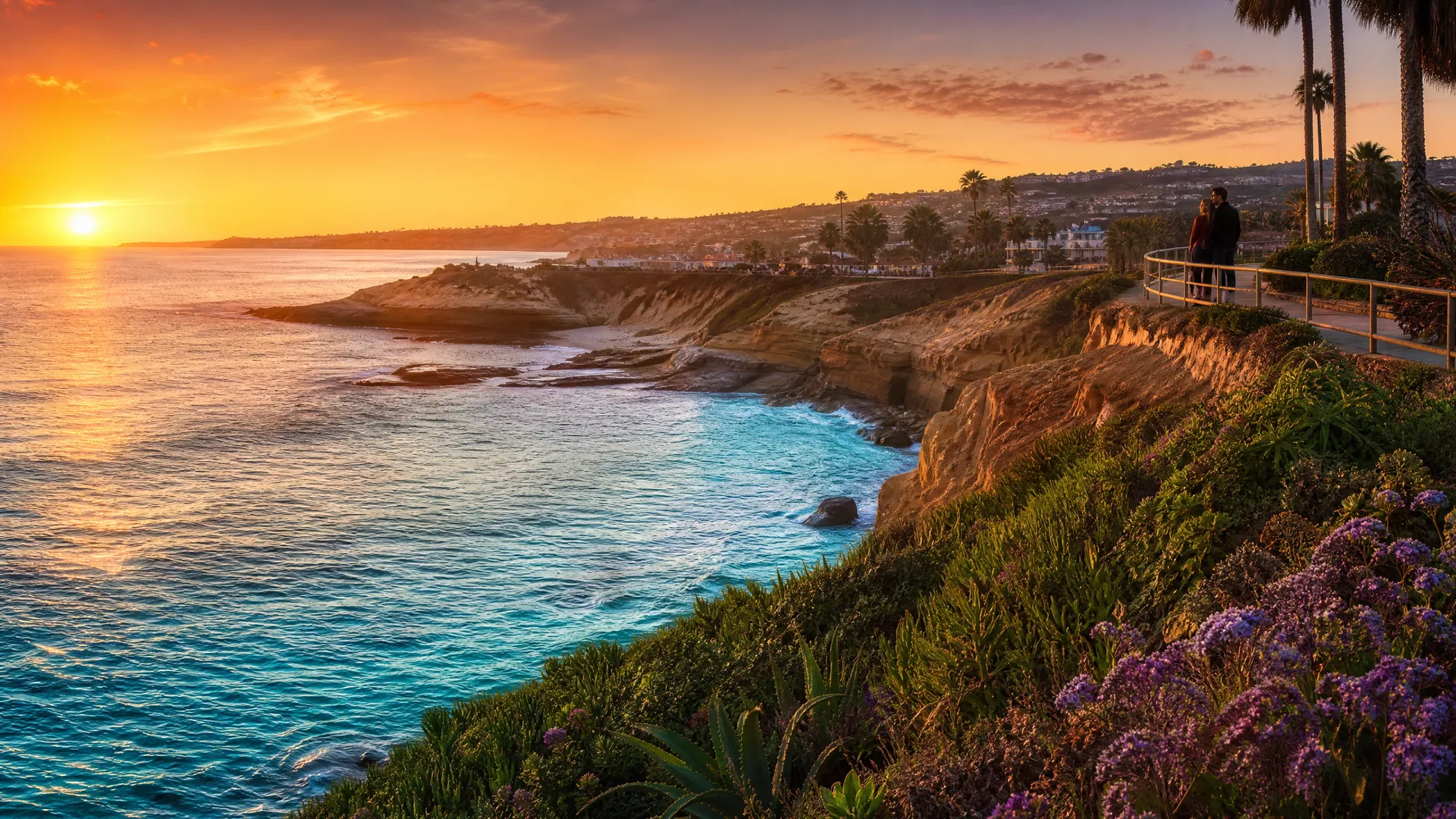
La Jolla is technically a separate community within the city, and it carries itself with the quiet confidence of a place that knows it's beautiful and doesn't need to advertise. The Cove — a protected inlet where leopard sharks congregate in the shallows from June through September, where sea lions haul out on the rocks, and where snorkelers drift over kelp forests in water so clear it looks artificially blue — is one of the most remarkable urban wildlife experiences in America. The cliffs above it, lined with restaurants and boutiques, offer views that have been making people reconsider their life choices for generations.
Ocean Beach is San Diego's most stubbornly bohemian neighborhood — a place where the surf culture of the 1960s never entirely gave way to gentrification, where Newport Avenue is still lined with vintage shops and dive bars, and where the pier stretching into the Pacific at sunset is one of the most reliably beautiful sights in the city. It's the neighborhood that most resembles what people imagine when they think of California beach culture, except it's real rather than performed.
Hillcrest is the cultural heart of the city's LGBTQ+ community and one of its most vibrant dining neighborhoods. The Sunday Farmers' Market on Normal Street is smaller and more local-feeling than the Little Italy Mercato, and the restaurant density on University Avenue — Thai, Vietnamese, Mexican, New American, and everything in between — makes it one of the best places in the city for a meal without a reservation.
The Food: A Border City's Greatest Asset
San Diego's food scene is shaped by a geographic fact that most travel writing underplays: this city shares a border with Tijuana, and that proximity has been producing extraordinary food for a very long time.
The fish taco is the obvious starting point, and the debate about who makes the best one in San Diego is the kind of argument that locals conduct with the seriousness usually reserved for matters of genuine importance. The contenders are well-established: Mitch's Seafood in Point Loma, a waterfront spot where the fish is pulled from the boats docked outside and the battered halibut taco is as close to perfect as the form allows. The Fish Shop in multiple locations, where the quality is consistent and the line is always worth it. And the dozens of taquerias along the border corridor that have been making versions of this dish since before it had a name.
But the fish taco is just the entry point. San Diego's food scene extends into territory that most visitors never reach. Liberty Station Public Market — a converted Naval Training Center in Point Loma — houses a rotating collection of food vendors under one roof, from lobster mac and cheese to hand-rolled sushi to wood-fired pizza, all available simultaneously in a space that manages to feel both grand and casual. Cesarina in Point Loma brings coastal Italian cooking to a room with a visible pasta-making station, where watching chefs transform flour and eggs into pappardelle is as much part of the meal as eating it. Morning Glory in Little Italy does brunch with the kind of theatrical presentation — towering French toast, elaborate egg dishes, cocktails that arrive in unexpected vessels — that has made it one of the most photographed restaurants in the city.
The farmers' market culture here is also worth noting. San Diego County has more farms than any other county in the United States — over 7,000 — and the produce that flows through the city's markets and restaurants reflects that. The Little Italy Mercato on Saturday mornings is the best single expression of this: 350 vendors, an extraordinary range of produce, and the kind of crowd that takes food seriously enough to arrive early and bring a canvas bag.
The Craft Beer: America's Capital, Earned
The title "America's Craft Beer Capital" gets applied to several cities, but San Diego's claim is the most defensible. The city has over 150 craft breweries — more per capita than almost anywhere in the country — and the culture around them is genuinely different from what you find in other beer cities. San Diego breweries tend to be neighborhood institutions rather than tourist attractions, places where locals go on Tuesday evenings as well as Saturday afternoons, where the patio culture is as important as the beer itself, and where the range of styles — West Coast IPAs, hazy New England-style IPAs, sours, stouts, lagers — reflects decades of experimentation rather than a single dominant aesthetic.
Ballast Point in Little Italy is the most famous, and the Sculpin IPA remains one of the definitive expressions of the West Coast style. Stone Brewing in Liberty Station is the largest, with a sprawling outdoor space and a food program serious enough to stand on its own. AleSmith in Miramar is the most decorated, with a Speedway Stout that has appeared on best-beer-in-the-world lists for years. But the most interesting drinking in San Diego happens in North Park and South Park, where smaller operations like Thorn Street Brewery, Benchmark Brewing, and South Park Brewing serve their neighborhoods with the kind of consistency and quality that doesn't require a marketing budget.
For visitors who want to understand the breadth of the scene, the North Park neighborhood is the most efficient starting point: a walkable concentration of breweries, taprooms, and beer bars within a few blocks of each other, where an afternoon of exploration can cover a dozen different operations without requiring a car.
The Outdoors: What San Diego Does Better Than Anywhere
Balboa Park is the most underrated urban park in America. At 1,200 acres — larger than Central Park — it contains 17 museums, the world-famous San Diego Zoo, multiple gardens, a Japanese Friendship Garden, an outdoor organ pavilion that hosts free Sunday concerts, and enough walking paths to spend an entire day without retracing your steps. The architecture — Spanish Colonial Revival buildings constructed for the 1915 Panama-California Exposition — gives the park a grandeur that feels genuinely European, and the Museum of Man, the Natural History Museum, and the San Diego Museum of Art are all worth serious time.
Torrey Pines State Natural Reserve is the city's most dramatic natural landscape — 2,000 acres of coastal bluffs, rare Torrey pine trees (found only here and on Santa Rosa Island), and trails that wind through canyons and along cliff edges above the Pacific. The views from the top of the bluffs, looking north toward the Torrey Pines Golf Course and south toward La Jolla, are among the best in Southern California. Go early on weekdays to avoid the crowds; the parking lot fills by 9 AM on weekends.
La Jolla Cove at low tide is a wildlife experience that most people don't realize is available in the middle of a major American city. The leopard sharks that congregate in the shallows from June through September — docile, beautiful, and completely uninterested in humans — make for snorkeling that rivals anything in the Caribbean. The sea lions on the rocks at Children's Pool, the harbor seals at the Cove, the pelicans and cormorants on the sea stacks — the density of marine wildlife here is extraordinary, and it's all free.
Mission Bay is San Diego's inland water playground — a 4,235-acre aquatic park where kayaking, paddleboarding, sailing, and cycling coexist in a space that feels both organized and genuinely relaxed. Rent a kayak from Mission Bay Sportcenter and spend a morning paddling through channels lined with waterfront homes, or cycle the 27-mile path around the bay's perimeter as the morning fog burns off.
The Guides: Plan Your San Diego Trip
San Diego rewards the traveler who comes with a plan, because the city's geography — spread across mesas and canyons, with distinct neighborhoods separated by canyons and freeways — means that spontaneous exploration can leave you spending more time in a car than you intended. The Ask Leif San Diego guides are built around this reality, organizing the city's best experiences into coherent itineraries that make geographic sense.
For families, the San Diego Family Beach Vacation: The Complete 5-Day Guide covers the Zoo, Balboa Park, the beaches of Pacific Beach and Mission Bay, and the logistics of navigating the city with kids — including the best neighborhoods to stay in and the restaurants that work for everyone at the table.
For couples, the San Diego Coastal & Craft Beer: A 5-Day Couples & Solo Adventure builds an itinerary around the city's best food and beer experiences, from the North Park brewery crawl to sunset at La Jolla Cove to the Little Italy Mercato on Saturday morning.
For solo travelers and surfers, the San Diego Solo Surf & Adventure: 5-Day La Jolla, PB, & Torrey Pines Guide covers the surf breaks from Ocean Beach to La Jolla Shores, the hiking at Torrey Pines, and the kind of solo-friendly restaurants and bars where arriving alone is never awkward.
The Practical Details
When to go: San Diego's weather is genuinely good year-round, but the sweet spots are May through June and September through November — before and after the peak summer crowds, when hotel rates are lower and the beaches are less packed. July and August bring "June Gloom" (which actually peaks in May and June — the name is misleading), a marine layer that can keep the coast overcast until noon. The interior neighborhoods — North Park, Hillcrest, Mission Hills — are typically sunnier than the coast in the mornings.
Getting around: San Diego is a car city, and the most honest thing to say about public transit here is that it exists but is not the primary way most people move around. The trolley system connects downtown to Old Town, Mission Valley, and the border, and is genuinely useful for those specific corridors. For everything else — La Jolla, Torrey Pines, Point Loma, North Park — a car or rideshare is the practical choice. Parking is easier and cheaper than in most major American cities.
Where to stay: Little Italy and the Gaslamp Quarter put you in the center of downtown activity. La Jolla is the choice for those who want the beach and the neighborhood restaurants without the downtown energy. Pacific Beach and Mission Beach are the best options for travelers whose primary goal is proximity to the ocean. North Park and Hillcrest are the best options for travelers who want to eat and drink well and don't need to be on the water.
Day trip to Tijuana: The border crossing at San Ysidro is 20 minutes from downtown, and Tijuana's Avenida Revolución and the Zona Gastronómica have undergone a genuine culinary renaissance over the past decade. The city that most Americans only know from cautionary tales is now home to some of the best restaurants in the region — including Caesar's Restaurant, where the Caesar salad was invented in 1924 and is still made tableside. Cross on foot via the pedestrian bridge, bring your passport, and don't let outdated perceptions keep you from one of the most interesting food experiences within driving distance of San Diego.
The Honest Assessment
San Diego is the American city that most consistently exceeds expectations, and it does so quietly — without the marketing budget of New York, the mythology of San Francisco, or the celebrity of Los Angeles. It's a city that has been quietly excellent for decades while the rest of the country argued about which coast was better, and it has the confidence that comes from knowing it doesn't need to win that argument.
The fish tacos are as good as advertised. The beer is better. The weather is exactly what you've been told it is. The neighborhoods are more interesting than the guidebooks suggest. And the moment you realize you've been thinking about this city wrong — usually around day two, usually with a taco in hand and the Pacific in front of you — is one of the better moments available in American travel.
Come for a long weekend. Stay for a week. Start looking at real estate listings on the flight home. It happens to almost everyone.