Dubrovnik Is Too Beautiful to Be Real. Go Before You Stop Believing That.
Destination: Dubrovnik, Croatia
Category: Destination Guides
Dubrovnik Is Too Beautiful to Be Real. Go Before You Stop Believing That.
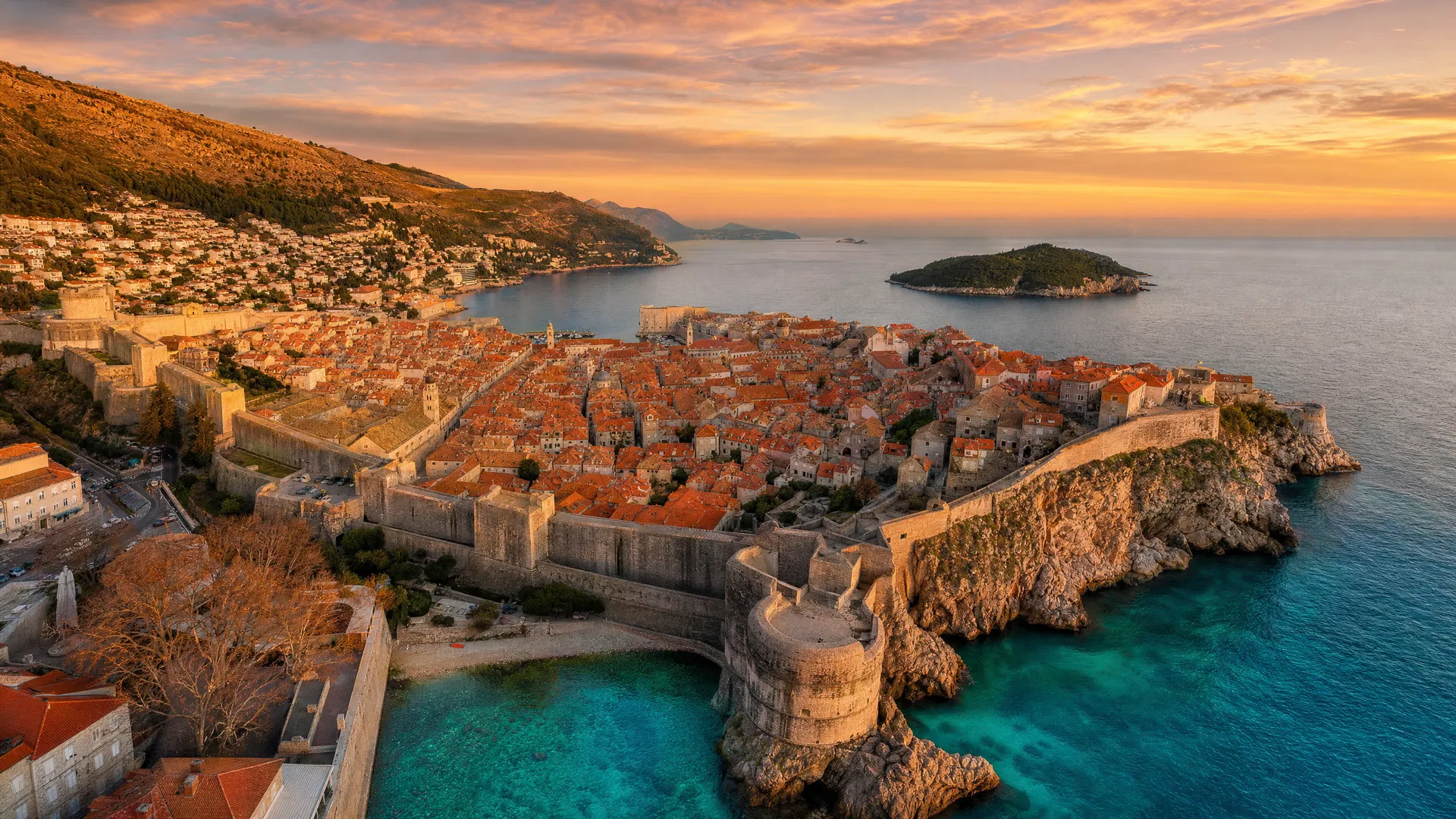
There is a moment — and every person who has ever stood on the city walls of Dubrovnik at the right time of day has had it — when the mind simply refuses to process what the eyes are seeing. The terracotta rooftops. The limestone streets worn smooth by six centuries of feet. The Adriatic below, so impossibly blue that it looks like someone has been adjusting the saturation settings on reality. The islands in the distance, green and still. The walls themselves, 25 meters high and two meters thick, encircling a city that has been continuously inhabited since the 7th century and has survived earthquakes, plagues, sieges, and the particular modern catastrophe of its own fame.
In that moment, you understand something that no photograph has ever quite managed to convey: Dubrovnik is not a backdrop. It is not a set. It is not the Water Gardens of Dorne, though it played that role for six seasons of Game of Thrones. It is a living city — small, proud, fiercely itself — that happens to be one of the most beautiful places on the surface of the earth.
The challenge of Dubrovnik is not finding it. The challenge is seeing it clearly through the fog of its own reputation, past the cruise ship crowds and the GoT tours and the Instagram queues at the cable car, to the thing underneath: a medieval maritime republic that ruled the Adriatic for centuries through diplomacy and trade and sheer stubborn intelligence, that abolished slavery in 1416 (before most of Europe had even begun to consider the question), that survived the 1667 earthquake that killed 5,000 people and destroyed most of the city by rebuilding it, stone by stone, into something even more beautiful than what was lost.
That city is still there. You just have to know how to find it.
The Walls: Walk Them First, Walk Them Early
The City Walls are the first thing you do in Dubrovnik, and you do them at 8 AM, before the cruise ships dock and the tour groups arrive and the walls become a slow-moving queue of people photographing each other in front of the view rather than looking at the view.
The walls were built between the 12th and 17th centuries and are among the best-preserved medieval fortifications in the world. The circuit is approximately two kilometers and takes between 90 minutes and three hours depending on how long you stop to look. You will stop to look constantly. The view from the walls is not one view but a hundred — the city below you, the harbor to the south, the island of Lokrum directly offshore, the open Adriatic to the west, the mountains of Bosnia and Herzegovina rising behind the city to the north. Every 50 meters the angle changes and the composition changes and you think: this is the best view. And then 50 meters later you think it again.
The Minceta Tower at the northwest corner is the highest point of the walls and the place where the views are most comprehensive. The Bokar Fortress at the southwest corner looks out over the sea with the kind of directness that medieval military architects understood instinctively: this is a wall built to be seen from the water, to communicate to approaching ships that this city was serious about its independence. The Fort Lovrijenac, just outside the walls on a 37-meter rock above the sea, is the city's most dramatic fortification — a triangular fortress that was built, according to legend, in three months to prevent the Venetians from constructing it first. The inscription above its entrance reads: Non bene pro toto libertas venditur auro — "Freedom is not to be sold for all the gold in the world." This was not a slogan. It was a policy.
The walls cost €35 to walk (2026 prices). They are worth every euro. Buy your ticket online the night before.
The Old Town: A City Inside a City
The Stradun — the main limestone promenade that runs the length of the Old Town from the Pile Gate to the Ploče Gate — is the city's spine, its living room, its stage. It was built after the 1667 earthquake on the site of a former canal that divided the city's Slavic and Latin communities, and its width and straightness give it a grandeur that is unusual in a medieval city. In the morning, before the crowds arrive, the polished limestone reflects the light like a mirror and the street is almost empty and the baroque facades on either side are exactly as they were when they were rebuilt in the 17th century. In the evening, after the day-trippers have returned to their ships, the Stradun fills with locals and the restaurants put their tables outside and the city becomes, briefly, itself again.
Off the Stradun, the city reveals itself in layers. The streets that climb up the hillside to the north are steep and narrow and lined with stone houses that have been inhabited continuously for centuries — laundry hangs between windows, cats sleep on warm stone, old women sit in doorways watching the world with the unhurried attention of people who have nowhere else to be. The streets that descend to the south toward the harbor are wider and more commercial, lined with restaurants and bars that range from tourist traps to genuinely excellent.
The Rector's Palace — the seat of the Ragusan Republic's government, rebuilt multiple times after earthquakes and explosions — is now a museum that tells the story of the republic with a richness that most visitors miss entirely. The Ragusan Republic was one of the most sophisticated political entities in medieval Europe: a city-state that maintained its independence for 450 years through a combination of diplomatic genius, commercial acumen, and a constitutional system that limited the power of any individual to prevent tyranny. The Rector was elected for a single month, lived in the palace during his term, and was prohibited from leaving the building except on official business. This was not a limitation — it was a safeguard, a system designed to prevent the accumulation of personal power that had destroyed other republics.
The Cathedral of the Assumption contains, in its treasury, one of the stranger and more wonderful collections of religious art in the Adriatic: relics and reliquaries accumulated over centuries, including a gold-and-enamel reliquary of St. Blaise (the city's patron saint) that is a masterpiece of Byzantine goldsmithing, and a collection of arms and legs fashioned in gold and silver — votive offerings from people who believed they had been healed. The cathedral itself was rebuilt after the 1667 earthquake, allegedly on the site of an earlier church funded by Richard I of England, who was shipwrecked near Dubrovnik on his way back from the Third Crusade and was so grateful for his rescue that he paid for a church to be built in thanksgiving.
The Church of St. Blaise, at the eastern end of the Stradun, holds a 15th-century silver statue of the saint holding a model of the city as it appeared before the 1667 earthquake — the most accurate representation of medieval Dubrovnik that exists, and a reminder of what was lost and what was rebuilt.
The Adriatic: Water as the Point
Dubrovnik is a city on the sea, and the sea is not incidental to the experience — it is the experience. The color of the Adriatic here, in the southern Dalmatian coast, is different from the color of the sea anywhere else: a deep, saturated blue that shifts to turquoise in the shallows and to near-black in the depths, so clear that you can see the bottom at 10 meters.
Banje Beach, just outside the Ploče Gate, is the closest beach to the Old Town — a pebble beach with views of the walls and the island of Lokrum that is genuinely beautiful and genuinely crowded in summer. The beach clubs here charge for sunbeds and serve cocktails and are fine for what they are. For something better, walk further.
Sveti Jakov Beach, 20 minutes east of the Old Town along the coastal path, is the beach that locals actually use — a small pebble cove with clear water and no beach clubs and a view of the Old Town from the water that is one of the best views in Dalmatia. The path to get there passes through a residential neighborhood and descends a long staircase, which is enough to deter most tourists.
Lokrum Island, a 10-minute ferry ride from the Old Town harbor, is a nature reserve with no permanent residents, a Benedictine monastery, a botanical garden, a saltwater lake called the Dead Sea, and swimming spots around its rocky coastline that are as good as anything in Croatia. The island has been a place of retreat and contemplation since the 11th century — Richard I allegedly landed here after his shipwreck, and the Benedictines maintained a monastery here until Napoleon dissolved it in 1798. The story goes that when the monks were expelled, they carried their candles in a procession around the island and cursed anyone who tried to make it their private property. Every subsequent private owner of Lokrum has died in mysterious or violent circumstances. The island is now a nature reserve. Nobody has tried to buy it recently.
The Elaphiti Islands — Koločep, Lopud, and Šipan — are a 30-minute to 90-minute ferry ride from Dubrovnik and offer the Dalmatian island experience without the crowds of Hvar or Korčula. Lopud has the best beach — Šunj Beach, a rare sandy beach on the far side of the island, reached by a 20-minute walk through an abandoned village — and a village of stone houses and overgrown gardens that feels genuinely remote. Šipan is the largest and least visited, with two small settlements connected by a road that passes through vineyards and olive groves. These are not day-trip destinations in the conventional sense — they are places to slow down, to swim, to eat grilled fish at a restaurant with four tables and a view of the harbor, to remember what the Adriatic was like before it was discovered.
Sea Kayaking: The View Nobody Talks About
The best view of Dubrovnik's Old Town is not from the cable car. It is not from the walls. It is from the water, at sea level, paddling a kayak along the base of the city walls as the morning light hits the limestone and the Adriatic reflects the sky and the city rises above you like something from a dream.
Sea kayaking around Dubrovnik has become one of the most popular activities on the Dalmatian coast, and for good reason: the combination of the Old Town's visual drama, the clarity of the water, and the accessibility of the sea caves and coves around the city's coastline makes it one of the best kayaking environments in Europe. The standard half-day tour goes from the Old Town harbor, around the walls, to Lokrum Island and back — a route that gives you the wall view from the water, the chance to swim in the Adriatic, and a perspective on the city that no land-based tourist ever gets.
For a more serious adventure, the multi-day kayaking routes along the Elaphiti Islands offer the chance to experience the Dalmatian coast at its most elemental — camping on islands, swimming in coves that can only be reached by water, eating fish that was caught that morning.
Game of Thrones and the Art of Seeing Past It
Dubrovnik's relationship with Game of Thrones is complicated. The show brought the city global recognition and a wave of tourism that has transformed its economy and strained its infrastructure. It has also, for many visitors, replaced the actual city with a fictional one — a place where the Pile Gate is the entrance to King's Landing, where the Stradun is the Street of Steel, where the Fort Lovrijenac is the Red Keep.
This is worth acknowledging and then setting aside. The GoT tours are well-run and the locations are genuinely interesting, and if you are a fan of the show, walking the streets where it was filmed is a genuine pleasure. But Dubrovnik was extraordinary for 600 years before Game of Thrones, and it will be extraordinary for 600 years after. The city's real story — the Ragusan Republic, the earthquake, the 1991-92 siege when Yugoslav forces shelled the Old Town and the world watched in horror — is more dramatic than anything George R.R. Martin invented.
The War Photo Limited gallery on Antuninska Street is the place where the real story is told most powerfully. Founded by New Zealand photojournalist Wade Goddard, it is a permanent gallery of war photography — not just from the Croatian War of Independence, but from conflicts around the world — that is one of the most important and most affecting photography galleries in Europe. It is not comfortable. It is essential.
The Food and Wine: Dalmatian Simplicity at Its Best
Dalmatian cuisine is built on a principle that the rest of the world has been slowly rediscovering: that the best food is made from the best ingredients, prepared simply, and eaten in the right company. The Adriatic provides fish. The hinterland provides lamb and vegetables. The Pelješac Peninsula and the islands produce wine. The combination, at its best, is extraordinary.
Prstaci — date mussels, now protected and illegal to harvest, but once the defining delicacy of the Dalmatian coast — are gone, but their absence is a reminder of how recently this coast was truly wild. What remains is still remarkable: crni rižot (black risotto made with cuttlefish ink), brudet (a slow-cooked fish stew with polenta), peka (lamb or octopus slow-cooked under a bell-shaped lid covered with embers), pašticada (beef slow-braised in prunes and wine, a dish that takes two days to make and tastes like it).
The wine is the part that most visitors miss. The Plavac Mali grape grown on the steep, sun-baked slopes of the Pelješac Peninsula — particularly in the villages of Dingač and Postup — produces wines of extraordinary concentration and complexity: deep red, tannic, with a mineral quality that comes from the limestone soil and the sea air. The best producers — Miloš, Grgić (yes, the same Grgić who made Napa Valley Chardonnay famous), Saints Hills — are making wines that compete with anything from the Mediterranean. A bottle of Dingač from a good year, drunk with grilled fish at a restaurant with a view of the Adriatic, is one of the great food-and-wine experiences in Europe.
The restaurants in the Old Town range from excellent to tourist-trap, and the distinction is not always obvious from the outside. The rule of thumb: avoid anywhere with a menu in six languages displayed on a stand outside the door, and look for places where the menu is short, the fish is listed by what was caught that day, and the wine list is exclusively Croatian.
Your Ask Leif Dubrovnik Guides
Dubrovnik rewards planning — not because the city is complicated, but because the crowds are real and the best experiences require either early starts or local knowledge. The Ask Leif team has built a set of guides that cover every way of experiencing this extraordinary city:
The 5-Day Dubrovnik Travel Guide: Old Town Walls, Game of Thrones & Island Hopping is the comprehensive starting point — five days that move through the Old Town, the islands, the beaches, and the surrounding coast with enough time to actually inhabit each one.
The Dubrovnik 4-Day City & Culture Guide: Old Town, GoT & Adriatic Charm is for the traveler who wants to understand the city's history and culture as deeply as possible in four days — a guide that takes the Ragusan Republic as seriously as it takes Game of Thrones.
For those who want to experience the Adriatic at its most physical, the Dubrovnik Adventure: 4-Day Sea Kayaking, Hiking & Island Exploration Guide covers the sea kayaking routes, the hiking trails on Mount Srđ above the city, and the island exploration that most visitors never attempt.
The Dubrovnik City Break: 4-Day Urban Escape Guide is for the traveler who wants the essential Dubrovnik experience in four focused days — the walls, the Old Town, the beaches, the food — without the complexity of island-hopping or extended day trips.
For couples, the Dubrovnik for Couples: A Romantic 4-Day Getaway in the Pearl of the Adriatic finds the romance in a city that offers it almost effortlessly — in sunset walks on the walls, in candlelit dinners of grilled fish and Plavac Mali, in the shared experience of swimming in water this clear and this blue.
And for those who want the full Dubrovnik experience with time to breathe, the Dubrovnik in 6 Days: Your Ultimate Guide to Beaches, History, and Croatian Charm is the guide that covers everything — the city, the islands, the Pelješac Peninsula, the wine, the food, the history — with the depth and pace that this extraordinary place deserves.
Before You Go: What Nobody Tells You
Come in shoulder season. July and August in Dubrovnik are genuinely overwhelming — the city receives up to 10,000 cruise ship passengers per day in peak season, and the Old Town, which was built for a population of a few thousand, cannot absorb them gracefully. May, June, September, and October offer the same beauty, the same water temperature, and a fraction of the crowds. The light in September is extraordinary — warm and golden and long, the kind of light that makes every photograph look like a painting.
Stay inside or just outside the walls. The Old Town has a small number of apartments and guesthouses within the walls — expensive, but worth it for the experience of waking up inside a medieval city before the day-trippers arrive. The neighborhoods of Lapad and Babin Kuk, 3 kilometers west of the Old Town, offer more affordable accommodation with regular bus connections.
The cable car is worth it, but go at sunset. The Mount Srđ Cable Car rises 405 meters above the city in four minutes and offers a panoramic view that puts the entire Old Town, the islands, and the Adriatic in a single frame. The view at sunset, when the light turns the limestone gold and the sea goes dark, is one of the great views in the Mediterranean.
Respect the city's capacity. Dubrovnik has been explicit about the damage that overtourism is doing to its streets, its infrastructure, and its quality of life. The city has introduced visitor limits on the walls, restrictions on luggage-wheeling in the Old Town, and caps on cruise ship arrivals. These measures are not bureaucratic inconveniences — they are attempts to preserve something genuinely irreplaceable. Cooperate with them.
Learn a few words of Croatian. Hvala (thank you), molim (please), dobar dan (good day). The effort is noticed and appreciated in a city that has been dealing with tourists who treat it as a theme park for decades.
The Pearl, Undiminished
There is a line from Rebecca West's Black Lamb and Grey Falcon — her 1941 masterpiece about the Balkans — that describes Dubrovnik as "a place where the human race has for once achieved its ambitions." She wrote it before the 1991 siege, before the cruise ships, before Game of Thrones. She wrote it after standing on the walls and looking out at the Adriatic and feeling what every person who has stood there has felt: that this is a place where beauty and intelligence and human stubbornness have combined to produce something that should not exist and does.
The siege of 1991-92, when Yugoslav forces shelled the Old Town and the world watched in horror, damaged 68% of the buildings within the walls. The city was rebuilt. The limestone was repaired. The rooftops were replaced. The walls still stand.
This is what Dubrovnik is: a city that has been destroyed and rebuilt so many times that its survival has become a kind of argument — an argument that beauty is worth defending, that history is worth preserving, that some things are too important to lose.
Stand on the walls at 8 AM, before the crowds arrive, and look out at the Adriatic. Feel the limestone under your feet. Watch the light change on the water. Understand that you are standing inside one of the great human achievements — not a monument to power or wealth, but a monument to the stubborn human insistence on making something beautiful and keeping it.
Then go swimming. The water is extraordinary.
Ready to plan your Dubrovnik trip? Create your personalized Dubrovnik itinerary with Ask Leif — built by travelers, for travelers.