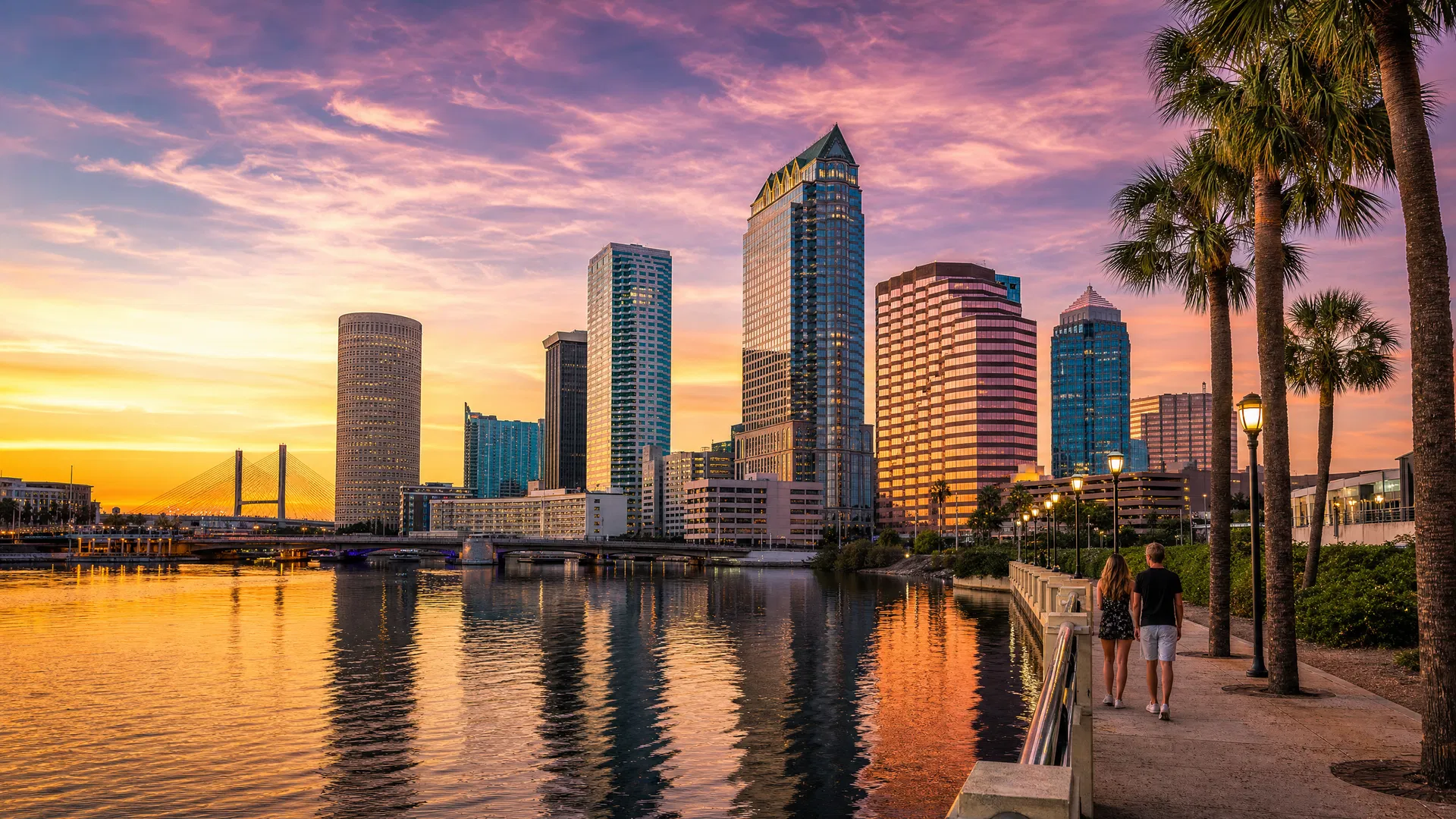
Cuban Sandwiches, Hand-Rolled Cigars, and a Waterfront That Keeps Reinventing Itself: The Tampa Guide Nobody Writes
Destination: Tampa, Florida, USA
Category: destination
The travel press has a Tampa problem. For decades, the narrative went something like this: Tampa is the city you fly through on your way to the beaches. It's the convention town, the Busch Gardens town, the place where you rent a car and drive forty-five minutes to Clearwater. It's fine. It's functional. It's not a destination.
That narrative was always wrong, and it's now embarrassingly wrong. Tampa has quietly become one of the most interesting food cities in the American South. Its waterfront has undergone a transformation that would be called a renaissance in any European city. Its neighborhoods — Ybor City, Hyde Park, Seminole Heights, Channelside — each have a distinct identity and a distinct reason to spend an afternoon. And sitting at the center of all of it is a history so specific, so genuinely strange, and so thoroughly American that it explains everything about why this city tastes the way it does, moves the way it does, and feels the way it does.
This is the guide for the person who wants to understand Tampa, not just visit it. The person who wants to eat the sandwich that was invented here, walk the street that was once the cigar capital of the world, and come home with the sense that they actually saw a place rather than just passing through it.
The History That Explains Everything
To understand Tampa, you have to understand Ybor City, and to understand Ybor City, you have to go back to 1886.
That year, a Cuban cigar manufacturer named Vicente Martinez Ybor was looking for a new home for his operations. He'd been in Key West, but labor disputes and fires had made it untenable. Tampa — then a small town of roughly 700 people on the Gulf Coast — offered cheap land, a deep harbor, and a railroad connection. Ybor bought 40 acres northeast of downtown and began building a company town from scratch.
Within a decade, Ybor City was producing more hand-rolled cigars than anywhere else in the world. At its peak in the early 20th century, the neighborhood's factories employed more than 12,000 workers — Cuban, Spanish, and Italian immigrants who had followed the cigar industry from Havana and Key West. They built mutual aid societies, social clubs, and restaurants. They brought their food, their music, their politics, and their culture. The lectores — professional readers hired to read aloud to workers on the factory floor — read newspapers, novels, and political philosophy to keep the rollers entertained during the long hours of repetitive work.
The Cuban sandwich was born in this context. Not in Cuba — in Tampa. The Tampa Cuban is a specific thing: Cuban bread (baked in long loaves with a palmetto leaf pressed into the top to create the characteristic split), roast pork, ham, Genoa salami (the Italian immigrant contribution that distinguishes the Tampa version from the Miami version), Swiss cheese, pickles, and yellow mustard, pressed flat on a plancha until the bread is crisp and the cheese is melted. The salami is not optional. Anyone who tells you otherwise is selling you a Miami Cuban, which is a fine sandwich but a different sandwich.
The cigar industry declined through the mid-20th century as machine-rolled cigarettes took over the market. The factories closed. The neighborhood fell into a long period of neglect. But the bones remained — the brick streets, the ornate social club buildings, the shotgun houses, the Columbia Restaurant (opened in 1905, making it the oldest restaurant in Florida, still family-owned, still serving the same Cuban bread). And over the past two decades, Ybor City has been slowly, imperfectly, genuinely coming back.
Ybor City: The Neighborhood You Have to Walk
Seventh Avenue is the spine of Ybor City, and it is unlike any other street in Florida. The brick road runs for several blocks through the heart of the historic district, flanked by low-rise buildings that date to the cigar era — wrought-iron balconies, terracotta tile, the occasional surviving cigar factory converted into lofts or restaurants. Free-roaming chickens, descendants of birds that have lived in the neighborhood for generations, pick their way along the sidewalks with complete indifference to the tourists.
The Columbia Restaurant anchors the block at the corner of Seventh Avenue and 22nd Street. It seats 1,700 people across fifteen dining rooms, making it the largest Spanish restaurant in the world. The flamenco show that runs nightly in the main dining room has been running continuously since 1954. The 1905 Salad — romaine, olives, capers, Worcestershire, lemon, olive oil, and Romano cheese, prepared tableside — is one of the great theatrical dining experiences in American food. Order the Cuban sandwich and the sangria and stay for the show. This is not a tourist trap. This is an institution, and there is a difference.
Down the block, the Ybor City Museum State Park occupies a former bakery and offers the most complete account of the neighborhood's history available anywhere — the cigar workers, the lectores, the mutual aid societies, the role of Ybor City in the Cuban independence movement (José Martí raised funds here for the revolution). It is small, well-curated, and essential context for understanding what you're walking through.
The Cigar City Brewing taproom on North 19th Street is the most famous craft brewery in Tampa, and its flagship Jai Alai IPA has become one of the best-selling craft beers in Florida. The taproom is worth a visit not just for the beer but for the name — jai alai, the Basque sport brought to Tampa by the same Spanish immigrant community that built the cigar industry, was once played at a fronton in Tampa and drew enormous crowds. The sport is largely gone from Florida now, but the name survives in the beer, and the story is worth knowing.
At night, Seventh Avenue transforms. The bars open, the music gets louder, and the neighborhood takes on a different energy — younger, louder, more chaotic. The Ritz Ybor hosts live music. The Green Iguana has been pouring drinks since 1985. The Cena rooftop bar offers views of the neighborhood's roofline and the Tampa skyline beyond. If you want the daytime Ybor — the history, the food, the architecture — come before 4 PM. If you want the nighttime Ybor, come after 9.
The Food Scene: Why Tampa Is the Most Underrated Eating City in the South
Tampa's food scene has a chip on its shoulder, and that chip has produced some extraordinary cooking.
The city has always had the Cuban sandwich and the Columbia's Spanish food. What's changed in the past decade is the emergence of a genuinely ambitious restaurant culture that draws on Tampa's immigrant history while pushing into new territory. The result is a food scene that feels both deeply rooted and genuinely exciting — a combination that's rarer than it sounds.
Bern's Steakhouse on South Howard Avenue is one of the great American steakhouse experiences, full stop. Owner Bern Laxer spent decades building relationships with farmers, aging his own beef, and creating a wine cellar that now holds more than 500,000 bottles — one of the largest restaurant wine collections in the world. The Harry Waugh Dessert Room upstairs, where desserts are served in private booths converted from wine storage vats, is unlike anything else in American dining. Make a reservation months in advance for weekend dates.
Ulele occupies a restored 1903 water pumping station on the Tampa Riverwalk, serving a menu built around Florida's indigenous and colonial food history — alligator, frog legs, hearts of palm, Florida grouper, datil pepper. The building alone is worth the visit: exposed brick, soaring ceilings, the original pumping machinery preserved as sculpture. The Native Florida Craft Beer brewed on-site is excellent.
In Seminole Heights, the neighborhood north of downtown that has become Tampa's most interesting food corridor, Rooster & the Till serves the kind of ingredient-focused, technique-driven cooking that would earn Michelin attention in any major city. The menu changes constantly based on what's available from local farms and the Gulf. The dining room is small and the reservations fill up fast.
La Segunda Central Bakery in West Tampa has been baking Cuban bread since 1915. The loaves come out of the oven at 4 AM, and the bread is used by restaurants across Tampa and shipped to Cuban sandwich shops throughout Florida. Walking in on a weekday morning — the smell of fresh bread, the workers in white aprons, the long loaves cooling on racks — is one of the great sensory experiences in Tampa. Buy a loaf. Eat it in the car. You will not regret this.
For the definitive Cuban sandwich, the debate between Tampa's institutions is genuinely contested. The Columbia does it well. La Teresita on Columbus Drive, a neighborhood Cuban diner that has been feeding Tampa since 1972, does it slightly better and charges half the price. Bodega on South Howard offers a modern take with excellent quality. Try at least two. Form an opinion. This is the correct approach.
The Tampa Riverwalk has become a legitimate dining and entertainment destination in its own right — a 2.6-mile waterfront promenade connecting the Tampa Convention Center to Armature Works, a converted 1910 streetcar maintenance facility that now houses one of the best food halls in Florida. The Armature Works food hall has 11 vendors, a rooftop bar with views of the Hillsborough River, and a ground-floor event space that hosts everything from farmers markets to live music. It is the best single stop for getting a sense of Tampa's current food moment in one place.
The Neighborhoods: A District-by-District Guide
Hyde Park is Tampa's oldest residential neighborhood, a collection of Victorian and Craftsman homes on the south side of downtown that has been converted into a walkable village of boutiques, restaurants, and bars. Hyde Park Village — the commercial center — is where Tampa's young professionals come on weekends. The neighborhood has a European feel that's unusual for Florida: tree-lined streets, sidewalk cafés, independent bookstores. Bern's Steakhouse is here. So is Mise en Place, one of Tampa's most celebrated fine dining restaurants, which has been operating since 1986 and remains one of the best kitchens in the city.
Channelside sits between downtown and the Port of Tampa, and its transformation over the past decade represents the most dramatic urban change in the city. The area around Amalie Arena (home of the Tampa Bay Lightning) has become a genuine entertainment district — restaurants, bars, the Florida Aquarium, and the Sparkman Wharf waterfront development, which converted a former shipping warehouse into an outdoor bar and dining complex with food trucks, string lights, and views of the cruise ships in the harbor.
Seminole Heights is Tampa's Brooklyn — the neighborhood where the chefs, artists, and young families priced out of Hyde Park have landed. The main commercial strip on North Florida Avenue has independent coffee shops, vintage stores, craft cocktail bars, and the highest concentration of interesting restaurants in the city. It's the neighborhood that feels most alive right now, most in the process of becoming something.
Davis Islands is a pair of man-made islands in Hillsborough Bay, connected to the mainland by a bridge, that feel like a small town dropped into the middle of a major city. The main street has a hardware store, a diner, a pharmacy, and a bar that has been open since the 1940s. The seaplane base at the southern tip of the island still operates commercial flights. The neighborhood is quiet, residential, and completely unlike the rest of Tampa — worth an afternoon walk for the contrast alone.
Busch Gardens, the Florida Aquarium, and What to Do with Kids
Tampa's family attractions are genuinely excellent, and they're often overlooked in favor of Orlando's theme parks, which is a mistake.
Busch Gardens Tampa Bay is one of the best theme parks in the United States that isn't Disney or Universal, and it benefits enormously from lower crowds and shorter lines than its Orlando competitors. The park combines a serious zoological collection — more than 12,000 animals, including the largest collection of African animals outside Africa — with world-class roller coasters. Cheetah Hunt, a launched coaster that reaches 60 mph and runs through the park's Serengeti Plain, is one of the best coasters in the Southeast. The park's commitment to animal welfare and conservation programs is genuine and worth understanding before you visit.
The Florida Aquarium on Channelside Drive is smaller than the major aquariums in Atlanta or Baltimore but punches above its weight in terms of exhibit quality and conservation focus. The Coral Reef Gallery — a 500,000-gallon tank with a 43-foot-wide acrylic window — is the centerpiece, but the outdoor wetlands exhibit, which recreates a Florida estuary with native species, is the most interesting thing in the building. The aquarium runs snorkeling and scuba programs in the main tank for certified divers.
The Tampa Riverwalk is free, stroller-friendly, and connects most of the city's major waterfront attractions. Walking the full 2.6 miles from Channelside to Armature Works takes about an hour at a leisurely pace and passes the aquarium, the convention center, Curtis Hixon Waterfront Park (which has a splash pad and playground), and the Straz Center for the Performing Arts. It's the best free afternoon in Tampa.
Day Trips: What's Within Easy Reach
Clearwater Beach is 45 minutes from downtown Tampa and consistently ranks among the best beaches in the United States. The Gulf of Mexico water is warm, calm, and an improbable shade of turquoise. Pier 60 hosts a nightly sunset festival with street performers and artisan vendors. The beach is crowded in summer but manageable in shoulder season. Go on a weekday if you can.
St. Pete — St. Petersburg, technically, but nobody calls it that — is 30 minutes from Tampa across the Howard Frankland Bridge and is, in many ways, a more interesting city for a day visit. The Salvador Dalí Museum holds the largest collection of Dalí's work outside of Spain, in a purpose-built building that is itself a work of art. The Central Avenue corridor has become one of the best restaurant and bar streets in Florida. The St. Pete Pier, rebuilt and reopened in 2020, is a genuinely impressive piece of urban waterfront design.
Tarpon Springs is an hour north of Tampa and is the most Greek city in America — a community founded by Greek sponge divers in the early 20th century that has maintained its culture, its language, and its food with remarkable fidelity. The Sponge Docks on Dodecanese Boulevard are lined with Greek restaurants, pastry shops, and sponge vendors. The Greek Orthodox Church of St. Nicholas, modeled on the Hagia Sophia in Istanbul, is worth the drive alone. Eat spanakopita and loukoumades and walk back to your car along the waterfront. This is one of the great underrated half-day trips in Florida.
Planning Your Tampa Trip with Ask Leif
Tampa rewards travelers who come with a plan. The city's neighborhoods are spread out enough that without a framework, you'll spend your trip in traffic rather than in Ybor City. The guides below represent the most complete Tampa itineraries available, built for every type of traveler:
The 4-Day Tampa City & Culture Guide: Authentic Florida & Cuban Flavors is the comprehensive framework — Ybor City, the Riverwalk, Bern's Steakhouse, the Columbia Restaurant, and the neighborhoods that make Tampa worth understanding. This is the guide for the traveler who wants to come home knowing the city.
For families navigating Tampa with kids, the Tampa Family Vacation: 4-Day Busch Gardens & Beach Adventure maps out a trip that balances Busch Gardens and the Florida Aquarium with Clearwater Beach and the Riverwalk — the full range of what makes Tampa one of the most family-friendly cities on the Gulf Coast.
Traveling solo? The Solo Tampa: 4-Day Itinerary for Independent Explorers is built around the experiences that are best done alone — the early morning walk through Ybor City before the crowds arrive, the long afternoon at a Seminole Heights coffee shop, the sunset from the Sparkman Wharf waterfront.
And for couples, the Tampa Romantic Escape: 4-Day Couples Guide to Waterfront Sunsets & Historic Charm covers Bern's Steakhouse, the Davis Islands waterfront, the Armature Works rooftop, and the kind of slow, exploratory pace that makes a city trip feel like a genuine escape.
When to Go, Where to Stay, and What to Know Before You Arrive
The best time to visit Tampa is October through April. Florida's Gulf Coast winters are genuinely mild — daytime highs in the 70s, low humidity, clear skies. Summer (June through September) is hot, humid, and subject to afternoon thunderstorms that are dramatic but brief. Hurricane season runs June through November, with the peak in September. Tampa has not taken a direct major hurricane hit since 1921, but the 2024 season was a reminder that the risk is real.
For accommodation, the Epicurean Hotel on South Howard Avenue — a boutique property built around a food and wine concept, with a rooftop bar, a cooking school, and a location walking distance from Bern's Steakhouse — is the best hotel in Tampa for food-focused travelers. The JW Marriott Tampa Water Street is the best luxury option downtown, with direct access to the Riverwalk and the Water Street Tampa development. For budget travelers, the Gram's Place Hostel in Ybor City is a converted 1945 bungalow with a music room and a garden, and it is one of the most characterful budget accommodations in Florida.
Getting around: Tampa is a driving city. The free Downtowner electric car service covers downtown and Ybor City and is genuinely useful for short hops. The TECO Line Streetcar connects downtown to Ybor City along a historic route and is worth riding once for the experience. For everything else, you'll need a car or rideshare.
The one thing you must do: Walk into La Segunda Central Bakery on a weekday morning, buy a loaf of Cuban bread, and eat it warm in the parking lot. This costs $3 and takes ten minutes and is the most Tampa thing you can do. Everything else in this guide is worth doing. This is the one that's non-negotiable.
Why Tampa Is Having Its Moment Right Now
Cities go through cycles, and Tampa is currently in the ascending part of one. The Water Street Tampa development — a $3 billion mixed-use project that has added hotels, restaurants, apartments, and office space to the blocks between downtown and the port — has transformed the city's waterfront in ways that are still unfolding. The Tampa Bay Lightning's back-to-back Stanley Cup championships in 2020 and 2021 gave the city a collective identity and pride that translated directly into investment and energy in the neighborhoods around Amalie Arena. The remote work migration of the pandemic years brought a wave of new residents — from New York, from California, from Chicago — who brought their expectations for food and culture with them and found a city that could meet them.
The result is a Tampa that is genuinely more interesting than it was five years ago, and more interesting than most of the travel press has caught up to. The bones were always there — the history, the food culture, the waterfront, the neighborhoods. What's changed is the energy, the investment, and the sense that the city is finally becoming what it always had the potential to be.
The travel press will catch up eventually. Go before they do.