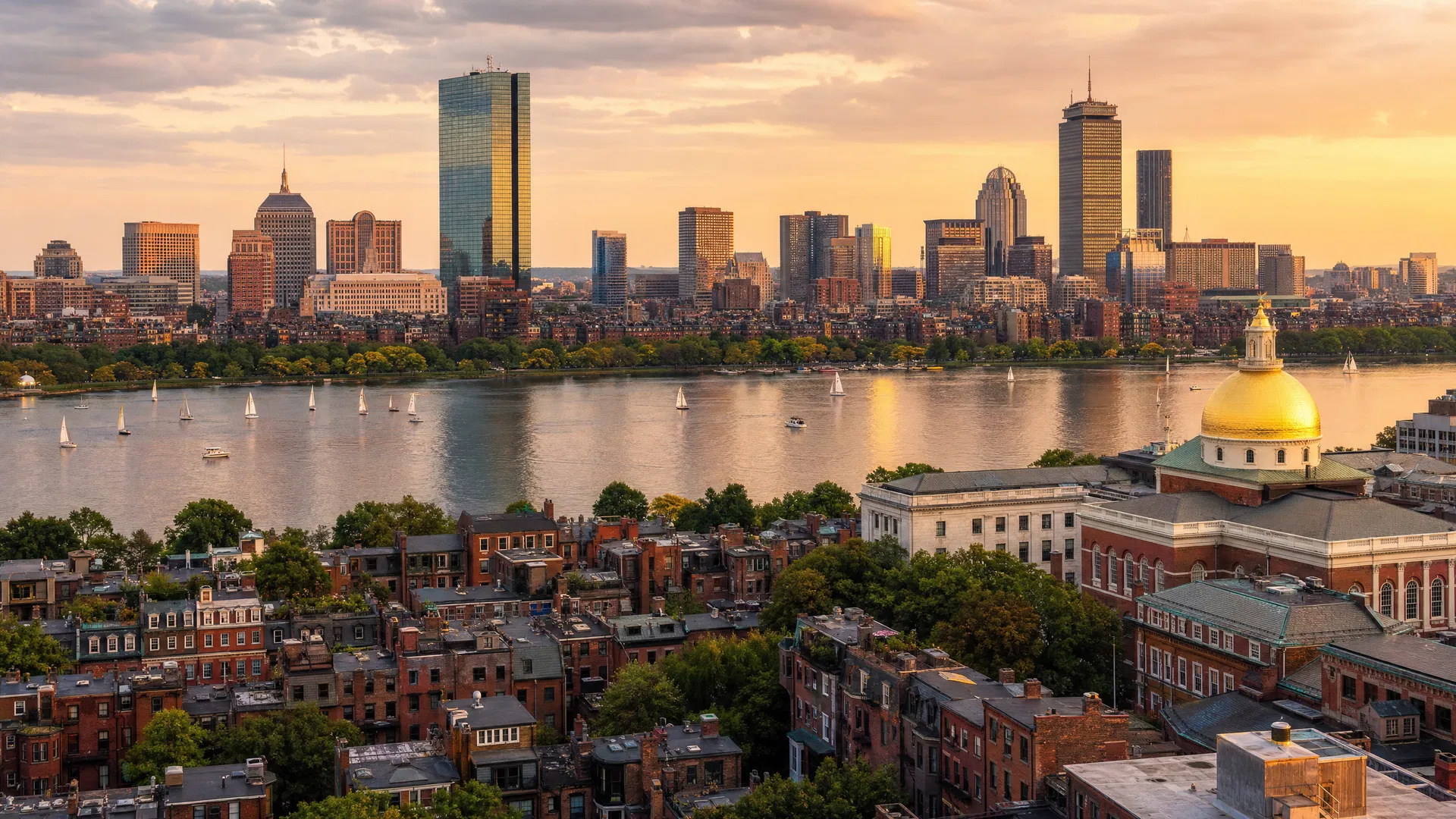
Fourteen Miles of Coastline, Four Centuries of Attitude: The Boston Nobody Writes About
Destination: Boston, Massachusetts, USA
Category: Destination Guides
Fourteen Miles of Coastline, Four Centuries of Attitude: The Boston Nobody Writes About
There is a version of Boston that exists in the collective imagination, assembled from grainy photographs of the Freedom Trail, Dunkin' Donuts jokes, and a vague sense that everyone here talks like they're auditioning for a Ben Affleck film. That Boston is a caricature. The real one — the Boston that Bostonians actually inhabit, argue about, and love with a ferocity that borders on the irrational — is something else entirely.
It is a city of 700,000 people packed into 48 square miles, which makes it one of the most densely layered urban environments in the United States. Every neighborhood has its own personality, its own food culture, its own unspoken rules. The Back Bay is Georgian brownstones and Newbury Street boutiques. South Boston is triple-deckers and dive bars where the same families have been drinking since 1962. The South End is James Beard Award restaurants and Victorian bow-fronts. Chinatown bleeds into the Theatre District bleeds into Downtown Crossing. And underneath all of it, the oldest subway system in America rattles along tunnels that were dug before the Wright Brothers flew at Kitty Hawk.
Boston is also, quietly and without much fanfare, one of the best food cities in America. It is a college town with nine universities inside the city limits and another dozen within commuting distance, which means it has the intellectual density of a place that demands good coffee, serious bookstores, and restaurants that can hold their own against anywhere in the country. The North End's Italian-American food culture is one of the most authentic in the United States. The oyster bars along the waterfront serve shellfish pulled from waters that have been producing some of the world's finest bivalves for centuries. And the city's newer restaurant scene — driven by chefs who trained in New York and Paris and came home to Boston because the rents were lower and the ingredients were better — has quietly made this one of the most exciting places to eat in the Northeast.
This is the guide to that Boston. Not the one on the brochure. The one worth knowing.
The Neighborhoods That Actually Matter
Back Bay and Beacon Hill: The Postcard Boston That Earns Its Reputation
Start here because you should, not because it's all there is. The Back Bay was literally created from nothing — it was a tidal flat until the 1850s, when the city spent thirty years filling it in with gravel hauled by train from Needham. The result is the most perfectly preserved Victorian neighborhood in America: 450 acres of brownstones laid out on a grid, with Commonwealth Avenue's tree-lined mall running down the center like a spine.
Newbury Street is the shopping corridor, and it is genuinely good — not a mall, but a street of independent boutiques, galleries, and restaurants that has somehow resisted the full homogenization that killed similar streets in other cities. Eat at Saltie Girl, which serves the best raw bar in New England and a tinned fish selection that would embarrass most European specialty shops. Walk down to the Public Garden and watch the Swan Boats, which have been operating since 1877 and are one of the few tourist attractions in any American city that is actually as charming as advertised.
Beacon Hill is adjacent and older, its gas-lit streets and Federal-style brick townhouses unchanged since the 1820s. Acorn Street is the most photographed cobblestone lane in America, and it deserves to be. The Massachusetts State House dome, covered in 23-karat gold leaf, sits at the top of the hill like a punctuation mark on four centuries of American political history. The hill's north slope, once the center of Boston's free Black community, is where you'll find the African Meeting House — the oldest surviving Black church building in the United States, built in 1806 — and the beginning of the Black Heritage Trail, which is one of the most important and undervisited historical walks in the country.
The North End: America's Oldest Neighborhood, Still Cooking
The North End is a peninsula that was settled in 1630, making it the oldest continuously inhabited neighborhood in the United States. For most of the twentieth century it was Boston's Italian-American enclave, and while gentrification has changed the demographics, the food culture has held. Hanover Street is still lined with Italian bakeries, pastry shops, and red-sauce restaurants that have been feeding the neighborhood for generations.
Mike's Pastry and Modern Pastry are the two great cannoli institutions, and the debate between them is the kind of thing that Bostonians will argue about with the same intensity they bring to the Red Sox. Both are excellent. The correct answer is to try both and form your own opinion, which is very much the North End way.
But the North End's food scene extends well beyond the tourist corridor. Panza, a tiny BYOB on Endicott Street, serves handmade pasta that would hold its own in Bologna. Neptune Oyster on Salem Street has a line out the door every night for a reason — the lobster roll, served hot with drawn butter or cold with mayo, is one of the definitive versions of the dish. Eat here before you die.
Paul Revere's house is here, and it is worth visiting not for the mythology but for the reality: it is the oldest remaining structure in downtown Boston, built around 1680, and standing inside it gives you a physical sense of how small and precarious colonial life actually was. The Old North Church, where the lanterns were hung on the night of April 18, 1775, is two blocks away and still an active Episcopal congregation.
The South End: Where Boston Became a Food City
The South End is the neighborhood that changed Boston's culinary reputation. Through the 1990s and 2000s, a generation of serious chefs opened restaurants in its Victorian row houses and former warehouses, and the neighborhood became the engine of a food scene that now rivals any in the country.
Toro, Ken Oringer and Jamie Bissonnette's Spanish tapas bar on Washington Street, is one of the best restaurants in New England — the corn with aioli and cotija is the kind of dish that people talk about for years. Coppa, their Italian enoteca around the corner, is equally serious. SRV on Columbus Avenue serves Venetian cicchetti and natural wine in a room that feels like it was transported directly from the Dorsoduro. The South End Buttery has been feeding the neighborhood's weekend brunch crowd for twenty years and shows no signs of slowing down.
The neighborhood is also home to the SoWa Art + Design District, a cluster of galleries, studios, and the SoWa Open Market that runs on Sundays from May through October. It is one of the best outdoor markets in New England — local produce, artisan food vendors, vintage dealers, and a farmers market that draws the city's best chefs.
Somerville and Cambridge: The Intellectual Engine
Cross the Charles River and you are in Cambridge, which is technically a separate city but functions as Boston's brain. Harvard Square is the obvious anchor — the university's brick buildings and the bookstores and coffee shops that cluster around them — but the more interesting Cambridge is Inman Square, Central Square, and the stretch of Massachusetts Avenue that connects them. Flour Bakery + Café has multiple locations across the metro area but the Cambridge original is the best. Oleana, Ana Sortun's Eastern Mediterranean restaurant in Inman Square, has been one of the most important restaurants in New England for twenty years.
Somerville, just north of Cambridge, is where the creative class moved when Cambridge got too expensive. Davis Square is the neighborhood center — the Somerville Theatre, a dozen excellent restaurants, and the kind of independent retail that makes a neighborhood feel alive. The Burren is an Irish pub that has been hosting live traditional music seven nights a week since 1996. Redbones has been serving the best barbecue in Greater Boston for decades, which is not a sentence you expect to write about a city in Massachusetts.
The History That Actually Happened Here
Boston's history is not a museum exhibit. It is embedded in the physical fabric of the city in a way that is genuinely unusual in America, where most historical sites have been demolished and replaced with parking lots.
The Freedom Trail is a 2.5-mile walking route connecting sixteen sites, and it is better than its reputation. The problem is that most people walk it too fast, treating it as a checklist rather than a narrative. The sites that reward slow attention are the ones that most people rush past: the Granary Burying Ground, where Paul Revere, Samuel Adams, and John Hancock are buried among 2,345 other souls, and where the headstones are so old that the faces carved into them have been worn smooth by three centuries of New England weather. The Old State House, which is the oldest surviving public building in Boston, built in 1713, and which still stands at the intersection of Washington and State Streets with the skyscrapers of the Financial District rising around it like a rebuke.
The USS Constitution — "Old Ironsides" — is docked at the Charlestown Navy Yard and is the oldest commissioned warship afloat in the world. She was launched in 1797, fought in the War of 1812, and has never been formally decommissioned. The Navy still sails her once a year, on the Fourth of July, to turn her around in the harbor so that she weathers evenly. This is not a reproduction or a museum piece. This is the actual ship.
The National Museum of African American History and Culture in Washington D.C. gets the attention, but Boston's Museum of African American History — which includes the African Meeting House and the Abiel Smith School, the first public school for Black children in the United States — tells a story that is equally essential and far less visited. The Black Heritage Trail that connects these sites is one of the most important historical walks in the country.
The Water: Boston's Most Underused Asset
Boston is a harbor city, and most visitors never engage with the water at all. This is a mistake of the first order.
The Harbor Islands State Park encompasses thirty-four islands in Boston Harbor, accessible by ferry from Long Wharf. Georges Island has Fort Warren, a Civil War-era fortification where Confederate prisoners were held. Spectacle Island has a beach, a café, and views of the Boston skyline that are among the best in the city. Peddocks Island has the ruins of Fort Andrews, abandoned after World War II and slowly being reclaimed by vegetation. The islands are uncrowded even in summer, which is remarkable given that they are twenty minutes by ferry from one of the major cities in the Northeast.
The Charles River Esplanade is the city's front lawn — a four-mile stretch of parkland along the Cambridge side of the river where Bostonians run, cycle, kayak, and attend the Boston Pops Fireworks Spectacular on the Fourth of July, which draws half a million people and is one of the great American civic events. The Community Boating dock has been renting sailboats and kayaks since 1936 and is the oldest public sailing program in the United States.
The Rose Kennedy Greenway, built on the land freed up when the Big Dig buried the elevated highway that used to cut the city off from its waterfront, is a mile-and-a-half of parks, fountains, and public art that has transformed the relationship between downtown Boston and the harbor. The Greenway Carousel operates from spring through fall. The food trucks that line the Greenway on weekdays are among the best in the city.
Day Trips That Turn a Boston Trip Into a New England Trip
Boston's greatest strategic advantage as a base city is what surrounds it. Within two hours in any direction, you have some of the most varied and beautiful landscape in the United States.
Cape Cod is the obvious first move, and it earns its reputation. The Cape is 70 miles of barrier beach, salt marshes, kettle ponds, and fishing villages that have been drawing visitors since the nineteenth century. The outer Cape — Wellfleet, Truro, Provincetown — is where the landscape becomes genuinely dramatic: the Atlantic cliffs at Marconi Beach, the Province Lands dunes, the tip of the Cape at Race Point where the light is different from anywhere else in New England. Provincetown is one of the most interesting small towns in America — an artists' colony, a LGBTQ+ destination, a working fishing port, and a whale watching hub all at once. The Ask Leif guides cover Cape Cod in depth, including a 5-day family summer adventure, a 4-day romantic couples escape, and a 3-day outdoor adventure at Cape Cod National Seashore.
Martha's Vineyard and Nantucket are the islands that define New England summer. The Vineyard is larger and more varied — Edgartown's white captain's houses, Oak Bluffs' painted Victorian gingerbread cottages, Aquinnah's clay cliffs at the Gay Head Lighthouse, the fishing village of Menemsha where you can eat lobster on the dock at sunset. Nantucket is smaller, more uniform, and more expensive — cobblestone streets, grey-shingled houses, a whaling museum that is one of the best maritime museums in the country. Both islands require ferry reservations well in advance in summer. The Ask Leif guides cover both: Martha's Vineyard couples summer escape, Martha's Vineyard family itinerary, Nantucket luxury couples escape, and Nantucket family adventure.
Salem is thirty minutes north by commuter rail and is one of the most misunderstood cities in Massachusetts. Yes, the witch trials happened here in 1692, and yes, October is a carnival of Halloween tourism. But Salem in any other month is a genuinely excellent small city: the Peabody Essex Museum is one of the great art museums in New England, with a collection that reflects Salem's history as one of the wealthiest ports in early America. The Derby Wharf historic district, the Charter Street Cemetery, and the Federal-style architecture of the McIntire Historic District are all worth serious time.
The Berkshires are two hours west, in the far western corner of Massachusetts, and they are one of the best-kept secrets in New England. Tanglewood, the summer home of the Boston Symphony Orchestra, is in Lenox. MASS MoCA, one of the largest contemporary art museums in the world, is in North Adams. The Clark Art Institute in Williamstown has one of the finest collections of French Impressionism outside of Paris. The Berkshires in fall — when the foliage turns and the light goes golden and the hills are on fire — is one of the most beautiful places in the United States. The Ask Leif guide covers the Berkshires in depth: 4-day arts and nature escape for couples.
Rockport is an hour north on the commuter rail, a fishing village on Cape Ann that has been an artists' colony since the nineteenth century. Motif Number 1, the red fishing shack on Bearskin Neck, is said to be the most painted building in America. The town has more galleries per capita than almost anywhere in New England, and the rocky coastline north of town — Halibut Point State Park, the Headlands — is some of the most dramatic coastal scenery in Massachusetts. The Ask Leif guide: 3-day New England coastal village itinerary.
The Boston Itineraries Worth Building
Boston rewards different approaches depending on what you're after. The Ask Leif guides cover the full range:
For a first visit that covers the essential history, food, and neighborhoods without feeling rushed: the 5-day Boston itinerary for couples and solo travelers is the right framework — it builds in time for the Freedom Trail, the North End, the South End food scene, a day trip to Salem, and an afternoon on the Harbor Islands.
For families with kids: the 5-day Boston family vacation guide covers the New England Aquarium (one of the best in the country), the Museum of Science, the Freedom Trail at a pace that works for children, and a day trip to Salem that leans into the spooky history without being overwhelming.
For travelers on a budget: the 4-day budget guide is built around the fact that Boston has an enormous amount of free and low-cost content — the Freedom Trail is free, the Public Garden is free, the Harbor Islands ferry is inexpensive, and the city's food hall culture (Time Out Market in the Fenway, the Boston Public Market near Faneuil Hall) makes it possible to eat very well without spending a lot.
For couples looking for a romantic weekend: the 3-day romantic Boston couples itinerary leans into the city's most intimate experiences — a sunset harbor cruise, dinner in the North End, a morning in the Isabella Stewart Gardner Museum, and a walk through Beacon Hill at dusk when the gas lamps come on.
The Practical Intelligence
Getting around: Boston is one of the most walkable cities in America, and the MBTA — the T — covers the rest. The Green Line is the oldest subway line in the United States and is famously slow, but it gets you where you need to go. Avoid driving in Boston if you can possibly help it. The streets were laid out along cow paths in the 1630s and have not improved significantly since.
When to go: June through August is peak season — warm, busy, expensive. September and October are the best months to visit: the weather is perfect, the crowds thin, the foliage starts in the second half of October, and the city is fully alive. November through March is cold and grey but the city is at its most authentic — no tourists, excellent restaurant reservations, and the kind of raw New England weather that makes a bowl of clam chowder at a bar on a Tuesday afternoon feel like one of the great pleasures of American life.
The clam chowder question: New England clam chowder — cream-based, thick, with potatoes and clams — is the correct version. Manhattan clam chowder, which is tomato-based, is a different dish and a matter of ongoing regional dispute. The best chowder in Boston is not at the tourist restaurants on the waterfront. It is at the smaller neighborhood places: Legal Harborside, Neptune Oyster, and the Legal Sea Foods at the Prudential Center, which has been serving the same recipe since 1968.
The Red Sox: Fenway Park is the oldest ballpark in Major League Baseball, opened in 1912, and it is worth attending a game regardless of your interest in baseball. The Green Monster — the 37-foot left field wall that is the most famous feature in American baseball — is more impressive in person than in photographs. The park holds 37,755 people and sells out nearly every game. Buy tickets in advance.
The college calendar: Boston has 350,000 college students, and their arrival in September and departure in May creates a city that operates on an academic calendar. The last two weeks of August, when students move in, are chaotic. The first two weeks of May, when they leave, are the best time to find a parking space. Plan accordingly.
Why Boston Rewards the Unhurried Traveler
The mistake most people make with Boston is treating it as a history lesson — a place to check off the Freedom Trail and move on. The city is patient with this misunderstanding. It has been around for four hundred years and will still be here when you come back.
But the travelers who stay longer, who wander into the neighborhoods that don't appear on the standard itinerary, who eat at the restaurant without a line rather than the one with one, who take the ferry to the Harbor Islands on a Tuesday morning when the harbor is empty — those are the travelers who understand what Boston actually is.
It is a city that has been arguing with itself and with the world since 1630. It is a city that produced the American Revolution, the abolitionist movement, the first public school in America, the first subway in America, and more Nobel laureates per square mile than almost anywhere on earth. It is a city where the past is not preserved behind glass but is still being lived in, argued about, and occasionally renovated without a permit.
It is, in other words, exactly the kind of place that rewards the traveler who shows up with curiosity instead of a checklist.
Plan your Boston trip with Ask Leif — whether you want a 5-day first-timer's itinerary, a family adventure, or a romantic long weekend, the city has more layers than any single trip can exhaust. That is not a problem. That is the point.