The Best Ski Destinations for People Who Plan Their Year Around Snow
Destination: Global
Category: comparison
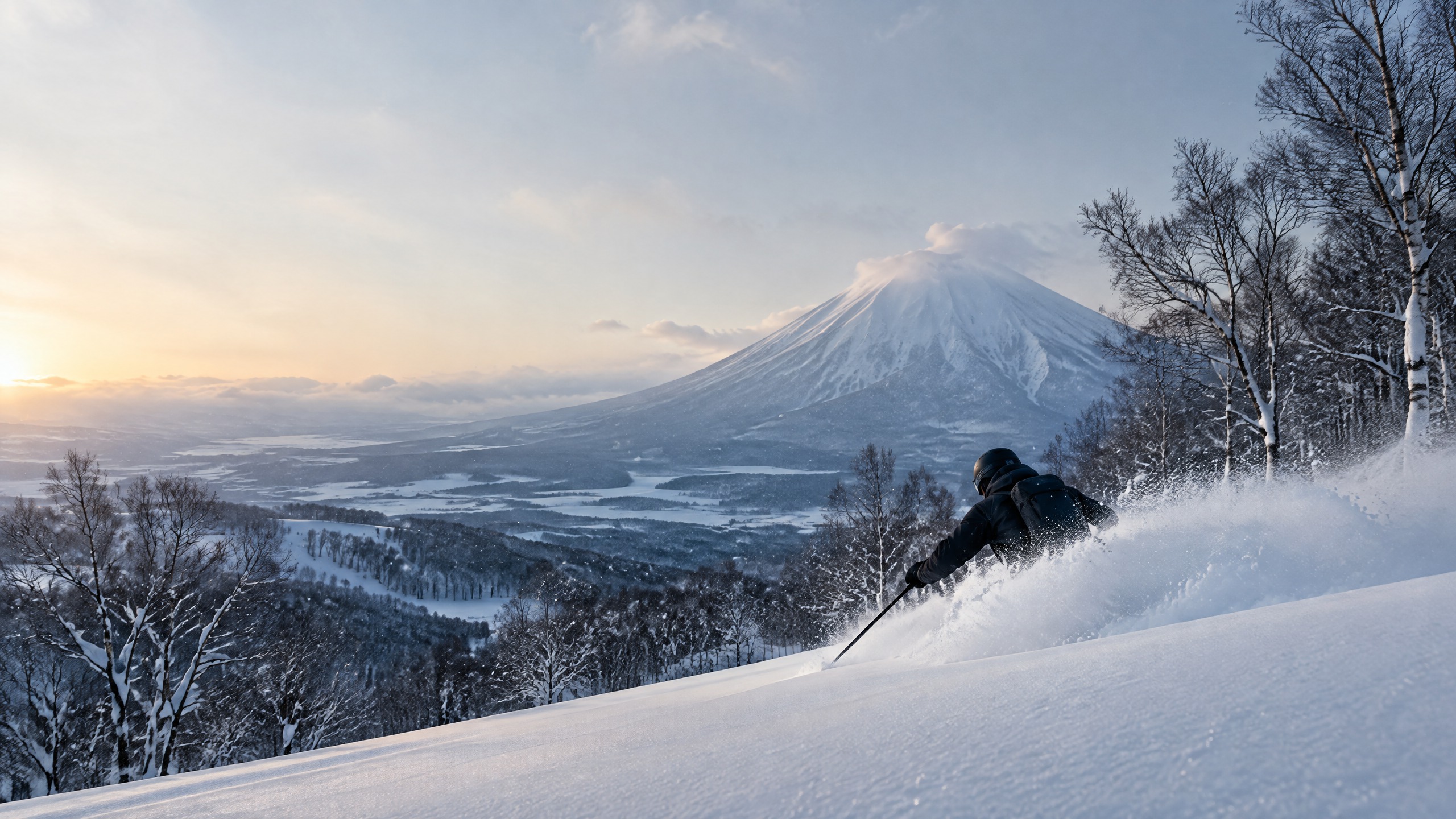
At 8:45 on a January morning in Hokkaido, the lift has barely started and a skier stands beside the gate at the edge of the trees, watching another overnight layer settle onto a slope that was already deep. In Chamonix, the equivalent moment begins much higher: boot buckles are tightened beneath the Aiguille du Midi, a rope is coiled, and the route across the Vallée Blanche is decided by what the glacier is doing that day. In Telluride, it is the first long look down the Gold Hill side, with the town tucked into its box canyon far below. None of these moments belongs to a resort brochure. They are the reason the trip happened.
Most lists of the best ski destinations mistake the supporting cast for the story. They rank lift capacity, vertical meters, spa treatments, restaurant reservations, ski-in access, the size of the village, and how easily every ability level can be made comfortable. Those things can make a week smoother. They do not explain what it feels like when cold air from Siberia turns a Japanese forest into powder of almost impossible softness, or when a route across a glacier requires a guide because the mountain has not been made harmless for the visitor.
The best ski destinations are the places where geology, weather, local ski culture, and the skier’s own judgment create an experience that no lift map can fully describe. This is a list for people who have already learned that a large resort can still produce a forgettable week. It favors six mountains that make a particular kind of skier feel something different: the powder obsessive, the alpinist in training, the person who wants a real town rather than a staged alpine village, the storm chaser, the technical purist, and the skier who wants every turn to become more deliberate.
That is also why some obvious names are deliberately absent. Whistler Blackcomb has scale, range, and an entirely defensible claim to a great ski week, but it is already the default North American answer and its story is told everywhere. Aspen has four mountains and Highland Bowl, yet putting it beside Telluride would blur the American argument rather than sharpen it. St. Moritz offers exceptional Engadin skiing, but its dominant appeal is a social and hotel proposition; this list is interested in what remains when the mountain carries the decision. These six places are here because the snow, terrain, and local relationship to skiing would still matter if every fireplace, tasting menu, and champagne bar disappeared tomorrow.
What the Best Ski Destinations Reveal Once You Stop Ranking Resorts
The best ski destinations are not interchangeable levels on a luxury scale. Hokkaido is about the physical fact of snow falling in a form that resets a skier’s expectations. Chamonix is about exposure and the humility of entering alpine terrain on the mountain’s terms. Telluride is about a town that still feels contained by the canyon around it. Snowbird is about a storm system meeting steep Little Cottonwood Canyon walls. Taos is about craft, consequences, and terrain that asks a skier to earn fluency. Sun Valley is about the patient work of the turn.
That framing also requires honesty. Several experiences below are not first-week skiing. A route can be spectacular and still be wrong for a particular person, a particular day, or a particular snowpack. A guide is not a decorative upgrade in glaciated or avalanche terrain; it is part of the basic decision. The point is not to make every mountain fit every traveler. The point is to identify the place whose demands and rewards fit the way you want to ski.
Hokkaido: Where Powder Changes the Meaning of a Snow Day
Hokkaido belongs among the best ski destinations because its snowfall is the mountain’s entire argument: the powder is not an accessory to the trip, but a different medium for skiing. The northeast monsoon pulls cold Siberian air across the comparatively warm Sea of Japan, gathers moisture, and releases it over Hokkaido in repeated, dry bursts. That pattern is why Niseko can see snowfall measured in the neighborhood of fifteen meters in a generous winter and why a familiar black-diamond pitch can feel newly available after a few centimeters of overnight accumulation. The point is less the number than the texture. This is snow that lets skis plane, lets a turn stay quiet, and makes a forest line feel wider than it looked from the chair.
Niseko has become the international shorthand for that experience, and it earns the recognition. The boundary gates make a clear distinction between patrolled resort terrain and the consequential country beyond it; read them as a safety system, not a suggestion that every powder day needs to become a backcountry story. When visibility closes in, the birch and conifer glades on the resort side can be the smart choice. When conditions, equipment, avalanche knowledge, and a local guide align, the terrain beyond the gates is one of the reasons serious skiers cross an ocean. A five-day Hokkaido powder and hot-springs itinerary is the right starting point for arranging the region without treating one famous base village as the whole island.
The more revealing decision is often to spend part of the week away from Niseko. Furano has the same northern weather system without the feeling that an international ski audience has rearranged the town around it. Its long, fall-line groomed lanes and drier inland cold make sense for someone who wants to alternate deep days with technical reset days. Kiroro, farther west, often receives even more snow than the average visitor expects and can feel remarkably contained when the larger resorts are absorbing crowds. After skiing, a bowl of ramen or a visit to an onsen is not a contrived recovery ritual; heat and food are part of how Hokkaido has made winter livable for generations.
Hokkaido is the choice for the skier whose calendar is ruled by a forecast. Book for January or February, remain flexible within the week, and do not judge the place by a single bluebird morning. Its best day may be the low-visibility day when the flakes keep coming, the trees provide contrast, and every lap offers a fresh decision. The ability requirement is straightforward: confident intermediates can find ample terrain in-bounds, while unguided off-piste ambition is never the upgrade it appears to be on a marketing video. Hire the local guide before attempting serious touring or terrain beyond the gates. Hokkaido powders because the atmosphere keeps doing its work; the skier’s job is to recognize how rare that is.
Chamonix: Where Skiing Starts With the Mountain, Not the Marked Run
If Hokkaido shows what the atmosphere can make, Chamonix shows what a mountain can refuse to simplify. Mont Blanc organizes the valley’s scale, weather, visual field, and skiing culture with a force that makes the usual resort vocabulary feel inadequate. You do not come here primarily to collect groomed kilometers. You come because the Aiguille du Midi cable car can place a skier above a glaciated landscape where the descent is a route, conditions change the route, and a person who knows the route is essential.
The Vallée Blanche begins at 3,842 meters beneath an edge of rock and ice that demands more preparation than the photos imply. The initial arête can be narrow and exposed; the glacier below contains crevasses that migrate with the season. On the classic line, the day stretches across the Glacier du Géant and toward the Mer de Glace before a changing finish back toward the valley. On a good day it is a long, absorbing lesson in scale rather than a simple twenty-kilometer victory lap. Strong intermediates with off-piste experience can do it with an appropriately qualified guide and the right conditions; it is not a casual first excursion into ungroomed skiing. A four-day Chamonix adventure plan can help build the valley around the day without pretending that the glacier is a guaranteed checklist item.
Chamonix’s in-area skiing is equally revealing when you choose it for its terrain rather than its reputation. Grands Montets, above Argentière, has long been the place serious alpine skiers look for sustained fall line, a colder north-facing orientation, and runs that keep asking questions after the first turn. Brévent and Flégère offer a different kind of access: sunnier exposure, views across to Mont Blanc, and a way to understand the valley’s shape without making every day a technical objective. The distinction matters. A person searching for one mountain’s polished, connected circuit may be frustrated by Chamonix’s dispersed areas. A skier who values a valley of separate mountain decisions will understand why the place never becomes ordinary.
There is a practical reason Chamonix has remained central to ski mountaineering: it treats skill as a condition of participation, not a tier of premium access. The Haute Route toward Zermatt, generally attempted in the more stable spring window, is a multi-day traverse with weather, navigation, glacial travel, and fitness built into the proposition. It is not necessary to ski it to feel the seriousness of the culture around you. The guide offices, weather briefings, early-morning departures, and quiet attention to equipment tell the story. Chamonix exposes the skier to the actual alpine contract: the mountain gives an enormous amount, and it asks for competence in return.
Telluride: Where a Town Still Lives Inside the Mountain
If Chamonix makes the skier meet the mountain at altitude, Telluride brings the mountain all the way into town. The box canyon is not scenery placed behind a developed resort; it is the physical fact that determines the town’s scale and mood. Historic Telluride sits at roughly 8,750 feet with steep San Juan walls closing three sides of the view. Arrive through the single valley entrance, then look up at the ridgelines and it becomes clear why this is the North American destination on the list. The setting has not been diluted into a generic base area.
The free gondola is the small piece of infrastructure that reveals the larger civic idea. It links the historic town and Mountain Village without a ticket, so a skier moves between them above the canyon rather than being sealed into one lodging enclave. Ride it late in the day when the low sun catches the peaks and the route itself becomes part of the trip rather than a transfer. The mountain has serious terrain, but its character begins with the way skiing and town remain in contact. Use a Telluride ski-and-culture itinerary to make room for that relationship, then look at a dedicated Telluride ski-resort plan for the mountain’s separate rhythm.
On snow, Telluride does not flatter indecision. Gold Hill climbs into high, exposed terrain where the snow can hold well on shaded aspects and where the ungroomed options demand real comfort with pitch, variable snow, and route choice. The Plunge and Spiral Stairs have a directness that keeps the fall line in the skier’s mind. These are not necessarily the longest runs in the West, but the vertical coherence matters: you can feel the canyon drop away and the terrain continue to ask something of you. An expert skier can spend more than one day here without repeating the same kind of turn.
Telluride earns its place because its cultural life is not a substitute for skiing. The historic district, the mining-era grid, and the September film festival give the town a life that extends past winter, but none of it turns the mountain into a backdrop. Ski here from late January through March for the best balance of base depth and daylight. The main ability truth is simple: a confident intermediate can have a superb week on groomed terrain and the gentler pods, while Gold Hill should be treated as a goal for people who are fully at ease on steep, ungroomed snow. Telluride resists the theme-park version of a ski town by allowing the canyon to remain in charge.
Snowbird: Where the Storm Is the Itinerary
If Telluride is defined by the canyon that contains it, Snowbird is defined by the storm corridor that keeps refilling it. Little Cottonwood Canyon narrows east of Salt Lake City, then rises toward a compact concentration of steep faces, gullies, bowls, and north-facing terrain. Utah’s low-density snow can be discussed in statistics, but Snowbird makes more sense as a daily weather practice: watch the forecast, understand the road and avalanche-control realities, and be ready when the lifts spin after a cycle has reset the mountain.
The tram is not only a convenience. It is the statement of intent. In a single ride it moves skiers from the base toward Hidden Peak and a view that makes the different sides of the canyon legible. Mineral Basin, when it opens after control work and visibility allows, expands the day into broad, sunlit bowls on the far side; Gad Valley offers its own web of steep entrances and powder fields. On a storm day, the tree-lined terrain lower on the mountain can offer the visual reference that open upper faces lack. A three-day Snowbird expert-skiing guide is useful because it treats the canyon as the trip’s operating system rather than assuming a visitor can simply arrive and execute a fixed list of runs.
Snowbird is a better answer than a broad resort when the skier wants terrain to remain terrain. The lift network gives access, but it does not erase the need to read snow, exposure, aspect, or changing conditions. A rope line can mean closure, control work, or a boundary with consequences beyond it. That is part of why it belongs here. The best Snowbird day has an athletic rhythm: steep fall-line turns, a traverse that leads somewhere worth reaching, a pause to decide whether the next aspect has held the cold, then another lap while the storm keeps working.
Choose Snowbird from February into April if snow depth and spring possibilities matter most, accepting that canyon-road logistics can be part of the day. Strong intermediates can enjoy the mountain, especially with a thoughtful plan, but its defining terrain is for advanced and expert skiers who are comfortable in steep, variable snow. Avalanche education and a local guide or instructor are appropriate investments when leaving familiar in-bounds routes or stepping toward sidecountry objectives. Snowbird does not need to simulate adventure. It waits for weather, then makes the skier ready enough to meet it.
Taos Ski Valley: Where Technique Stops Being an Abstract Idea
If Snowbird rewards the skier who can move with a storm, Taos Ski Valley rewards the skier who wants every turn to become more exact. The Sangre de Cristo Mountains rise in a different visual language from Utah’s canyon walls: dry high-desert light, dark spruce, and an alpine ridge that looks severe because it is. Taos has long had a reputation for refusing the easy resort narrative, and its terrain supports that reputation. The mountain’s best skiing is not a succession of soft assurances. It is a conversation with angle, exposure, chalk, wind, trees, and the consequences of where you commit.
Kachina Peak is the clearest expression of the argument. The lift rises toward terrain where the entrance alone tells you whether today is your day for it. From there, the Highline Ridge and its named lines turn an ordinary ski vocabulary into a set of specific decisions: stay with the fall line, manage speed before the constriction, know when a changing surface has made the plan less appealing. The hike-to terrain is not included to create a badge of honor. It is included because the short walk filters the day toward people who have chosen the effort and have the skills for the descent. A Taos Ski Valley guide for steep terrain and purist ski culture should be read as a preparation tool, not a promise that the most technical routes belong to every visitor.
The local character gives Taos another advantage. The village does not feel interchangeable with a mountain development that could be transplanted across the West. The Taos Ski Valley School has a long tradition of technical instruction, and the ski week is better when a visitor uses that depth rather than treating lessons as remedial. The Snakedance trail, the chairlift conversations, the focus on stance and line selection: these are reminders that improvement can be the most satisfying form of travel. Down in Taos proper, Pueblo and Hispano history give the region a cultural gravity that the base area does not manufacture. A broader Taos adventure itinerary helps make the time beyond the lifts as specific as the time on them.
Taos is the choice for a skier who has decided that comfort is not the same as pleasure. Late January through March tends to provide the best chance of settled coverage, though conditions are variable enough that flexibility matters. Advanced skiers will find the mountain richly rewarding; experts can pursue the most demanding terrain when snow and judgment align. Intermediates should not write it off, but should come with a plan to develop technique rather than chase a summit line prematurely. Taos asks for attention and gives back a sharper skier.
Sun Valley: Where the Turn Becomes a Form of Craft
If Taos makes technique feel urgent, Sun Valley shows what happens when a skiing culture has spent decades refining it. Bald Mountain, usually called Baldy, is not chosen for a manufactured image of old-school prestige. It is here because its fall line, pitch, consistent grooming, and wide-open visibility make the mechanics of skiing impossible to ignore. There are mountains that invite survival mode; Baldy invites a skier to make a better turn on the next pitch than on the last one.
The Warm Springs side reveals the mountain at its most compelling. Its sustained, sun-facing fall line can turn a morning into an extended study of rhythm, edge angle, speed control, and the moment a clean carve releases into the next one. Seattle Ridge offers a different posture and different snow preservation, while the Roundhouse is a useful mid-mountain pause because it places the skier inside the mountain’s original social geography rather than at a generic food court. A four-day Sun Valley ski and Hemingway itinerary can anchor the trip around Baldy’s separate faces and the town’s literary inheritance without mistaking either for a reason to rush through the skiing.
Sun Valley’s place in American ski history is real, but history alone would be dead weight if the mountain did not still ski with precision. The resort helped define the destination-ski model in the 1930s; today the more relevant inheritance is a local expectation that people care about the quality of their turns. Book a private lesson, take a clinic, or simply ski with the most technically exact person in your group and let the mountain expose what needs work. The small decisions—where you release the edge, whether you stay centered on a changing pitch, how you choose a line through afternoon texture—become the actual souvenir. A Sun Valley winter escape can add the non-skiing shape of the trip, but do not let the accommodation choice outrank the mountain choice.
Sun Valley fits a surprisingly broad range of skiers, which is not the same as saying it makes no demands. Strong intermediates can develop quickly here because the terrain presents clear, repeatable lessons. Advanced skiers can make Baldy as exacting as they choose, especially when moving between aspects and snow states. Go in February or March for a dependable mix of winter snow and long, bright Idaho days. Sun Valley perfects because it makes skiing feel less like a collection of runs and more like a craft worth practicing.
How to Choose Among the Best Ski Destinations Without Choosing the Wrong Mountain
The useful question is not which of these destinations is objectively best. It is which one solves the particular reason you still plan winters around snow.
| If this is your skiing identity | Choose | The honest condition |
|---|---|---|
| You wake up for snowfall totals and want powder that changes how a turn feels | Hokkaido | In-bounds terrain suits confident intermediates; serious gates and touring require trained judgment and a local guide. |
| You want the Alps to feel alpine rather than managed | Chamonix | The Vallée Blanche is a guided glacial objective, not a scenic groomer; confidence off-piste matters. |
| You want an American mountain town with genuine geographic pressure around it | Telluride | The town is accessible to many skiers, but Gold Hill’s best terrain is expert territory. |
| You plan around storm cycles and steep, lift-served lines | Snowbird | Its defining terrain is advanced to expert, and canyon logistics can change the day. |
| You want to improve through difficult, consequential terrain | Taos Ski Valley | Go with humility; the hike-to and Highline terrain ask for true advanced or expert comfort. |
| You want to make cleaner, more considered turns every day | Sun Valley | It rewards nearly every level, but only if you treat technique as part of the trip. |
A realistic trip length is four to six ski days for any one of these places. Hokkaido deserves a week because weather variation and multiple mountains are part of the point. Chamonix works best with five or more days because a weather hold or guide day should not decide the entire trip. Telluride, Snowbird, Taos, and Sun Valley can each deliver a satisfying long weekend, though staying longer gives snow conditions time to reveal their own logic. Do not try to combine them on one holiday unless the combination itself has a reason: a Utah week can pair Snowbird with time in Salt Lake City; a Hokkaido trip can add Furano or Kiroro. Chamonix is not a convenient add-on to a Swiss or French resort circuit if the Vallée Blanche is the ambition. Give the mountain enough days to become familiar.
Budgets differ most sharply in the travel around the skiing. Hokkaido often asks for the greatest flight commitment but can reward the skier with food and lodging options outside the most international pockets. Chamonix has a broad lodging range but adds meaningful guide, lift, and equipment costs when the high mountain is central. Telluride commands a premium in peak weeks because the canyon limits supply. Snowbird can be made comparatively efficient by staying in Salt Lake City, while Taos and Sun Valley reward a planned rental car and a willingness to stay beyond the most obvious slopeside inventory. Ski trips get expensive when every decision is made at the last moment. They get memorable when the cost goes toward the mountain you actually came to ski.
If the choice still feels too close, start with the sensation you want at the end of the day. Hokkaido leaves the body light and pleasantly disoriented by snow depth. Chamonix leaves the mind alert to scale. Telluride leaves the canyon in your peripheral vision. Snowbird leaves storm fragments on your jacket. Taos leaves you thinking about the line you could have skied better. Sun Valley leaves you wanting one more chance to get the turn right. That is enough information to build a ski trip around. Leif can help turn the right mountain, dates, ability level, and pace into a route that gives the snow room to decide the week.
The Best Ski Destinations Are the Ones You Can Name by Their Verb
Hokkaido powders. Chamonix exposes. Telluride resists. Snowbird storms. Taos sharpens. Sun Valley perfects.
Those verbs are not marketing slogans. They are the compressed reason each mountain made the list and the reason the obvious alternatives did not. A skier who chooses among them by lift count will miss the decision. Choose by the kind of attention the mountain asks for. Then go while you are still willing to give it.