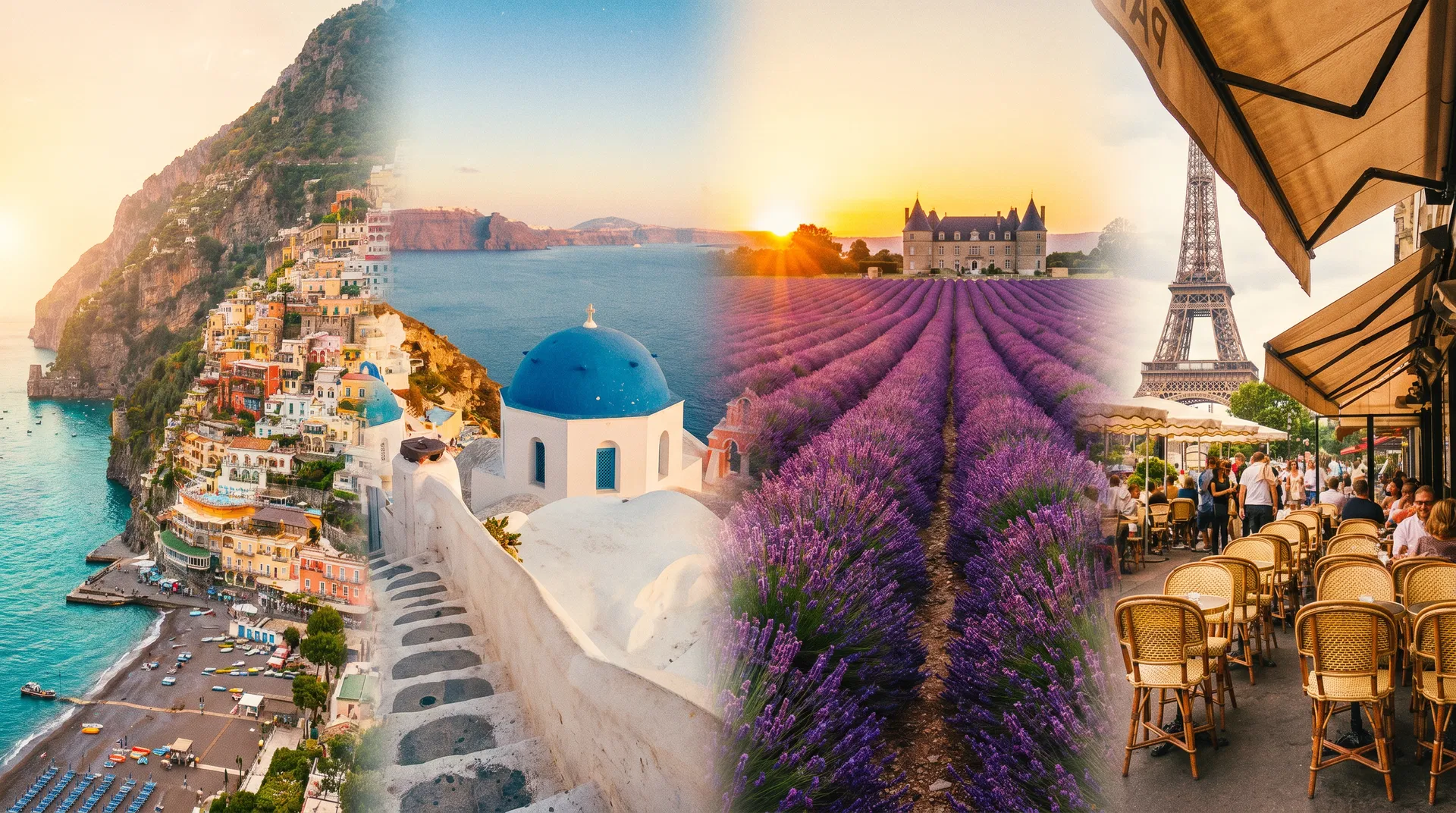
The Best European Destinations for Summer 2026 — Book These Now
Destination: Europe
Category: tips
Here's the thing about European summer travel that nobody tells you until it's too late: the decision to go is easy. The decision of where to go — and more importantly, when to book — is where most people lose months of planning time and end up paying significantly more for significantly less.
Summer 2026 is going to be busy. Post-pandemic travel demand has normalized, but it hasn't cooled — and a weak dollar combined with a strong desire to finally do the trip you've been putting off means that the good hotels in the good neighborhoods are already filling up. Not in a panic-inducing way, but in a "if you wait until May to book a July trip to Santorini, you'll be staying somewhere you didn't want to stay" kind of way.
This is the list of destinations worth prioritizing — not because they're the most famous (though some are), but because they represent the best combination of what summer in Europe actually delivers: light that lasts until 10 PM, food that's been perfected over centuries, and the particular feeling of being somewhere that has been worth visiting for a very long time.
Book the flights. Figure out the rest later.
1. The Amalfi Coast, Italy — The One That Earns Every Cliché
There's a reason the Amalfi Coast is on every list. It's because the list is correct.
The cliffs are genuinely that dramatic. The water is genuinely that blue. The lemon granita you'll eat at a bar in Positano on a Tuesday afternoon, watching fishing boats come in while the sun turns everything gold — that's genuinely as good as it sounds. The Amalfi Coast is one of those places that has been photographed millions of times and still manages to exceed expectations when you're actually standing on it.
The practical reality: summer on the Amalfi Coast is hot, crowded, and expensive. The ferry between towns is the only sane way to move — the coastal road is a single lane of chaos that's beautiful to look at and miserable to drive. The towns themselves (Positano, Ravello, Amalfi, Praiano) are small enough that you can walk everywhere once you're there.
What makes it worth it in summer: The water is at its warmest, the evening passeggiata in every town is a genuine social event, and the seafood — grilled fish, pasta alle vongole, spaghetti al limone — is at its peak. The lemons here are the size of softballs and taste like nothing you've had before.
Book early because: Positano has a finite number of good hotels, and the ones with sea views and reasonable prices go first. By late spring, the options thin out considerably.
Plan your trip: Amalfi Coast 7-Day Beach & Food Guide → | Amalfi Coast Romantic Getaway →
2. Lisbon, Portugal — Europe's Most Underpriced Capital
Lisbon keeps winning "best city in Europe" awards, and the travel community keeps acting surprised. It shouldn't be a surprise anymore.
The city is built on seven hills above the Tagus River, which means every neighborhood has a different character and a different view. The historic Alfama district — the oldest part of the city, a maze of steep cobblestone streets and tiled facades — feels like it belongs to a different century. The Bairro Alto neighborhood comes alive after midnight in a way that few European cities manage. The LX Factory, a converted industrial complex in Alcântara, hosts one of the best weekend markets in Europe.
And the food. The pastéis de nata at Pastéis de Belém are worth the line. The seafood — bacalhau in its hundred preparations, grilled sardines, percebes — is extraordinary. A full dinner at a good restaurant in Lisbon costs roughly half what the same meal would cost in Paris or Amsterdam.
What makes it worth it in summer: The outdoor dining culture is at its peak, the rooftop bars (miradouros) are open late, and the light — that particular Atlantic light that makes everything look slightly golden — is at its most beautiful in June and July.
Book early because: Lisbon has become one of the most popular city-break destinations in Europe, and the good hotels in Alfama and Chiado fill up months in advance for summer.
Plan your trip: Lisbon 5-Day City & Culture Guide → | Lisbon & Porto 7-Day Portugal Itinerary → | Lisbon for Couples →
3. Santorini, Greece — Yes, It's Worth It
Every year, someone writes an article about how Santorini is "too touristy" and "overrated." Every year, the people who actually go come back evangelical about it. The views from the caldera rim at sunset — the white-and-blue villages cascading down the cliff, the volcano in the middle of the sea, the light turning everything amber — are genuinely one of the great visual experiences in travel.
The key to Santorini is knowing which village to stay in. Oia has the famous sunset and the most dramatic views; it's also the most crowded. Fira is the main town, more practical and slightly less precious. Imerovigli is the quieter middle ground, with caldera views that rival Oia at half the foot traffic. Pyrgos, the inland village, is where the locals eat and where you'll find the island's best wine.
The beaches on the east side of the island — Kamari, Perissa — are black volcanic sand and far less crowded than the caldera side. The boat trip to the volcanic island of Nea Kameni (and the hot springs at Palea Kameni) is one of the best half-day excursions in the Aegean.
What makes it worth it in summer: The Aegean is warm enough to swim comfortably from June through October, the outdoor restaurants are at their best, and the long summer evenings mean you can watch the sunset from Oia and still have time for dinner.
Book early because: Santorini has a hard cap on accommodation — the island is small and the caldera-view hotels are finite. The good ones at reasonable prices are gone by February for July and August.
Plan your trip: Santorini 5-Day Island Escape → | Greece: 10 Days in Athens & Santorini → | Santorini Romantic Getaway →
4. Barcelona, Spain — The City That Has Everything
Barcelona is one of the few cities in Europe that genuinely delivers on every front simultaneously: architecture, food, beach, nightlife, culture, and a climate that makes you want to be outside all day.
The Gaudí buildings (Sagrada Família, Park Güell, Casa Batlló, Casa Milà) are extraordinary and unlike anything else in the world — not just as tourist attractions but as genuine works of art that reward close attention. The Gothic Quarter is one of the best-preserved medieval city centers in Europe. The Boqueria market is a sensory overload in the best possible way. And the beaches — Barceloneta, Bogatell, Mar Bella — are right there, a 20-minute walk from the old city.
The food scene has evolved well beyond tapas: the city has some of the most interesting restaurants in Europe, from the traditional bodega serving vermouth and anchovies to the avant-garde tasting menus that have made Catalonia one of the world's great culinary regions.
What makes it worth it in summer: The beach is the obvious answer, but the real draw is the outdoor culture — the terraces, the late dinners, the evening walks along the Passeig de Gràcia. Barcelona in summer feels like the city is operating at full capacity, and that energy is infectious.
Book early because: Barcelona is one of the most visited cities in Europe, and summer is peak season. The hotels in the Gothic Quarter and Eixample fill up fast; the good ones at reasonable prices go first.
Plan your trip: Barcelona 7-Day City & Culture Guide → | Barcelona for Couples: Gaudí & Beach → | Barcelona 4-Day Weekend →
5. Dubrovnik, Croatia — The Adriatic at Its Best
Dubrovnik is one of those places that looks exactly like the photos and still manages to exceed expectations. The Old Town — a UNESCO World Heritage Site enclosed by medieval walls — is a living city, not a museum, and the Adriatic views from the walls at golden hour are among the most beautiful in Europe.
The real secret to Dubrovnik is getting off the main tourist trail. The Elaphiti Islands (Lopud, Šipan, Koločep), a 45-minute ferry ride away, offer the same clear Adriatic water with a fraction of the crowds. The Pelješac Peninsula, an hour's drive north, has some of the best red wine in Croatia (Dingač and Postup) and oyster farms that sell directly to visitors. And the Konavle Valley, just south of the city, is where locals go for Sunday lunch — stone farmhouses, homemade wine, and food that hasn't changed in generations.
What makes it worth it in summer: The Adriatic is at its warmest and clearest, the island ferries run frequently, and the evening atmosphere in the Old Town — when the day-trippers have left and the city belongs to the people staying overnight — is genuinely magical.
Book early because: Dubrovnik has strict limits on tourist numbers in the Old Town, and the accommodation inside the walls is extremely limited. The best options go months in advance.
Plan your trip: Dubrovnik 6-Day Beach & History Guide → | Dubrovnik 4-Day City Break → | Dubrovnik for Couples →
6. Athens, Greece — More Than a Layover
Athens has spent years being treated as a gateway to the Greek islands rather than a destination in its own right. That's changing, and the travelers who've figured it out are having some of the best trips in Europe.
The Acropolis is genuinely one of the great sights in the world — not just as a historical monument but as a piece of architecture that still impresses after 2,500 years. But the Athens that rewards visitors is the one below the Acropolis: the Monastiraki flea market, the Psirri neighborhood with its mezze restaurants and rooftop bars, the Kolonaki district with its galleries and coffee shops, and the Exarcheia neighborhood, which is rougher around the edges and more interesting for it.
The food scene has exploded in the last decade. The traditional tavernas serving grilled octopus, spanakopita, and slow-cooked lamb are still there and still excellent. But there's now a generation of young Athenian chefs doing extraordinary things with Greek ingredients, and the city's restaurant scene is genuinely world-class.
What makes it worth it in summer: Athens in July and August is hot — genuinely hot, 35°C+ hot — but the evenings are perfect, the outdoor dining culture is at its peak, and the rooftop bars with Acropolis views are one of the great summer experiences in Europe. Combine with a ferry to the islands for the ideal Greek summer trip.
Plan your trip: Athens 4-Day City Break → | Romantic Athens: 4-Day Couples' Escape →
7. Copenhagen, Denmark — The City That Invented "Hygge" (And Does It Best)
Copenhagen is the kind of city that makes you want to move there. The cycling culture, the food scene, the design sensibility, the particular Danish approach to quality of life — it all adds up to something that feels genuinely aspirational.
The food is the obvious draw: Copenhagen has more Michelin-starred restaurants per capita than almost any city in Europe, and the New Nordic movement that put the city on the culinary map has filtered down to every level of the dining scene. But you don't need a Michelin reservation to eat extraordinarily well here. The Torvehallerne covered market has some of the best food stalls in Scandinavia. The Nørrebro neighborhood has a thriving street food scene. And the smørrebrød (open-faced sandwiches) at a traditional Danish lunch restaurant are one of the great underrated food experiences in Europe.
The city is also extraordinarily walkable and bikeable — rent a bike for the day and you can cover Nørrebro, Frederiksberg, the harbor, and the old city without breaking a sweat.
What makes it worth it in summer: Copenhagen in June and July is transformed by the long Scandinavian days — it's light until 10:30 PM, the outdoor cafes and harbor bars are packed, and the city's parks (Fælledparken, the Botanical Garden) are at their most beautiful. This is when Copenhagen is at its best.
Book early because: Copenhagen is expensive, and the good hotels at reasonable prices fill up fast for summer. Budget accordingly — this is not a cheap city, but it's worth every krone.
Plan your trip: Copenhagen 4-Day City Break → | Copenhagen for Two →
8. Porto, Portugal — The City That Keeps Surprising People
Porto is what happens when a city has been doing the same things exceptionally well for 800 years and hasn't felt the need to change. The port wine lodges in Vila Nova de Gaia, the azulejo-tiled facades of the Ribeira waterfront, the São Bento train station with its 20,000 hand-painted tiles, the Livraria Lello bookshop that inspired Harry Potter — Porto is a city of specific, irreplaceable things that you can't find anywhere else.
The food is extraordinary and underrated. Francesinha (a meat sandwich drowned in a spicy beer-and-tomato sauce, topped with a fried egg) is one of the great comfort foods of Europe. The bacalhau à Brás is a masterpiece of salt cod cookery. And the wine — not just port, but the Douro Valley reds and the vinho verde whites — is some of the best value in Europe.
The Douro Valley, an hour's drive east, is one of the most beautiful wine regions in the world: terraced vineyards dropping to the river, quintas (wine estates) offering tastings and accommodation, and a landscape that looks like it was designed by someone who wanted to make a point about beauty.
What makes it worth it in summer: The outdoor dining culture along the Ribeira is at its peak, the river cruises to the Douro Valley are running daily, and the city's rooftop bars and miradouros are perfect for long summer evenings.
Plan your trip: Porto 4-Day City Break → | Porto for Two → | Lisbon & Porto 7-Day Portugal →
The Booking Timeline That Actually Matters
Here's the honest truth about booking European summer travel: the window between "good options at reasonable prices" and "whatever's left" is shorter than most people think.
For July and August travel, the sweet spot for booking flights is 8–12 weeks out. Earlier than that and prices are often still inflated; later and the good seats are gone. For accommodation, the calculus is different — the best hotels in popular destinations (Santorini, Positano, Dubrovnik) can sell out 4–6 months in advance. For city hotels in Barcelona, Lisbon, and Copenhagen, 6–8 weeks is usually sufficient.
For June travel, you have more flexibility — it's shoulder season in most of Europe, the crowds are thinner, and the prices are lower. The weather is excellent almost everywhere on this list, and the long days (especially in Scandinavia) are a genuine bonus.
The one thing that's true across all of these destinations: don't wait. The travelers who have the best European summers are the ones who made the decision in February and March, booked the flights and the first hotel, and figured out the rest from there. The travelers who wait until May to start planning are the ones who end up in the wrong neighborhood, paying too much, and wondering why the trip didn't feel as good as they'd hoped.
Build Your European Summer Itinerary
Every destination on this list has a full guide on Ask Leif — day-by-day itineraries built around real traveler experiences, with accommodation recommendations, restaurant picks, and the kind of local knowledge that takes years to accumulate.
If you want a personalized itinerary built around your specific travel dates, budget, group size, and travel style — one that accounts for the connections between destinations, the best neighborhoods to stay in, and the experiences that match what you actually care about — Leif can build it for you in about 60 seconds.
The summer of 2026 is going to be extraordinary. The only question is where you'll be for it.
Created by the Ask Leif Team — Reviewed by Shane